
Buying a Turnkey Home vs. a Fixer-Upper: Which Strategy Wins in 2026?
As renovation costs climb and move-in ready premiums hold steady, buyers face a stark choice between immediate convenience and sweat equity. We break down the true costs, timelines, and trade-offs of both paths in the 2026 housing market.
By Factlen Editorial Team
- Turnkey Advocates
- Argue that the time, stress, and hidden costs of renovations make move-in ready homes the smarter financial and emotional choice.
- Value-Add Investors
- Believe that buying discounted properties and forcing appreciation through strategic renovations is the best path to building wealth.
- Real Estate Pragmatists
- Emphasize that the right choice depends entirely on local contractor availability, loan types, and the buyer's contingency cash.
What's not represented
- · Local contractors facing labor shortages
- · Neighborhood associations dealing with prolonged construction noise
Why this matters
Choosing between a move-in ready home and a renovation project dictates your financial flexibility and lifestyle for years to come. Understanding the hidden costs of both paths prevents buyers from draining their savings on unexpected repairs or overpaying for cosmetic updates.
Key points
- Turnkey homes command a 10% to 20% premium but allow buyers to finance the updates over 30 years.
- Fixer-uppers sell at a 20% to 30% discount, offering a path to build sweat equity.
- Mid-range home renovations in 2026 cost between $20,000 and $80,000, averaging $15 to $60 per square foot.
- Hidden problems behind walls typically add 20% to 30% to initial contractor estimates.
- Standard mortgages may not cover homes with habitability issues, requiring specialized renovation loans.
- Turnkey properties fit buyers needing immediate stability, while fixer-uppers suit those with cash reserves and patience.
Every prospective homebuyer in 2026 eventually stares down the same fundamental choice: pay a premium for immediate comfort, or buy at a discount and embrace the chaos of renovation. With housing affordability remaining tight, the debate between purchasing a turnkey property and a fixer-upper has never carried higher financial stakes. Buyers are weighing the certainty of a fixed 30-year mortgage against the unpredictable variables of contractor timelines and material costs.[1][4]
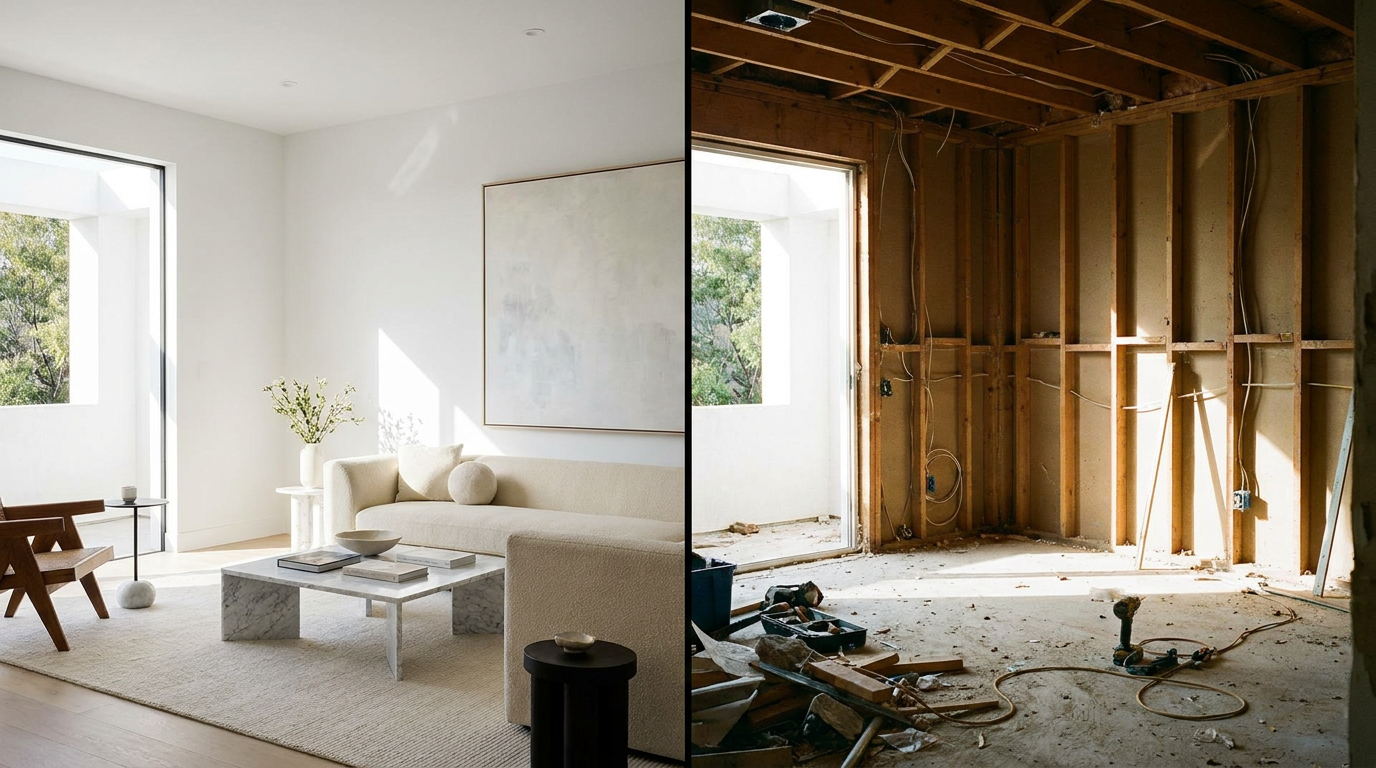
A turnkey home is exactly what it sounds like: you turn the key, walk in, and start living. These properties require zero immediate repairs, boasting updated systems, modern finishes, and a clean bill of health from inspectors. In the current market, this convenience commands a steep price. Real estate data indicates that turnkey homes typically sell for a 10% to 20% premium over comparable properties that need work.[1][7]

For many buyers, that premium is entirely justified by the preservation of their emotional and financial bandwidth. Industry analysts note a growing trend of "buyer fatigue" in 2026. After scraping together down payments and navigating elevated interest rates, many purchasers simply do not have the cash reserves or the energy to immediately replace a roof, gut a kitchen, or manage a team of contractors.[4][8]
Financing a move-in ready home is also remarkably straightforward. Traditional lenders favor properties in excellent condition, allowing buyers to roll the entire cost of the home into a standard 30-year fixed-rate mortgage. There are no complex escrow holdbacks, no contractor estimates required at closing, and no need to secure secondary construction loans. You pay more, but the financial picture is crystal clear from day one.[6][8]
On the other end of the spectrum lies the fixer-upper. These properties are the diamonds in the rough, typically hitting the market at a 20% to 30% discount compared to their fully updated neighbors. For buyers priced out of their desired neighborhoods, a home in need of cosmetic or functional repair often represents the only viable entry point.[1][5]
These properties are the diamonds in the rough, typically hitting the market at a 20% to 30% discount compared to their fully updated neighbors.
The primary allure of the fixer-upper is the potential for forced appreciation, commonly known as sweat equity. By purchasing below market value and strategically upgrading the property, buyers can build significant wealth. Real estate investors often rely on the "70% Rule," which dictates that the purchase price plus the cost of renovations should never exceed 70% of the home's After Repair Value (ARV). When executed correctly, this strategy yields a custom home and immediate profit.[1][7]
However, the reality of renovating a home in 2026 requires a sobering look at construction economics. The average mid-range home renovation currently costs between $20,000 and $80,000, translating to roughly $15 to $60 per square foot. If a home requires premium finishes, structural changes, or a full gut rehabilitation, those costs can easily surge past $150 per square foot.[2][3]

Budget overruns are not a possibility; they are a near certainty. Contractor surveys reveal that hidden problems discovered after walls are opened—such as outdated electrical wiring, plumbing leaks, or structural rot—add an average of 20% to 30% to initial budget estimates. Buyers who purchase a fixer-upper without a robust contingency fund often find themselves halting projects mid-stream or compromising on essential updates.[1][2]
Beyond the financial outlay, buyers must account for the sheer disruption of living in a construction zone. The timeline for a standard home renovation spans two to eight months. If the home is uninhabitable during this period, buyers face the double burden of paying their new mortgage while simultaneously covering rent or extended-stay hotel costs elsewhere.[2][5]

Financing a fixer-upper also introduces distinct hurdles. Standard conventional loans often cannot be used for homes with significant habitability issues. Instead, buyers must navigate specialized renovation mortgages, such as the FHA 203(k) or Fannie Mae HomeStyle loans. These products allow buyers to roll renovation costs into their primary mortgage, but they require rigorous contractor vetting, detailed upfront estimates, and strict timelines that can complicate the purchasing process.[1][7]
Ultimately, the decision hinges on a buyer's risk tolerance, cash reserves, and lifestyle flexibility. A turnkey home fits perfectly for those who need immediate stability, lack the cash for out-of-pocket renovations, or simply cannot stomach the stress of managing a construction site. The higher monthly mortgage payment acts as an insurance policy against unexpected capital expenditures.[4][6]

Conversely, a fixer-upper remains the superior choice for buyers with strong cash reserves, access to reliable contractors, and the patience to endure months of disruption. It fits well for those who prioritize neighborhood location over immediate aesthetics and want absolute control over their home's design. In a 2026 market defined by high costs, both paths offer a route to homeownership, provided buyers are honest about the true price of their choice.[5][8]
Viewpoints in depth
The Move-In Ready Buyer
Prioritizes immediate comfort and predictable monthly costs over the potential for sweat equity.
For this camp, the premium paid for a turnkey home is viewed as an insurance policy against stress. They argue that the out-of-pocket cash required to fund a renovation is better kept in savings or invested elsewhere. By rolling the cost of a fully updated home into a 30-year fixed mortgage, they secure a predictable monthly housing expense without the risk of contractor delays or budget-busting surprises behind the drywall.
The Sweat Equity Investor
Sees outdated properties as the most reliable vehicle for building wealth in a high-cost market.
Value-add investors and ambitious homeowners believe that buying at the top of the market for someone else's design choices is a financial mistake. By adhering to the 70% rule, they target properties with 'good bones' in desirable neighborhoods. They accept the temporary chaos of construction because the end result is a customized home that holds significantly more equity than what they invested in the purchase and repairs.
The Budget-Constrained First-Timer
Views the fixer-upper as the only realistic entry point into homeownership, despite the challenges.
For buyers priced out of turnkey homes, the debate is less about investment strategy and more about market access. This group relies on specialized financing like FHA 203(k) loans to make uninhabitable properties livable. While they acknowledge the stress of living in a construction zone, they argue that taking on a project house is the only way to escape the rental cycle and secure a foothold in their preferred zip codes.
What we don't know
- Whether the cost of construction materials and labor will stabilize or continue to rise through the end of 2026.
- How potential shifts in interest rates might alter the premium buyers are willing to pay for move-in ready homes.
Key terms
- Turnkey Property
- A home that is fully updated, repaired, and ready for immediate move-in without requiring any additional work.
- Fixer-Upper
- A property that requires significant cosmetic or structural repairs, typically sold at a discount compared to market value.
- After Repair Value (ARV)
- The estimated total value of a property once all planned renovations and repairs are completed.
- FHA 203(k) Loan
- A government-backed mortgage that allows buyers to finance both the purchase of a house and the cost of its rehabilitation through a single loan.
- Contingency Budget
- Extra funds set aside (usually 20-30% of the project cost) to cover unexpected expenses that arise during a renovation.
Frequently asked
What is the 70% rule in real estate?
It is a guideline used by investors stating that the purchase price of a fixer-upper plus the cost of renovations should not exceed 70% of the home's After Repair Value (ARV).
Can I finance a fixer-upper with a standard mortgage?
It depends on the condition. If the home has significant habitability issues, standard loans may be denied, requiring specialized renovation loans like the FHA 203(k).
How much should I save for a renovation contingency fund?
Contractors and real estate experts recommend setting aside an extra 20% to 30% of your total estimated budget to cover hidden problems discovered during the project.
Why are turnkey homes selling for such a high premium?
Buyers are experiencing fatigue from high housing costs and prefer to finance a fully updated home over 30 years rather than paying out-of-pocket cash for immediate renovations.
Sources
Source coverage
8 outlets
3 viewpoints surfaced






[1]AmeriSaveReal Estate Pragmatists
The Real Numbers Behind Buying a Fixer Upper
Read on AmeriSave →[2]AngiReal Estate Pragmatists
How Much Does It Cost to Remodel a House? [2026 Data]
Read on Angi →[3]HomeProjectsCostReal Estate Pragmatists
Home Renovation Costs in 2026
Read on HomeProjectsCost →[4]Foxes Sell FasterTurnkey Advocates
Turnkey Homes Are Winning Because Buyers Are Tired Before They Even Move In
Read on Foxes Sell Faster →[5]State FarmReal Estate Pragmatists
Pros and cons of buying a fixer-upper home
Read on State Farm →[6]Windermere Real EstateValue-Add Investors
Turnkey vs. Fixer-Upper: Pros and Cons
Read on Windermere Real Estate →[7]InvstgValue-Add Investors
Comparing Costs: Turnkey vs. Fixer-Upper Investments
Read on Invstg →[8]Elena Price Real EstateTurnkey Advocates
The Turnkey Premium Matrix
Read on Elena Price Real Estate →
Every angle. Every day.
Get real estate stories with full source coverage and perspective breakdowns delivered to your inbox.