
Sport Climbing's Medical Awakening: How Elite Athletes Are Redefining the Comeback
As the 2026 World Climbing Series accelerates, a wave of elite climbers returning from severe injuries is highlighting a sport-wide push to standardize rehabilitation and injury prevention.
By Factlen Editorial Team
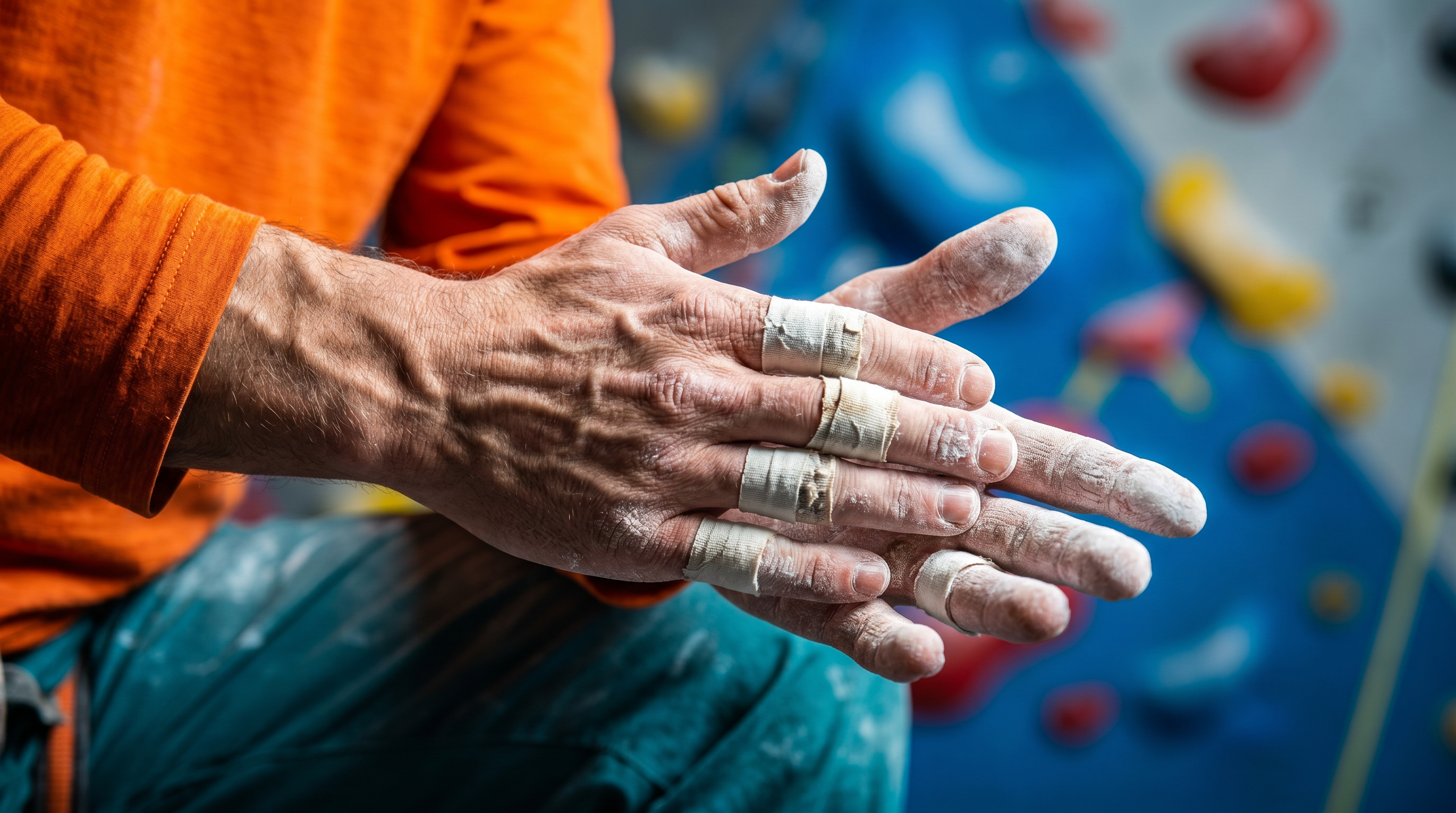
- Sports Medicine Researchers
- Advocate for standardized return-to-sport protocols and better data tracking to prevent chronic overuse injuries.
- Elite Competitors
- Focused on balancing the intense pressure of the competition calendar with the need for adequate recovery time.
- Governing Bodies
- Prioritizing systemic safety by implementing data registries to track trends and protect athlete well-being.
What's not represented
- · Recreational gym owners balancing route-setting safety with customer demand for dynamic, competition-style boulders.
- · Youth climbing coaches managing the physical development and injury prevention of adolescent athletes.
Why this matters
With over 10 million active climbers in the U.S. alone, the shift from 'climbing through the pain' to evidence-based recovery means safer training protocols for both professionals and everyday gym-goers.
Key points
- 77% of recreational climbers report experiencing at least one injury, primarily affecting finger pulleys and joints.
- Major stars like Natalia Grossman have successfully returned from severe surgeries to win gold.
- Climbers are increasingly prioritizing long-term health, opting to skip events rather than climb through acute strains.
- World Climbing has introduced an Injury Registry to track and analyze competition injuries.
- Sports medicine researchers are pushing for standardized 'return-to-sport' criteria specific to climbing biomechanics.
For decades, the culture of sport climbing was defined by a quiet stoicism. Athletes taped up aching fingers, ignored the dull throb of inflamed tendons, and pushed through microtraumas to stay on the wall. But as the 2026 World Climbing Series unfolds, the narrative has fundamentally shifted. A wave of high-profile returns from severe injuries is showcasing a new era in the sport—one where evidence-based rehabilitation, strategic rest, and standardized medical protocols are replacing the old ethos of climbing through the pain.[1][2]
The physical toll of modern competition climbing is immense. Bouldering and lead climbing require explosive, dynamic movements and extreme force applied to isolated joints. According to the American Academy of Orthopaedic Surgeons, roughly 93 percent of all rock-climbing injuries are attributed to overuse or chronic microtrauma. The hallmark injury is the annular pulley tear, which occurs when the flexor tendon force becomes extreme—often during a 'crimp' grip where forces exceeding 400 Newtons are exerted on a single finger pulley.[2]
A sweeping 2026 scoping review published in BMJ Open Sport & Exercise Medicine quantified the scale of the issue. The review found that 77 percent of recreational climbers report experiencing at least one injury, with finger pulley injuries and general joint swelling each affecting 47 percent of the climbing population. Despite this high prevalence, the researchers noted a glaring gap: unlike soccer or basketball, climbing has historically lacked standardized 'return-to-sport' criteria to guide athletes safely back to the wall.[1]

That medical void is now being filled, driven in part by the elite athletes themselves. American Olympian Natalia Grossman provided a masterclass in modern recovery following a devastating ACL and meniscus tear. Rather than rushing her return, Grossman documented a methodical, months-long rehabilitation process. Her patience paid off spectacularly when she returned to the competition mats to take gold at the North American Cup, demonstrating that a severe knee injury is no longer a career death sentence in a sport that demands intense lower-body coordination.[3][6]
Similarly, French climber Naïlé Meignan recently made a triumphant return to the World Cup podium, securing a bronze medal in Salt Lake City after recovering from her own severe knee injury. These comebacks are reshaping how younger athletes view setbacks. The focus is no longer on how fast a climber can return, but how fully they can rebuild their biomechanical foundation before bearing the extreme loads of competition.[3]
These comebacks are reshaping how younger athletes view setbacks.
This shift in mindset is also changing how athletes manage their competition calendars. Canadian climber Madison Richardson made headlines when she voluntarily withdrew from the first World Cup of the season in China due to a Grade 1 hamstring strain. Acknowledging that the risk of reinjury or a full tear was over 50 percent, Richardson opted for a comprehensive recovery regimen involving physical therapy and targeted rest. By sacrificing early-season points, she preserved her long-term health for the remainder of the 2026 circuit.[4]

Even at the highest levels of pressure, climbers are choosing longevity. Austrian standout Jessica Pilz made the agonizing decision to skip her home World Cup in Innsbruck to allow a severe finger inflammation to heal. Recognizing that the aggressive, crimp-heavy routes would jeopardize her recovery, Pilz prioritized her finger's structural integrity over the emotional pull of competing in front of a hometown crowd.[3][4]
The sport's governing body is actively supporting this medical awakening. World Climbing (formerly the IFSC) has rolled out a comprehensive Injury Registry for the 2026 season. Using standardized recording sheets at every World Cup event, medical staff are now tracking and analyzing injuries across the global circuit. This data collection aims to identify injury patterns, understand risk factors, and guide future route-setting and competition safety measures.[5]

The trickle-down effect of these elite protocols is already reaching the grassroots level. With over 10.3 million active climbers in the United States alone, local physical therapists are increasingly specializing in climbing biomechanics. The BMJ review highlighted that while many healthcare providers treat climbers, only a fraction feel they have adequate sport-specific knowledge. The new push for standardized outcome measures is equipping everyday practitioners with the tools to treat the weekend warrior just as effectively as the Olympian.[1][2]
Ultimately, the 2026 season is proving that an injury report doesn't have to be a tragedy. It can be a blueprint for a stronger return. As climbers like Grossman and Meignan stand on podiums with rebuilt joints, and as the governing bodies institutionalize safety, sport climbing is maturing. The tape and chalk remain, but the science of the comeback has forever changed the vertical landscape.[3][5][6]
How we got here
Early 2025
US Olympian Natalia Grossman sustains a severe ACL and meniscus tear, beginning a highly documented rehabilitation process.
August 2025
Grossman returns to competition, winning gold at the North American Cup in a major post-injury comeback.
February 2026
A major scoping review in BMJ Open Sport & Exercise Medicine highlights the lack of standardized return-to-sport criteria in climbing.
May 2026
The 2026 World Climbing Series begins, featuring the rollout of the IFSC's new standardized Injury Registry.
Viewpoints in depth
Sports Medicine Researchers
Advocating for standardized recovery metrics to replace guesswork.
For years, sports medicine professionals have noted that climbing lags behind traditional sports in formal rehabilitation science. Researchers emphasize that because climbing involves unique biomechanical loads—such as the extreme forces placed on the annular pulleys during a crimp grip—generic physical therapy often falls short. They are pushing for universal 'return-to-sport' criteria, ensuring that athletes only resume full training when objective strength and tissue-healing benchmarks are met, rather than relying on subjective pain tolerance.
Elite Competitors
Balancing the grueling competition calendar with long-term health.
For the athletes, the dense World Climbing Series schedule presents a constant dilemma. Missing a single World Cup event can severely impact overall season rankings and Olympic qualification prospects. However, a cultural shift is occurring. Climbers are increasingly viewing strategic withdrawals—opting out of a competition to rehab a minor strain—as a necessary investment in their career longevity. The success of athletes returning from major surgeries to win gold has validated this patient, long-term approach.
Governing Bodies
Implementing systemic data tracking to improve sport-wide safety.
Organizations like World Climbing (IFSC) are transitioning from a passive role in athlete health to an active, preventative stance. By instituting the Injury Registry, the governing body is collecting macro-level data on how, when, and why injuries occur during competitions. This data is expected to influence everything from the design of climbing holds to the style of route-setting, ensuring that the physical challenges presented to athletes test their skill without unnecessarily jeopardizing their structural health.
What we don't know
- How the new IFSC Injury Registry data will directly influence future route-setting and competition rules.
- Whether standardized return-to-sport criteria will be universally adopted by national climbing federations.
- The long-term joint health outcomes for the current generation of climbers performing highly dynamic, modern bouldering moves.
Key terms
- Annular Pulley
- A series of fibrous bands in the fingers that hold the flexor tendons close to the bone; frequently injured in climbing.
- Crimp Grip
- A climbing technique where the first finger joints are hyperextended and the middle joints are sharply bent, placing extreme force on the pulleys.
- Microtrauma
- Small-scale damage to muscles, ligaments, or tendons caused by repetitive stress, which can accumulate into a chronic injury.
- Return-to-Sport Criteria
- Objective medical and physical benchmarks an athlete must meet before safely resuming competition after an injury.
- Dyno
- A dynamic climbing move requiring the climber to jump or lunge to reach the next hold, often placing sudden, high loads on the body.
Frequently asked
What is the most common injury in sport climbing?
Finger pulley injuries and general joint pain are the most common, each affecting roughly 47% of injured climbers due to the extreme forces placed on the hands.
How are climbing injuries usually caused?
Approximately 93% of rock-climbing injuries are attributed to overuse and chronic microtrauma from repetitive high loads, rather than acute falls.
What is the IFSC Injury Registry?
It is a new data-tracking initiative by World Climbing that uses standardized sheets during competitions to monitor injury patterns and improve athlete safety.
Can climbers fully recover from severe knee injuries?
Yes. Athletes like Natalia Grossman and Naïlé Meignan have successfully returned from severe knee surgeries to win medals at the highest levels of competition.
Sources
Source coverage
6 outlets
3 viewpoints surfaced






[1]BMJ Open Sport & Exercise MedicineSports Medicine Researchers
Return to climbing after musculoskeletal injury: a scoping review protocol
Read on BMJ Open Sport & Exercise Medicine →[2]American Academy of Orthopaedic SurgeonsSports Medicine Researchers
Assessment and Management of Hand Injuries in Rock Climbers
Read on American Academy of Orthopaedic Surgeons →[3]Inside ClimbingElite Competitors
Natalia Grossman dominates despite knee troubles
Read on Inside Climbing →[4]Richardsons ClimbingElite Competitors
Why I Withdrew from the First World Cup of the Season
Read on Richardsons Climbing →[5]World ClimbingGoverning Bodies
IFSC Injury Registry and Prevention Initiatives
Read on World Climbing →[6]Climbing MagazineElite Competitors
Natalia Grossman Takes Gold in Stunning Post-Injury Comeback
Read on Climbing Magazine →
More in sports
See all 337 stories →Pro Volleyball Boom
The $100M Turf War Building America's First Sustainable Pro Volleyball Ecosystem
6 sources
Adaptive Gaming
How Adaptive Tech and Modular Design Are Leveling the Esports Playing Field
7 sources
Sports Tech
How Artificial Intelligence is Revolutionizing Soccer Scouting and Player Recruitment
8 sources
Fighter Safety
How Impact-Sensing Smart Gloves Are Changing the Science of Boxing Safety
7 sources
Every angle. Every day.
Get sports stories with full source coverage and perspective breakdowns delivered to your inbox.