
How the 'Fediverse' Works: The Tech Making Social Media Interoperable
As decentralized platforms like Bluesky and Mastodon cross tens of millions of users in 2026, the underlying protocols powering them are beginning to connect. This shift promises a future where users can seamlessly communicate across different social networks without losing their data or followers.
By Factlen Editorial Team
- Pragmatic Adopters
- Developers and users balancing open protocols with mainstream usability.
- Protocol Purists
- Advocates for total decentralization and user data ownership.
- Privacy & Governance Watchdogs
- Researchers focused on the ethical and safety implications of open networks.
What's not represented
- · Everyday users prioritizing frictionless app experiences over data ownership
- · Advertisers struggling to adapt to the lack of centralized targeting data
Why this matters
For two decades, social media has been defined by 'walled gardens'—if you leave a platform, you lose your audience and your history. The maturation of interoperable protocols means users and creators are finally gaining the ability to own their digital identities and move freely across the web.
Key points
- Decentralized social media is moving from a niche concept to a mainstream alternative, driven by protocols like ActivityPub and the AT Protocol.
- Bluesky's AT Protocol emphasizes account portability, allowing users to switch hosting providers without losing their followers or data.
- ActivityPub, the standard behind Mastodon, continues to grow and has seen partial integration from massive corporate platforms like Meta's Threads.
- Third-party developers are building bridging tools to allow seamless communication between these competing decentralized networks.
- The shift toward open protocols gives users and creators more control over their digital identities, freeing them from corporate walled gardens.
In 2026, the digital landscape is undergoing a quiet but profound architectural revolution. For years, the social internet has been defined by massive, centralized platforms that lock users into proprietary ecosystems. But as decentralized alternatives like Bluesky cross the 42 million user mark and Mastodon continues to solidify its dedicated base, the conversation has shifted. The most significant development is no longer the apps themselves, but the invisible plumbing operating beneath them. This underlying technology is beginning to connect previously isolated networks, promising a future where digital communication is as open and interoperable as email.[3][6]
To understand the magnitude of this shift, one must look at the "walled garden" model that has dominated the web for two decades. Under this paradigm, a post published on X cannot be seamlessly liked by a user on Instagram, and a creator's carefully cultivated follower graph on TikTok cannot be ported to YouTube. Users do not truly own their digital identities; they rent space on corporate servers. If a platform changes its algorithm, introduces aggressive monetization, or shuts down entirely, the user's audience and history vanish with it.[6]
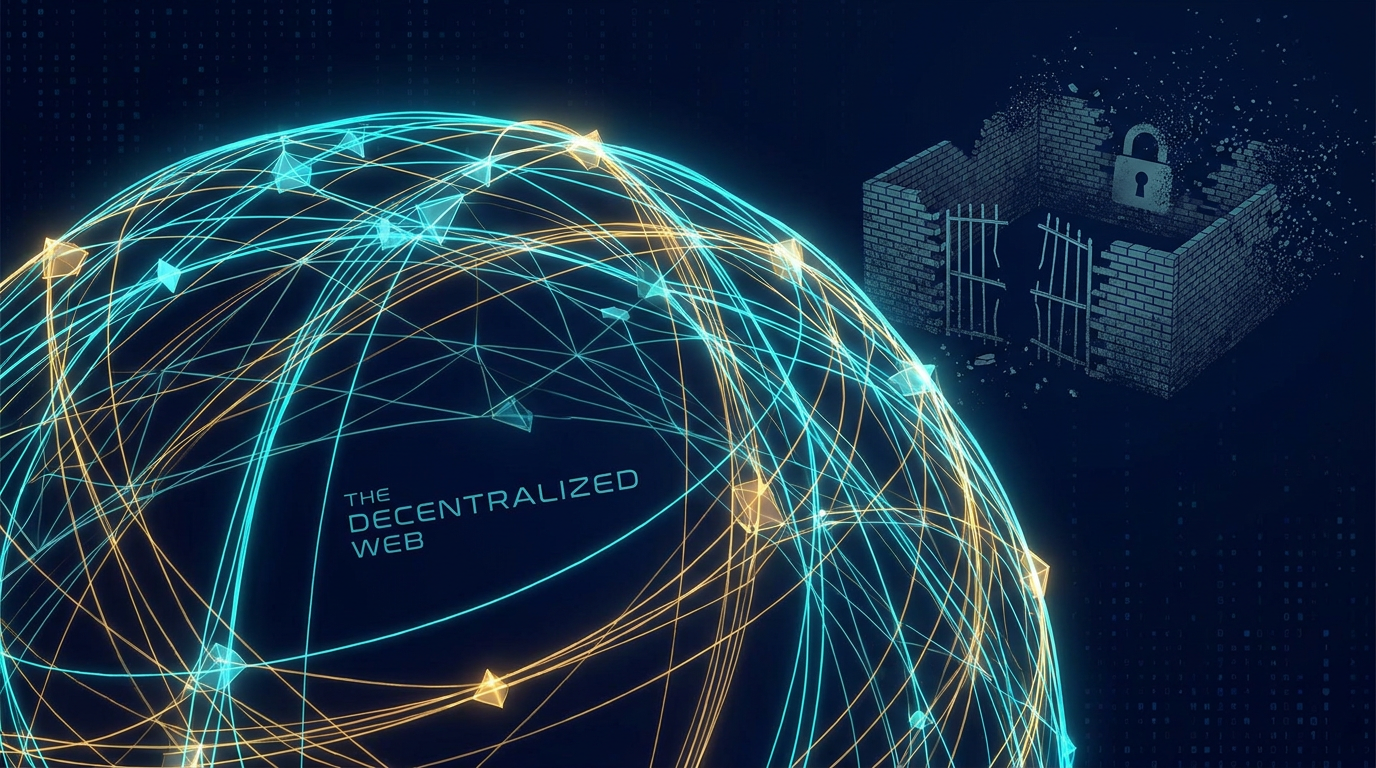
A fundamental alternative is now reaching maturity, driven by a concept broadly known as the "Fediverse." Short for federated universe, this ecosystem rejects the premise of centralized corporate servers. Instead, it relies on open protocols that allow independent servers to communicate with one another. In a fully realized Fediverse, a user's choice of app or hosting provider does not limit who they can talk to, effectively decoupling the user interface from the underlying social graph.[3][6]
At the heart of this movement are two competing but increasingly cooperative technical standards: ActivityPub and the AT Protocol. Both frameworks aim to do for social media what Simple Mail Transfer Protocol (SMTP) did for email decades ago. Just as a Gmail user can effortlessly send a message to an Outlook address without ever thinking about the routing mechanics or server handshakes, these protocols are designed to allow different social networks to exchange content natively. The ultimate goal is a seamless user experience where the underlying technology fades entirely into the background.[6]

ActivityPub is the older and more established of the two standards. Recognized as an official recommendation by the World Wide Web Consortium (W3C) in January 2018, it serves as the defining standard of the current Fediverse. It is the engine that powers Mastodon, PeerTube, and Pixelfed, and its influence has grown so significant that even Meta integrated partial ActivityPub support into its Threads platform, marking a rare instance of a tech giant embracing open federation.[5]
The mechanics of ActivityPub operate on a dual model: a client-to-server API for creating content, and a federated server-to-server protocol for delivering it. When a user on one Mastodon instance publishes a post, the protocol translates that action into a standardized JSON-based format and broadcasts it to the servers of anyone following that user. This message-passing system is robust and proven, but it requires servers to constantly push and pull data to stay synchronized.[5]
On the other side of the ecosystem is the AT Protocol, the technological foundation of Bluesky. Originally incubated as an internal research project within Twitter before spinning out as an independent entity, the AT Protocol was built to address some of the perceived limitations of older federated models. Its creators wanted a system that could handle massive scale while prioritizing user experience and seamless account migration.[6]
Instead of relying on traditional message-passing between servers, the AT Protocol utilizes what engineers call a "shared heap" architecture. In this model, data exists in a global, cryptographically secured pool. Users connect to this network through Personal Data Servers (PDS), which host their accounts, posts, and likes. The heavy lifting of aggregating and serving feeds is handled by separate indexing services, creating a modular system where different components can be swapped out without breaking the network.[3][6]
Instead of relying on traditional message-passing between servers, the AT Protocol utilizes what engineers call a "shared heap" architecture.
This specific design choice solves one of the most persistent headaches of the decentralized web: account portability. On the AT Protocol, a user can seamlessly migrate their profile, followers, and entire post history from one server provider to another. Because the user's identity is tied to a cryptographic key rather than a specific server address, the transition is invisible to their followers, ensuring that users are never trapped by a bad hosting provider.[3]

The capabilities of the AT Protocol are expanding rapidly. In June 2026, Bluesky's Head of Product, Alex Benzer, announced a major architectural evolution with the introduction of "Communities." Moving beyond the platform's microblogging roots, Communities are designed as smaller, Reddit-style spaces built directly on the protocol. Because they exist on the open web, developers can assign them unique URLs and build customized features using the broader AT Protocol ecosystem, known as the Atmosphere.[1]
As both ActivityPub and the AT Protocol mature, the tech industry faces a critical juncture. If these two massive networks remain isolated from one another, the decentralized web risks replicating the very fragmentation it sought to destroy. Users would simply be trading corporate walled gardens for protocol-based walled gardens, forcing them to maintain separate identities across the Mastodon and Bluesky ecosystems.[6]
To prevent this fragmentation, independent developers are building bridges. The most prominent of these is Bridgy Fed, an open-source initiative designed to act as a universal translator between the two networks. By routing messages through a specialized bridging server, Bridgy Fed allows a Mastodon user to follow, like, and reply to a Bluesky user as if they were operating on the exact same platform.[7]
This concept of "invisible interoperability" is the holy grail for the decentralized web. When the translation layer works correctly, everyday users do not need to understand the underlying protocols, server architectures, or cryptographic keys. They simply open their app of choice, see their friends' posts appear in their feeds, and interact naturally, completely unaware of the complex routing happening in the background.[7]

However, bridging these disparate networks introduces complex questions around privacy and governance. The Social Web Foundation recently published research highlighting that open protocols must carefully manage how data is shared across boundaries. When a user on a highly moderated, privacy-focused Mastodon server interacts with a user on a more permissive Bluesky server, reconciling their different expectations of data protection becomes a significant technical and ethical challenge.[4]
Moderation, in particular, becomes a thorny issue in a federated landscape. In a centralized system, a single trust and safety team dictates what content is allowed. In a federated system, moderation is inherently composable and community-driven. Different servers can enforce entirely different rules, and a post that is perfectly acceptable on one instance might be instantly blocked by another.[4][6]
Bluesky has attempted to solve this through independent labeling services. Rather than relying on a central authority, the AT Protocol allows users to subscribe to third-party moderation filters. If a user wants a strictly family-friendly feed, they can apply a filter that automatically hides content flagged by a trusted community labeler. This separates the hosting of speech from the algorithmic amplification of it, giving users unprecedented control over what they see.[3][6]

Despite the technical hurdles, the momentum behind open social protocols is accelerating. Market analysts and marketing strategists note that brands, publishers, and independent creators are increasingly looking to the Fediverse to escape algorithmic unpredictability. By building audiences on open protocols, creators can reclaim direct relationships with their followers, ensuring that a sudden algorithm tweak doesn't destroy their livelihood overnight.[2]
The transition to a fully decentralized web will not happen overnight. The vast majority of global internet users still rely on centralized platforms, drawn by their frictionless onboarding, massive network effects, and polished user interfaces. For the average consumer, the philosophical benefits of data ownership often take a backseat to the immediate convenience of seeing where their friends are posting.[6]
Yet, the foundational infrastructure for a new era of the internet is now firmly in place. With tens of millions of users actively participating, major corporate players testing the waters, and developers successfully bridging competing protocols, the dream of a truly interoperable social web is finally moving from theoretical whitepapers to everyday reality. The walls of the gardens are coming down, one protocol at a time.[6]
How we got here
Jan 2018
The W3C officially publishes ActivityPub as a recommended standard for decentralized social networking.
Feb 2024
Bluesky drops its invite-only beta and opens to the public, rapidly accelerating the adoption of the AT Protocol.
Apr 2024
Meta's Threads begins implementing ActivityPub federation, bringing a major corporate player into the Fediverse.
Early 2026
Bluesky crosses 42 million users and announces 'Communities,' expanding the AT Protocol beyond microblogging.
Viewpoints in depth
Protocol Purists
Advocates who believe social networks should operate entirely on open, decentralized standards.
This camp argues that the only way to truly protect user data and free speech is to remove corporate control entirely. They champion protocols like ActivityPub and the AT Protocol as foundational internet infrastructure, similar to email. For purists, any reliance on centralized servers or proprietary algorithms is a fundamental flaw, and they prioritize total data ownership and portability above frictionless user experiences.
Pragmatic Adopters
Users and developers who value decentralization but prioritize usability and network effects.
While supportive of the Fediverse, this group acknowledges that mainstream adoption requires slick interfaces and easy onboarding. They are willing to accept hybrid models—such as Meta's Threads integrating with ActivityPub—if it means bringing millions of new users into the ecosystem. They view bridging technologies like Bridgy Fed as essential compromises to prevent the decentralized web from becoming an isolated echo chamber.
Centralized Incumbents
Traditional tech giants who maintain closed ecosystems to protect their business models.
Major platforms argue that walled gardens provide superior security, faster feature development, and more effective content moderation. By keeping users within a closed loop, they can optimize algorithmic feeds to maximize engagement and ad revenue. While some incumbents are experimenting with federation to appease regulators, their core strategy relies on maintaining proprietary control over the social graph.
What we don't know
- It remains unclear if third-party bridging tools can scale reliably without compromising user privacy or network performance.
- We do not yet know how decentralized networks will sustainably fund their infrastructure as user bases grow into the hundreds of millions.
- The long-term impact of varying moderation standards across federated servers on user safety is still being studied.
Key terms
- ActivityPub
- An open, decentralized social networking protocol established by the W3C, used most notably by Mastodon.
- AT Protocol
- The open-source framework powering Bluesky, designed to prioritize account portability and composable moderation.
- Fediverse
- A portmanteau of 'federated' and 'universe,' referring to the interconnected web of decentralized social networks.
- Interoperability
- The ability of different computer systems, software, or networks to connect and exchange information seamlessly.
- Walled Garden
- A closed technology ecosystem where the provider tightly controls access to content, services, and user data.
Frequently asked
What is the Fediverse?
The Fediverse is a collection of independent social media servers that can communicate with each other using shared technical standards, allowing users on different platforms to interact seamlessly.
How is Bluesky different from Mastodon?
Mastodon uses the ActivityPub protocol and relies on a traditional server-to-server messaging model. Bluesky uses the AT Protocol, which features a 'shared heap' architecture designed to make it easier for users to move their accounts between servers.
Can a Mastodon user talk to a Bluesky user?
Natively, no, because they use different protocols. However, third-party bridging tools like Bridgy Fed are actively being developed to translate messages between the two networks.
What are Bluesky Communities?
Announced in 2026, Communities are smaller, Reddit-style spaces built on the AT Protocol that allow users to gather around specific interests with customized features and moderation.
Sources
Source coverage
7 outlets
3 viewpoints surfaced






[1]The VergePragmatic Adopters
Bluesky is getting 'communities'
Read on The Verge →[2]ForbesPrivacy & Governance Watchdogs
The Next Social Wave: The Top 6 Predictions That Will Shape Social Media Strategies In 2026
Read on Forbes →[3]TechCrunchProtocol Purists
Decentralized social networks: Mastodon vs Bluesky
Read on TechCrunch →[4]Social Web FoundationPrivacy & Governance Watchdogs
Report: Privacy Preserving Interoperability and the Fediverse
Read on Social Web Foundation →[5]W3CProtocol Purists
ActivityPub - W3C Recommendation
Read on W3C →[6]Factlen Editorial TeamPragmatic Adopters
Synthesis by Factlen editorial team
Read on Factlen Editorial Team →[7]OpenChannelsPragmatic Adopters
BridgyFed: Invisible Interoperability
Read on OpenChannels →

More in technology
See all 6 stories →Ambient Computing
Applied Materials and EssilorLuxottica Partner to Shrink AR Smart Glasses Tech into a Single Platform
6 sources

Smart Glasses
Smart Glasses Hit a Tipping Point as Tech Giants Unveil the Post-Smartphone Future
8 sources

Enterprise AI
Anthropic Launches Live Artifacts for Claude Code, Turning Terminal Sessions Into Shareable Enterprise Dashboards
7 sources

Developer Tools
Anthropic Brings Live, Auto-Updating Artifacts to Claude Code for Enterprise Teams
7 sources

Every angle. Every day.
Get technology stories with full source coverage and perspective breakdowns delivered to your inbox.