
AI Weather Models Officially Surpass Traditional Physics-Based Forecasting in Speed and Accuracy
Next-generation artificial intelligence models from Google DeepMind and ECMWF are generating highly accurate global weather forecasts in minutes, using a fraction of the computing power of traditional supercomputers.
By Factlen Editorial Team

- Meteorological Agencies
- Cautious integration of AI alongside traditional physics models to ensure operational reliability.
- AI Research Labs
- Treating weather forecasting primarily as a massive data and pattern recognition problem to maximize speed.
- Commercial Energy Sector
- Prioritizing rapid-refresh, hyper-local accuracy for financial and renewable grid optimization.
- Climate Resilience Planners
- Focusing on the democratization of forecasting for developing nations and disaster preparedness.
What's not represented
- · Traditional meteorologists concerned about the loss of physical intuition in forecasting.
- · Hardware manufacturers who previously built massive supercomputers for weather agencies.
Why this matters
Weather forecasting dictates global agriculture, disaster preparedness, and energy grids. By democratizing access to hyper-accurate, rapid forecasts, AI is giving developing nations and emergency planners the tools to save lives and resources without needing billion-dollar supercomputers.
Key points
- AI weather models have officially surpassed traditional physics-based systems in both speed and accuracy for most standard forecasts.
- Google DeepMind's GenCast outperformed the world's top operational ensemble system on 97.2% of verification targets.
- New AI architectures use up to 1,000 times less computing power, allowing global forecasts to run on standard desktop computers.
- The shift democratizes weather forecasting, giving developing nations access to hyper-accurate predictions without billion-dollar supercomputers.
- AI models still face challenges with unprecedented extreme weather, prompting a shift toward "physics-constrained" machine learning.
The era of the supercomputer monopoly on weather forecasting is ending. In a watershed moment for meteorology, artificial intelligence models have officially surpassed traditional physics-based systems in both speed and accuracy. Across 2025 and 2026, a convergence of novel neural network architectures and massive historical climate datasets has allowed AI to challenge a paradigm that has dominated the field for over half a century.[3][5]
The evidence of this shift is now operational. The European Centre for Medium-Range Weather Forecasts (ECMWF), long considered the global gold standard in forecasting, made history by running its Artificial Intelligence Forecasting System (AIFS) side-by-side with its legendary physics-based model. The results were definitive: AIFS outperformed the traditional model on numerous measures, including a 20% improvement in tracking tropical cyclones, while reducing the energy required to generate a forecast by a factor of 1,000.[3][5][6]
Google DeepMind has been a primary catalyst in this revolution. Following the success of its GraphCast model, DeepMind introduced GenCast and WeatherNext 2, pushing the boundaries of probabilistic forecasting. When rigorously tested against the ECMWF's top operational ensemble system, GenCast proved more accurate on 97.2% of 1,320 verification targets, and an astonishing 99.8% at lead times greater than 36 hours.[3][5]

The mechanism behind this leap represents a fundamental shift in how we simulate the Earth. Traditional Numerical Weather Prediction (NWP) relies on solving incredibly complex fluid dynamics and thermodynamics equations step-by-step on massive supercomputers. AI models, by contrast, treat weather as a pattern recognition problem. Using graph neural networks and diffusion models, they learn the spatial and temporal dependencies directly from decades of historical atmospheric data.[2][6]
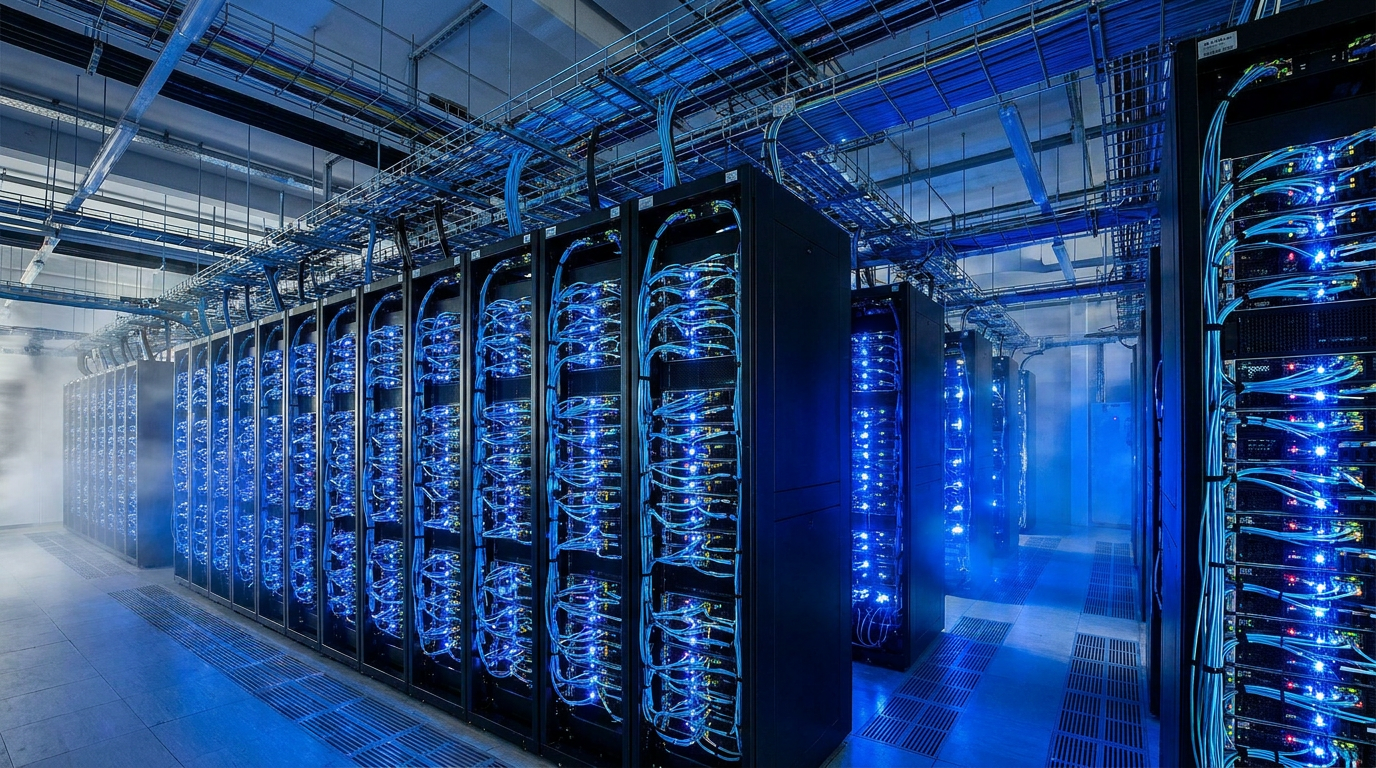
Because they skip the computationally heavy physics equations during the actual forecasting phase, AI models operate at blistering speeds. Generating a 15-day global ensemble forecast with GenCast takes approximately eight minutes on a single cloud TPU. This efficiency is not just a convenience; it is a democratizing force for global resilience.[5]
Because they skip the computationally heavy physics equations during the actual forecasting phase, AI models operate at blistering speeds.
Researchers at the University of Cambridge and the Alan Turing Institute recently demonstrated this democratization with "Aardvark Weather," an end-to-end AI forecasting system. Aardvark proved that a single researcher with a standard desktop computer can now deliver accurate weather forecasts tens of times faster than conventional systems. By using just 10% of the input data required by existing frameworks, Aardvark still managed to outperform the US national GFS forecasting system in several key metrics.[2]

For developing nations that cannot afford billion-dollar supercomputing centers, this technology is transformative. The ability to run hyper-local, accurate forecasts on cheap hardware means better agricultural planning in sub-Saharan Africa, faster cyclone evacuations in Southeast Asia, and improved disaster readiness globally.[2][3]
The commercial sector is also capitalizing on this newfound precision, particularly in renewable energy. Jua, a climate tech company, released its EPT-2 AI model, which consistently beats traditional models on energy-critical variables like 10-meter wind speed, 2-meter temperature, and surface solar radiation. For energy traders managing multi-gigawatt portfolios of wind and solar power, this hyper-accurate, rapid-refresh data translates to millions of dollars in saved imbalance charges.[4]

Beyond corporate energy trading, the hyper-local precision of these models is reshaping public safety. Because systems like AIFS and GenCast can generate dozens of probabilistic scenarios in minutes, emergency managers receive earlier and more accurate warnings for severe weather. During recent Atlantic hurricane seasons, AI models consistently identified storm formation and trajectory shifts days before traditional physics models caught the signal, providing crucial extra time for evacuation planning.[3][5]
However, the evidence pack for AI weather prediction still contains transparent uncertainties. The most significant vulnerability of purely data-driven models is their performance during extreme, unprecedented weather events. Because machine learning models rely on historical training data, they can struggle to predict "out-of-distribution" extremes—record-breaking heatwaves or floods that have no historical precedent.[4][5]

To address this weakness, the industry is moving toward "physics-constrained" AI. Models like Jua's EPT-2 are designed to respect fundamental conservation laws, preventing the AI from hallucinating physically impossible weather scenarios and improving its grip on extreme events. Similarly, NOAA's Project EAGLE is rigorously testing AI models like a fine-tuned version of GraphCast against trusted operational metrics to ensure reliability before full deployment.[1][4]
Ultimately, professional forecasters are not discarding traditional models entirely. The consensus in 2026 is a multi-model approach. Traditional physics models still generate the vital reanalysis data that trains the AI, and they remain a crucial fallback for verifying unprecedented extremes. But the heavy lifting of daily, rapid, and probabilistic forecasting has decisively shifted to artificial intelligence, marking one of the most significant scientific upgrades of the decade.[1][5]
How we got here
July 2023
Early peer-reviewed papers show AI models like Huawei's Pangu-Weather can match traditional physics models.
December 2023
Google DeepMind demonstrates its GraphCast model outperforming ECMWF's flagship model on 90% of verification targets.
February 2025
ECMWF makes history by moving its Artificial Intelligence Forecasting System (AIFS) into full operational status.
March 2025
Cambridge researchers unveil Aardvark Weather, proving global forecasting can run on a standard desktop computer.
Early 2026
Next-generation models like GenCast and EPT-2 master probabilistic ensemble forecasting and physics-constrained outputs.
Viewpoints in depth
Meteorological Agencies' view
Cautious integration of AI alongside traditional physics models.
National and international bodies like NOAA and ECMWF view AI as a revolutionary tool, but not a complete replacement for traditional Numerical Weather Prediction (NWP). They emphasize that AI models still rely on the reanalysis data generated by physics-based systems for their training. Their approach is hybrid: using AI for rapid, energy-efficient ensemble forecasting while keeping traditional models operational to verify extreme events and maintain a baseline of physical atmospheric modeling.
AI Research Labs' view
Treating weather forecasting primarily as a massive data and pattern recognition problem.
Institutions like Google DeepMind and the Alan Turing Institute argue that the atmosphere's complexity is better solved by machine learning than by human-coded physics equations. By training graph neural networks on decades of historical data, they believe AI can uncover spatial and temporal dependencies that traditional fluid dynamics miss. Their focus is on pushing computational efficiency, proving that accurate global forecasts no longer require warehouse-sized supercomputers.
Commercial Energy Sector's view
Prioritizing rapid-refresh, hyper-local accuracy for financial and grid optimization.
For climate tech companies and energy traders, traditional weather models update too slowly to manage the volatility of renewable energy grids. They favor physics-constrained AI models that can issue highly accurate, localized forecasts for wind and solar radiation up to 24 times a day. In this view, the value of AI lies in its ability to quantify probabilistic risk, saving millions in grid imbalance charges and optimizing the deployment of green energy.
What we don't know
- How purely data-driven AI models will perform during unprecedented, 'black swan' climate events that do not exist in their historical training data.
- Whether the rapid proliferation of private, commercial AI weather models will fragment the historically collaborative global meteorological community.
- The long-term impact of AI-generated forecasts on the collection of physical atmospheric data, which remains necessary for model training.
Key terms
- Numerical Weather Prediction (NWP)
- Traditional forecasting that uses supercomputers to solve complex fluid dynamics and physics equations to predict the weather.
- Ensemble Forecasting
- Running a weather model multiple times with slight variations to determine the probability of different weather outcomes.
- Graph Neural Network
- An AI architecture that models the Earth as a web of connected points, excellent for capturing spatial weather dependencies.
- Physics-Constrained AI
- Machine learning models that are forced to obey fundamental laws of physics (like conservation of energy) to prevent unrealistic predictions.
Frequently asked
Will AI completely replace traditional weather models?
Not in the near future. AI models currently rely on the historical data generated by traditional physics-based models for their training, and meteorologists prefer a multi-model approach to verify unprecedented extreme events.
Why are AI weather models so much faster?
Traditional models must solve complex fluid dynamics equations step-by-step for every forecast. AI models skip this by using pattern recognition learned from decades of historical data, requiring computation only for the final prediction.
Can AI predict extreme weather like hurricanes?
Yes, AI models have shown up to a 20% improvement in predicting tropical cyclone tracks. However, purely data-driven models can sometimes underestimate unprecedented extremes that do not exist in their historical training data.
Sources
Source coverage
6 outlets
4 viewpoints surfaced






[1]NOAAMeteorological Agencies
NOAA EAGLE: Research-to-Operations Pipeline for AI Weather Models
Read on NOAA →[2]The GuardianAI Research Labs
Researchers say Aardvark Weather uses thousands of times less computing power
Read on The Guardian →[3]ETC JournalAI Research Labs
Five innovations collectively represent a transformation in weather science
Read on ETC Journal →[4]JuaCommercial Energy Sector
EPT-2 as the New Baseline for AI Weather Benchmarks
Read on Jua →[5]AmbeeClimate Resilience Planners
2026 Accuracy rankings: ECMWF AIFS and GenCast
Read on Ambee →[6]Weather and Climate ExpertMeteorological Agencies
How AI Weather Prediction Is Changing Weather-Related Cases
Read on Weather and Climate Expert →

Every angle. Every day.
Get ai stories with full source coverage and perspective breakdowns delivered to your inbox.