
Anthropic Brings Live, Auto-Updating Artifacts to Claude Code for Enterprise Teams
A new update turns command-line AI sessions into secure, shareable web dashboards that refresh in real-time as the agent works.
By Factlen Editorial Team
- Enterprise Engineering Teams
- Value the elimination of manual status updates and the ability to share live, secure context with non-technical stakeholders.
- Security & Compliance Officers
- Appreciate Anthropic's deliberate architectural limitations that prevent corporate data leakage.
- Open-Source & Solo Developers
- Frustrated by the enterprise-only paywall and actively championing self-hosted, open-source alternatives.
What's not represented
- · Non-technical stakeholders who consume these dashboards
- · Competitors building persistent internal SaaS tools
Why this matters
For software teams, this update eliminates the tedious busywork of manually sharing code snippets and error logs. By turning terminal sessions into live, secure web pages, it allows non-technical stakeholders to instantly understand complex engineering work without risking corporate data leakage.
Key points
- Anthropic launched Artifacts for Claude Code, turning terminal sessions into live HTML webpages.
- The feature is currently in beta exclusively for Team and Enterprise subscribers.
- Artifacts auto-update in real-time as the AI agent works, eliminating manual status updates.
- The webpages are ephemeral and cannot make external API calls or process form inputs.
- Sharing is restricted to private organizational URLs, prioritizing corporate data security.
- Open-source developers are championing self-hosted alternatives due to the enterprise paywall.
Anthropic has fundamentally altered how software engineers share AI-generated work with the launch of Artifacts for Claude Code. The update bridges the gap between deep, back-end terminal workflows and the non-technical stakeholders who need to understand them.[1]
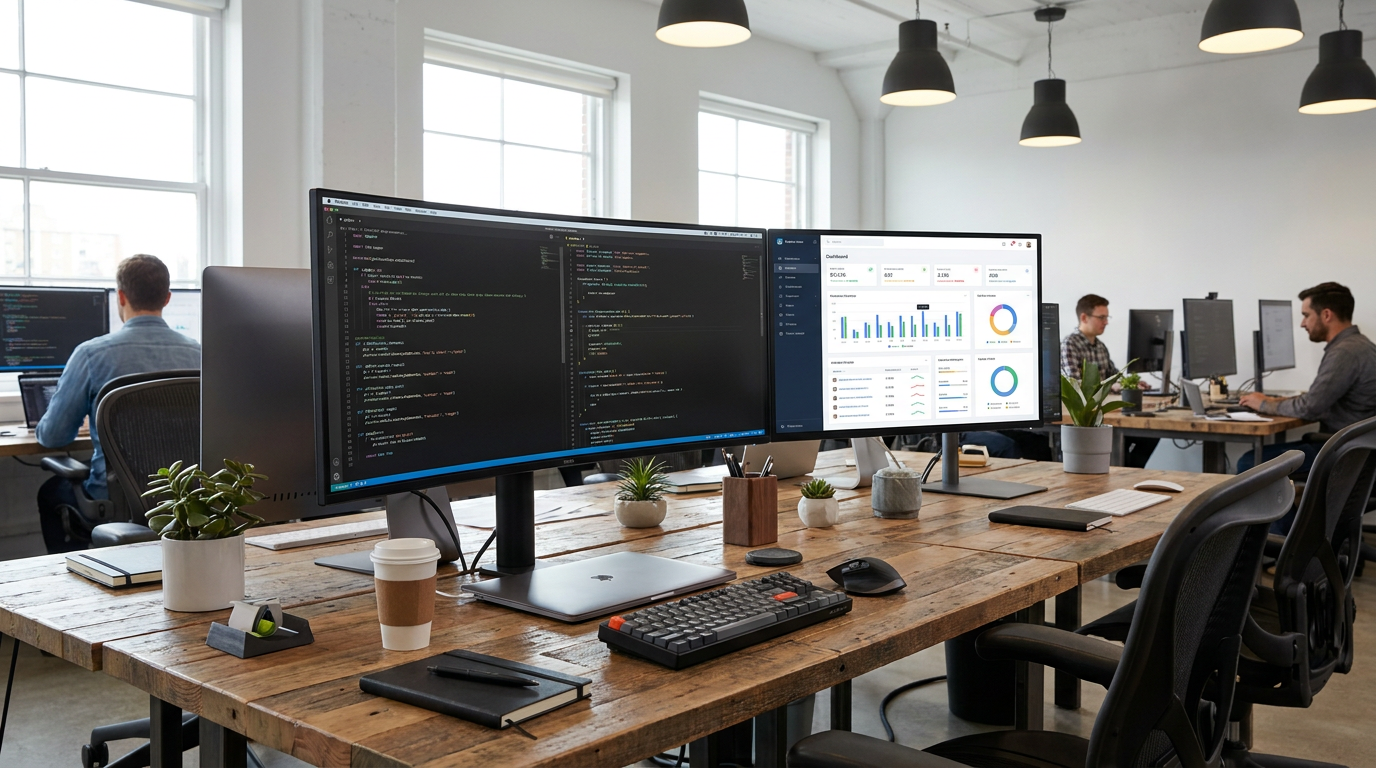
The new feature takes an active command-line session and translates it into a live, interactive HTML webpage hosted at a private URL. Instead of reading through dense terminal outputs, teams can now view PR walkthroughs, system explainers, project dashboards, and release checklists in a clean visual format.[1][3][6]
Currently in beta, the capability is exclusively available to Anthropic's Team and Enterprise subscribers. This restriction signals a deliberate push into the lucrative B2B market, targeting organizations that are actively making software procurement decisions for the second half of the year.[2][4]
Historically, collaborating on AI-assisted coding has been a messy, manual process. Engineers debugging an issue with an AI agent would have to take screenshots, copy-paste code snippets, and compile error logs just to bring their teammates up to speed.[4]

If the underlying code or the agent's reasoning changed, the entire manual syncing process had to be repeated. Artifacts eliminates this busywork by acting as a dynamic translation layer that automatically packages the work.[1][4]
The system pulls unbroken context directly from the user's local repository, installed plugins, and connected third-party monitoring tools. Using this context, the AI synthesizes a specialized web UI without requiring the engineer to wire up external data sources or stand up temporary infrastructure.[1][3][4]
The AI essentially builds the interface from the components that already exist within the developer's environment. Crucially, these web pages are not static exports.[1]
As the Claude Code agent continues to work autonomously or under the user's guidance in the terminal, the open webpage refreshes in-place. This real-time synchronization means that anyone with the link is always looking at the latest version of the work.[1][4][6]

As the Claude Code agent continues to work autonomously or under the user's guidance in the terminal, the open webpage refreshes in-place.
Every update publishes a new version history, allowing teammates to track the agent's progress or roll back changes securely on desktop or mobile. Consider a standard incident response scenario: An engineer kicks off an investigation into a failing service before a morning standup meeting.[1][3]
Claude Code works through the logs and publishes an artifact containing a timeline, suspect commits, and an error-rate chart. The engineer shares the link with her team.[3]
By the time the meeting begins, the AI has republished the page multiple times as the investigation progressed, incorporating the latest findings. Stakeholders no longer need a manual walkthrough because they are all viewing the exact same live context.[3]
Despite the power of these live dashboards, Anthropic has deliberately limited their technical scope to prioritize corporate security. The newly released documentation is blunt: "An artifact is a capture of work, not an application."[1]

Under the hood, Artifacts cannot store form input, call an API at view time, or serve multiple routes. Furthermore, all CSS and JavaScript must be inlined, and images must be embedded as data URIs. Fetch, XHR, and WebSocket calls are completely blocked.[1]
This technical limitation reflects Anthropic's philosophical stance on enterprise AI. While competitors like OpenAI are encouraging the creation of persistent software portals for entire companies, Anthropic is keeping Claude Code firmly anchored in ephemeral workflows.[1]
The goal is to replace whiteboard diagrams, manual bug walkthroughs, and status reports with secure visual tools that never leak live data outside the corporate boundary. By default, every artifact is private to its author and sharing stays strictly inside the organization.[1][3][5]
The enterprise community has largely praised the update, noting that sharing complex technical context is now as simple as sending a single link without configuring complex permission setups. However, the strict paywall has generated pushback from solo developers and open-source advocates.[4][5]

Because the feature is locked behind the Team and Enterprise tiers, users on the standard Pro plan cannot access it. In response, the open-source community has begun championing self-hosted alternatives.[2][4][5]
Tools like tdoc, which can be deployed on Cloudflare Workers, offer similar document-generation workflows for Claude Code and Codex without the enterprise subscription requirement. If Anthropic successfully migrates even a fraction of the hundreds of millions of consumer Artifacts created since 2024 into this new enterprise format, the company will capture an unprecedented dataset of real-world corporate engineering workflows.[2][4]
How we got here
June 2024
Anthropic introduces the original Artifacts feature to its consumer web chatbot.
August 2024
Consumer Artifacts reach general availability, allowing users to publish code snippets and games.
April 2026
Anthropic begins teasing enterprise-focused features for Claude Code during the spring procurement cycle.
June 18, 2026
Claude Code Artifacts officially launches in beta for Team and Enterprise plans.
Viewpoints in depth
Enterprise Engineering Teams
Value the elimination of manual status updates and the ability to share live, secure context with non-technical stakeholders.
For engineering managers and product owners, the primary friction in AI-assisted coding is visibility. When an engineer uses an AI agent in their terminal, the context is locked on their local machine. This camp views Artifacts as a massive productivity multiplier because it replaces daily standup explanations and manual documentation with a single, auto-updating URL. They argue that the true value of AI isn't just writing code, but making the engineering process transparent to the rest of the business.
Security & Compliance Officers
Appreciate Anthropic's deliberate architectural limitations that prevent corporate data leakage.
Enterprise security teams are typically wary of AI agents that can spin up web apps, fearing that sensitive internal data could be exposed to the public internet or third-party APIs. This camp strongly supports Anthropic's decision to cripple the backend capabilities of Artifacts. By enforcing inlined CSS/JS, blocking external API calls, and restricting access to private organizational URLs, compliance officers argue that Anthropic has created a safe sandbox that allows innovation without violating strict data governance policies.
Open-Source & Solo Developers
Frustrated by the enterprise-only paywall and actively championing self-hosted, open-source alternatives.
Independent developers and startup founders feel sidelined by Anthropic's decision to lock this feature behind the Team and Enterprise tiers, excluding standard Pro users. This camp argues that fundamental workflow improvements shouldn't be gated for large corporations. In response, they are rallying around open-source alternatives like `tdoc`, which provide similar document-generation capabilities for local AI agents. They maintain that the open-source community will quickly replicate and commoditize these sharing features.
What we don't know
- Whether Anthropic plans to eventually roll out Artifacts for Claude Code to standard Pro plan users.
- How competitors like OpenAI will respond to Anthropic's ephemeral, high-security approach to enterprise dashboards.
Key terms
- Claude Code
- Anthropic's command-line AI assistant that operates as an agentic system within a developer's local environment.
- Artifact
- A live, interactive HTML webpage generated by Claude to visualize code, data, or workflows.
- Ephemeral Workspace
- A temporary digital environment designed for a specific task that is not meant to serve as permanent software infrastructure.
- Inlined CSS/JS
- The practice of including styling and scripts directly within a single HTML file rather than linking to external files, used here to prevent data leakage.
Frequently asked
Can I use Artifacts on the Claude Pro plan?
No, the feature is currently in beta exclusively for Anthropic's Team and Enterprise subscription plans.
Do Artifacts update automatically?
Yes, as the Claude Code agent works in your terminal, the shared webpage refreshes in real-time without needing a manual reload.
Can I build a full internal app with Artifacts?
No, Artifacts are designed as ephemeral workspaces. They cannot process form inputs, handle routing, or make external API calls.
Are Artifacts visible to the public?
By default, every artifact is private to its author, and sharing is restricted strictly to members within your organization.
Sources
Source coverage
7 outlets
3 viewpoints surfaced







[1]VentureBeatEnterprise Engineering Teams
Anthropic's Claude Code Artifacts update brings live, shared dashboards and interactive workspaces to enterprises
Read on VentureBeat →[2]CryptoBriefingEnterprise Engineering Teams
Anthropic just gave its enterprise customers a reason to stop building internal tools the hard way
Read on CryptoBriefing →[3]AnthropicSecurity & Compliance Officers
Claude Code now supports artifacts
Read on Anthropic →[4]MediumOpen-Source & Solo Developers
Artifacts is Here: Claude Code Turns AI Conversations Into Shareable Documents
Read on Medium →[5]RedditOpen-Source & Solo Developers
New in Claude Code: Artifacts
Read on Reddit →[6]AI WeeklyEnterprise Engineering Teams
Anthropic launches Claude Code Artifacts in beta
Read on AI Weekly →[7]MarktechpostSecurity & Compliance Officers
Claude Code Guide 2026: 25 Features with Examples + Demo
Read on Marktechpost →

Every angle. Every day.
Get technology stories with full source coverage and perspective breakdowns delivered to your inbox.