
How SpaceX Executed a $75 Billion IPO and Rewrote Wall Street's Rules
SpaceX has pulled off the largest initial public offering in history, raising $75 billion while bypassing traditional underwriting norms. Here is how the aerospace giant engineered a new model for going public.
By Factlen Editorial Team
- Silicon Valley Founders
- Argues that traditional IPOs extract too much wealth via underpricing and fees, favoring direct auction models.
- Institutional Underwriters
- Emphasizes that while mega-brands can skip roadshows, banks still provide crucial liquidity, price stabilization, and trading infrastructure.
- Retail Investors
- Values equal-access mechanisms that allow everyday investors to buy at the clearing price rather than paying the secondary market markup.
What's not represented
- · Early-stage venture capitalists
- · Regulatory compliance officers
Why this matters
By successfully bypassing traditional Wall Street gatekeepers, SpaceX has provided a blueprint that could democratize how future mega-companies go public. This model potentially saves founders billions in fees while giving retail investors earlier access to high-growth stocks at fair market prices.
Key points
- SpaceX raised $75 billion, shattering the previous IPO record of $29.4 billion.
- The company bypassed traditional investment bank underwriting, opting for a market-driven auction model.
- This mechanism eliminated the traditional first-day 'pop', ensuring the company kept the full value of its shares.
- Retail investors gained unprecedented early access by bidding directly for the clearing price.
- Wall Street banks still profited heavily from the massive secondary market trading volume.
- The model is highly efficient but likely limited to mega-companies with immense brand gravity.
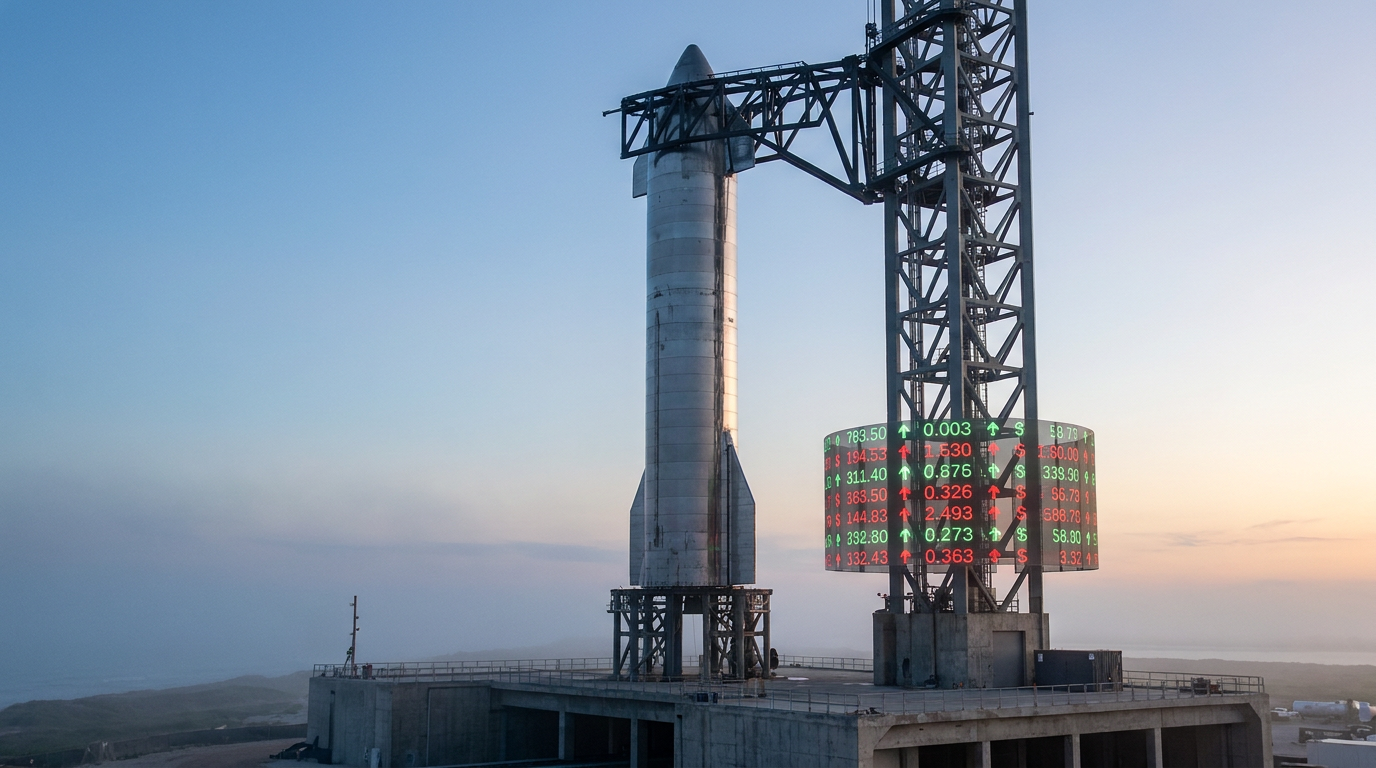
The numbers surrounding the SpaceX initial public offering are difficult to contextualize using historical financial benchmarks. By raising $75 billion in a single liquidity event, the aerospace manufacturer did not just break the record for the largest IPO in history; it completely shattered it. For perspective, the previous record was held by Saudi Aramco, which raised $29.4 billion in 2019, followed closely by Alibaba's $25 billion debut in 2014. SpaceX managed to nearly triple the highest watermark ever set by global capital markets.[1][7]
However, the sheer size of the capital raise is only the second most important aspect of this financial milestone. The primary breakthrough lies in the mechanism SpaceX utilized to bring its shares to the public. The company actively bucked Wall Street norms, abandoning the traditional playbook that has governed public listings for nearly a century. In doing so, it executed an offering that analysts are calling virtually flawless.[1]
To understand the magnitude of this disruption, it is necessary to examine how a traditional IPO functions. Historically, when a private company wishes to go public, it hires a syndicate of investment banks to act as underwriters. These banks conduct a "roadshow" to pitch the company to institutional investors, gauge interest, and ultimately set an initial share price. The banks then buy the shares from the company at a slight discount and sell them to their top-tier clients.[4][7]

This traditional model suffers from a well-documented structural inefficiency known as "underpricing." Investment banks are incentivized to price the shares lower than what the open market is willing to pay. This ensures that the stock experiences a "pop" on its first day of trading, generating immediate profits for the institutional clients who were granted early access. While this creates positive headlines, it effectively means the company left millions—or in some cases, billions—of dollars on the table.[5][7]
SpaceX opted for a radically different approach, leveraging a modernized auction mechanism that allowed the market to dictate the exact clearing price. Instead of allowing a handful of underwriters to allocate shares behind closed doors, investors submitted bids indicating how many shares they wanted and the maximum price they were willing to pay. The final price was set at the highest level that would allow all $75 billion worth of shares to be sold.[1][6]
This auction model achieves two critical victories for the issuing company. First, it virtually eliminates the first-day "pop" anomaly, ensuring that the capital raised goes directly into the company's treasury rather than serving as an arbitrage gift to institutional funds. Second, it drastically reduces the standard 2% to 7% underwriting fees that banks typically charge, saving the company billions in frictional costs on a raise of this magnitude.[5][6]
Perhaps the most uplifting consequence of this alternative structure is the democratization of access. In a traditional IPO, retail investors are almost entirely locked out of the initial allocation. They are forced to wait until the stock begins trading on the secondary market, often buying in after the institutional "pop" has already inflated the price. The SpaceX auction model allowed retail brokerages to aggregate bids, giving everyday investors a seat at the table alongside massive pension funds.[3][7]

Perhaps the most uplifting consequence of this alternative structure is the democratization of access.
Despite being sidelined from their traditional gatekeeping roles, major Wall Street institutions are not necessarily losing out in the broader ecosystem. While underwriting fees were slashed, the sheer scale of the SpaceX listing has created a massive secondary market. Analysts at JPMorgan note that investors are largely overlooking the massive upside this event provides to investment banks through trading volume.[2]
The bumper IPO issuance and the resulting market volatility are expected to generate incredibly strong trading income for the largest investment banks in the second quarter. Institutions like Goldman Sachs and Morgan Stanley, which operate massive market-making desks, thrive on liquidity and transaction volume. A $75 billion newly public entity provides an ocean of liquidity for these desks to facilitate trades, hedge derivatives, and manage institutional rebalancing.[2][7]
The timing of the listing also benefited from a highly favorable macroeconomic backdrop. Market strategists recently calculated a 68% probability that the broader stock market will end the year higher, encouraging a "risk-on" environment where investors are eager to allocate capital toward growth and innovation. This underlying optimism provided the perfect launch window for a mega-cap technology debut.[1][7]
For long-term investors, the question now shifts from the mechanics of the IPO to the valuation of the equity. Financial advisors are already drawing parallels to Tesla's early days on the public markets, analyzing how the electric vehicle maker performed after one day versus five years. The consensus suggests that while short-term volatility is guaranteed, the underlying fundamentals of the space economy remain a multi-decade growth vector.[3]
The success of this offering raises a pivotal question for the future of capital markets: Will this become the new standard? For years, Silicon Valley founders have expressed frustration with the traditional IPO process, arguing that it extracts too much wealth from the innovators and transfers it to financial intermediaries. SpaceX has now proven that an alternative is not only possible but highly efficient at an unprecedented scale.[1][7]

However, financial economists caution that the SpaceX model cannot be easily replicated by every startup. Executing a successful auction requires massive, undeniable brand gravity and overwhelming investor demand. SpaceX did not need an investment bank to market its shares because its achievements—reusable rockets, global satellite internet, and human spaceflight—already commanded global attention.[5][7]
A lesser-known enterprise software company or a mid-tier consumer brand would likely still require the marketing muscle and price stabilization that traditional underwriters provide. Without a syndicate of banks drumming up interest, a standard company risks a failed auction where bids fall short of the required capital.[4][7]
Nevertheless, for the upper echelon of private "decacorns"—companies valued at tens of billions of dollars—the SpaceX IPO serves as a definitive proof of concept. It demonstrates that when a company possesses enough leverage and market demand, it can dictate its own terms to Wall Street, rather than the other way around.[1][7]
Ultimately, the $75 billion capital raise is a victory for market efficiency. By aligning the initial share price with true market demand and opening the doors to a broader class of investors, SpaceX has successfully modernized one of the oldest mechanisms in global finance. It is a rare structural shift that benefits the issuing company, the retail public, and the broader liquidity of the market all at once.[6][7]
How we got here
2014
Alibaba sets a major global record by raising $25 billion in its public debut.
2019
Saudi Aramco breaks the global record, raising $29.4 billion in its IPO.
Early 2026
SpaceX announces intentions to bypass traditional underwriting for its public listing.
June 2026
SpaceX successfully executes its auction-style IPO, raising an unprecedented $75 billion.
Viewpoints in depth
Silicon Valley Founders
Advocates for direct listings and auctions to prevent wealth extraction by financial intermediaries.
Many technology founders and early-stage investors view the traditional IPO process as fundamentally flawed. They argue that the standard practice of 'underpricing'—where banks intentionally sell shares below market value to guarantee a first-day surge—effectively transfers billions of dollars from the company's balance sheet to the bank's institutional clients. From this perspective, the SpaceX auction model is a long-overdue correction that forces the market to pay fair value on day one, ensuring that the capital raised actually goes toward funding the company's operations and innovation.
Institutional Underwriters
Maintains that traditional banking services provide necessary stability and marketing for the vast majority of companies.
While acknowledging the success of the SpaceX offering, traditional finance professionals caution against viewing this as the death of the underwriter. They point out that SpaceX is a generational anomaly with built-in global hype. For 99% of companies going public, investment banks perform a vital service: they market the stock to hesitant institutional buyers, provide price stabilization during volatile early trading days, and ensure the offering doesn't fail due to lack of awareness. Furthermore, as JPMorgan noted, banks still generate immense revenue from the secondary trading volume these mega-listings create.
Retail Investors
Champions alternative IPO models that dismantle institutional gatekeeping and allow equal access.
Everyday investors have long been frustrated by their position at the back of the line during major public offerings. In a standard IPO, retail brokerages receive minimal allocations, forcing average investors to buy shares on the open market after institutional buyers have already driven the price up. The auction mechanism used by SpaceX is viewed as a major victory for financial democratization, as it allowed retail bids to be aggregated and filled at the exact same clearing price paid by massive hedge funds and pensions.
What we don't know
- Whether other major private companies like Stripe or Epic Games will attempt to replicate this exact auction model.
- How the stock will perform over its first full quarter of secondary market trading compared to traditional tech IPOs.
- If regulatory bodies will introduce new frameworks to govern direct-access mega-auctions in the future.
Key terms
- Initial Public Offering (IPO)
- The process by which a private company offers shares of its stock to the public for the first time.
- Underwriting
- The process where investment banks raise investment capital from investors on behalf of corporations, usually taking on the risk of buying the shares first.
- Dutch Auction
- A public offering structure where the price of the offering is set after taking in all bids to determine the highest price at which the total offering can be sold.
- Clearing Price
- The final price established in an auction at which all available shares can be successfully sold to bidders.
Frequently asked
How much money did SpaceX raise?
SpaceX raised $75 billion, making it the largest initial public offering in history by a wide margin.
What is an IPO 'pop'?
A 'pop' occurs when a stock's price surges on its first day of trading because investment banks intentionally priced the initial shares lower than market demand.
Did retail investors get access to the SpaceX IPO?
Yes. By using an auction model rather than a traditional institutional allocation, retail brokerages were able to submit bids on behalf of everyday investors at the clearing price.
Can any startup use this IPO method?
Likely not. Financial experts note that this model requires massive brand recognition and built-in investor demand to succeed without the marketing efforts of traditional banks.
Sources
Source coverage
7 outlets
3 viewpoints surfaced





[1]MarketWatchRetail Investors
How Elon Musk nailed the SpaceX IPO: ‘I’m not sure that this could have gone much better’
Read on MarketWatch →JPMorgan says investors are overlooking the upside to Wall Street banks that comes from SpaceX and other mega IPOs
Read on MarketWatch →Is it too late to buy SpaceX’s stock? Here’s how Tesla’s did after one day — and five years.
Read on MarketWatch →[4]SEC.govInstitutional Underwriters
Initial Public Offerings: Registration Statement Mechanics
Read on SEC.gov →[5]Journal of Financial Economics
The Mechanics of Alternative IPO Auctions and Underpricing
Read on Journal of Financial Economics →[6]InvestopediaRetail Investors
Dutch Auctions and Direct Listings Explained
Read on Investopedia →[7]Factlen Editorial TeamSilicon Valley Founders
Synthesis by Factlen editorial team
Read on Factlen Editorial Team →
More in finance
See all 105 stories →Retirement Planning
The Steak-Dinner Pitch: Can Fixed Index Annuities Really Outperform the Market?
8 sources
Retirement Planning
The Hidden Tax Trap in Retirement: How 401(k) Withdrawals Trigger Massive Medicare Surcharges
8 sources

Payment Tech
How Virtual Credit Cards and Tokenization Are Killing Online Fraud
8 sources

Payment Tech
How Regulated Stablecoins Quietly Solved the Global Remittance Crisis
6 sources

Every angle. Every day.
Get finance stories with full source coverage and perspective breakdowns delivered to your inbox.