
How Solid-State Batteries Work—And Why They Are Finally Ready to Change EVs
After years of laboratory development, solid-state batteries are entering pilot production in 2026, promising to double electric vehicle range and eliminate fire risks.
By Factlen Editorial Team
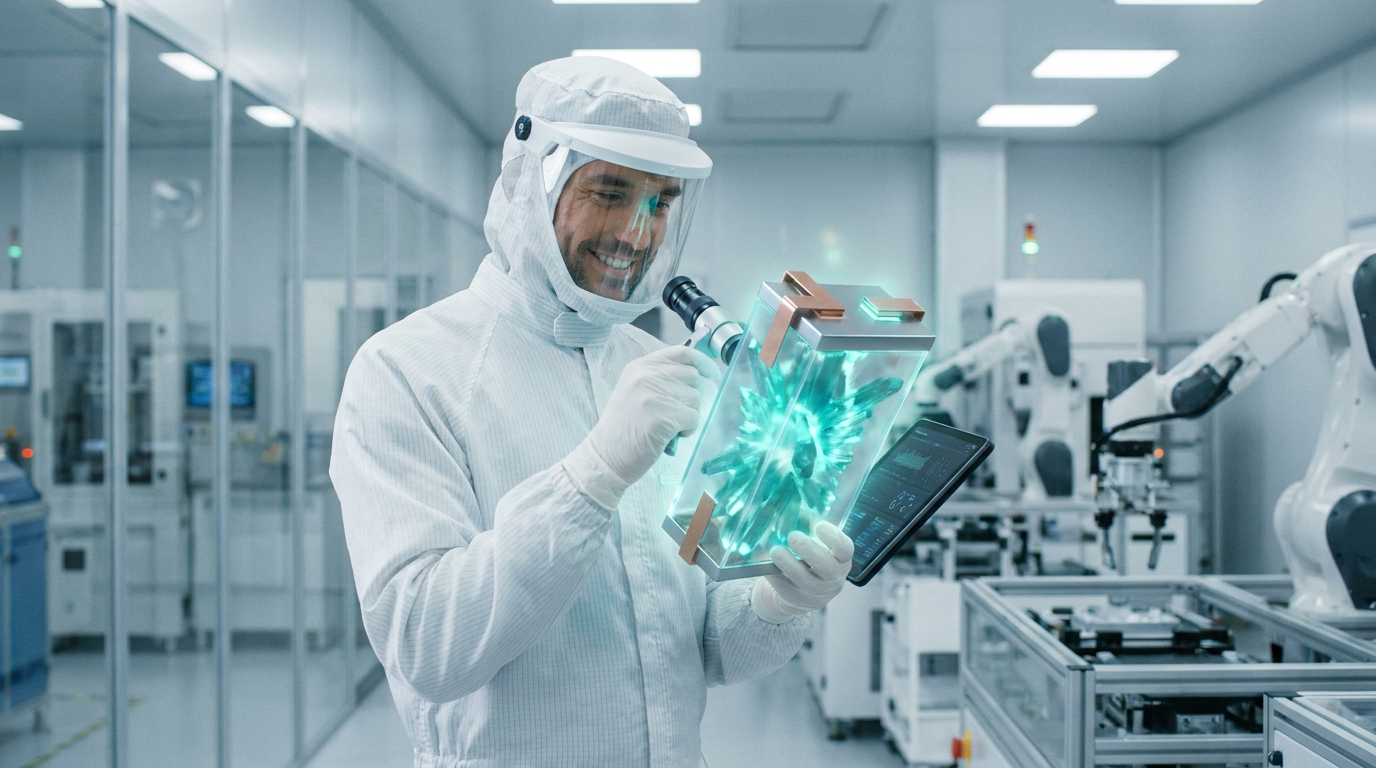
- Solid-State Developers
- Companies engineering the chemistry view solid-state as a fundamental rewrite of battery architecture.
- Legacy Automakers
- Major car brands see the technology as a strategic leapfrog opportunity to solve EV range anxiety.
- Manufacturing Skeptics
- Industry analysts caution that building a perfect battery in a lab is vastly different from mass-producing it cheaply.
What's not represented
- · Lithium-ion manufacturers defending current tech
- · Raw material mining communities
Why this matters
Solid-state batteries are the most significant breakthrough in energy storage in decades. By doubling EV range and cutting charge times to 10 minutes, this technology is poised to eliminate the final hurdles to mass electric vehicle adoption and reshape the global auto industry.
Key points
- Solid-state batteries replace flammable liquid electrolytes with solid ceramics or polymers.
- This architectural shift allows for pure lithium-metal anodes, drastically increasing energy density.
- Leading developers project ranges exceeding 700 miles and charge times under 15 minutes.
- QuantumScape and Toyota have both launched pilot production facilities in 2026.
- Scaling manufacturing and building a new supply chain remain the primary hurdles to mass adoption.
The electric vehicle revolution has a chemistry problem. While today's lithium-ion batteries have successfully powered millions of cars, they are approaching their theoretical limits. Drivers still face range anxiety on long trips, charging takes too long, and the flammable liquids inside the cells pose rare but severe fire risks. For over a decade, the automotive and tech industries have chased a "holy grail" solution that could solve all three problems at once: the solid-state battery.[1][7]
In early 2026, that chase is finally transitioning from laboratory science to real-world manufacturing. Companies that have spent years refining their chemistry in secret are now inaugurating pilot production lines, moving from hand-built prototypes to automated assembly. To understand why this shift is considered the most significant breakthrough in energy storage since the invention of the lithium-ion cell, you have to look inside the battery itself.[2][4][7]
Every battery has three main components: a positive electrode (cathode), a negative electrode (anode), and an electrolyte that sits between them. In a conventional lithium-ion battery, that electrolyte is a liquid solvent. When you charge or discharge the battery, lithium ions swim back and forth through this liquid pool. While effective, this liquid is highly flammable and chemically volatile, requiring heavy protective casing and complex cooling systems to keep the car safe.[1][7]
A solid-state battery simply replaces that liquid pool with a solid material—typically a specialized ceramic, glass, or sulfide-based polymer. This solid separator still allows lithium ions to pass through, but it completely eliminates the flammable liquid. The immediate result is a battery that is inherently fireproof. It can withstand extreme temperatures, physical punctures, and rapid charging without the risk of thermal runaway.[1][7]

But safety is only half the story; the real prize is energy density. In a traditional battery, the liquid electrolyte is vulnerable to "dendrites"—microscopic, needle-like spikes of lithium metal that grow over time. If a dendrite pierces the separator and touches the other side, the battery short-circuits. To prevent this, engineers use bulky graphite for the anode to safely house the lithium ions.[1][5][7]
Because a solid-state separator is physically rigid, it acts as a mechanical wall that blocks dendrite growth. This allows battery designers to completely remove the heavy, space-consuming graphite anode and replace it with pure lithium metal. This single architectural change allows the battery to store vastly more energy in the exact same physical footprint.[1][5][7]
The performance leaps are staggering. Solid-state cells are projected to hold two to three times the energy density of today's best lithium-ion batteries. For an electric vehicle, this means a car that currently gets 300 miles of range could theoretically travel 600 to 700 miles without increasing the size or weight of the battery pack. Alternatively, automakers could build much lighter, cheaper cars that maintain a standard 300-mile range.[5][6][7]

Solid-state cells are projected to hold two to three times the energy density of today's best lithium-ion batteries.
Charging speeds also see a dramatic improvement. Because the solid electrolyte is highly stable and doesn't overheat like a liquid, it can accept a massive influx of electricity safely. Leading developers project that solid-state EV batteries will be able to charge from 10% to 80% capacity in just 10 to 15 minutes, bringing the EV charging experience remarkably close to the time it takes to fill a gas tank.[4][6][7]
The race to commercialize this technology has accelerated sharply in 2026. In February, California-based QuantumScape—one of the industry's leading developers—inaugurated its "Eagle Line" in San Jose. This highly automated pilot facility is designed to produce the company's proprietary QSE-5 solid-state cells at a scale large enough for automakers to begin real-world vehicle integration and testing.[2][4][7]
Rather than attempting to build massive gigafactories on its own, QuantumScape is adopting a licensing model. The company plans to perfect the manufacturing blueprint—specifically its "Cobra" process for producing the delicate ceramic separators—and then license that technology to established battery manufacturers and automotive giants like the Volkswagen Group.[2][5][7]

Meanwhile, legacy automakers are making their own massive bets. Toyota, which has historically been cautious about pure electric vehicles, has positioned solid-state technology as the centerpiece of its future EV strategy. The Japanese automaker has partnered with petrochemical giant Idemitsu and Sumitomo Metal Mining to build a large-scale pilot plant specifically for producing solid electrolytes.[3][6][7]
Toyota's timeline is aggressive. The company aims to launch its first electric vehicles equipped with all-solid-state batteries between 2027 and 2028. While these will initially be available in limited, high-end batches, Toyota claims its first-generation solid-state packs will deliver up to 745 miles of range and recharge in under 10 minutes, fundamentally altering the competitive landscape of the auto industry.[3][6][7]
Despite the immense promise, the transition will not happen overnight. The primary hurdle is no longer the chemistry, but the manufacturing. Building solid-state batteries requires extreme precision; the ceramic layers are incredibly thin and brittle, and the assembly must happen in ultra-dry cleanrooms. Scaling these delicate processes from a pilot line to a gigawatt-hour factory without sky-high defect rates remains a monumental engineering challenge.[2][5][7]

Furthermore, the supply chain for these new materials is still in its infancy. The specialized sulfide powders and advanced ceramics required for the solid electrolytes do not yet have the massive, global production infrastructure that supports the current lithium-ion industry. Building out this new supply chain will require billions of dollars in capital investment over the next decade.[3][5][7]
Because of these initial manufacturing costs, solid-state batteries will likely debut in premium luxury vehicles and high-performance sports cars, where buyers can absorb the price premium. Beyond automotive, the technology is already drawing intense interest from the aerospace and defense sectors, as well as AI data centers, where maximum energy density and absolute fire safety are paramount.[5][7]
The era of the solid-state battery has officially begun. While the lithium-ion battery will remain the workhorse of the consumer electronics and entry-level EV markets for years to come, the ceiling on energy storage has been permanently lifted. As pilot lines ramp up throughout 2026, the automotive industry is finally getting its hands on the technology that will power the next generation of transportation.[4][6][7]
How we got here
1990s
Lithium-ion batteries are commercialized, using liquid electrolytes to power the portable electronics revolution.
2010s
Automakers adopt lithium-ion for the first wave of mass-market electric vehicles, but run into theoretical limits on energy density.
2020–2025
Billions in venture capital flow into solid-state startups as they prove the chemistry works in laboratory settings.
Feb 2026
QuantumScape inaugurates its 'Eagle Line' in California, marking the transition to automated pilot production.
2027–2028
Toyota and other automakers target the launch of their first commercial EVs equipped with solid-state batteries.
Viewpoints in depth
Solid-State Developers
Companies engineering the chemistry view solid-state as a fundamental rewrite of battery architecture.
Startups and tech firms like QuantumScape argue that lithium-ion has reached the top of its developmental S-curve. By replacing the liquid core with a solid separator, they believe they have unlocked the ultimate battery architecture. Their focus is now on perfecting the pilot manufacturing processes—such as printing ultra-thin ceramic layers—so they can license the intellectual property to global manufacturers.
Legacy Automakers
Major car brands see the technology as the silver bullet for mainstream EV adoption.
Automakers like Toyota, which have historically been hesitant to go all-in on current lithium-ion EVs, are using solid-state technology as a leapfrog strategy. They argue that the only way to win over the remaining internal-combustion holdouts is to offer an EV that matches the convenience of gas—specifically, 700+ miles of range and 10-minute refueling times. They are investing billions to secure the supply chain for these next-generation packs.
Manufacturing Skeptics
Industry analysts caution that building a perfect battery in a lab is vastly different from mass-producing it cheaply.
While the chemistry is proven, skeptics point out that solid-state manufacturing requires entirely new, highly sensitive processes. The solid ceramic or sulfide electrolytes are brittle and must be assembled in ultra-dry cleanrooms. Analysts warn that scaling this from a pilot line to a gigawatt-hour factory without massive defect rates will take years, meaning affordable solid-state cars are likely a post-2030 reality.
What we don't know
- Exactly how much the first generation of solid-state EVs will cost consumers.
- Whether the new supply chain for specialized ceramics and sulfides can scale fast enough to meet global demand by 2030.
Key terms
- Electrolyte
- The medium inside a battery that allows ions to flow between the positive and negative sides during charging and discharging.
- Anode
- The negative electrode of a battery. In solid-state batteries, this can be made of pure lithium metal instead of bulky graphite.
- Dendrites
- Microscopic, needle-like metal spikes that can grow inside a battery over time, potentially causing short circuits and fires.
- Thermal Runaway
- A dangerous chain reaction where a battery overheats uncontrollably, often resulting in a fire. Solid-state batteries largely eliminate this risk.
Frequently asked
What makes a solid-state battery different from a regular battery?
It replaces the flammable liquid electrolyte found in current lithium-ion batteries with a solid material, like ceramic or glass, making it safer and more energy-dense.
When will solid-state batteries be available in cars?
Pilot production began in 2026, and automakers like Toyota plan to launch their first solid-state EVs in limited batches between 2027 and 2028.
Will solid-state batteries make electric cars cheaper?
Eventually, yes. While the first solid-state batteries will be expensive and limited to luxury vehicles, the technology will eventually allow automakers to build smaller, cheaper battery packs that still offer excellent range.
Sources
Source coverage
7 outlets
3 viewpoints surfaced







[1]WikipediaManufacturing Skeptics
Solid-state battery
Read on Wikipedia →[2]QuantumScapeSolid-State Developers
QuantumScape Inaugurates Eagle Line for Solid-State Battery Production
Read on QuantumScape →[3]ElectrekLegacy Automakers
Toyota partner breaks ground on solid electrolytes plant for all-solid-state EV batteries
Read on Electrek →[4]InsideEVsLegacy Automakers
QuantumScape Kicks Off Pilot Production Of Solid-State EV Batteries
Read on InsideEVs →[5]BatteryTechOnlineManufacturing Skeptics
QuantumScape Details Commercialization Strategy for Solid-State Batteries
Read on BatteryTechOnline →[6]Car and DriverLegacy Automakers
Toyota Lays Out Its EV Battery Road Map, Including a Solid-State Battery
Read on Car and Driver →[7]Factlen Editorial TeamManufacturing Skeptics
Synthesis by Factlen editorial team
Read on Factlen Editorial Team →

More in guides
See all 51 stories →Exercise Science
The Science of Zone 2 Training: Why the Slowest Cardio Builds the Strongest Engine
7 sources

AI Developer Tools
Cursor vs. GitHub Copilot vs. Codeium: The 2026 AI Coding Assistant Trade-Offs
8 sources

Battery Tech
How Solid-State Batteries Work: The Breakthrough Reshaping the Future of Energy
6 sources
Auto Tech
EV vs. PHEV in 2026: Total Cost, Range, and Which Fits Your Drive
8 sources
Every angle. Every day.
Get guides stories with full source coverage and perspective breakdowns delivered to your inbox.