
How Parametric Insurance is Revolutionizing Disaster Recovery
A new data-driven model of insurance is bypassing traditional claims adjusters to deliver instant payouts based on weather metrics, accelerating recovery for vulnerable communities and businesses.
By Factlen Editorial Team
- Insurtech Innovators
- Argue that high-resolution data and smart contracts make insurance faster, cheaper, and more accessible to the underinsured.
- Traditional Underwriters
- Emphasize the dangers of basis risk and advocate for parametric policies as a supplement rather than a replacement for indemnity.
- Climate Resilience Advocates
- View parametric payouts as a crucial tool for climate justice, enabling rapid capital deployment to vulnerable communities.
What's not represented
- · Consumer protection advocates concerned about policyholders misunderstanding basis risk
- · Local claims adjusters whose traditional roles are being bypassed by automation
Why this matters
As climate change accelerates the frequency of extreme weather, traditional insurance is becoming slower and more expensive. Parametric models offer a faster, data-driven safety net that can deploy emergency funds in days rather than months, fundamentally changing how communities survive disasters.
Key points
- Parametric insurance pays out based on objective data triggers, not physical damage assessments.
- Payouts can be deployed in days, providing immediate liquidity for disaster recovery.
- The model is expanding to protect smallholder farmers and vulnerable ecosystems like coral reefs.
- Basis risk remains a challenge, meaning the data trigger might not perfectly match actual losses.
- Experts recommend using parametric policies alongside traditional indemnity insurance.
When a natural disaster strikes, the immediate aftermath is often compounded by a second, bureaucratic storm: the insurance claims process. For decades, homeowners, municipalities, and businesses have had to wait weeks or even months for claims adjusters to physically assess damage before receiving a payout. This delay in capital deployment can paralyze recovery efforts, leaving communities vulnerable precisely when they need liquidity the most to clear debris, secure temporary housing, or restore critical infrastructure.[1][4]
But a rapidly growing financial technology known as parametric insurance is upending this traditional model. Instead of indemnifying the actual physical loss incurred by a policyholder, parametric insurance pays out a pre-agreed amount when a specific, objective metric is met or exceeded. It is a fundamental shift from "damage-based" coverage to "data-based" coverage, stripping away the administrative friction that has long plagued the industry.[2][4]
The mechanics are remarkably straightforward. If a Category 4 hurricane passes within a 50-mile radius of a designated property, or if an earthquake registers a 7.0 magnitude on the Richter scale within a specific geographic box, the policy triggers automatically. There is no damage assessment required, no haggling over replacement costs, and no waiting for an adjuster to arrive on the scene. The payout is executed purely based on the data.[1][2]
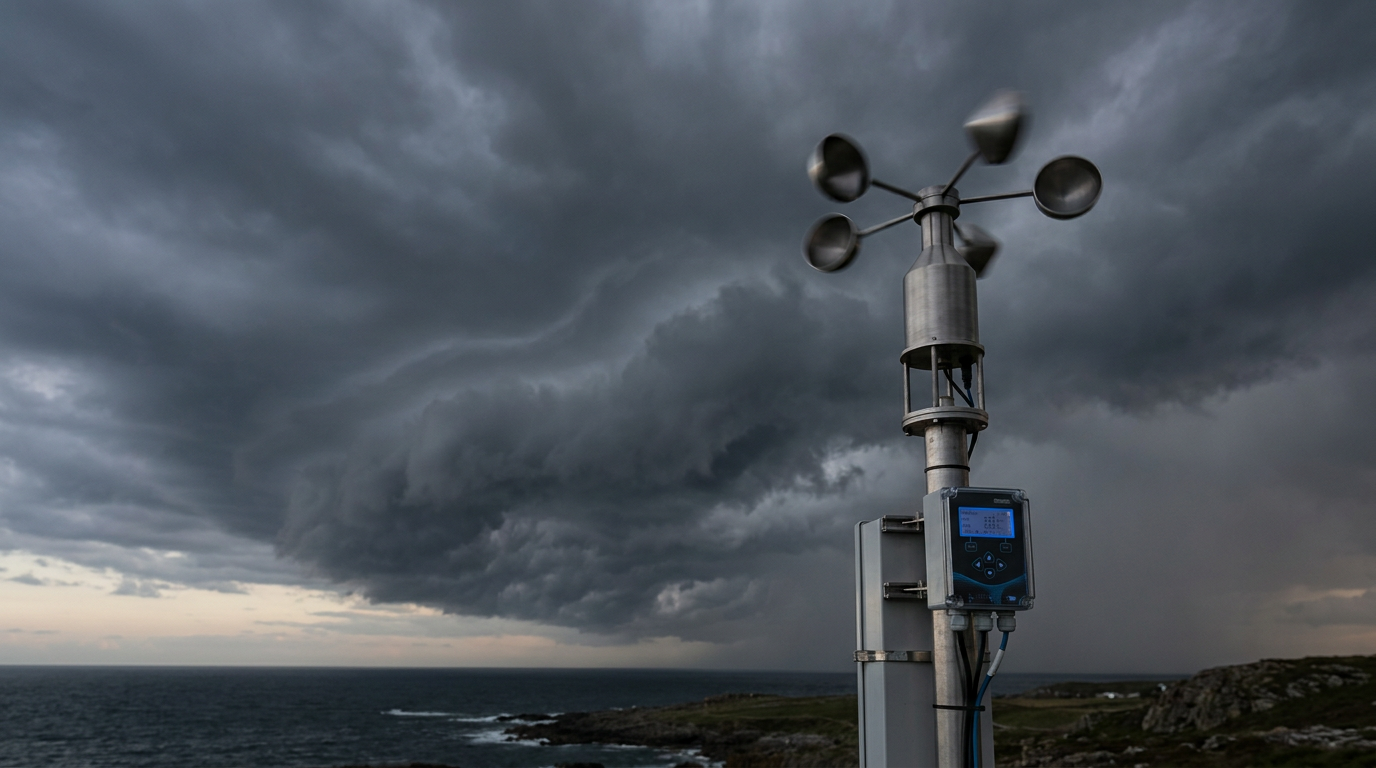
To ensure fairness and transparency, these policies rely on independent data "oracles"—trusted third-party sources that provide the triggering metrics. These oracles include government agencies like the National Hurricane Center or the U.S. Geological Survey, as well as high-resolution satellite imagery and localized Internet of Things (IoT) weather sensors. Because the data is objective and verifiable by both the insurer and the insured, disputes over claims are virtually eliminated.[1][5]

The speed of these payouts is the primary advantage. In traditional indemnity insurance, the complex logistics of verifying widespread destruction across a ruined city can delay capital for months. Parametric policies, by contrast, can settle in a matter of days. For a municipality trying to run emergency generators at a hospital, or a small business needing to pay its employees while the doors are closed, this immediate liquidity can mean the difference between a swift recovery and permanent economic closure.[3][4]
The applications for this technology are expanding far beyond coastal real estate and earthquake zones. In the agricultural sector, parametric insurance is becoming a vital lifeline for smallholder farmers in developing nations. Traditional crop insurance is often too expensive to administer for small plots of land, leaving millions of farmers entirely exposed to climate shocks.[3][7]
Now, if satellite data indicates that soil moisture has dropped below a critical threshold for a sustained period, drought policies automatically trigger. Funds are frequently disbursed directly to farmers' mobile wallets, allowing them to purchase drought-resistant seeds, secure irrigation, or buy animal feed before a poor harvest turns into a localized famine. This proactive approach transforms insurance from a post-disaster recovery tool into a pre-disaster survival mechanism.[1][7]

Now, if satellite data indicates that soil moisture has dropped below a critical threshold for a sustained period, drought policies automatically trigger.
Environmental conservation is also benefiting profoundly from this financial innovation. In a landmark initiative, the Mesoamerican Reef off the coast of Mexico was insured using a parametric policy. Coral reefs act as natural breakwaters, protecting coastlines from storm surges, but they are highly vulnerable to hurricane damage.[2][5]
When hurricane winds exceed 100 knots in the reef's designated polygon, the policy pays out immediately. These funds are used to dispatch local "reef brigades"—teams of trained divers who reattach broken coral fragments within days of the storm. This is a highly time-sensitive intervention; if the coral is not stabilized quickly, it dies. Traditional insurance would be far too slow to fund this kind of emergency ecological triage.[2][5]

The renewable energy industry is similarly utilizing parametric structures to hedge against weather variability. A wind farm can purchase a policy that pays out if average wind speeds over a quarter fall below the threshold required to generate profitable electricity. Solar farms use analogous policies tied to cloud cover and solar irradiance metrics.[5]
This guarantees revenue stability for green energy projects, making them significantly more attractive to institutional investors and banks. By removing the financial risk of a "windless year" or a "cloudy summer," parametric insurance is actively accelerating the deployment of capital into the global energy transition.[1][5]
However, the model is not without its flaws. The central challenge of parametric insurance is known as "basis risk"—the potential mismatch between the payout triggered by the data and the actual physical loss experienced by the policyholder. Because the payout is tied to a metric rather than an assessment, the correlation is never perfect.[4][6]
If a policy triggers at sustained winds of 111 mph, but the storm hits the property with 109 mph winds, the policyholder receives nothing, even if a falling tree tore their roof off. Conversely, a policyholder might receive a full payout if the wind threshold is met, even if their specific building was newly constructed and sustained zero damage. This binary nature requires careful calibration.[1][6]

Because of this basis risk, regulators and industry experts generally advise against using parametric insurance as a complete replacement for traditional indemnity coverage. Instead, it is best utilized as a complementary layer of protection, designed to plug the gaps left by traditional policies.[4]
A homeowner or business might use a parametric policy to cover immediate out-of-pocket expenses, evacuation costs, business interruption, or the high deductible on their primary insurance, while relying on traditional coverage for the long-term, full-scale reconstruction of the physical property.[1][6]
As climate change increases the frequency and severity of extreme weather events, traditional insurance markets are retreating from high-risk areas, leaving a widening "protection gap." Premiums are skyrocketing, and in some regions, coverage is becoming entirely unavailable.[3][7]
Parametric insurance offers a scalable, transparent mechanism to help fill this void. By stripping away the administrative friction of claims adjustment and leveraging high-resolution data, it provides a fast, objective safety net that builds genuine resilience in the face of an unpredictable climate.[1][2][7]
How we got here
Late 1990s
The first catastrophe bonds are issued, laying the financial groundwork for parametric risk transfer.
2007
The Caribbean Catastrophe Risk Insurance Facility (CCRIF) launches, providing the first multi-country parametric disaster pool.
2017
The Mesoamerican Reef becomes the first natural ecosystem to be insured using a parametric policy.
2024
Parametric models see widespread adoption in the renewable energy sector to hedge against wind and solar variability.
Viewpoints in depth
Insurtech and Data Providers
Believe that high-resolution data is solving the traditional flaws of the insurance industry.
This camp argues that the proliferation of IoT sensors, advanced satellite imagery, and AI-driven weather modeling is making parametric triggers incredibly precise. They view the traditional claims adjustment process as an outdated, high-friction bottleneck that harms consumers by delaying capital when it is most needed. By automating payouts through smart contracts tied to objective oracles, they believe insurance can become a frictionless utility rather than a bureaucratic hurdle.
Traditional Insurance Regulators
Warn that consumers must be educated on the limitations of data-driven payouts.
Regulators and traditional underwriters acknowledge the speed of parametric policies but remain deeply concerned about basis risk. They warn that if a hurricane destroys a home but the wind speed recorded at the nearest oracle falls 1 mph short of the trigger, the consumer is left with nothing. This camp advocates for strict disclosure requirements and generally pushes for parametric products to be sold only as commercial hedges or as supplements to traditional indemnity policies, rather than standalone replacements.
Global Development Organizations
Champion parametric insurance as a vital mechanism for climate justice and adaptation.
Organizations like the World Bank view parametric insurance as a way to democratize financial protection for the world's most vulnerable populations. In developing nations where traditional insurance infrastructure (like networks of claims adjusters) does not exist, parametric policies offer a scalable alternative. By delivering instant payouts to smallholder farmers via mobile money during a drought, these organizations argue that parametric insurance prevents short-term climate shocks from turning into long-term generational poverty.
What we don't know
- How regulators will standardize the certification of 'data oracles' to prevent disputes over sensor accuracy.
- Whether the cost of parametric premiums will remain affordable as climate change makes extreme weather events more common.
Key terms
- Parametric Insurance
- A type of insurance that pays a pre-agreed amount when a specific, objective event occurs (like an earthquake of a certain magnitude), rather than paying for the actual physical loss.
- Indemnity Insurance
- Traditional insurance that compensates the policyholder for the exact value of the physical damage or loss incurred, requiring an adjuster to assess the claim.
- Basis Risk
- The risk that the payout from a parametric policy does not perfectly match the actual financial loss experienced by the policyholder.
- Protection Gap
- The difference between the total economic losses caused by a disaster and the portion of those losses that are covered by insurance.
Frequently asked
What is a data oracle?
A data oracle is an independent, trusted third-party source—like the National Hurricane Center or a satellite network—that provides the objective data used to trigger a parametric insurance payout.
Can I buy parametric insurance for my house?
While historically used by corporations and governments, parametric policies are increasingly available to consumers as a supplement to traditional homeowners insurance, often used to cover high deductibles or evacuation costs.
What happens if I have damage but the trigger isn't met?
This is known as 'basis risk.' If the specific metric (e.g., wind speed) is not met, the parametric policy will not pay out, regardless of the physical damage sustained. This is why it is usually paired with traditional insurance.
Sources
Source coverage
7 outlets
3 viewpoints surfaced







[1]Factlen Editorial TeamInsurtech Innovators
Synthesis by Factlen editorial team
Read on Factlen Editorial Team →[2]Swiss Re InstituteInsurtech Innovators
Parametric insurance: a tool to increase climate resilience
Read on Swiss Re Institute →[3]World BankClimate Resilience Advocates
How Parametric Insurance Can Help Developing Countries Cope with Disasters
Read on World Bank →[4]National Association of Insurance CommissionersTraditional Underwriters
Understanding Parametric Insurance
Read on National Association of Insurance Commissioners →[5]Lloyd's of LondonInsurtech Innovators
Innovation in parametric triggers
Read on Lloyd's of London →[6]Journal of Risk and InsuranceTraditional Underwriters
Basis risk in parametric insurance contracts
Read on Journal of Risk and Insurance →[7]Global Environment FacilityClimate Resilience Advocates
Climate adaptation and parametric solutions
Read on Global Environment Facility →

More in finance
See all 118 stories →Annuities
Do Fixed-Index Annuities Outperform the Market? The Evidence Behind the Pitch
6 sources

Retirement Planning
The Truth About Fixed Index Annuities: How the 'Zero Risk' Retirement Pitch Actually Works
7 sources

SpaceX IPO
SpaceX Completes Historic $75 Billion IPO, Vaulting Valuation Past $2 Trillion
8 sources

Economic Metrics
Headline vs. Core Inflation: How to Read the Economy's Thermometer in 2026
7 sources
Every angle. Every day.
Get finance stories with full source coverage and perspective breakdowns delivered to your inbox.