
How Local AI Models Are Turning Consumer Laptops Into Private Supercomputers
Advances in model compression and user-friendly software now allow anyone to run powerful artificial intelligence entirely offline, offering complete privacy and zero subscription costs.
By Factlen Editorial Team
- Decentralized AI Advocates
- Believe that AI technology should be open, free, and run on personal devices to prevent corporate monopolies.
- Enterprise Privacy Officers
- Value local AI primarily for its ability to process sensitive corporate and client data without violating compliance laws.
- Hybrid Architecture Proponents
- Argue that the future is a mix of lightweight local models for privacy and massive cloud models for heavy reasoning.
What's not represented
- · Hardware manufacturers profiting from the increased demand for high-VRAM components
- · Everyday consumers who prefer the simplicity of managed cloud subscriptions over local setup
Why this matters
Running AI locally means your private documents, code, and queries never leave your computer. It eliminates monthly subscription fees and allows users to harness powerful technology even without an internet connection.
Key points
- Software tools like Ollama and LM Studio have made running AI locally as easy as installing a standard app.
- Quantization techniques allow massive AI models to be compressed to fit into 8GB or 16GB of RAM.
- Apple Silicon's unified memory architecture gives Macs a significant advantage in running large local models.
- Enterprises are adopting local AI to ensure sensitive data never leaves their internal networks.
- Running models locally eliminates the per-token subscription costs associated with cloud AI providers.
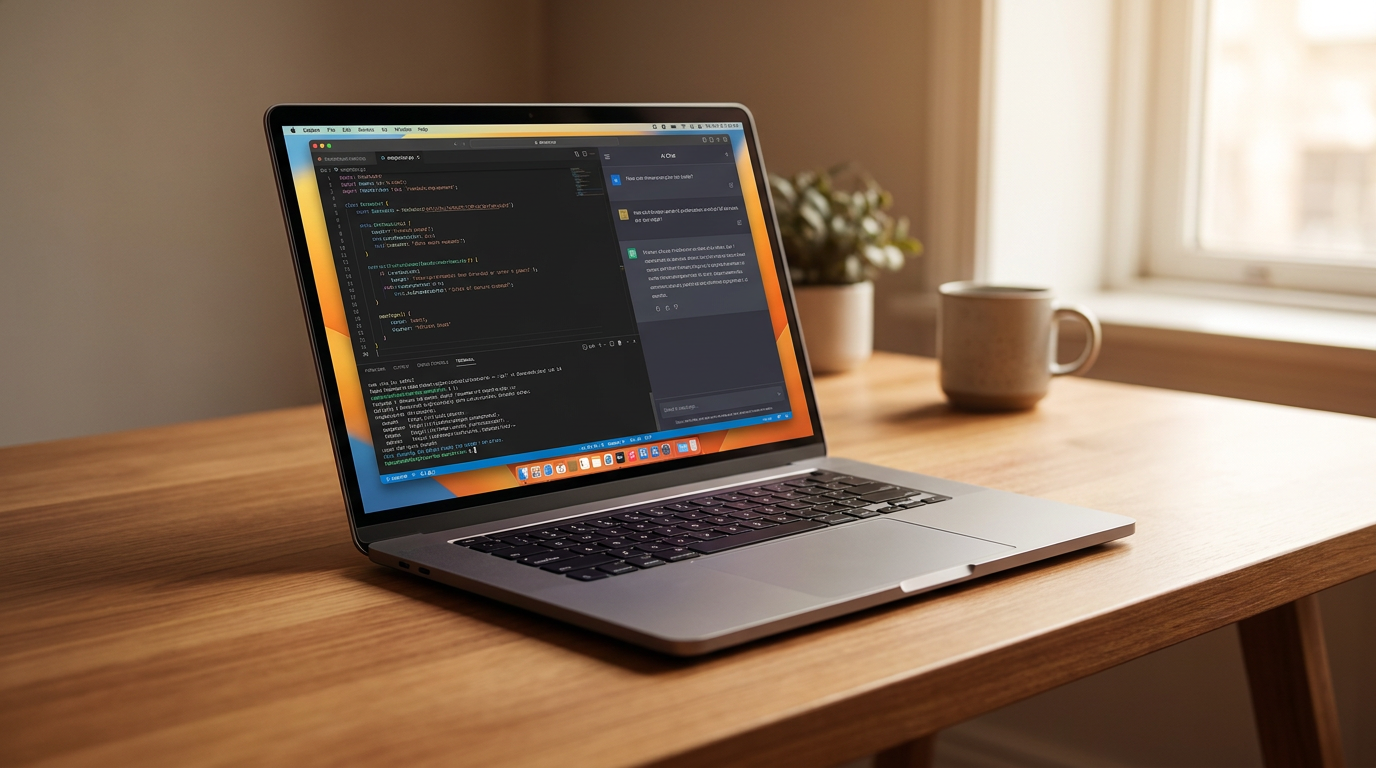
For the past three years, the artificial intelligence boom has been synonymous with the cloud. Users typed prompts into web browsers, sending their private data to massive server farms owned by tech giants, and paid monthly subscriptions for the privilege. But a quiet revolution has matured in 2026. A growing wave of users and enterprises are severing the cloud umbilical cord, choosing instead to run highly capable AI models directly on their own laptops and desktop computers.[6]
This shift toward "local AI" is driven by a potent combination of privacy concerns, subscription fatigue, and rapid software innovation. Today, running a large language model on consumer hardware is no longer a complex weekend project reserved for software engineers. With a single click or terminal command, anyone can download an AI assistant that rivals the intelligence of last year's premium cloud models, operating entirely offline with zero latency and zero per-message cost.[1][5]
The magic enabling this desktop AI revolution is a mathematical compression technique known as quantization. Artificial intelligence models are essentially massive collections of numbers—parameters—that dictate how the network processes language. Historically, these numbers were stored in high-precision formats that required hundreds of gigabytes of specialized memory. Quantization shrinks these numbers, rounding them down to lower-precision formats.[2]
By utilizing 4-bit quantization, developers can compress a massive model to a fraction of its original size with almost imperceptible drops in output quality. A 7-billion parameter model, which once required enterprise-grade server racks, can now be squeezed into just 4 to 5 gigabytes of memory. This breakthrough, standardized by a file format called GGUF, is the foundational technology that made consumer hardware viable for advanced AI.[1][2]

But hardware capability is only half the story; the software ecosystem has also undergone a radical simplification. Tools like LM Studio have emerged as the "Spotify for LLMs," offering a clean, graphical interface where users can browse, download, and chat with thousands of open-weight models just as easily as installing a smartphone app.[1]
For developers and power users, a lightweight framework called Ollama has become the industry standard. Operating quietly in the background, Ollama allows users to pull models via simple terminal commands and exposes an interface that perfectly mimics the OpenAI API. This means any existing application built to talk to ChatGPT can be instantly redirected to talk to a local model instead, requiring zero code changes.[3][5]
The models themselves have seen staggering improvements in 2026. Tech giants and open-source communities are locked in a fierce arms race to release highly optimized, efficient models. Meta's Llama 4 Scout and Google's Gemma 4 are currently dominating the local landscape. These models, ranging from 8 billion to 17 billion parameters, punch far above their weight class, matching or exceeding the performance of cloud models like GPT-4o mini on everyday coding, writing, and reasoning tasks.[2][5]
The models themselves have seen staggering improvements in 2026.
The hardware reality of local AI, however, dictates that memory is king. Specifically, Video RAM (VRAM) is the ultimate bottleneck. To run a standard 7-billion parameter model comfortably, a computer needs at least 8 gigabytes of RAM. Pushing into the more capable 12-billion to 17-billion parameter tier requires 16 gigabytes, while running massive 70-billion parameter flagship models still demands 40 gigabytes of VRAM, typically requiring dual high-end desktop graphics cards.[2]

This memory constraint has inadvertently crowned Apple Silicon as the undisputed champion of consumer AI hardware. Unlike traditional Windows PCs, which separate system RAM from graphics VRAM, Apple's M-series chips utilize a "unified memory" architecture. A MacBook Pro with 64 gigabytes of unified memory can allocate almost all of it to the GPU, allowing users to run massive, enterprise-grade models on a laptop—a feat that would cost thousands of dollars to replicate on a traditional PC build.[1][2]
Apple itself has heavily validated this on-device approach. With the rollout of iOS 27 and macOS 27 in 2026, Apple integrated its own advanced Foundation Models directly into the operating system. Recognizing the intense memory demands of local AI, Apple drew a hard line in the sand: its most capable on-device features now require a minimum of 12 gigabytes of unified memory, excluding older base-model iPhones and Macs from the full suite of local capabilities.[4]
Beyond the consumer appeal, the enterprise sector is driving massive adoption of local LLMs. In 2023, only a fraction of corporate AI inference happened on-premises. By 2026, that number has surged past 50 percent. For hospitals, law firms, and financial institutions, the appeal is entirely about data sovereignty.[1]
When an AI model runs locally, the data never leaves the machine. There are no telemetry logs, no cloud storage risks, and no concerns about proprietary company data being used to train a vendor's future models. This air-gapped security makes local LLMs inherently compliant with strict data protection regulations like Europe's GDPR, unlocking AI capabilities for industries that were previously locked out by compliance fears.[2][3]

The economics are equally compelling. Cloud AI providers charge per token—a fraction of a cent for every word read or generated. While this seems cheap initially, processing millions of documents or running automated AI agents can quickly result in staggering monthly bills. Local inference drops the marginal cost per token to absolute zero. Once the hardware is purchased, the AI can run 24/7 without generating a single invoice.[2][5]
Despite these massive leaps, local AI is not a complete replacement for the cloud. The absolute frontier of artificial intelligence—models capable of deep, multi-step logical reasoning, complex mathematical breakthroughs, and massive context windows—still requires the raw computational horsepower of data centers. A laptop running Llama 4 is brilliant for drafting an email or reviewing a script, but it cannot match the sheer reasoning depth of a massive cloud-based cluster.[2][6]
The future of AI interaction is settling into a hybrid model. Privacy-conscious users and cost-aware enterprises are routing 80 percent of their daily tasks—summarization, translation, code formatting, and drafting—through fast, free, local models. Only when a problem requires heavy, complex reasoning is the query escalated to a paid cloud service. By bringing the intelligence down to the device, the AI industry has finally given users the ultimate luxury: control.[1][6]
How we got here
2023
Local AI is largely experimental, with only 12% of enterprise inference happening on-premises.
Early 2024
The GGUF format standardizes model compression, making it easier to run LLMs on consumer hardware.
Mid 2025
Ollama and LM Studio gain massive traction, providing one-click installations for open-weight models.
June 2026
Apple announces that its most advanced on-device AI features will require 12GB of unified memory.
Viewpoints in depth
Decentralized AI Advocates
Believe that AI technology should be open, free, and run on personal devices to prevent corporate monopolies.
This camp, largely composed of open-source developers and privacy activists, views the cloud-based AI model as a dangerous centralization of power. They argue that relying on a handful of tech giants for intelligence creates unacceptable bottlenecks and censorship risks. By optimizing models to run on consumer hardware, they aim to democratize access to AI, ensuring that anyone with a standard laptop can harness machine learning without paying a monthly toll or sacrificing their personal data to corporate servers.
Enterprise Privacy Officers
Value local AI primarily for its ability to process sensitive corporate and client data without violating compliance laws.
For corporate IT leaders, hospital administrators, and legal professionals, the appeal of local AI is strictly pragmatic: data sovereignty. Sending proprietary code, patient records, or unreleased financial data to a third-party cloud API is often a violation of internal policies or international laws like the GDPR. This camp views local LLMs as the only viable way to safely integrate generative AI into highly regulated workflows, as the air-gapped nature of local inference guarantees that sensitive data never leaves the company's physical hardware.
Hybrid Architecture Proponents
Argue that the future is a mix of lightweight local models for privacy and massive cloud models for heavy reasoning.
Hardware manufacturers and major tech companies like Apple advocate for a tiered approach to artificial intelligence. They acknowledge that local models are perfect for low-latency, privacy-sensitive tasks like summarizing notifications, drafting emails, and formatting code. However, they maintain that the sheer physics of computing means that the most advanced, multi-step logical reasoning will always require the massive power of data centers. This camp is building operating systems that seamlessly route simple queries to the local processor while quietly escalating complex problems to the cloud.
What we don't know
- Whether future breakthroughs in model architecture will eventually allow frontier-level reasoning to run entirely on consumer hardware.
- How cloud AI providers will adjust their pricing models as more users shift their daily workloads to free local alternatives.
Key terms
- Quantization
- A compression technique that shrinks an AI model's file size and memory requirements by reducing the mathematical precision of its parameters.
- VRAM (Video RAM)
- The specialized memory used by graphics cards, which is crucial for loading and running large artificial intelligence models.
- GGUF
- A standardized file format designed specifically for storing and running quantized AI models efficiently on consumer hardware.
- Open-weights
- AI models where the underlying parameters are made publicly available, allowing anyone to download, run, and modify the model locally.
Frequently asked
Can I run a local LLM on my current laptop?
Yes, if you have at least 8GB of RAM. Tools like Ollama and LM Studio allow standard Mac and Windows computers to run smaller 7-billion parameter models efficiently.
Is a local AI model as smart as ChatGPT?
Local models like Meta's Llama 4 Scout match the performance of lightweight cloud models like GPT-4o mini for everyday tasks, but they cannot yet match the deep reasoning of frontier models like GPT-4o or Claude 3.5.
Does running a local LLM require the internet?
No. Once the model file and the software are downloaded to your computer, the AI operates entirely offline.
What is Ollama?
Ollama is a popular, free software framework that allows users to easily download and run open-source AI models on their local machines using simple terminal commands.
Sources
Source coverage
6 outlets
3 viewpoints surfaced






[1]TechsyEnterprise Privacy Officers
How to Run LLMs Locally: Hardware, Tools, and Models [2026]
Read on Techsy →[2]Prompt QuorumDecentralized AI Advocates
Best Local LLMs May 2026: Ollama, LM Studio, Hardware & VRAM Guide
Read on Prompt Quorum →[3]CohorteEnterprise Privacy Officers
Run LLMs Locally with Ollama: Privacy-First AI for Developers in 2025
Read on Cohorte →[4]MacRumorsHybrid Architecture Proponents
Apple's most advanced on-device AI model in iOS 27 requires a minimum of 12GB of unified memory
Read on MacRumors →[5]PinggyDecentralized AI Advocates
Running powerful AI language models locally has become increasingly accessible in 2026
Read on Pinggy →[6]Factlen Editorial TeamHybrid Architecture Proponents
Synthesis by Factlen editorial team
Read on Factlen Editorial Team →

More in ai
See all 139 stories →Open-Source AI
IBM and Red Hat Pledge $5 Billion to Secure Open-Source AI as Autonomous Agents Enter the Enterprise
7 sources

On-Device AI
The AI Revolution Moves Offline: How Small Language Models Are Putting Privacy First
7 sources

Frontier Model Security
New U.S. Executive Order Shifts AI Oversight to National Security and Cyber Defense
8 sources

Global AI Governance
U.S. and EU Finalize Diverging AI Regulations as State-Level Patchwork Takes Effect
10 sources
Every angle. Every day.
Get ai stories with full source coverage and perspective breakdowns delivered to your inbox.