
How Enhanced Geothermal Systems Are Unlocking 24/7 Clean Energy
By borrowing drilling techniques from the oil and gas industry, next-generation geothermal plants are turning hot, dry rock into a limitless source of carbon-free baseload power.
By Factlen Editorial Team
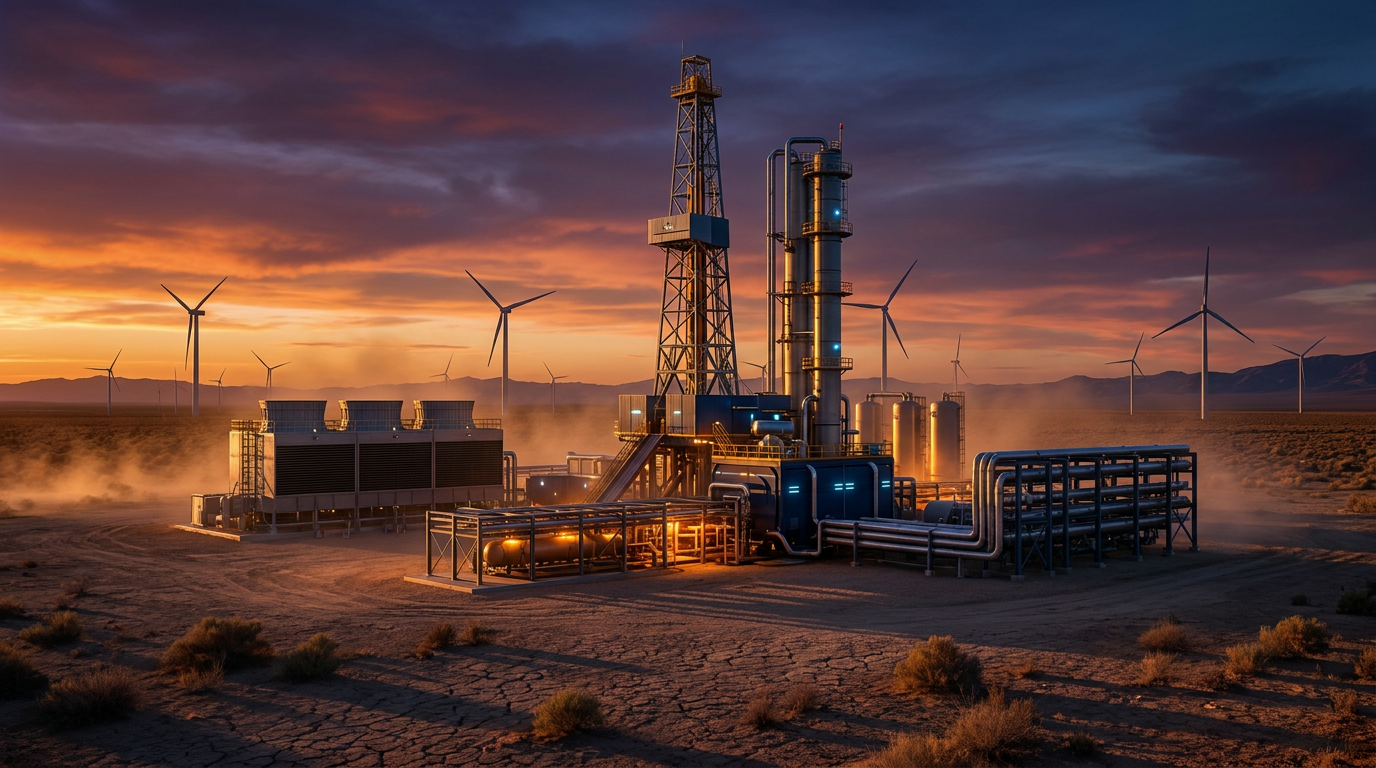
- Geothermal Developers & Investors
- EGS is a scalable, repeatable manufacturing process that has retired its fundamental technology risks.
- Grid & Tech Advocates
- The electrical grid desperately needs firm, dispatchable clean energy to balance intermittent renewables and power AI data centers.
- Scientific & Government Researchers
- Public-private partnerships and open-source field laboratories are essential for de-risking advanced drilling techniques.
- Environmental Risk Analysts
- While the carbon benefits are clear, EGS requires strict oversight regarding water usage and induced seismicity.
What's not represented
- · Local Utah residents living near the Cape Station site
- · Fossil fuel executives viewing EGS as a competitive threat
Why this matters
As the world electrifies and AI data centers demand massive amounts of constant power, wind and solar alone cannot keep the grid stable. Enhanced Geothermal Systems offer a carbon-free, always-on energy source that could permanently replace coal and natural gas plants.
Key points
- Enhanced Geothermal Systems (EGS) use horizontal drilling and hydraulic fracturing to extract heat from dry rock.
- Unlike wind and solar, EGS provides 24/7 baseload power, making it ideal for stabilizing the electrical grid.
- Fervo Energy's Cape Station in Utah is scaling to 500 megawatts, backed by a massive $1.89 billion IPO in May 2026.
- Modern EGS plants use closed-loop systems, consuming a fraction of the water required by fossil fuel plants.
- The technology relies heavily on the existing skills and equipment of the oil and gas workforce.
The global transition to clean energy has long faced a stubborn mathematical problem: wind and solar power are cheap and abundant, but they stop generating electricity when the air is still or the sun goes down. To keep the grid stable, operators have historically relied on coal or natural gas plants to provide "baseload" power—energy that is always on. Next-generation geothermal energy is poised to solve this intermittency problem by tapping into the virtually limitless heat stored within the Earth's crust, offering a reliable, carbon-free alternative that runs twenty-four hours a day, seven days a week.[3][8]
The technology, known as Enhanced Geothermal Systems (EGS), recently crossed a massive commercial threshold. In May 2026, Fervo Energy, a leading EGS developer, executed a $1.89 billion initial public offering—the largest clean-energy IPO on record—pushing its market valuation past $10 billion. The financial milestone reflects surging confidence in a technology that was considered experimental just a few years ago. Investors are pouring billions into the sector, recognizing that a scalable, always-on clean energy source is the missing puzzle piece in the global race to decarbonize the electrical grid.[1][2]
Fervo's flagship project, Cape Station in Beaver County, Utah, is currently scaling up to become the world's largest next-generation geothermal plant. The facility is fully contracted to deliver 500 megawatts of continuous, carbon-free power, with its first 100 megawatts scheduled to hit the grid in late 2026. At full capacity, Cape Station will generate enough electricity to power hundreds of thousands of homes around the clock. Unlike theoretical energy projects that struggle to find buyers, Cape Station's entire output has already been purchased by utilities desperate for reliable clean power.[1][2]
To understand why Cape Station is a breakthrough, it helps to look at the limitations of conventional geothermal energy. Traditional geothermal plants require a rare geological trifecta: subterranean heat, naturally occurring fluid, and highly permeable rock so the fluid can flow. Because these three elements rarely occur together naturally, conventional geothermal accounts for only about 0.4% of total electricity generation in the United States. For decades, the industry was geographically trapped, limited to places like Iceland or the geysers of Northern California where nature had already done the heavy lifting.[1][3]
Enhanced Geothermal Systems bypass this geographic lottery by engineering the necessary conditions artificially. Instead of hunting for natural hot springs, EGS developers only need hot rock—which exists essentially everywhere on the planet if you drill deep enough. To access it, companies are borrowing the advanced horizontal drilling and hydraulic fracturing techniques that sparked the shale oil and gas revolution over the last two decades. By applying fossil fuel extraction methods to clean energy, EGS transforms solid, dry granite into a highly efficient subterranean radiator.[3][8]
The EGS mechanism begins by drilling a vertical well thousands of feet into the Earth's crust until it reaches rock temperatures exceeding 350 degrees Fahrenheit. The drill path is then steered horizontally, extending for thousands of feet through the hot, dry granite. High-pressure fluid is pumped into the well to create a network of millimeter-thick fractures in the rock, establishing artificial permeability. This precise fracturing process, guided by fiber-optic sensors, creates the vast surface area needed to transfer the Earth's heat into the circulating water.[3][6]

A second well, known as the production well, is drilled to intersect this newly created fracture network. Cold water is injected down the first well, forced through the hot fractured rock where it absorbs massive amounts of thermal energy, and then drawn up the production well. At the surface, this superheated fluid flashes into steam or heats a secondary working fluid to spin a turbine, generating electricity before being cooled and reinjected into the ground. It is a continuous, closed loop of heat extraction.[3][8]
A second well, known as the production well, is drilled to intersect this newly created fracture network.
The commercial viability of this mechanism was largely proven at Utah FORGE, a dedicated field laboratory funded by the U.S. Department of Energy, located just miles from Fervo's Cape Station. Since 2018, Utah FORGE has served as an open-source testing ground for EGS, allowing researchers to experiment with novel drill bits, stimulation designs, and fiber-optic monitoring tools in extreme high-temperature environments. By publicly sharing their drilling data and seismic monitoring results, the laboratory significantly reduced the technical risks for private developers entering the space.[4][8]
In late 2024 and 2025, Utah FORGE completed a series of extended circulation tests that definitively proved the concept. The facility sustained commercial-scale flow rates of 26 kilograms per second across a 1,000-foot stimulated lateral well, demonstrating that engineered reservoirs could maintain connectivity and heat extraction over long periods without degrading. Fervo's own commercial wells have since achieved flow rates exceeding 100 kilograms per second, tripling the output of early pilot projects and proving that the technology can scale to meet massive industrial demand.[2][4][5]
The resulting power profile is exactly what modern electrical grids desperately need. Unlike intermittent renewables, EGS provides firm, dispatchable electricity that operates with a capacity factor of over 90%, meaning it is almost always generating its maximum output. This reliability has made geothermal highly attractive to technology companies; Google, for instance, is both a major investor in Fervo and a primary buyer of its electricity to power energy-intensive artificial intelligence data centers that cannot afford to go offline when the wind stops blowing.[1][2][6]
Beyond reliability, EGS boasts an exceptionally small physical footprint. A next-generation geothermal plant requires roughly 1.5 acres of land per megawatt of installed capacity. By comparison, a utility-scale solar farm requires significantly more acreage to generate the same amount of electricity, and even more land when accounting for the massive battery storage facilities needed to match geothermal's 24/7 availability. It allows developers to generate massive amounts of power without sprawling across thousands of acres, making EGS easier to permit and less disruptive to local ecosystems and agricultural lands.[2][8]

Despite its promise, the deployment of EGS has raised valid environmental questions, particularly regarding water usage in arid regions like the American Southwest where many early projects are located. To address this, modern EGS facilities utilize closed-loop systems and dry cooling technology. Once the initial drilling and reservoir stimulation are complete, the working fluid is continuously recycled within sealed pipes, meaning no steam is vented into the atmosphere. This closed-loop architecture ensures that the system does not drain local aquifers during its decades of operation.[6][7]
According to industry data, a closed-loop EGS plant consumes approximately 14 gallons of degraded, non-potable water per megawatt-hour over its 30-year lifespan. This represents a tiny fraction of the water consumed by traditional coal, nuclear, or natural gas plants, which can require hundreds of gallons per megawatt-hour for their massive cooling towers. Furthermore, because EGS developers often use brackish or degraded water for the initial fracturing process, they avoid competing with municipalities and agriculture for precious freshwater resources.[7][8]

A more complex challenge is induced seismicity. The process of fracturing deep subterranean rock inherently creates micro-earthquakes as the stone cracks and shifts. While the vast majority of these events are too small to be felt at the surface, the risk of triggering a larger, noticeable seismic event requires rigorous management, especially if EGS projects eventually move closer to populated areas. Geologists and environmental watchdogs closely monitor these operations to ensure that the artificial fault lines do not interact with larger, naturally stressed fault systems.[5][7]
To mitigate this risk, the Department of Energy requires EGS developers to implement strict 'traffic light' protocols. Sites are surrounded by dense networks of seismic sensors and fiber-optic cables that monitor ground movement in real time. If seismic activity approaches a predetermined safety threshold, fluid injection is immediately slowed or halted to relieve subsurface pressure. This real-time feedback loop has proven highly effective at preventing noticeable tremors, ensuring that the fracturing process remains controlled and safely contained miles beneath the surface.[7][8]

Interestingly, the rise of EGS is creating a seamless transition pathway for the existing fossil fuel workforce. The drilling rigs, steel casing designs, and hydraulic fracturing techniques used in EGS are nearly identical to those used in the oil and gas industry. At Cape Station, Fervo reports that over 90% of the on-site labor hours are logged by workers transitioning directly from the petroleum sector. This dynamic offers a rare blue-collar economic boom in the clean energy transition, utilizing existing skills rather than rendering them obsolete.[2][6]
If the current trajectory holds, the impact on the global energy mix will be profound. The Department of Energy estimates that advanced geothermal systems could realistically provide 90 gigawatts of electricity in the United States by 2050—enough to power tens of millions of homes with firm, zero-carbon energy. By turning the Earth's natural heat into a scalable, engineered product, EGS is positioning itself as the ultimate baseload anchor for a carbon-free future, proving that the tools of the fossil fuel era can be repurposed to save the climate.[3][8]
How we got here
2018
The U.S. Department of Energy establishes the Utah FORGE field laboratory to research and de-risk Enhanced Geothermal Systems.
2023
Fervo Energy brings its first commercial pilot project online in Nevada, proving the EGS concept on a small scale.
Late 2024
Utah FORGE completes a highly successful 30-day circulation test, demonstrating sustained commercial-scale flow rates.
May 2026
Fervo Energy executes a $1.89 billion IPO, the largest clean-energy public offering to date, signaling massive market confidence.
Late 2026
The first 100 megawatts of Fervo's 500-megawatt Cape Station are scheduled to begin delivering power to the grid.
Viewpoints in depth
Geothermal Developers & Investors
EGS is the missing piece of the clean energy transition that can scale rapidly using existing oil and gas technology.
Developers argue that the fundamental technology risk of EGS has been retired. By repurposing the horizontal drilling and hydraulic fracturing techniques perfected during the shale revolution, companies can now manufacture geothermal reservoirs anywhere with sufficient subterranean heat. Investors view this as a highly scalable, repeatable manufacturing process rather than a series of bespoke geological exploration projects, pointing to rapid decreases in drilling times and costs at sites like Cape Station.
Grid Operators & Tech Companies
The grid desperately needs firm, dispatchable clean energy to balance intermittent renewables and power AI data centers.
For utilities and major tech companies, the primary appeal of EGS is its capacity factor. Wind and solar require massive, expensive battery storage to provide power at night or during calm weather. EGS provides 'firm' power that is always on, making it the ideal clean replacement for retiring coal and natural gas plants. Tech giants like Google are heavily backing EGS because their rapidly expanding artificial intelligence data centers require 24/7 electricity that intermittent renewables simply cannot guarantee.
Environmental Risk Analysts
While the carbon benefits are clear, EGS requires strict oversight regarding water usage and induced seismicity.
Environmental watchdogs acknowledge the massive climate benefits of EGS but caution that the physical realities of fracturing rock must be managed carefully. Their primary concerns are the massive amounts of water needed for the initial stimulation phase and the risk of triggering noticeable earthquakes. They advocate for mandatory closed-loop water recycling systems to protect arid aquifers and strict enforcement of 'traffic light' seismic protocols that automatically halt operations if subterranean pressure causes excessive ground movement.
Energy Transition Workforce
EGS provides a direct, high-paying transition path for workers currently employed in the fossil fuel industry.
Labor advocates and industry workers highlight EGS as one of the few green technologies that directly utilizes the existing blue-collar workforce. Unlike solar panel installation or wind turbine maintenance, drilling an EGS well requires the exact same roughnecks, directional drillers, and petroleum engineers that currently work on oil rigs. This creates a politically and economically popular bridge for fossil fuel communities, allowing them to lead the clean energy transition without abandoning their specialized skills.
What we don't know
- How quickly the supply chain for specialized high-temperature drilling equipment can scale to meet the projected demand for hundreds of new EGS wells.
- Whether the long-term thermal drawdown of engineered reservoirs will match theoretical models over a 30-to-50-year operational lifespan.
- How public perception of induced seismicity will evolve as EGS projects expand beyond remote deserts and closer to populated areas.
Key terms
- Enhanced Geothermal System (EGS)
- A man-made reservoir created by drilling into hot, dry rock and injecting fluid to fracture it, allowing water to circulate and absorb heat.
- Baseload Power
- The minimum amount of electrical demand on a grid, typically met by power plants that can run continuously 24/7.
- Horizontal Drilling
- A technique where a vertical well is gradually steered to run parallel to the Earth's surface, maximizing contact with the target rock layer.
- Closed-Loop System
- A power generation design where the working fluid is continuously recycled through sealed pipes rather than being vented or discharged.
- Induced Seismicity
- Minor earthquakes or tremors caused by human activity, such as injecting high-pressure fluid into subterranean rock.
- Capacity Factor
- The ratio of a power plant's actual electrical output over a period of time compared to its maximum possible output.
Frequently asked
What is the difference between conventional and enhanced geothermal?
Conventional geothermal requires naturally occurring hot springs and permeable rock. Enhanced Geothermal Systems (EGS) artificially create that permeability by fracturing hot, dry rock deep underground.
Does fracking for geothermal energy cause earthquakes?
The fracturing process creates micro-seismicity, but developers use strict 'traffic light' monitoring protocols to halt operations if pressure builds, preventing noticeable earthquakes at the surface.
How much water does an EGS plant use?
Modern closed-loop EGS plants recycle their fluid and consume roughly 14 gallons of water per megawatt-hour, a fraction of what fossil fuel plants require for cooling.
Why is geothermal better than solar or wind power?
Geothermal provides 'baseload' power, meaning it generates electricity 24/7 regardless of weather conditions, eliminating the need for massive battery storage.
Sources
Source coverage
8 outlets
4 viewpoints surfaced








[1]Canary MediaGeothermal Developers & Investors
Fervo nabs $462M to complete massive next-gen geothermal project
Read on Canary Media →[2]AutoNocionGeothermal Developers & Investors
Fervo Energy's $1.89B IPO and the 500 MW Cape Station
Read on AutoNocion →[3]U.S. Department of EnergyScientific & Government Researchers
Geothermal Power Generation Technologies
Read on U.S. Department of Energy →[4]Utah FORGEScientific & Government Researchers
Utah FORGE extended circulation test confirms EGS connectivity and heat extraction
Read on Utah FORGE →[5]Stanford UniversityEnvironmental Risk Analysts
Analysis of Utah FORGE Circulation Tests
Read on Stanford University →[6]Gates NotesGrid & Tech Advocates
A new type of climate-friendly energy is coming online in the U.S. Southwest
Read on Gates Notes →[7]Clean Air Task ForceEnvironmental Risk Analysts
Minimizing Water Use and Seismic Risk in Next-Generation Geothermal
Read on Clean Air Task Force →[8]Factlen Editorial TeamGrid & Tech Advocates
Synthesis by Factlen editorial team
Read on Factlen Editorial Team →

Every angle. Every day.
Get guides stories with full source coverage and perspective breakdowns delivered to your inbox.