
The Evidence on Sleep Trackers: What Wearables Can (and Cannot) Tell You About Your Rest
Clinical studies reveal that while consumer sleep trackers are highly accurate at detecting basic sleep and wakefulness, they struggle to classify specific sleep stages and can sometimes trigger sleep-related anxiety.
By Factlen Editorial Team
- Clinical Sleep Researchers
- Medical professionals who rely on polysomnography and view consumer trackers as limited proxy devices.
- Behavioral Psychologists
- Experts focused on the mental and emotional impact of quantifying human rest.
- Consumer Health Advocates
- Proponents of wearable technology who view trackers as powerful tools for preventative health.
What's not represented
- · Device Manufacturers' Algorithm Engineers
- · Chronic Insomnia Patients
Why this matters
Millions of consumers rely on wearable devices to optimize their health, but misunderstanding the limitations of this data can lead to unnecessary anxiety. Knowing which metrics are clinically accurate allows users to make better lifestyle choices without falling into the trap of obsessing over imperfect sleep scores.
Key points
- Consumer sleep trackers are highly accurate (≥95%) at determining whether a user is asleep or awake.
- Trackers struggle to accurately classify light, deep, and REM sleep stages, often overestimating light sleep.
- Accuracy drops significantly when trackers are used by individuals with pre-existing clinical sleep disorders.
- Obsessing over sleep scores can trigger 'orthosomnia,' a form of anxiety that actively worsens sleep quality.
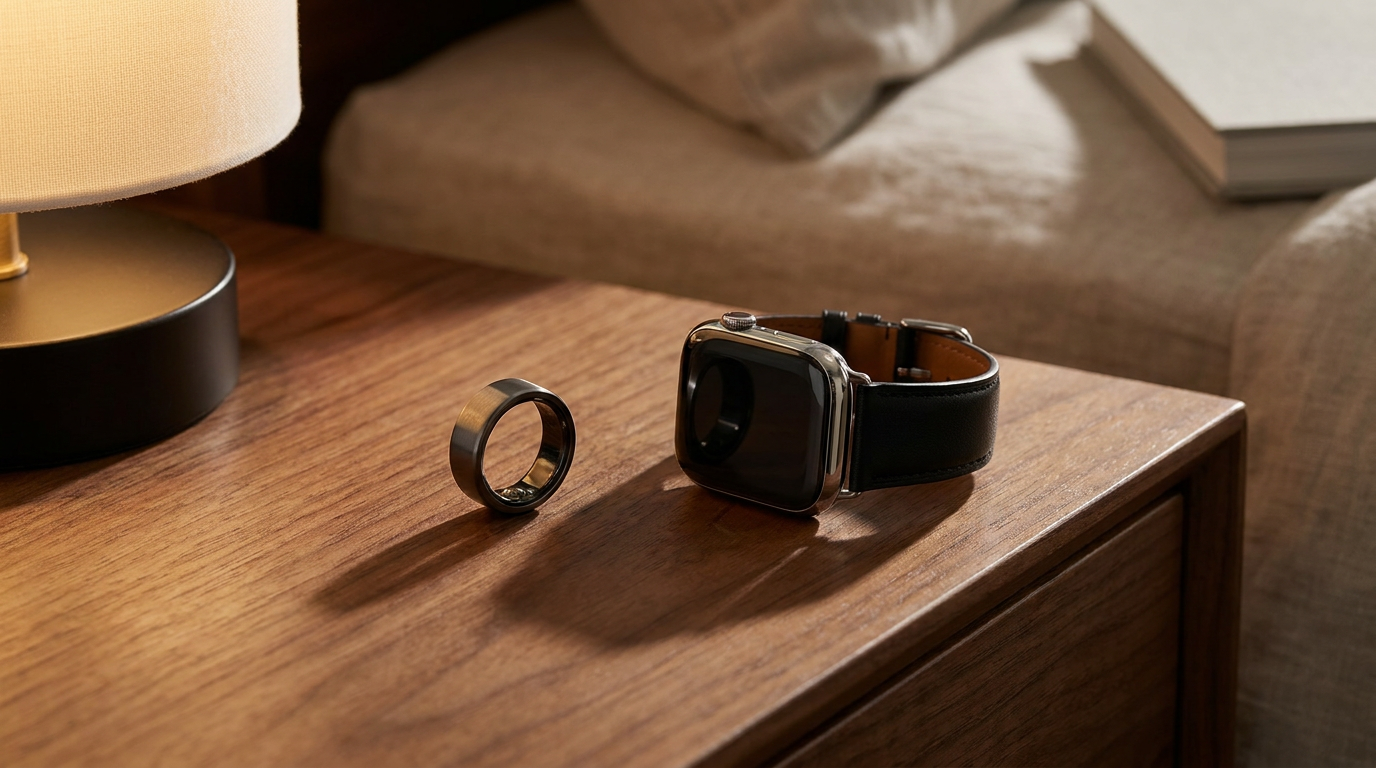
The quest for the perfect night of rest has moved from the mattress to the microchip. Consumer sleep technologies have exploded into a multi-billion-dollar industry, with devices like the Oura Ring, Apple Watch, and Fitbit promising to decode the mysteries of our nightly slumber. Millions of users now wake up and immediately check their wrists or phones to receive a "sleep score," a quantified judgment of their physiological recovery. But as these devices transition from niche fitness gadgets to mainstream health monitors, a critical question has emerged within the medical community: how much of this data is actually grounded in scientific reality?[7]
To answer that question, researchers have spent the last several years conducting rigorous head-to-head trials, pitting consumer wearables against polysomnography (PSG)—the clinical gold standard for sleep measurement. Polysomnography involves spending a night in a sleep lab with electrodes attached to the scalp, face, and chest to measure actual brain waves, eye movements, and muscle activity. Wearables, by contrast, must guess what the brain is doing by measuring movement and heart rate variability from the wrist or finger.[1][4]
The resulting evidence pack reveals a nuanced picture of what these devices can and cannot do. When it comes to the most fundamental question—are you asleep or awake?—modern consumer trackers are remarkably highly accurate. A 2024 study conducted by researchers at Brigham and Women's Hospital and published in the journal Sensors evaluated the Oura Ring Gen3, Fitbit Sense 2, and Apple Watch Series 8 against clinical PSG. The researchers found that for detecting basic sleep versus wakefulness, all three devices achieved a sensitivity of 95 percent or higher.[1]
This represents a massive technological leap. Early generation fitness trackers often confused sitting still on the couch while watching television with actual sleep. Today's algorithms, powered by advanced machine learning and multi-sensor arrays, have largely solved that problem. For consumers looking to measure their "Total Sleep Time" or their "Sleep Efficiency"—the percentage of time spent in bed actually asleep—these devices provide highly reliable, actionable data that rivals older, research-grade actigraphy monitors.[1][3]

However, the evidence becomes significantly weaker when trackers attempt to classify specific sleep stages. Every night, the human brain cycles through light sleep, deep (slow-wave) sleep, and REM (rapid eye movement) sleep. Because consumer devices cannot read brain waves, they rely on proxy metrics like heart rate dips and micro-movements to guess which stage you are in. The Brigham and Women's Hospital study revealed that accuracy drops precipitously when devices attempt this four-stage classification.[1][4]
Among the devices tested, the Oura Ring performed the best, achieving roughly 76 to 79 percent sensitivity across light, deep, and REM sleep stages. The Fitbit Sense 2 demonstrated between 61 and 78 percent sensitivity, notably overestimating light sleep by an average of 18 minutes while underestimating deep sleep. The Apple Watch Series 8 showed the highest variance, with sensitivity ranging from 50 to 86 percent depending on the stage, frequently overestimating light sleep by 45 minutes and underestimating deep sleep by 43 minutes.[1]
Among the devices tested, the Oura Ring performed the best, achieving roughly 76 to 79 percent sensitivity across light, deep, and REM sleep stages.
These margins of error mean that the highly specific "time in deep sleep" metrics presented on smartphone dashboards each morning should be viewed as broad estimates rather than clinical facts. Furthermore, there is a significant clinical caveat to all of this data: the algorithms are trained almost exclusively on healthy sleepers. A 2025 study published in Scientific Reports evaluated smart rings in a clinical population featuring individuals with various sleep disorders. In that cohort, the overall sleep-stage classification accuracy plummeted to approximately 53 percent.[6]

When a device encounters the fragmented sleep patterns of someone with sleep apnea or chronic insomnia, its predictive models often break down. This limitation has led sleep medicine specialists to caution against using consumer wearables to self-diagnose medical conditions. While a tracker might correctly identify that a user is waking up frequently, it cannot distinguish whether those awakenings are caused by a collapsing airway, restless leg syndrome, or simple environmental noise.[3][4]
Beyond the hardware limitations, researchers are increasingly focused on the psychological impact of sleep tracking. For a growing subset of users, the daily quantification of sleep has paradoxically become a source of profound anxiety. In 2017, researchers publishing in the Journal of Clinical Sleep Medicine coined the term "orthosomnia" to describe an unhealthy, obsessive preoccupation with achieving perfect sleep metrics as dictated by a tracker.[2]
Orthosomnia creates a cruel irony: the anxiety of wanting to achieve a high sleep score triggers a state of hyperarousal in the nervous system, which actively prevents the user from falling asleep. A 2024 cross-sectional study estimated that orthosomnia may affect between 3 and 14 percent of the general population, noting that individuals exhibiting these traits consistently reported higher baseline insomnia scores. The device purchased to fix a sleep problem can inadvertently become the cause of it.[5]

Behavioral psychologists point to the "placebo sleep" effect to explain why this data can be so psychologically potent. Studies have shown that when individuals are given false feedback about their sleep quality, their cognitive performance and mood the next day align with the feedback they received, regardless of how they actually slept. If a tracker inaccurately reports a terrible night of sleep, the user may experience genuine fatigue and irritability simply because they believe the device.[2][5]
Does this mean consumers should abandon their sleep trackers? The consensus among medical professionals is a resounding no, provided the devices are used with the right mindset. For the vast majority of users, the behavioral nudges provided by these wearables far outweigh the technical inaccuracies. Trackers excel at highlighting macro-trends and the consequences of lifestyle choices, providing undeniable visual evidence of how a late-night heavy meal or a few glasses of alcohol can elevate resting heart rate and fragment sleep.[3][7]
The most effective way to utilize a consumer sleep tracker is to ignore the granular, night-to-night fluctuations in deep or REM sleep, and instead focus on long-term behavioral baselines. If a user consistently goes to bed at the same time, maintains a cool bedroom environment, and limits evening screen time, the tracker will reflect a broader trend of improved sleep efficiency.[3]
Ultimately, the evidence pack suggests that while consumer sleep technology is a powerful tool for behavioral change, it is not an infallible medical instrument. The most sophisticated sleep monitor available remains the human body's own subjective feeling of restfulness. When the data on the screen conflicts with the energy felt throughout the day, experts advise trusting the body over the algorithm.[2][7]
How we got here
2017
Researchers first coin the term 'orthosomnia' to describe patients whose sleep anxiety is exacerbated by fitness trackers.
2020
The U.S. National Sleep Foundation reports that half of all Americans feel sleepy multiple days a week, driving a surge in sleep tech adoption.
2024
A Brigham and Women's Hospital study confirms that major consumer wearables now achieve over 95% accuracy in basic sleep/wake detection.
2025
A systematic review highlights that tracker accuracy drops significantly when used by individuals with pre-existing clinical sleep disorders.
Viewpoints in depth
Clinical Sleep Researchers
Medical professionals who rely on polysomnography and view consumer trackers as limited proxy devices.
For clinical researchers, the brain is the only true source of truth for sleep architecture. Because consumer wearables rely on photoplethysmography (PPG) to measure heart rate and accelerometers to measure movement, they are fundamentally guessing what the brain is doing. Researchers emphasize that while these proxy metrics have improved dramatically, they still fail to capture the complex neurological reality of sleep disorders, making them insufficient for medical diagnosis.
Behavioral Psychologists
Experts focused on the mental and emotional impact of quantifying human rest.
Psychologists warn that the gamification of sleep can turn a natural biological process into a performance metric. The phenomenon of orthosomnia demonstrates how the pressure to achieve a high 'sleep score' can trigger the sympathetic nervous system, causing the exact hyperarousal that prevents restful sleep. They advocate for 'data holidays' where users take breaks from their devices to reconnect with their body's natural signals.
Consumer Health Advocates
Proponents of wearable technology who view trackers as powerful tools for preventative health.
Advocates argue that despite the imperfections in sleep stage classification, the macro-level behavioral nudges provided by wearables are a massive net positive for public health. By providing undeniable visual evidence of how alcohol, late meals, or inconsistent bedtimes destroy sleep efficiency, these devices empower users to make healthier daily choices that they otherwise might not have prioritized.
What we don't know
- How the next generation of non-contact sleep trackers (using radar or sonar) will compare to current wearable sensors in large-scale clinical trials.
- The exact long-term psychological impact of gamifying sleep metrics across different age demographics, particularly teenagers.
- Whether consumer algorithms will eventually be able to accurately detect sleep stages in populations with severe, compounding sleep disorders.
Key terms
- Polysomnography (PSG)
- The clinical gold standard for sleep testing, which uses electrodes to monitor brain waves, blood oxygen, heart rate, and breathing during sleep.
- Actigraphy
- The continuous measurement of movement and activity, typically via a wrist-worn sensor, used to estimate sleep and wake cycles.
- Orthosomnia
- An unhealthy preoccupation or anxiety regarding the pursuit of perfect sleep metrics, often triggered by the use of consumer sleep trackers.
- Sleep Efficiency
- The percentage of total time spent in bed that is actually spent sleeping.
Frequently asked
Can a sleep tracker diagnose sleep apnea?
No. While a tracker might detect frequent awakenings or drops in blood oxygen, it cannot definitively diagnose sleep apnea; a clinical polysomnography study is required.
Why does my smartwatch say I got very little deep sleep?
Wrist-based trackers often struggle to accurately classify sleep stages and frequently underestimate deep sleep compared to clinical brain-wave monitors.
What is orthosomnia?
Orthosomnia is a psychological phenomenon where an individual develops an unhealthy obsession with achieving perfect sleep metrics, which ironically causes anxiety that worsens their sleep.
Which consumer sleep tracker is the most accurate?
Recent clinical studies suggest the Oura Ring has a slight edge in sleep stage classification accuracy over wrist-based competitors, though all major devices are highly accurate at basic sleep/wake detection.
Sources
Source coverage
7 outlets
3 viewpoints surfaced







[1]Sensors JournalClinical Sleep Researchers
Accuracy of Consumer Sleep Tracking Devices Compared to Polysomnography
Read on Sensors Journal →[2]Journal of Clinical Sleep MedicineBehavioral Psychologists
Orthosomnia: Are Some Patients Taking the Quantified Self Too Far?
Read on Journal of Clinical Sleep Medicine →[3]Cleveland ClinicConsumer Health Advocates
Do Sleep Trackers Really Work?
Read on Cleveland Clinic →[4]National Institutes of Health (NIH)Clinical Sleep Researchers
The Validity of Consumer Sleep Tracking Devices
Read on National Institutes of Health (NIH) →[5]Sleep FoundationBehavioral Psychologists
Sleep Trackers and Orthosomnia
Read on Sleep Foundation →[6]Scientific ReportsClinical Sleep Researchers
Evaluation of ring trackers against polysomnography in clinical populations
Read on Scientific Reports →[7]Factlen Editorial TeamConsumer Health Advocates
Synthesis by Factlen editorial team
Read on Factlen Editorial Team →
Every angle. Every day.
Get shopping stories with full source coverage and perspective breakdowns delivered to your inbox.