
Fact-Checking the $40 Billion Promise: The Real Economics of the 2026 World Cup
FIFA projects the North American tournament will inject tens of billions into the global economy, but independent economists warn that host cities rarely see the promised financial windfall.
By Factlen Editorial Team
- Sports Economists
- Assert that the macroeconomic impact is vastly overstated due to the substitution effect, displaced tourism, and the temporary nature of the jobs created.
- Mega-Event Promoters
- Argue that hosting the World Cup generates billions in new economic activity, creates jobs, and provides invaluable global marketing for host cities.
- Hospitality Industry
- Anticipate short-term revenue spikes but face uncertainty over booking shortfalls, high operational costs, and international travel barriers.
What's not represented
- · Local taxpayers funding the infrastructure
- · Non-hospitality small business owners
Why this matters
When cities host mega-events, local taxpayers often foot the bill for security and infrastructure based on promises of massive economic returns. Understanding the actual financial mechanics empowers citizens to evaluate whether these civic investments are truly paying off.
Key points
- FIFA projects the 2026 World Cup will add $40.9 billion to the global GDP.
- Independent economists warn the actual macroeconomic impact will be a fraction of a percent.
- Local spending on the tournament largely replaces regular entertainment spending, creating no new wealth.
- Regular tourists often avoid host cities during mega-events, a phenomenon known as crowding out.
- 80 percent of U.S. host city hotels reported bookings falling short of initial spring forecasts.
- FIFA is expected to generate a record $11 billion in revenue, while local taxpayers fund security and logistics.
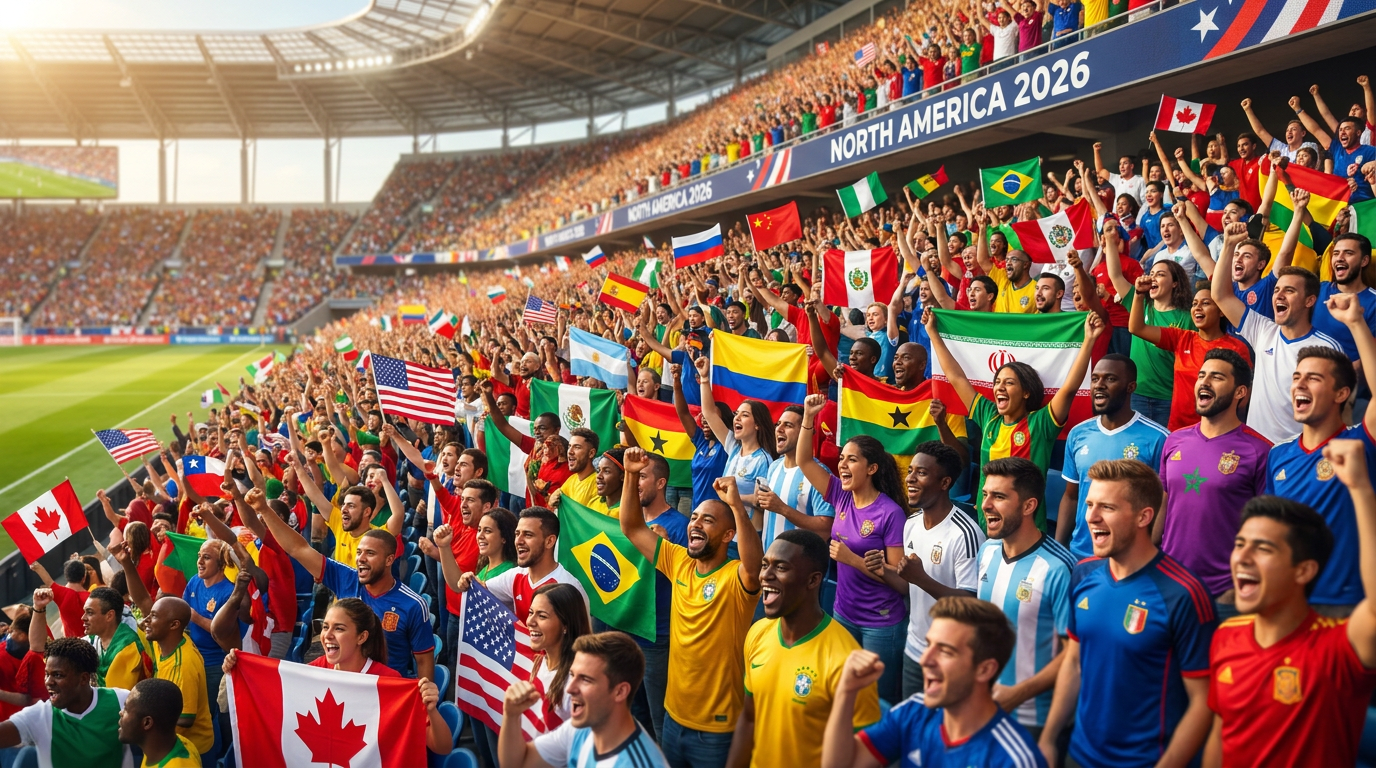
As the 2026 FIFA World Cup kicks off across the United States, Canada, and Mexico, the tournament is breaking records before a single champion is crowned. With an expanded roster of 48 teams playing 104 matches across 16 host cities, it is the largest sporting event in history. For local politicians and event organizers, the sheer scale of the tournament has been accompanied by promises of a historic economic windfall.[1][2]
The official projections are staggering. A joint study released by FIFA and the World Trade Organization in 2025 estimated that the tournament would contribute $40.9 billion to the global gross domestic product (GDP) and support over 800,000 jobs. In the United States alone, the study projected a $17.2 billion boost to the national economy, fueled by an influx of 1.24 million international visitors spending heavily on hotels, dining, and merchandise.[2][6]
However, as the matches get underway, a consensus of independent sports economists and financial institutions is offering a stark reality check. While the World Cup is an unparalleled cultural celebration, the promised macroeconomic boom is largely a mirage. Decades of data from previous mega-events suggest that the actual financial impact on host cities will be a fraction of what was advertised.[1][4]

The discrepancy between FIFA's projections and economic reality comes down to a concept known as the "substitution effect." When a local resident spends $500 on World Cup tickets, jerseys, and fan-zone beers, that money is rarely new to the local economy. Instead, it is diverted from other entertainment budgets—money that would have otherwise been spent at local movie theaters, bowling alleys, or neighborhood restaurants over the course of the summer.[4][7]
Furthermore, host cities frequently experience "crowding out." The anticipated influx of soccer fans often displaces regular tourists and business travelers who actively avoid the host cities to escape the congestion and inflated hotel prices. In major tourism hubs like New York and Miami, World Cup visitors are largely replacing existing travel demand rather than adding to it.[8]

In major tourism hubs like New York and Miami, World Cup visitors are largely replacing existing travel demand rather than adding to it.
Early data from the hospitality sector supports this skepticism. Despite the hype, 80 percent of hoteliers across U.S. host cities reported in late spring that their bookings were falling short of initial forecasts, according to the American Hotel & Lodging Association. Analysts attribute the sluggish demand to a combination of record-high dynamic ticket pricing, surging airfares, and complex visa processing times that have deterred some overseas fans.[2][6]
The Council on Foreign Relations notes that travel restrictions and safety concerns have further suppressed international attendance. With the U.S. hosting 78 of the 104 matches, fans from certain nations face stringent entry requirements, leading to a softer-than-expected turnout. By the opening week, several matches on the official resale portal still had thousands of unsold tickets.[3][6]
When financial institutions model the actual net impact, the numbers shrink dramatically. A May 2026 report by Natixis CIB estimated that the World Cup would boost U.S. GDP by a mere 0.05 percentage points—a statistical blip in a $31 trillion economy. Mexico, which has a smaller economy more highly exposed to tourism, might see a slightly larger bump of 0.1 to 0.2 percent. BMO Economics similarly projected a modest 0.1 percent annualized lift for Canada's GDP, describing it as a "short-lived bump."[5][7]
Job creation claims also require careful scrutiny. While the tournament will undoubtedly spur hiring, economists from Goldman Sachs and Oxford Economics point out that these roles are overwhelmingly temporary positions in the leisure, security, and hospitality sectors. Once the final whistle blows in July, the vast majority of these jobs will vanish, leaving "effectively zero" long-term impact on the labor market.[2]
Meanwhile, the costs borne by the host cities are very real. Local governments are legally obligated to provide extensive logistical support, including transit upgrades, fan festival infrastructure, and massive security operations. The city of Toronto, for example, approved a $380 million budget just to meet its host city obligations. Because FIFA retains the revenue from ticket sales, broadcasting rights, and top-tier sponsorships, local municipalities are left hoping that a temporary surge in sales taxes will cover their outlays.[1][4]

The undisputed financial winner of the 2026 World Cup is FIFA itself. The global governing body is projected to generate a record $11 billion in direct revenue from this tournament cycle, a massive leap from the $7.5 billion earned during the 2022 edition in Qatar. The expanded 48-team format directly translates to more lucrative broadcasting rights and expanded corporate sponsorships.[3][4]
Despite the sobering economic data, experts emphasize that hosting the World Cup still holds immense value—just not the kind that shows up on a balance sheet. The tournament offers unparalleled global visibility, civic pride, and a rare moment of unified cultural celebration. Economists suggest that cities should view hosting mega-events as a massive, joyous public party rather than a strategic economic investment.[4][7]
How we got here
June 2018
The united bid of the US, Canada, and Mexico wins the right to host the 2026 World Cup.
March 2025
FIFA and the WTO release a study projecting a $40.9 billion global economic boost from the tournament.
April 2026
The American Hotel & Lodging Association reports that 80 percent of host city hotels are missing booking targets.
May 2026
Financial institutions release reports downgrading the expected macroeconomic impact to less than 0.1 percent of GDP.
June 11, 2026
The 2026 FIFA World Cup officially kicks off across North America.
Viewpoints in depth
Mega-Event Promoters
Event organizers and local politicians emphasize the massive influx of visitors and global branding opportunities.
For FIFA, local host committees, and tourism boards, the World Cup represents an unparalleled opportunity to showcase a city on the global stage. They point to the projected 1.24 million international visitors and billions in direct spending as proof of the event's value. Proponents argue that even if the macroeconomic needle barely moves, the localized surge in restaurant, bar, and hotel spending provides a vital lifeline to the hospitality sector, while the global television audience of billions delivers marketing value that cities could never afford to purchase outright.
Sports Economists
Academic researchers argue that the financial benefits of hosting mega-events are consistently exaggerated.
Independent economists counter that the rosy projections rely on flawed "economic multiplier" models that ignore basic human behavior. They highlight the substitution effect—where locals simply shift their spending from movies to soccer—and the crowding-out effect, where regular tourists stay away. Economists stress that while the cultural value of the World Cup is immense, treating it as a strategic financial investment is a mistake, especially since local taxpayers bear the brunt of the security and infrastructure costs while FIFA extracts the vast majority of the revenue.
What we don't know
- The final tally of international visitors, which remains subject to last-minute visa approvals and travel costs.
- The exact cost of security and logistical overruns that local municipalities will have to absorb.
- Whether the long-term global branding of the host cities will translate into future tourism growth.
Key terms
- Substitution Effect
- An economic principle where consumers spend money on a new event (like a soccer match) instead of their usual entertainment, resulting in no net new economic activity.
- Crowding Out
- A phenomenon where regular tourists or business travelers avoid a city because a mega-event drives up prices and congestion.
- Economic Multiplier
- A formula used to estimate how direct spending circulates through a local economy, which economists argue is often exaggerated in sports impact studies.
- Dynamic Pricing
- A ticketing strategy where prices fluctuate in real-time based on demand, which has pushed some World Cup tickets to record highs.
Frequently asked
How much money does FIFA make from the World Cup?
FIFA is projected to generate a record $11 billion in direct revenue from the 2023-2026 cycle, primarily through broadcasting rights, ticket sales, and corporate sponsorships.
Do host cities make a profit from the tournament?
Historically, most host cities do not turn a direct profit. They are responsible for heavy security, transit, and operational costs, while FIFA retains the primary revenue streams.
Will the World Cup create permanent jobs?
No. Economists note that the vast majority of the estimated 800,000 jobs created globally are temporary positions in the leisure, hospitality, and security sectors that disappear after the tournament.
Why are hotel bookings lower than expected in some cities?
Industry reports indicate that high dynamic ticket prices, surging airfares, and complex visa processing times have deterred some international fans, while regular tourists are avoiding the cities to escape crowds.
Sources
Source coverage
8 outlets
3 viewpoints surfaced







[1]NewsweekSports Economists
World Cup 2026 Economic Windfall May Be a Fraction of What Was Advertised
Read on Newsweek →[2]CBS NewsMega-Event Promoters
Will the 2026 World Cup boost the U.S. economy? Here's what experts say.
Read on CBS News →[3]Financial TimesHospitality Industry
US World Cup host cities face doubts over economic windfall
Read on Financial Times →[4]NPRSports Economists
Host cities hope for a World Cup economic boom. Economists are skeptical.
Read on NPR →[5]CTV NewsSports Economists
World Cup expected to give modest, short-lived bump to Canadian economy: BMO
Read on CTV News →[6]Council on Foreign RelationsHospitality Industry
The 2026 World Cup's Economic Promise Faces Travel Hurdles
Read on Council on Foreign Relations →[7]Natixis CIBSports Economists
Beyond The Game: The Economics of the 2026 FIFA World Cup
Read on Natixis CIB →[8]Investing.comHospitality Industry
World Cup to provide modest boost to North American tourism, William Blair says
Read on Investing.com →
More in news politics
See all 7 stories →Colombia Election
Right-Wing Outsider Abelardo de la Espriella Wins Colombian Presidency in Historic Squeaker
7 sources

Strait of Hormuz
US and Iran Open High-Stakes Talks in Switzerland as Tehran Closes Strait of Hormuz
6 sources
Information Science
The Science of Fact-Checking: What Actually Reduces Political Misinformation in 2026
6 sources

US-Iran Relations
U.S. and Iran Hold High-Stakes Ceasefire Talks in Switzerland Amid Threats and Walkouts
7 sources
Every angle. Every day.
Get news politics stories with full source coverage and perspective breakdowns delivered to your inbox.