
The Science of No-Dig Gardening: Why Leaving Soil Undisturbed Boosts Yields and Traps Carbon
A growing movement of home gardeners is abandoning the rototiller in favor of "no-dig" methods, relying on surface mulching to preserve the soil microbiome, sequester carbon, and dramatically reduce labor.
By Factlen Editorial Team
- Regenerative Gardeners
- Advocate for minimizing soil disturbance to protect the microbiome, sequester carbon, and build long-term fertility.
- Traditional Cultivators
- Maintain that periodic tilling is necessary to break up compacted hardpan, aerate heavy clay, and incorporate amendments quickly.
- Agricultural Extension Scientists
- Focus on the measurable agronomic benefits of no-till systems, such as reduced erosion, improved water retention, and labor savings.
What's not represented
- · Commercial compost suppliers who benefit from the high initial volume requirements of no-dig beds.
- · Manufacturers of rototillers and traditional garden cultivation equipment.
Why this matters
Traditional gardening practices inadvertently destroy the microscopic ecosystems that plants rely on to thrive. Adopting no-dig methods allows home growers to drastically reduce their weeding and watering time while actively pulling climate-warming carbon out of the atmosphere.
Key points
- No-dig gardening relies on layering compost on the surface rather than turning the soil with a tiller.
- Leaving soil undisturbed protects delicate fungal networks that help plants absorb water and nutrients.
- Tilling releases stored carbon dioxide into the atmosphere, while no-dig methods sequester carbon in the ground.
- Surface mulching smothers existing weeds and prevents dormant weed seeds from germinating.
- Undisturbed soil forms porous aggregates that dramatically improve water retention and drainage.
- Transitioning to no-dig requires an initial investment in compost but significantly reduces long-term labor.
For generations, the arrival of spring in the home garden was heralded by the roar of the rototiller. Turning the earth was considered an essential chore to aerate the ground, mix in fertilizers, and create a soft, welcoming bed for new seeds and transplants. The practice of breaking up the soil has been deeply ingrained in agricultural tradition since the invention of the plow.[3][4]
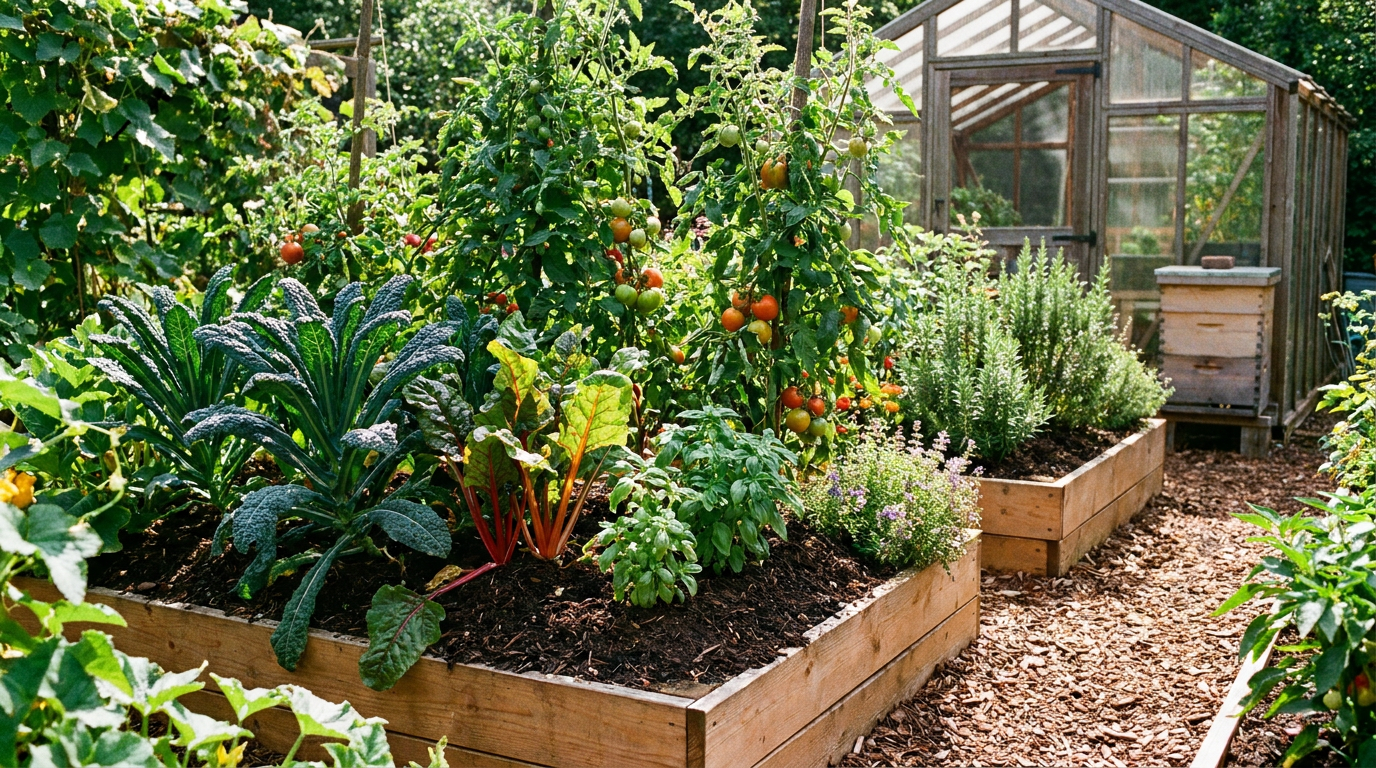
But a quiet, science-backed revolution is taking root in backyards and market farms worldwide. Known as "no-dig" or "no-till" gardening, this approach asks growers to permanently put away their spades and tillers. Instead of turning the earth, gardeners simply layer organic matter on top of the soil, allowing nature's biological processes to do the heavy lifting of cultivation.[2][5]
The science behind the movement represents a fundamental shift in how we understand the ground beneath our feet. Dirt is not merely an inert structural medium holding plants upright; it is a complex, living ecosystem. A single teaspoon of healthy, undisturbed soil can contain more than a billion microorganisms, forming a bustling subterranean metropolis.[6]
When a rototiller churns through a garden bed, it acts like a localized earthquake. The mechanical blades pulverize delicate soil aggregates, destroy intricate fungal networks, and expose light-sensitive microbes to lethal ultraviolet radiation. While tilling provides a brief flush of oxygen that temporarily boosts plant growth, it ultimately collapses the soil's long-term architecture.[1][4]

By leaving the soil undisturbed, no-dig gardening preserves the "soil food web." At the heart of this web are mycorrhizal fungi, which form ancient, symbiotic relationships with plant roots. The fungi act as a massive extension of the root system, scavenging for water and trace minerals to trade with the plant in exchange for photosynthetic sugars.[2][5]
Tilling severs these microscopic fungal threads, forcing plants to expend significantly more energy searching for nutrients on their own. In an undisturbed system, these networks flourish and expand, resulting in stronger, more resilient crops that require far less synthetic fertilizer to achieve high yields.[1][5]
Beyond immediate plant health, the no-dig method plays a crucial role in climate mitigation through carbon sequestration. Plants naturally pull carbon dioxide from the atmosphere during photosynthesis and pump a portion of it into the ground through their roots to feed the microbial community.[3][6]
When soil is tilled, a sudden influx of oxygen floods into the subterranean environment. This exposure causes microbes to rapidly consume stored organic matter, releasing the sequestered carbon back into the atmosphere as carbon dioxide—a potent greenhouse gas that drives climate change.[4]
When soil is tilled, a sudden influx of oxygen floods into the subterranean environment.
By keeping the soil intact and continually adding organic mulch to the surface, no-dig gardens become highly effective carbon sinks. Over time, this regenerative practice builds deep, carbon-rich topsoil that mimics the natural, undisturbed accumulation found on a healthy forest floor.[3][6]
One of the most immediate and celebrated benefits for the home gardener is a dramatic reduction in weeds. Traditional digging inadvertently brings thousands of dormant weed seeds to the surface, exposing them to the flash of sunlight they need to break dormancy and germinate.[2][4]
In fact, many soil scientists view weeds as nature's first responders, rapidly growing to cover and heal disturbed, bare earth. By laying down a thick layer of compost or mulch, no-dig gardeners smother existing weeds and keep buried seeds safely in the dark where they cannot sprout.[4][5]
Water conservation is another major advantage of the undisturbed approach. Pulverized, tilled soil often forms a hard, baked crust on the surface that repels rain, leading to wasteful runoff and erosion. Undisturbed soil, however, maintains its natural "aggregates"—tiny clumps of earth glued together by microbial secretions.[3][4]

These aggregates create a highly porous structure, full of microscopic channels left behind by decayed roots and tunneling earthworms. This spongy architecture allows water to infiltrate deeply and remain stored during dry spells, significantly reducing the need for frequent irrigation.[1][3]
Transitioning to a no-dig system is surprisingly straightforward, even for beginners. To establish a new bed, gardeners typically lay down a layer of plain, unwaxed cardboard directly over existing grass or weeds to completely block out sunlight.[5]
A thick layer of compost—usually four to six inches deep—is then spread directly over the cardboard. Seeds and transplants can be planted immediately into this top layer of compost. Over a few months, the cardboard naturally decomposes, allowing the new plant roots to penetrate the native soil below.[2][5]

Ongoing maintenance involves simply adding an inch or two of fresh compost to the surface each autumn or spring. At the end of the season, old plants are not yanked out by the roots; instead, they are cut at the base, leaving the root systems to decay in place and feed the soil biology.[2][6]
Viewpoints in depth
Regenerative Gardeners
Focus on the biological health of the soil as the foundation of a successful garden.
Proponents of regenerative and no-dig gardening argue that the soil is a living organism that must be fed and protected, not mechanically manipulated. They point to the forest floor as the ultimate model of fertility: a system where organic matter falls to the surface, decays slowly, and feeds a vast, undisturbed network of fungi and microbes. By mimicking this process with surface compost, they argue gardeners can achieve higher yields, eliminate the need for synthetic fertilizers, and actively draw down atmospheric carbon.
Traditional Cultivators
Emphasize the mechanical benefits of turning the soil to prepare a planting bed.
While the no-till movement is growing rapidly, traditional cultivation still has strong roots. Proponents argue that tilling provides an immediate, necessary flush of oxygen to the soil, warms the ground faster in the spring, and creates a loose, fluffy texture that is ideal for direct-sowing small seeds like carrots. They also point out that tilling is sometimes the only practical way to quickly incorporate large amounts of lime, sulfur, or organic amendments deep into the soil profile when correcting severe nutrient deficiencies.
Agricultural Extension Scientists
Evaluate gardening methods based on long-term data regarding erosion, water use, and crop resilience.
University extension programs and soil scientists increasingly back the no-till approach based on decades of agricultural data. They highlight that tilling is a primary driver of topsoil erosion and moisture loss. By transitioning to no-till, scientists note that growers can drastically reduce their water usage, as the undisturbed soil aggregates act like a sponge. They view the transition away from the rototiller as a necessary evolution in both commercial farming and home gardening to ensure long-term food security and soil conservation.
What we don't know
- Exactly how much carbon a typical home no-dig garden sequesters annually compared to commercial regenerative agriculture.
- The precise timeline for severely degraded or chemically treated urban soils to fully rebuild their mycorrhizal networks using only surface mulching.
Key terms
- Mycorrhizae
- Beneficial fungi that form a symbiotic relationship with plant roots, extending their reach to gather water and nutrients in exchange for plant sugars.
- Carbon Sequestration
- The process of capturing and storing atmospheric carbon dioxide in the soil, mitigating the effects of climate change.
- Soil Aggregates
- Small clumps of soil particles bound together by organic matter and microbial secretions, creating a porous structure that holds water and air.
- Chop and Drop
- A practice where spent plants are cut at the base and left on the soil surface to decompose as mulch, rather than being uprooted.
- Soil Microbiome
- The vast community of microscopic organisms—including bacteria, fungi, and nematodes—that live in the dirt and drive nutrient cycling.
Frequently asked
Does the no-dig method work on heavy clay soil?
Yes. While it seems counterintuitive not to break up hard clay, layering compost on top encourages earthworms and roots to naturally tunnel through the clay, improving its drainage and structure over time without creating a compacted hardpan.
How do I deal with aggressive perennial weeds?
For highly invasive weeds like bindweed or brambles, initial targeted digging may be required. However, for most weeds, a thick layer of cardboard topped with compost will smother them by blocking all sunlight.
Do I need to buy massive amounts of compost every year?
No. The first year requires a heavy application (4-6 inches) to establish the bed. In subsequent years, you only need to add a thin maintenance layer (1-2 inches) to replenish the organic matter.
Can I plant seeds directly into the compost layer?
Yes. Most vegetable seeds and transplants will thrive when planted directly into the surface compost layer, eventually sending their roots down through the decomposing cardboard and into the native soil.
Sources
Source coverage
6 outlets
3 viewpoints surfaced






[1]University of SaskatchewanAgricultural Extension Scientists
The pros and cons of no till gardening
Read on University of Saskatchewan →[2]UC Agriculture and Natural ResourcesRegenerative Gardeners
“No Till” Gardening
Read on UC Agriculture and Natural Resources →[3]Washington State University ExtensionAgricultural Extension Scientists
The Advantages of a No-Till Home Garden
Read on Washington State University Extension →[4]Illinois ExtensionTraditional Cultivators
What a no-till garden can do for you
Read on Illinois Extension →[5]Charles DowdingRegenerative Gardeners
Beginner's Guide to No Dig
Read on Charles Dowding →[6]Factlen Editorial TeamRegenerative Gardeners
Synthesis by Factlen editorial team
Read on Factlen Editorial Team →
Every angle. Every day.
Get home stories with full source coverage and perspective breakdowns delivered to your inbox.