
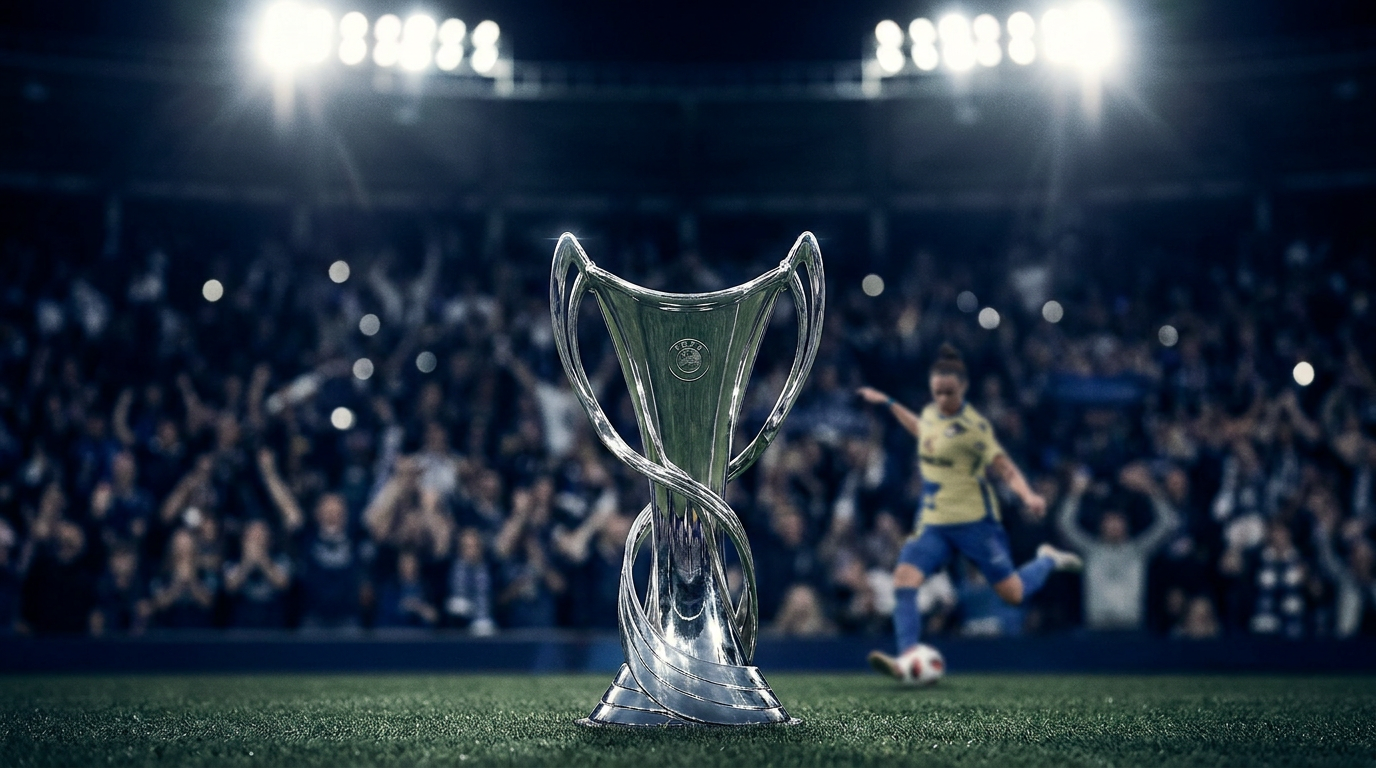
How the New 18-Team Format is Transforming the UEFA Women's Champions League
UEFA's shift to a single-league 'Swiss model' has eliminated predictable group stages, drastically tightening competitive margins and reshaping the landscape of European women's football.
By Factlen Editorial Team
- Tournament Organizers
- Argues that the single-league format increases competitive balance, eliminates dead-rubber matches, and drives commercial growth.
- Top-Tier Clubs
- Focuses on the tactical challenges of facing six different opponents and the immense premium placed on squad depth.
- Media & Broadcasters
- Highlights the entertainment value of tighter margins, the unpredictability of the new table, and the importance of the Disney+ broadcast deal.
What's not represented
- · Players' Unions (FIFPRO) regarding the physical toll and schedule congestion.
- · Clubs from lower-ranked European associations navigating the new Europa Cup.
Why this matters
The overhaul of Europe's premier club competition represents a massive leap forward in the professionalization of women's sports. By guaranteeing higher-quality matchups and expanding broadcast access, the new format is designed to attract millions of new fans while pushing elite athletes to new tactical and physical heights.
Key points
- The traditional 16-team group stage has been replaced by an 18-team single league table.
- Teams now play six matches against six different opponents, determined by a seeded draw.
- The top four teams earn a direct bye to the quarter-finals, avoiding a grueling playoff round.
- Early statistical data shows the format has drastically reduced blowouts and increased competitive tension.
- A new broadcast deal with Disney+ aims to expand the tournament's reach with free-to-air availability.
- The overhaul includes the launch of a second-tier tournament, the UEFA Women's Europa Cup.
The 2025/26 season marks a structural revolution for the UEFA Women's Champions League. Four years after the tournament finally adopted a modernized group stage, European football's governing body has ripped up the blueprint once again. The traditional four-team groups have been entirely abolished, replaced by a sprawling, 18-team single league phase. It is the most significant structural overhaul since the competition was rebranded from the UEFA Women's Cup in 2009, designed specifically to inject jeopardy into the early months of the calendar and eliminate the predictable, lopsided fixtures that previously defined the autumn schedule.[1][5]
The catalyst for this rapid evolution is the sheer velocity of the women's game. As domestic leagues across Europe professionalize and deepen their talent pools, a 16-team group stage was no longer sufficient to capture the continent's elite. Expanding the primary phase to 18 teams accommodates the rising tide of quality, offering a wider platform for emerging clubs while simultaneously forcing the established heavyweights out of their comfort zones. Observers note that while changing the format so soon after the 2021 update felt initially jarring, the expansion leaves vital wriggle room for future growth as the sport's infrastructure matures.[2]
At the heart of the new format is the "Swiss model," a system that places all 18 participating clubs into a single, unified league table. Instead of the familiar rhythm of playing three opponents twice—once at home and once away—teams now face a gauntlet of six entirely different opponents. Every club plays three matches in their home stadium and three on the road, ensuring a wider variety of tactical matchups and travel demands. The sheer diversity of opponents means scouting departments are stretched further, and managers can no longer rely on the familiarity of a rapid rematch to correct tactical errors.[1][3]
To determine these six opponents, UEFA utilizes a complex seeding system based on the latest club coefficient rankings. Teams are divided into three pots, and each club is drawn against two teams from every pot. This mathematical matchmaking guarantees that the tournament's titans collide almost immediately. In previous iterations, giants like Barcelona, Lyon, and Chelsea were kept apart until the spring knockout rounds. Now, marquee matchups featuring past finalists are baked into the autumn schedule, driving immediate commercial interest and testing championship credentials from the opening whistle.[1][4]

The stakes within this single league table are ruthlessly clear, creating three distinct tiers of success and failure. The ultimate prize in the league phase is a top-four finish. The four clubs that accumulate the most points across their six fixtures are rewarded with a direct bye to the quarter-finals. This golden ticket allows them to bypass the grueling February playoff window, granting their squads vital rest during a notoriously congested period of the domestic calendar. For the elite, finishing fifth is no longer just a minor seeding inconvenience; it is a material disadvantage that adds two high-intensity matches to their workload.[3][4]
For the teams finishing between fifth and twelfth place, the European dream remains alive, but the path steepens dramatically. These eight clubs are thrown into a two-legged knockout playoff round in February. The teams that finished fifth through eighth are seeded and earn the right to host the decisive second leg at home, while those finishing ninth through twelfth must survive a hostile away environment to advance. The four survivors of this playoff crucible then advance to the quarter-finals, where the rested top-four seeds await them.[1][4]
At the bottom of the table, the consequences are absolute. Teams finishing 13th through 18th are immediately eliminated from European competition. There is no parachute into a lower-tier tournament, no consolation bracket, and no second chances. This hard cutoff ensures that the lower half of the table remains fiercely competitive through the final matchday, as clubs scramble for the crucial 12th-place threshold. Every goal scored, every clean sheet maintained, and every late equalizer suddenly carries massive financial and sporting implications.[5][6]
The statistical evidence from the new format's implementation suggests UEFA's gamble has paid off spectacularly. The primary goal was to eradicate the "dead rubber" matches that plagued the old group stage, where dominant teams would often secure qualification with two games to spare. Under the Swiss model, the tension is sustained until the bitter end. On the final matchday of the league phase, all nine fixtures are played simultaneously, and an astonishing seven of those nine matches still carried direct qualification or seeding stakes.[1][4]
The statistical evidence from the new format's implementation suggests UEFA's gamble has paid off spectacularly.
Beyond the structural drama, the actual quality of the football has tightened considerably. In previous seasons, the disparity between the continent's superpowers and the emerging clubs often resulted in heavily skewed scorelines. Under the new format, the average winning margin has plummeted from 2.88 goals down to 1.98. The era of routine 5-0 blowouts in the early stages is rapidly fading, replaced by grueling, tactical battles where every inch of turf is contested.[1]
This newfound parity is reflected in the sheer volume of closely fought contests. An impressive 53.7% of matches in the new league phase were either drawn or decided by a single goal—a massive leap from the 27% recorded at the same stage in the previous season. Furthermore, 54% of fixtures featured goals from both teams, up from 37.5%. The data paints a clear picture of a competition where defensive resilience and tactical adaptability are being tested far more rigorously than raw attacking firepower.[1]

Perhaps the most striking metric of the new era is the death of the guaranteed front-runner. In the old group stage, scoring the first goal was a near-certain predictor of success, resulting in victory 88% of the time. In the chaotic, high-stakes environment of the 18-team league, that win rate has dropped to just 61%. Closer contests, frequent momentum shifts, and dramatic come-from-behind victories have become the defining characteristics of the league phase, thrilling broadcasters and terrifying managers in equal measure.[1]
Off the pitch, the format change coincides with a critical evolution in the tournament's commercial strategy. The broadcasting rights have transitioned to a new deal with Disney+, replacing the previous arrangement with DAZN. Industry analysts view this as a significant upgrade, noting that the previous broadcaster's attempt to place the tournament behind a strict paywall proved unworkable and hindered audience growth. The new partnership promises greater reach and a more accessible platform for casual fans to discover the sport.[2]
Crucially, the new broadcasting arrangement includes provisions for free-to-air rights. In the broader ecosystem of women's sports, free-to-air visibility remains the most powerful engine for audience acquisition. By ensuring that a portion of these high-stakes, tightly contested league phase matches are available without a subscription, UEFA and its broadcast partners are actively lowering the barrier to entry, inviting a new generation of fans to engage with the continent's premier club competition.[2]
The 2025/26 overhaul did not stop at the Champions League; it also birthed a brand-new, second-tier competition: the UEFA Women's Europa Cup. Operating as a straight knockout tournament played in parallel to the Champions League, the Europa Cup features six rounds of two-legged ties. This addition is a lifeline for clubs from lower-ranked associations who previously faced a massive chasm between domestic dominance and European irrelevance.[1]

The introduction of the Europa Cup effectively doubles the footprint of professional women's European football. It provides vital continental experience, broadcast exposure, and prize money to a wider array of clubs. The winner of the Europa Cup is also rewarded with automatic qualification for the third qualifying round of the following season's Champions League, creating a tangible pathway for upward mobility and ensuring that the wealth and experience of European nights are distributed more equitably across the continent.[1]
Despite the overwhelming statistical success of the new format, legitimate concerns remain regarding player welfare. The modern women's football calendar is increasingly congested, with expanded international windows, domestic cups, and now a more intense European schedule. While the total number of matches in the league phase remains six, the physical and mental toll of playing six different, highly competitive opponents is significantly higher than the old format's predictable rhythm.[2]
This heightened intensity places an unprecedented premium on squad depth. Clubs like Manchester United, venturing deep into the competition while simultaneously battling on domestic fronts, are finding their rosters stretched to the limit. Managers can no longer afford to rotate heavily in European fixtures without risking a catastrophic drop in the unified league table. The true cost of this thrilling new format may only become apparent in the spring, as sports science departments battle to keep their star players off the treatment table.[2]

Ultimately, the grueling gauntlet of the 18-team league phase, the February playoffs, and the traditional spring knockouts all point toward a single destination. The two clubs that survive this unprecedented test of endurance and quality will meet in May 2026 at the Ullevaal Stadion in Oslo. For the team that lifts the trophy in Norway, the victory will carry a new weight—proof that they conquered not just their opponents, but the most demanding format in the history of women's club football.[2][4][5]
How we got here
2001
UEFA launches the UEFA Women's Cup, the first official European club championship for women.
2009
The tournament is rebranded as the UEFA Women's Champions League to align with the men's competition.
2021
A 16-team group stage is introduced, replacing the previous straight-knockout format from the Round of 32 onwards.
October 2025
The new 18-team single league phase kicks off, alongside the inaugural UEFA Women's Europa Cup.
May 2026
The first final under the new format is scheduled to take place at the Ullevaal Stadion in Oslo.
Viewpoints in depth
Tournament Organizers' view
UEFA's perspective on the statistical success of the new format.
For UEFA, the transition to the Swiss model is already a resounding triumph. The governing body points directly to the data: average winning margins have dropped by nearly a full goal, and the percentage of matches decided by a single goal or drawn has doubled. By eliminating the predictable 'dead rubber' matches that plagued the old group stage, organizers believe they have created a product that sustains fan engagement and commercial value from the opening matchday to the final whistle.
Top-Tier Clubs' view
The logistical and physical realities facing the competing teams.
While managers and sporting directors acknowledge the entertainment value of the new format, their primary concern is survival. Facing six different opponents requires double the scouting resources, and the lack of 'easy' fixtures means heavy rotation is a luxury few can afford. Clubs are acutely aware that finishing fifth instead of fourth adds two high-intensity playoff matches to their February schedule, placing an unprecedented strain on sports science departments and demanding deeper, more expensive rosters.
Broadcasters' view
The commercial and audience-growth implications of the overhaul.
Media analysts view the format change as a necessary evolution to monetize the women's game effectively. The previous group stage often featured lopsided matchups that failed to draw neutral viewers. Now, with heavyweights clashing early and comeback rates soaring, broadcasters have a premium product to sell. The shift to Disney+, combined with strategic free-to-air availability, is seen as the vital next step in converting casual tournament viewers into dedicated, season-long fans of club football.
What we don't know
- It remains unclear how the increased intensity of facing six different elite opponents will impact player injury rates by the spring.
- We do not yet know if the new format will genuinely help emerging clubs break the dominance of traditional powerhouses like Barcelona and Lyon.
- The long-term commercial impact of the Disney+ broadcast deal on casual viewership numbers has yet to be fully measured.
Key terms
- Swiss Model
- A tournament format where all participating teams are ranked in a single league table, but do not play every other team, instead playing a set number of fixtures based on seeding.
- League Phase
- The new primary stage of the competition that replaces the traditional group stage, featuring all 18 teams competing for points on one unified leaderboard.
- UEFA Coefficient
- A statistical ranking system used by European football's governing body to seed teams based on their historical performance in continental competitions.
- Dead Rubber
- A sporting fixture where the outcome has no impact on the tournament's progression, often occurring late in traditional group stages when teams have already qualified.
Frequently asked
How many teams are in the new Women's Champions League format?
The new format features 18 teams competing in a single, unified league table, replacing the previous system of four groups of four.
How many matches does each team play in the league phase?
Each club plays six matches against six different opponents. Three matches are played at home, and three are played away.
Who qualifies for the knockout stages?
The top four teams advance directly to the quarter-finals. Teams finishing 5th through 12th enter a two-legged playoff to secure the remaining four quarter-final spots.
What happens to the teams at the bottom of the table?
Clubs that finish between 13th and 18th place in the league phase are immediately eliminated from European competition.
What is the UEFA Women's Europa Cup?
It is a newly introduced second-tier knockout tournament that runs parallel to the Champions League, designed to give more European clubs continental experience.
Sources
Source coverage
6 outlets
3 viewpoints surfaced




[1]UEFATournament Organizers
How will the UEFA Women's Champions League format look from the 2025/26 season?
Read on UEFA →[2]The GuardianMedia & Broadcasters
What to expect from a tournament full of even more European club talent
Read on The Guardian →[3]Arsenal FCTop-Tier Clubs
Meet our six Women's Champions League opponents!
Read on Arsenal FC →[4]FC BayernTop-Tier Clubs
How does the 2025/26 UEFA Women's Champions League work?
Read on FC Bayern →[5]Olympics.comTournament Organizers
Your one-stop guide to the latest edition of the UEFA Women's Champions League
Read on Olympics.com →[6]Game ReactorMedia & Broadcasters
Women's Champions League: New format explained and matches this week
Read on Game Reactor →
More in sports
See all 7 stories →Gymnastics Longevity
How the NCAA Crossover and Sports Science Are Rewriting Gymnastics Longevity
6 sources
Player Safety
NWSL Becomes First U.S. Pro League to Mandate CPR Training Following Savy King's On-Field Collapse
7 sources
NBA Finals
New York Knicks End 53-Year Drought, Defeat Spurs to Win 2026 NBA Championship
8 sources

Sports Biomechanics
How Markerless Motion Capture and AI Are Extending Athlete Careers
7 sources
Every angle. Every day.
Get sports stories with full source coverage and perspective breakdowns delivered to your inbox.