
Global Parity Surges in WTT Standings as Mid-Season Race Heats Up
The June 2026 World Table Tennis rankings reveal a shrinking points gap between China's elite and a surging pack of international challengers. Stars like Brazil's Hugo Calderano and Japan's Miwa Harimoto are reshaping the top 10 ahead of the crucial WTT Champions Yokohama.
By Factlen Editorial Team
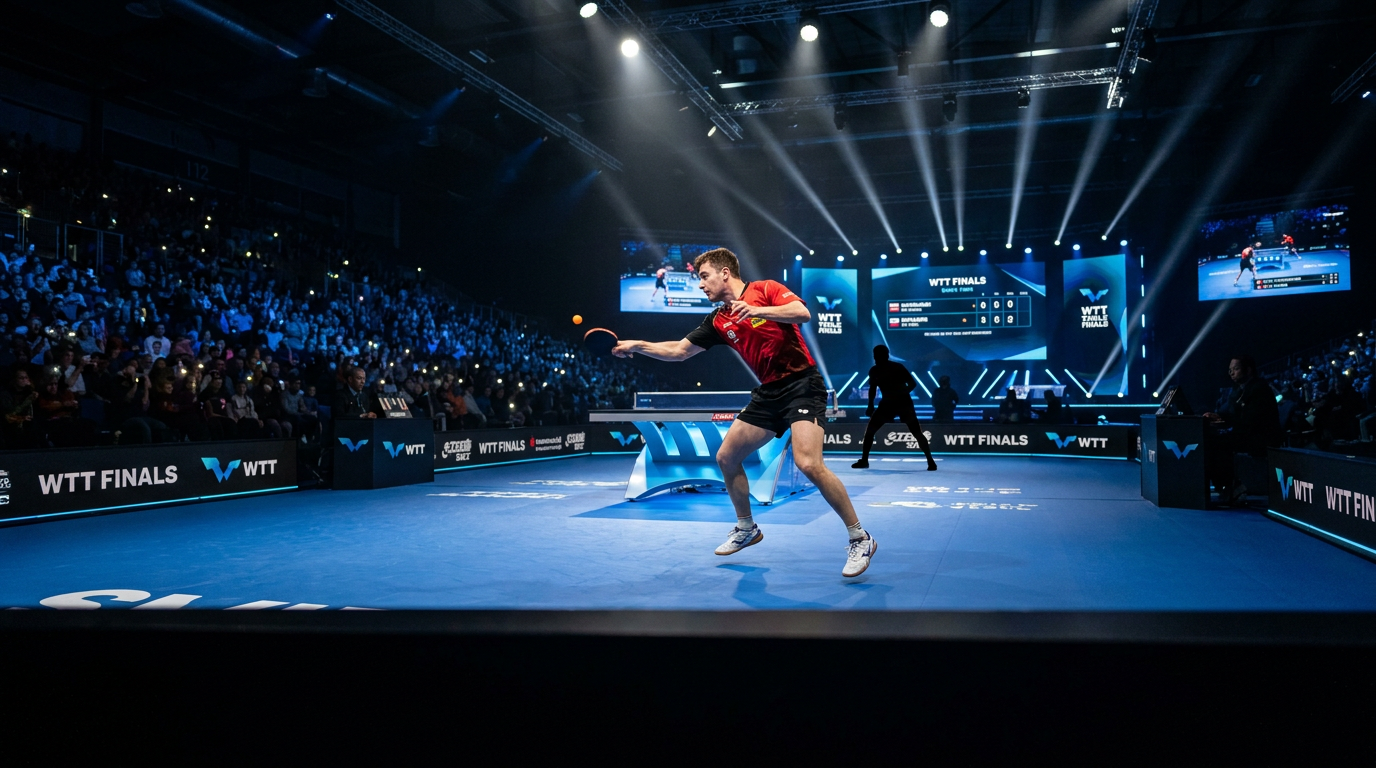
- International Challengers
- Focused on breaking the monopoly through aggressive, unorthodox playstyles.
- Chinese National Team
- Focused on defending their top ranking spots through tactical adaptation and unmatched roster depth.
- WTT Tour Officials
- Thrilled by the parity, viewing the tight standings as a driver for global viewership and commercial growth.
What's not represented
- · Grassroots coaches adapting to new global playstyles
- · Equipment manufacturers tracking rubber and blade trends
Why this matters
A more competitive and geographically diverse leaderboard is driving record global viewership and participation in table tennis. For fans, the breaking of long-held national monopolies means every tournament now carries genuine suspense and higher stakes.
Key points
- The June 2026 WTT rankings feature the most geographically diverse top 10 in modern table tennis history.
- Brazil's Hugo Calderano and France's Felix Lebrun are leading the international charge in the men's standings.
- Japan's 18-year-old Miwa Harimoto has reached a career-high World No. 3 in the women's rankings.
- Macao's Zhu Yuling has surged back into the top 5 following a 10-match unbeaten streak earlier this year.
- The Chinese national team is actively adapting its strategies to counter the high-speed playstyles of the global challengers.
- Players are currently scrambling for points at European Contender events to secure favorable seeding for August's WTT Champions Yokohama.
The mid-point of the 2026 World Table Tennis (WTT) season has arrived, and the June world rankings reveal a thrilling shift in the sport's competitive landscape. For decades, the WTT standings have been characterized by the predictable, albeit brilliant, dominance of a single nation. However, the current leaderboard tells a story of unprecedented global parity. The traditional stronghold of the Chinese national team is facing its most formidable international challenge in years, transforming the WTT standings from a static hierarchy into a fiercely competitive weekly race. As players traverse the globe from the Contender events in Europe to the massive showcases in Asia, every single match carries heavy implications for the top 10. The narrative of invincibility has been replaced by a dynamic scramble for points, proving that the sport's global development initiatives are finally bearing fruit at the highest professional level.[1][2]
Following the conclusion of the WTT Contender Zagreb and heading directly into the Star Contender Ljubljana, the points margins at the top of the leaderboard have become razor-thin. According to World Table Tennis, the latest rankings update showcases the most geographically diverse top 10 in the modern era of the sport. Players from South America, Europe, and various parts of Asia are not just participating; they are actively dictating the pace of the tour. This diversity is reshaping tournament draws, ensuring that fans are treated to dramatic, high-stakes clashes in the quarterfinals rather than waiting for the finals. The sheer volume of ranking points available during this dense summer stretch means that a single upset can completely upend the standings, leaving no room for complacency among the world's elite.[1][6]
In the men's singles race, Brazil's Hugo Calderano has firmly cemented his status as a global powerhouse and a beacon for Pan-American table tennis. Boasting an impressive 6,080 points, Calderano sits comfortably in the top four of the world rankings. His historic 2025 ITTF Men's World Cup victory proved unequivocally that he could dismantle China's elite on the biggest stages, and his consistency throughout the first half of 2026 has kept him within striking distance of the absolute summit. Calderano's explosive athleticism and devastating two-winged attack have made him a nightmare matchup for traditional players, and his sustained presence at the top of the WTT standings is inspiring a massive surge of table tennis participation across South America.[2][6]

Hot on Calderano's heels is France's Felix Lebrun, whose meteoric rise continues to captivate the European table tennis community. The French teenager, who has remarkably revitalized the traditional penhold grip for a new generation, is currently surging through the European swing of the WTT tour. As the top seed at the WTT Star Contender Ljubljana, Lebrun is capitalizing on his home-continent advantage to rack up crucial ranking points. His hyper-aggressive, fast-paced style forces opponents into uncomfortable, split-second decisions, allowing him to consistently challenge the world's top three. Lebrun's ascent in the standings is not just a personal triumph; it represents a broader European resurgence that is actively threatening the Asian monopoly on the men's podium.[5][6]
Table Tennis England notes that the broader European contingent is pushing harder than ever to break into the upper echelons of the standings. Players like Slovenia's Darko Jorgic and Germany's Dang Qiu are battling fiercely on the fringes of the top 10, using the current slate of Contender events to leapfrog their international rivals. The depth of talent currently competing on the European circuit means that early-round matches are fraught with danger for seeded players. Every victory yields vital points that could mean the difference between an unseeded nightmare draw or a protected top-eight seed at the upcoming major championships. This desperate scramble for positioning is elevating the quality of play across the entire WTT Series.[5]
Table Tennis England notes that the broader European contingent is pushing harder than ever to break into the upper echelons of the standings.
This unprecedented international pressure has certainly not gone unnoticed in Beijing. The South China Morning Post reports that while World No. 1 Wang Chuqin and rising star Lin Shidong still command the top tier of the men's standings, the Chinese Table Tennis Association is actively adapting its training regimens. The national team is meticulously analyzing the high-speed, creative playstyles of the surging international pack, recognizing that the gap in raw talent has significantly narrowed. Wang and Lin are facing immense pressure to defend their ranking points, knowing that a single early exit could result in a historic drop in the standings. The Chinese squad's ability to evolve and counter these new global threats will define the second half of their 2026 campaign.[3]
The women's standings reflect a similarly exciting diversification, driven by a thrilling mix of rising teenage prodigies and resurgent veterans. Japan's 18-year-old phenom Miwa Harimoto has officially climbed to a career-high World No. 3, positioning her as the most immediate and dangerous threat to China's Sun Yingsha. Harimoto's game is characterized by fearless ball-striking and an uncanny ability to absorb and redirect pace, making her a formidable opponent on any surface. Her presence in the top three shatters the illusion of an impenetrable Chinese wall at the top of the women's game, signaling the arrival of a new generation ready to claim the sport's biggest prizes.[4]

Butterfly Online highlights that Harimoto's rapid ascent is the direct result of back-to-back deep runs in the WTT Series over the past several months. Her aggressive, uncompromising approach to the table has allowed her to bypass established veterans and disrupt the traditional hierarchy of the women's tour. By consistently reaching the semifinals and finals of top-tier events, Harimoto is accumulating ranking points at a staggering rate, proving that her early-career flashes of brilliance have solidified into week-to-week consistency. Her success is forcing other top-10 players to recalibrate their defensive strategies, as the standard for speed, power, and early-ball initiation in the women's game continues to be pushed to new, dizzying heights by the Japanese teenager.[4]
Meanwhile, Macao's Zhu Yuling has orchestrated one of the most compelling comeback stories of the 2026 season, dramatically altering the landscape of the women's top five. After winning the WTT Star Contender Doha and embarking on a spectacular 10-match unbeaten streak earlier this year, she has surged back into the world's elite tier. Zhu's resurgence is a testament to her tactical brilliance and mental fortitude, proving that experience and strategic mastery can still dismantle raw power. Her climb up the WTT standings has injected a fascinating stylistic contrast into the upper echelon of the women's game, offering fans a masterclass in spin variation and placement.[1][2]
Zhu's return to the top of the leaderboard adds a crucial layer of veteran stability to a top 10 that is increasingly dominated by youth. Her ability to slow down the pace, dictate the rhythm of the rally, and systematically dismantle power-hitters provides a necessary counterweight to the explosive speed of teenagers like Harimoto. As Zhu continues to gather points across the Middle Eastern and European swings of the tour, she is not just climbing the rankings; she is actively shaping the tactical meta of the sport. Her presence ensures that the race for the World No. 1 spot will be a complex battle of contrasting styles rather than a simple baseline shootout.[1]

The stakes for this thrilling standings race are intensely focused on the upcoming WTT Champions Yokohama event scheduled for August. With a massive 1,000 ranking points on the line for the ultimate victor, the current Contender and Star Contender events are effectively a high-stakes scramble for favorable seeding. Reuters notes that securing a top-four seed for Yokohama is paramount, as it guarantees players will avoid facing the absolute titans of the sport until the semifinal rounds. Consequently, every match played in June and July carries the weight of a championship final, with players pushing their physical and mental limits to secure those vital incremental points.[4][6]
For fans and stakeholders of the sport, this unprecedented global parity is a massive, unequivocal victory. The International Table Tennis Federation has emphasized that a dynamic, unpredictable rankings board is driving record engagement, ticket sales, and broadcast viewership across the globe. As the tour moves through Slovenia and looks eagerly toward the massive events in Asia, the narrative is no longer just about who will lift the next trophy. Instead, the entire table tennis world is watching to see whether 2026 will be the definitive year the WTT standings are permanently rewritten by a bold, fearless, and truly global generation of stars.[2][6]
How we got here
May 2025
Hugo Calderano makes history by winning the ITTF Men's World Cup, proving international players can consistently beat China's elite.
January 2026
Zhu Yuling completes the 'Doha Double,' winning back-to-back WTT titles and surging back into the women's top 5.
June 2026
Miwa Harimoto reaches a career-high World No. 3, becoming the primary challenger to Sun Yingsha.
August 2026
The upcoming WTT Champions Yokohama, where 1,000 ranking points will heavily dictate the year-end standings.
Viewpoints in depth
The International Challengers
Players from Brazil, France, and Japan view the current standings as proof that the global gap has closed.
For stars like Hugo Calderano and Felix Lebrun, the June 2026 rankings are a validation of years spent refining unorthodox, highly aggressive playstyles. Rather than trying to beat the Chinese national team at their own baseline-rally game, these challengers have embraced extreme speed, early-ball initiation, and unique grips (like Lebrun's penhold) to disrupt the traditional rhythm of the sport. They argue that the WTT Series' dense schedule rewards their high-risk, high-reward approach, allowing them to accumulate points rapidly and permanently alter the sport's balance of power.
The Chinese National Team
The traditional powerhouse views the tight standings as a catalyst for tactical evolution and renewed focus.
Despite the shrinking points gap, the Chinese Table Tennis Association remains confident in its unmatched depth and rigorous developmental pipeline. Coaches and players within the Chinese camp view the surge of international talent not as a crisis, but as a necessary evolutionary pressure. They argue that defending their top spots against diverse global playstyles will ultimately make their elite players, like Wang Chuqin and Sun Yingsha, even sharper. Their strategy relies on meticulous video analysis and adapting their training to neutralize the specific weapons of emerging stars like Miwa Harimoto.
WTT Tour Officials
The sport's governing bodies see the geographic diversity of the top 10 as the ultimate success of their tour restructuring.
For the executives running the World Table Tennis circuit, the current standings race is exactly what they envisioned when they revamped the tour format. By distributing heavy ranking points across Contender, Star Contender, and Champions events globally, they aimed to break up regional monopolies and incentivize top players to travel constantly. Officials argue that a predictable leaderboard stifles fan interest, whereas the current weekly volatility—where a teenager from France or Japan can legitimately threaten the World No. 1 spot—is driving unprecedented broadcast rights negotiations and ticket sales.
What we don't know
- Whether the international challengers can maintain their physical peak through the grueling summer schedule leading up to Yokohama.
- How the Chinese national team's tactical adjustments will perform in high-stakes semifinal and final matchups.
Key terms
- WTT Series
- World Table Tennis, the commercial and events arm of the ITTF that organizes the professional global table tennis tour.
- Penhold Grip
- A style of holding the table tennis paddle similar to holding a pen, which allows for extreme wrist flexibility and rapid attacks.
- Contender Event
- A mid-tier tournament on the WTT circuit that offers crucial ranking points and serves as a stepping stone to major championships.
- Two-Winged Attack
- An offensive playstyle where a player is equally proficient at hitting powerful topspin shots from both the forehand and backhand sides.
Frequently asked
How does the WTT ranking system work?
The WTT rankings are a 52-week cumulative system based on a player's best 14 tournament results. Points drop off a year after they are earned, requiring players to consistently perform to maintain their standing.
Why is the WTT Champions Yokohama event so important?
The Yokohama event in August awards 1,000 ranking points to the winner, making it one of the most lucrative tournaments of the year and a major factor in year-end seeding.
Who is currently World No. 1 in table tennis?
As of June 2026, China's Wang Chuqin holds the Men's World No. 1 spot, while China's Sun Yingsha is the Women's World No. 1.
What makes Felix Lebrun's playstyle unique?
Lebrun uses a modern penhold grip, which is increasingly rare at the elite level, allowing him to execute incredibly fast, deceptive attacks close to the table.
Sources
Source coverage
6 outlets
3 viewpoints surfaced






[1]World Table TennisWTT Tour Officials
WTT Rankings Update: The Race to Yokohama Heats Up
Read on World Table Tennis →[2]International Table Tennis FederationWTT Tour Officials
Week 24 World Rankings: Historic Shifts in the Top 10
Read on International Table Tennis Federation →[3]South China Morning PostChinese National Team
China's Table Tennis Dominance Tested as Global Challengers Surge in June Rankings
Read on South China Morning Post →[4]Butterfly OnlineInternational Challengers
Miwa Harimoto Climbs to World No. 3 Ahead of WTT Champions Yokohama
Read on Butterfly Online →[5]Table Tennis EnglandInternational Challengers
European Stars Lebrun and Jorgic Eye Top 5 Breakthrough at Star Contender Ljubljana
Read on Table Tennis England →[6]ReutersInternational Challengers
Table Tennis: Calderano and Lebrun Lead International Charge in Latest WTT Standings
Read on Reuters →

More in sports
See all 13 stories →Injury
Olympic Champions Find a 'New Lease of Life' in Triumphant Returns at World Rowing Cup I
6 sources

Standings
USA Surges in World Rowing Cup Standings Ahead of Lucerne Finale
6 sources
Women's Wrestling
Inside the Inaugural NCAA Women's Wrestling Championship
8 sources

Injury
Gymnastics Injury Report: Andrade's Triumphant Return and Rivera's Strategic Rest at Pan Ams
7 sources
Every angle. Every day.
Get sports stories with full source coverage and perspective breakdowns delivered to your inbox.