
Olympic Champions Find a 'New Lease of Life' in Triumphant Returns at World Rowing Cup I
Following a grueling post-Olympic year marred by injuries and boat-class transitions, rowing stars like Hannah Scott and Fintan McCarthy are making highly anticipated returns to the water in Seville. Their comebacks highlight a broader theme of resilience and reinvention as athletes target the 2028 Los Angeles Games.
By Factlen Editorial Team
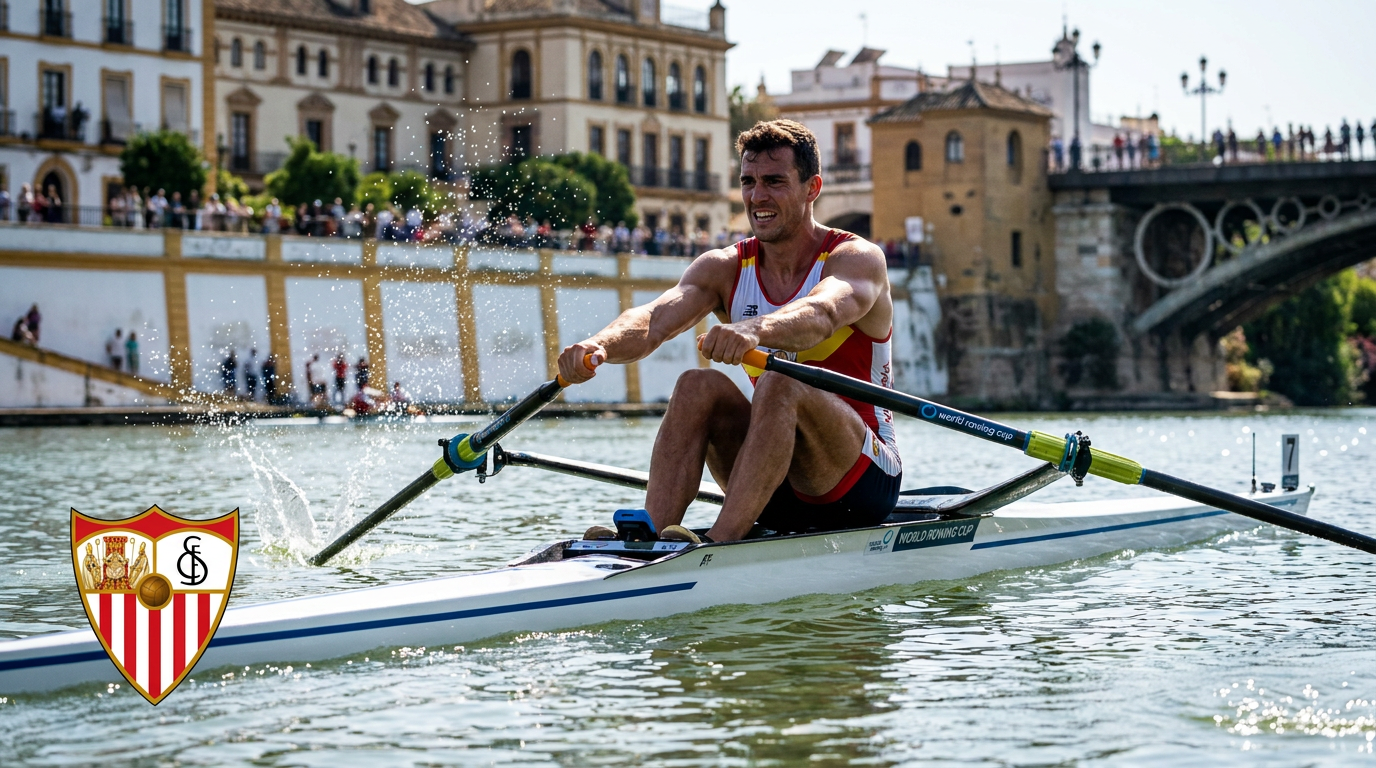
- Returning Athletes
- View the post-Olympic year as a necessary period of physical and mental reset, finding renewed motivation in new boat classes.
- National Federations
- Focus on managing athlete health, testing new crew combinations, and building sustainable depth for the LA 2028 cycle.
- Sports Medical Staff
- Emphasize the importance of biomechanics, proper fueling, and load management to prevent the rib and back injuries endemic to the sport.
What's not represented
- · Athletes whose injuries forced them into early retirement rather than a successful return.
Why this matters
In a sport defined by grueling physical repetition, the ability to recover from severe back and rib injuries dictates an athlete's longevity. These successful returns demonstrate how modern biomechanics and load management are extending the careers of Olympic champions.
Key points
- Olympic champion Hannah Scott has returned to the British quadruple sculls after a 'building-back year' managing illness.
- Irish star Fintan McCarthy successfully debuted in the openweight single sculls following a severe back injury.
- Athletes are citing a 'new lease of life' as they transition out of the discontinued lightweight Olympic categories.
- National federations are prioritizing biomechanics and load management to extend athlete careers ahead of LA 2028.
The 2026 World Rowing Cup I in Seville, Spain, marks the beginning of the international racing season, but for several reigning Olympic champions, simply reaching the start line represents a major victory. After a grueling post-Paris year defined by injuries, illness, and the immense physical toll of the sport, the regatta has become a showcase of resilience.[1][4]
Among the most anticipated returns is Great Britain’s Hannah Scott. The Coleraine native won gold in the women's quadruple sculls at the Paris 2024 Games, but the ensuing high was followed by a season of physical rebuilding. Scott has been transparent about her struggles, describing the period as a "building-back year" where she was forced to manage illness and injury while navigating an "Olympic comedown."[1][2]
Now, Scott is back leading a revamped British quad that includes Lola Anderson, Sarah McKay, and Finnola Stratton. She told reporters that her time away from the water gave her a renewed sense of clarity and purpose. Recognizing that her time as an elite athlete is finite, she is determined to "treasure every moment" of the journey toward the 2028 Los Angeles Olympics.[1][2]
A similar narrative of reinvention is playing out in the Irish camp, where two-time Olympic lightweight double champion Fintan McCarthy is making a bold transition. With lightweight rowing removed from the Olympic program for 2028, McCarthy has moved up to the openweight single sculls—a transition that was severely derailed by a back injury in February.[1][3][6]

The injury restricted McCarthy’s training entirely to a stationary bike for ten weeks, keeping him off the water until mid-April. Yet, rather than viewing the setback as a career-ender, McCarthy used the time to completely overhaul his approach to the sport. He and his coaches dug deeply into biomechanics and physiology to figure out how to maximize his power output against naturally heavier competitors.[3]
The injury restricted McCarthy’s training entirely to a stationary bike for ten weeks, keeping him off the water until mid-April.
The forced reset has proven transformative. McCarthy noted that the steep learning curve of a new boat class and the meticulous rehabilitation process have given him a "new lease of life in the sport." He described the experience as feeling like he is "nearly starting again," bringing a fresh sense of enjoyment to the daily grind.[3][6]
McCarthy is not the only Irish rower finding freedom in the heavyweight transition. Mags Cremen, who previously battled severe rib injuries linked to the low body fat required for lightweight weigh-ins, has also embraced the openweight class. The move has allowed her to focus entirely on fueling for performance rather than starvation, a shift she also described as a "new adventure" and a massive relief for her physical health.[1][3]

Across the broader World Cup field, national federations are increasingly prioritizing long-term athlete health over immediate results. British Rowing noted that their men's quadruple sculls crew also faced interrupted preparation due to injury this spring. However, rather than rushing the recovery, the federation allowed the new combination time to settle, resulting in excellent performances during their final training blocks.[5]
Even for those who are still actively managing pain, the Seville regatta offers a crucial testing ground. Tokyo Olympic champion Stefanos Ntouskos of Greece raced through the weekend despite a lingering back injury that severely limited his recent training volume. While the injury relegated him to a minor final, his presence on the water underscores the grit required to compete on the elite circuit.[1][4]
As the rowing world looks ahead to the World Championships in Amsterdam this August, the early results from Seville prove that raw speed is only part of the equation. The athletes standing on the podium in 2028 will be those who have mastered the art of injury management, adaptability, and the mental fortitude to find joy in the comeback.[1][4]
How we got here
August 2024
Hannah Scott and Fintan McCarthy win gold medals at the Paris Olympic Games.
February 2026
McCarthy suffers a severe back injury, restricting his training to a stationary bike.
Mid-April 2026
McCarthy is medically cleared to return to training on the water.
May 2026
Athletes make their international returns at World Rowing Cup I in Seville, Spain.
Viewpoints in depth
Returning Athletes
Athletes view the post-Olympic reset as a vital period for long-term career survival.
For competitors like Hannah Scott and Fintan McCarthy, the year following an Olympic peak is often the most physically and mentally dangerous. The pressure to immediately return to gold-medal form frequently leads to overtraining and burnout. By accepting a 'building-back year' and embracing the steep learning curve of new boat classes, these athletes have found a way to relieve the mental pressure. They argue that stepping away from the water to heal—even if it means spending months on a stationary bike—ultimately extends their careers and reignites their passion for the sport.
National Federations
Governing bodies are shifting focus toward sustainable load management and biomechanical efficiency.
Organizations like British Rowing and Rowing Ireland are increasingly treating the first two years of an Olympic cycle as an experimental phase rather than a must-win period. By allowing athletes like the British men's quad to recover fully from interrupted preparations without the threat of losing their seats, federations are building deeper, healthier rosters. Coaches are heavily investing in biomechanical analysis to help transitioning athletes—particularly former lightweights moving to openweight—compete safely against naturally larger opponents without overloading their spines and ribs.
What we don't know
- How the former lightweight athletes will physically hold up against established openweight competitors over a full 2000-meter World Championship final.
- Whether the athletes currently managing lingering injuries, like Stefanos Ntouskos, will require surgical intervention before the 2028 Games.
Key terms
- Single Sculls
- A rowing event where a single athlete propels the boat using two oars, one in each hand.
- Quadruple Sculls
- A rowing event featuring four athletes in a boat, each using two oars.
- Openweight
- A racing category with no maximum weight limit for the athletes, historically referred to as 'heavyweight' in contrast to the restricted lightweight class.
- Biomechanics
- The study of the mechanical laws relating to the movement or structure of living organisms, used in rowing to optimize the efficiency and safety of a stroke.
Frequently asked
Why are lightweight rowers moving to the heavyweight class?
Lightweight rowing events have been permanently removed from the Olympic program starting with the 2028 Los Angeles Games, forcing athletes to transition to openweight categories if they wish to continue competing at the Olympics.
What are the most common injuries in elite rowing?
Elite rowers frequently suffer from lower back injuries and rib stress fractures due to the repetitive, high-load flexion required by the rowing stroke, as well as the strict weight cuts previously required in lightweight classes.
Where is the first World Rowing Cup of 2026?
The 2026 World Rowing Cup I is being held at the La Cartuja High Performance Center in Seville, Spain.
Sources
Source coverage
6 outlets
3 viewpoints surfaced






[1]Row360Returning Athletes
World Rowing Cup I: Seville Preview
Read on Row360 →[2]BBC Sport NIReturning Athletes
Scott 'treasuring' every day on road to LA 2028
Read on BBC Sport NI →[3]Irish ExaminerSports Medical Staff
Rowing scandal brought choppy waters for Fintan McCarthy to navigate
Read on Irish Examiner →[4]World RowingNational Federations
A second day of racing at 2026 World Rowing Cup I in Seville
Read on World Rowing →[5]British RowingNational Federations
The GB Rowing Team to race World Rowing Cup I, Seville
Read on British Rowing →[6]Echo LiveReturning Athletes
Fintan McCarthy enjoying the move up from lightweight rowing
Read on Echo Live →
More in sports
See all 11 stories →Premier League Transfers
Tottenham Hotspur Signs Defender Jan Paul van Hecke in €60 Million Transfer
7 sources
Injury
Lindsey Vonn Reaches Major Recovery Milestone Months After Harrowing Olympic Crash
6 sources
Standings
Marco Odermatt and Mikaela Shiffrin Cement Legacies in Historic 2026 FIS Alpine Ski World Cup Standings
6 sources

Injury
XGL Injury Report: Nyjah Huston's Rapid Recovery Headlines Inaugural Summer Season Status Updates
6 sources

Every angle. Every day.
Get sports stories with full source coverage and perspective breakdowns delivered to your inbox.