
US Envoy Heads to Switzerland for Iran Talks Amid Regional Escalation
US and Iranian officials are preparing for a critical round of indirect negotiations in Switzerland, aiming to establish a new diplomatic framework as conflict continues between Israel and Hezbollah.
By Factlen Editorial Team
- US Administration
- Argues that diplomacy is the only viable mechanism to cap Iran's nuclear program and stabilize the Middle East without triggering a massive regional war.
- Iranian Government
- Seeks relief from crippling economic sanctions while demanding that the US restrain Israeli military operations against its regional allies.
- Israeli Security Establishment
- Views the talks as a dangerous concession that will enrich Iran and fund proxy militias like Hezbollah and Hamas, increasing existential threats to Israel.
- International Mediators
- Focuses on the urgent need for de-escalation and verifiable nuclear monitoring to prevent an uncontrolled arms race in the region.
What's not represented
- · Lebanese civilians affected by the border conflict
- · Gulf Arab states concerned about Iranian regional influence
Why this matters
A new US-Iran agreement could significantly alter the balance of power in the Middle East, potentially capping Iran's nuclear program while reshaping US-Israel relations. If the talks collapse, the region faces a heightened risk of a direct, multi-front war involving the US, Israel, and Iranian-aligned militias.
Key points
- US Envoy Steve Witkoff is traveling to Switzerland for indirect nuclear negotiations with Iran.
- The talks were delayed due to escalating military conflict between Israel and Hezbollah in Lebanon.
- Iran is demanding the US halt Israeli military operations in Lebanon as part of the broader diplomatic process.
- Vice President JD Vance defended the diplomatic push, telling Israeli critics the US cannot 'kill its way out' of the crisis.
- The US aims to cap Iran's 60 percent uranium enrichment in exchange for targeted economic sanctions relief.
- Israel strongly opposes the framework, fearing sanctions relief will fund Iranian proxy militias across the Middle East.
White House envoy Steve Witkoff is currently en route to Switzerland to initiate a highly anticipated round of indirect diplomatic talks with Iranian officials. The negotiations represent the first major effort by the current US administration to establish a new framework regarding Iran's nuclear program and regional security posture. The talks are taking place under the shadow of intense geopolitical strain, requiring delicate maneuvering by international mediators.[1]
The meetings were originally scheduled to begin on Friday but faced an abrupt postponement due to escalating military engagements between Israel and Hezbollah forces in Lebanon. The delay highlights the fragility of the diplomatic process, which remains deeply entangled with the volatile security situation across the broader Middle East.[1][3]
Iranian leadership has explicitly linked the progress of these negotiations to the ongoing regional conflicts. Iran's deputy foreign minister stated that while Tehran is ready to move forward on diplomacy with the United States, the broader war must end on all fronts. Specifically, Iranian officials are demanding that the US ensure Israel ceases its military operations in Lebanon as a precondition for broader regional stabilization.[3]
The US administration is pursuing a dual-track approach: pushing for a diplomatic breakthrough with Tehran while simultaneously managing deep skepticism from its closest Middle Eastern ally, Israel. This dynamic has led to unusually blunt public messaging from top US officials regarding the limitations of military force in resolving the region's interlocking crises.[1][2]
Vice President JD Vance delivered a stark message to Israeli critics of the potential diplomatic deal, asserting that a nation cannot simply 'kill its way out' of complex national security problems. This rhetoric marks a notable shift in US public posture, signaling a firm commitment to the diplomatic track even in the face of strong opposition from the Israeli government.[2]
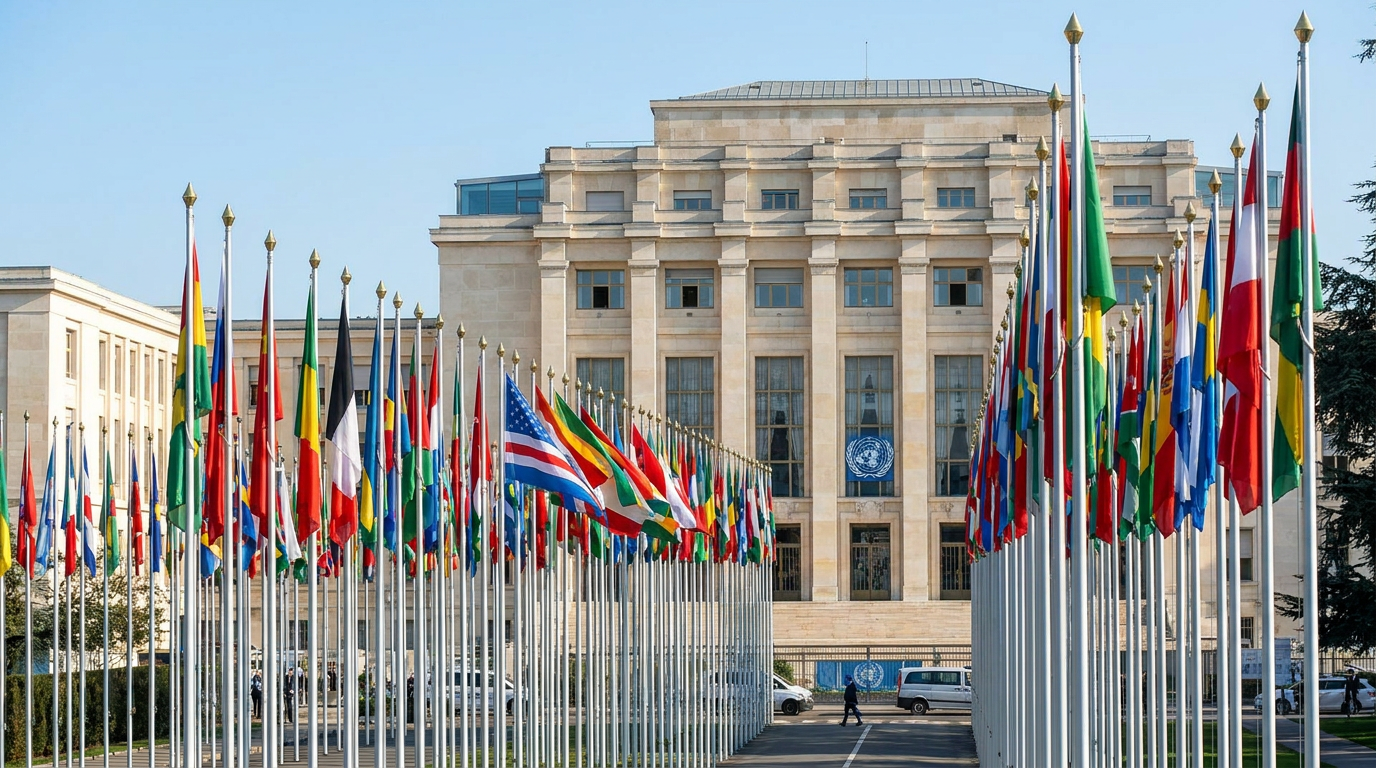
Because the United States and Iran severed formal diplomatic relations in 1980, the negotiations in Switzerland will not feature face-to-face meetings between the two delegations. Instead, the process will rely on 'proximity talks,' a mechanism where Swiss and European diplomats shuttle proposals between US and Iranian officials seated in separate rooms or buildings.[4][7]

Switzerland has historically served as the official US protecting power in Iran, making Geneva a natural and tested venue for these high-stakes backchannel communications. European mediators have spent weeks preparing the logistical and diplomatic groundwork to ensure the shuttle diplomacy can proceed smoothly despite the high tensions.[4][7]
European mediators have spent weeks preparing the logistical and diplomatic groundwork to ensure the shuttle diplomacy can proceed smoothly despite the high tensions.
At the core of the negotiations is Iran's advancing nuclear program. According to non-proliferation experts, Iran has been enriching uranium to 60 percent purity, a level that has no civilian justification and places the country a short technical step away from the 90 percent threshold required for weapons-grade material.[6]
The primary objective for the US delegation is to secure verifiable caps on this enrichment activity and restore comprehensive monitoring by the International Atomic Energy Agency (IAEA). In exchange, Tehran is seeking substantial relief from the heavy economic sanctions that have severely constrained its oil exports and isolated it from the global banking system.[3][6]

The Israeli government remains deeply opposed to the emerging framework. Israeli officials argue that providing sanctions relief to Tehran will inevitably result in a financial windfall for Iranian-aligned militias across the region, including Hezbollah in Lebanon and Hamas in Gaza, thereby increasing the direct threat to Israeli security.[5]
The Israeli security establishment views the diplomatic push as a dangerous concession. They maintain that any agreement focusing solely on the nuclear portfolio while ignoring Iran's ballistic missile program and its network of regional proxies is fundamentally flawed and will only delay, rather than prevent, a broader conflict.[5]

Conversely, European diplomats involved in facilitating the talks view this window as a critical, and perhaps fleeting, opportunity to de-escalate a region that has been teetering on the brink of a wider war for months. They argue that capping the nuclear program is a necessary first step before broader regional security issues can be addressed.[4]
As Envoy Witkoff arrives in Switzerland, the immediate challenge will be decoupling the technical nuclear negotiations from the volatile daily developments on the Israel-Lebanon border. If cross-border fire intensifies, the political space for both US and Iranian negotiators to make concessions could rapidly evaporate.[1][3][4]
How we got here
1980
The US severs formal diplomatic ties with Iran, leading Switzerland to become the US protecting power in Tehran.
2018
The United States formally withdraws from the Joint Comprehensive Plan of Action (JCPOA) nuclear agreement.
2021-2025
Iran steadily increases its uranium enrichment levels up to 60 percent purity amid stalled diplomatic efforts.
June 19, 2026
Scheduled talks in Switzerland are postponed due to intense cross-border fighting between Israel and Hezbollah.
June 20, 2026
US Envoy Steve Witkoff departs for Geneva to begin the delayed proximity talks with Iranian officials.
Viewpoints in depth
The US Administration's View
Diplomacy is the necessary tool to prevent a nuclear-armed Iran and avoid a catastrophic regional war.
The US administration views the Swiss talks as a critical off-ramp from a rapidly deteriorating security environment in the Middle East. By focusing on capping Iran's uranium enrichment at its current 60 percent level and restoring IAEA monitoring, Washington hopes to freeze the immediate nuclear threat. Officials argue that military strikes on Iranian nuclear facilities would only delay the program while guaranteeing a massive, multi-front regional war. Vice President JD Vance's recent comments underscore a growing US consensus that military force has reached its limits in solving the region's deeply entrenched political and security dilemmas.
The Iranian Government's View
Sanctions relief is non-negotiable, and regional security cannot be separated from the actions of US allies.
Tehran approaches the negotiations seeking immediate relief from the 'maximum pressure' sanctions that have crippled its economy, devalued its currency, and locked it out of global markets. However, Iranian leadership refuses to treat the nuclear issue in a vacuum. By explicitly linking the progress of the Swiss talks to the ongoing conflict in Lebanon, Iran is asserting its role as a regional power broker. Tehran insists that if the US wants a stabilized Middle East and a capped nuclear program, Washington must use its leverage to restrain Israeli military operations against Iranian allies like Hezbollah.
The Israeli Government's View
The talks are a dangerous distraction that will enrich an existential enemy without dismantling its capabilities.
The Israeli security establishment views the renewed diplomatic push with profound alarm. From Israel's perspective, any agreement that provides sanctions relief to Tehran will result in billions of dollars flowing directly to the Islamic Revolutionary Guard Corps (IRGC) and its network of proxy militias, including Hezbollah, Hamas, and the Houthis. Israeli officials argue that the proposed framework merely pauses the nuclear threat while actively subsidizing the conventional military threats surrounding Israel's borders. They maintain that only credible military threats and sustained economic strangulation can force Iran to abandon its nuclear ambitions.
What we don't know
- Whether the US and Iran can successfully insulate the nuclear negotiations from the daily violence on the Israel-Lebanon border.
- Exactly what level of sanctions relief the US is willing to offer in exchange for a freeze on 60 percent uranium enrichment.
- How Israel might respond militarily if it concludes the US-Iran diplomatic framework leaves it vulnerable to an emboldened Hezbollah.
Key terms
- Proximity Talks
- A form of indirect diplomacy where conflicting parties do not meet face-to-face, relying instead on third-party mediators to shuttle proposals between them.
- Uranium Enrichment
- The process of increasing the concentration of the U-235 isotope in uranium; 3-5% is used for civilian power, while 90% is required for nuclear weapons.
- Sanctions Relief
- The lifting or easing of economic penalties imposed by the US and international bodies, which currently restrict Iran's ability to sell oil and access global banking.
- Protecting Power
- A country that represents a sovereign state in another state where it lacks diplomatic representation, a role Switzerland fulfills for the US in Iran.
Frequently asked
Why are the talks happening in Switzerland?
Switzerland has acted as the official protecting power for US interests in Iran since diplomatic ties were severed in 1980, making it the traditional neutral ground for backchannel communications.
Will US and Iranian officials meet face-to-face?
No. The negotiations are structured as 'proximity talks,' meaning Swiss and European mediators will shuttle messages between the two delegations, who will sit in separate rooms.
What does Israel think of the negotiations?
Israel strongly opposes the talks, arguing that any sanctions relief will be used by Iran to fund proxy militias like Hezbollah and Hamas, rather than leading to lasting peace.
Why were the talks delayed?
The talks were briefly postponed due to intense fighting between Israel and Hezbollah in Lebanon, prompting Iran to demand that the US rein in Israeli military operations.
Sources
Source coverage
7 outlets
4 viewpoints surfaced







[1]AxiosUS Administration
Trump envoy Witkoff heads to Switzerland ahead of potential Iran talks
Read on Axios →[2]Fox NewsUS Administration
JD Vance tells Israeli critics 'you can't kill your way' out of national security problems
Read on Fox News →[3]Al JazeeraIranian Government
Iran war live: Tehran says US must ensure Israel ends attacks on Lebanon
Read on Al Jazeera →[4]ReutersInternational Mediators
European mediators prepare Swiss venue for delayed US-Iran proximity talks
Read on Reuters →[5]The Times of IsraelIsraeli Security Establishment
Israeli officials express deep concern over renewed US-Iran diplomatic push
Read on The Times of Israel →[6]Arms Control AssociationInternational Mediators
Iran's Nuclear Program: 2026 Status and Breakout Estimates
Read on Arms Control Association →[7]Council on Foreign RelationsInternational Mediators
The Swiss Backchannel: A History of US-Iran Indirect Diplomacy
Read on Council on Foreign Relations →

Every angle. Every day.
Get news politics stories with full source coverage and perspective breakdowns delivered to your inbox.