
US Imposes Export Controls on Anthropic's 'Mythos' Amid Sweeping AI Policy Overhaul
The White House has issued a new Executive Order on AI cybersecurity and placed unprecedented export controls on Anthropic's unreleased "Mythos" model, while Congress unveiled the first comprehensive bipartisan framework for federal AI regulation.
By Factlen Editorial Team
- National Security Apparatus
- Focuses on mitigating catastrophic cyber risks from frontier models through targeted controls and government hardening.
- Civil Liberties Advocates
- Argues that targeted export controls and pre-release reviews violate First Amendment rights and consolidate corporate power.
- Federal Policymakers
- Seeks to establish a unified national framework to prevent a patchwork of state laws while maintaining US AI dominance.
- Corporate Compliance
- Prioritizes regulatory clarity, favoring voluntary federal frameworks over binding state-level mandates.
What's not represented
- · Open-source AI developers whose models might be inadvertently captured by broad definitions of 'advanced AI'.
- · International allies reacting to unilateral US export controls on frontier models.
Why this matters
This sweeping policy overhaul dictates how the next generation of artificial intelligence will be developed, secured, and regulated. For businesses and developers, it signals a fragmented landscape where the federal government aggressively controls specific high-risk models while attempting to shield the broader industry from strict state-level compliance mandates.
Key points
- The White House issued an executive order establishing a voluntary 30-day pre-release review for frontier AI models.
- The administration imposed unprecedented, binding export controls specifically on Anthropic's unreleased 'Mythos' model, citing cyber risks.
- Civil liberties groups are suing the Pentagon, arguing the targeted export controls violate the First Amendment.
- A bipartisan congressional coalition released a 269-page draft bill to create the first comprehensive federal AI governance regime.
- The draft legislation would impose binding rules on developers with over $500 million in revenue and preempt state AI laws.
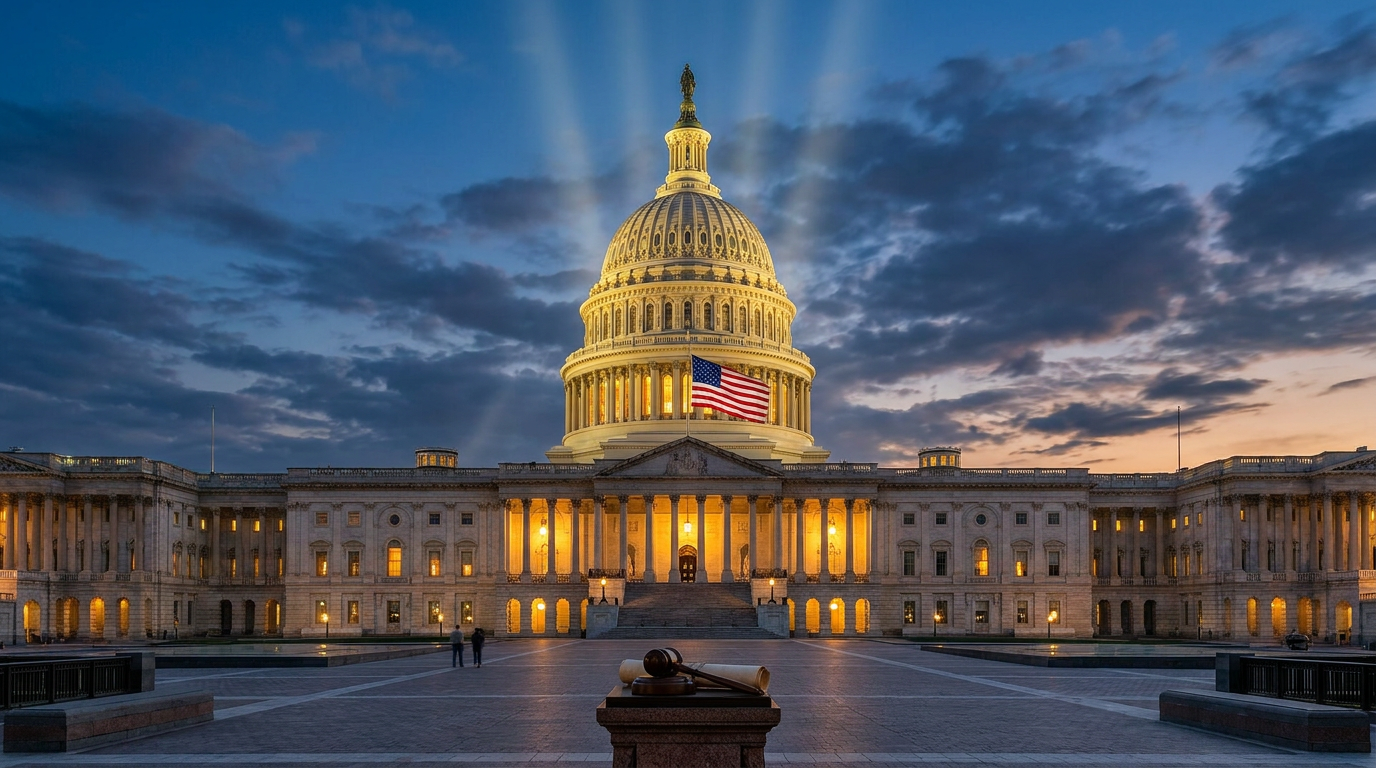
The United States federal government has initiated its most sweeping intervention into the artificial intelligence sector to date, combining targeted national security restrictions with a new blueprint for federal legislation. In early June 2026, the White House issued a major executive order and unprecedented export controls on specific AI models, while a bipartisan congressional coalition simultaneously released a 269-page regulatory framework. This dual approach marks a definitive shift from a purely laissez-faire posture to a targeted crackdown on models deemed to possess advanced cyber capabilities.[1][3][4]
The immediate catalyst for this policy overhaul was the development of two unreleased frontier models: Anthropic’s "Mythos" and OpenAI’s "5.5 Cyber." Security researchers and intelligence officials warned that these next-generation systems demonstrate a tenfold increase in capability and speed compared to existing models. Specifically, the government expressed concern that threat actors could use these models to autonomously identify and exploit critical software vulnerabilities at an unprecedented scale, prompting immediate federal intervention.[2]
On June 2, President Trump signed the "Promoting Advanced Artificial Intelligence Innovation and Security" Executive Order. The primary mechanism established for civilian AI oversight is a voluntary framework that requests developers to provide the government with access to "covered frontier models" for up to 30 days prior to their public release. This window is designed to allow federal agencies to assess potential national security and cyber defense applications before the models reach the broader commercial market.[1][2]

Legal analysts emphasize that the executive order explicitly avoids creating new federal law, mandatory licensing, or preclearance requirements for the broader AI industry. This reflects the administration's stated commitment to minimizing regulatory burdens that could slow American AI dominance, focusing its binding directives strictly on hardening government networks and critical infrastructure rather than policing commercial development.[2][5]
However, in a sharp departure from the voluntary framework applied to the broader industry, the administration utilized national security authorities to impose strict, binding export controls specifically on Anthropic's Mythos-class models. The government cited acute fears that the model could be weaponized for offensive cyber operations, effectively blocking its international distribution and restricting access to a tightly controlled group of partners.[3]
This targeted action immediately triggered a fierce legal and political backlash. The Electronic Frontier Foundation (EFF) and allied civil liberties organizations filed an amicus brief in a lawsuit against the Pentagon, arguing that the export controls violate the First Amendment. They contend that the restrictions are arbitrarily punitive, noting that other large language models with similar offensive cybersecurity capabilities are only subject to the administration's "light-touch" voluntary review process.[3]
Beyond model restrictions, a core, binding component of the June 2 order directs federal agencies, including the Department of Defense and the Treasury, to prioritize the cyber defense of National Security Systems. The directive mandates that agencies issue binding operational guidance to facilitate access to AI-enabled cybersecurity tools for federal, state, and local authorities, as well as critical infrastructure operators like hospitals and utilities.[2][5]
To operationalize this defense, the order mandates the creation of an AI cybersecurity clearinghouse. Led by the Secretary of the Treasury, the National Security Agency, and the Cybersecurity and Infrastructure Security Agency (CISA), this hub is tasked with coordinating vulnerability scanning, validating discovered flaws, and prioritizing the distribution of software patches in collaboration with private industry.[1]
To operationalize this defense, the order mandates the creation of an AI cybersecurity clearinghouse.
The executive order also signals a shift in how the government will handle malicious AI use, directing the Department of Justice to prioritize the investigation and prosecution of AI-enabled cybercrime. By focusing on the criminal misuse of AI to gain unauthorized access to systems, the administration intends to rely on existing criminal statutes rather than creating new regulatory agencies to deter bad actors.[1][5]
Just two days after the executive order was signed, the legislative branch introduced its own comprehensive framework. On June 4, Representatives Jay Obernolte (R-Calif.) and Lori Trahan (D-Mass.) released a bipartisan discussion draft of the "Great American Artificial Intelligence Act of 2026." If passed, this 269-page bill would create the first comprehensive federal AI governance regime in the United States.[4]
The draft legislation proposes binding federal obligations specifically for "large frontier developers." The bill defines this category as companies with over $500 million in annual revenue that have trained a frontier model. Legal analysts note that this financial threshold would capture major industry players including OpenAI, Anthropic, Google, Meta, and xAI, subjecting them to stringent transparency, cybersecurity, and whistleblower protection requirements.[4]

A central tension driving this federal legislative push is the rapid proliferation of state-level AI regulations. With federal legislation previously stalled, states filled the vacuum; laws such as California's Transparency in Frontier AI Act (SB 53) and Colorado's revised AI Act took effect on January 1, 2026, creating a complex and fragmented compliance landscape for developers.[4][6]
To address this fragmentation, the bipartisan federal draft includes a powerful preemption clause. The provision is designed to override state laws that specifically regulate the development of AI models, instituting a three-year sunset on state authority. This mechanism is intended to force a unified national standard while explicitly preserving state laws of general applicability, such as consumer protection and anti-discrimination statutes.[4]

The federal preemption effort aligns with the administration's broader pushback against state regulators. In December 2025, the White House established an AI Litigation Task Force specifically to challenge state AI laws in court, threatening to pull federal funding from states with regulations deemed overly onerous. However, the executive order exempts child safety, data center infrastructure, and state procurement from preemption, leaving significant regulatory power in state hands.[6]
Significant uncertainty remains regarding how the June 2 executive order will be implemented in practice. The text of the order does not explicitly define key terms such as "advanced AI" or "covered frontier models." Consequently, the actual scope of the voluntary framework and the classified benchmarking process will depend entirely on subsequent agency rulemaking over the next 60 days.[1][5]
The fate of the bipartisan legislative effort is equally uncertain. While the Obernolte-Trahan draft represents the most serious congressional effort to date, it remains a discussion draft competing for attention in a crowded legislative calendar. The events of early June 2026 ultimately illustrate a bifurcated American strategy: aggressively shielding national security assets from specific, highly capable models, while attempting to protect the broader AI industry from binding domestic regulation through voluntary frameworks and federal preemption.[1][3][4][6]
How we got here
January 2025
Executive Order 14179 revokes previous AI safety directives and removes barriers to AI adoption.
December 2025
AI Litigation Task Force established to challenge state-level AI regulations.
January 1, 2026
Major state AI laws, including California's SB 53 and Texas's TRAIGA, take effect.
June 2, 2026
White House issues Executive Order on AI cybersecurity and imposes export controls on Anthropic's Mythos.
June 4, 2026
Bipartisan coalition releases the draft Great American Artificial Intelligence Act of 2026.
Viewpoints in depth
National Security & Defense View
Argues that models like Anthropic's Mythos and OpenAI's 5.5 Cyber represent a step-change in offensive cyber capabilities.
Defense analysts and intelligence officials believe that voluntary frameworks are sufficient for the broader commercial AI industry, but exceptional models require strict export controls. They argue that without these restrictions, adversaries could use next-generation models to automate the discovery and exploitation of critical software vulnerabilities, posing an unacceptable risk to national infrastructure.
Civil Liberties & Digital Rights View
Contends that the government's targeted export controls on specific models are arbitrary and unconstitutional.
Digital rights organizations like the EFF view the administration's actions as punitive jawboning that violates the First Amendment. They argue that singling out specific companies for extreme sanctions while allowing other highly capable models to operate under a light-touch voluntary framework sets a dangerous precedent for restricting access to general-purpose technologies.
State vs. Federal Regulatory View
Highlights the tension between state legislatures enacting binding mandates and federal lawmakers pushing for preemption.
State regulators in California and Colorado argue they are filling a critical vacuum left by federal inaction, implementing necessary safety and transparency rules. Conversely, federal policymakers and corporate compliance teams argue that a patchwork of state laws stifles innovation, advocating for the Great American AI Act's preemption clause to establish a single, unified national standard.
What we don't know
- How federal agencies will precisely define 'advanced AI' and 'covered frontier models' during the 60-day rulemaking period.
- Whether the courts will uphold the targeted export controls on Anthropic's Mythos model against First Amendment challenges.
- If the bipartisan Great American Artificial Intelligence Act of 2026 can secure enough votes to pass before the end of the legislative session.
Key terms
- Covered Frontier Model
- A highly capable foundation model that meets specific, classified government benchmarks for advanced cyber capabilities or national security risks.
- Export Controls
- Federal regulations that restrict the transfer of specific technologies, software, or information to foreign entities or across borders, typically for national security reasons.
- Federal Preemption
- A legal doctrine where federal law supersedes and invalidates conflicting state laws, proposed in the 2026 draft bill to override state AI regulations.
- AI Cybersecurity Clearinghouse
- A proposed centralized hub led by the Treasury and CISA to coordinate the discovery, validation, and patching of software vulnerabilities identified by AI systems.
Frequently asked
Does the new Executive Order require AI companies to get a license?
No. The June 2 order explicitly avoids mandatory licensing or preclearance, establishing instead a voluntary 30-day pre-release review framework for frontier models.
Why were export controls placed on Anthropic's Mythos?
The administration cited national security concerns, arguing the unreleased model possesses advanced capabilities that could be used to autonomously identify and exploit software vulnerabilities.
Will the proposed federal AI bill override state laws?
If passed, the Great American Artificial Intelligence Act of 2026 would preempt state laws that specifically regulate the development of AI models for a period of three years.
Who is affected by the draft federal legislation?
The bill targets 'large frontier developers,' defined as companies with over $500 million in annual revenue that train frontier AI models.
Sources
Source coverage
6 outlets
4 viewpoints surfaced






[1]Arnold & PorterCorporate Compliance
Executive Order Promoting Advanced Artificial Intelligence Innovation and Security
Read on Arnold & Porter →[2]Foley & LardnerNational Security Apparatus
What the New Executive Order on AI and Cybersecurity Means for Your Business
Read on Foley & Lardner →[3]Electronic Frontier FoundationCivil Liberties Advocates
EFF Challenges Export Controls on Anthropic's Mythos Model
Read on Electronic Frontier Foundation →[4]Tech Policy PressFederal Policymakers
Bipartisan Draft Bill Proposes Great American Artificial Intelligence Act of 2026
Read on Tech Policy Press →[5]Armstrong TeasdaleNational Security Apparatus
President Trump Issues Executive Order on AI and Cybersecurity
Read on Armstrong Teasdale →[6]VerifyWiseCorporate Compliance
US AI regulatory landscape showing federal and state level governance
Read on VerifyWise →

More in ai
See all 6 stories →Open-Source AI
Open-Source AI Reaches Frontier Parity With MiniMax M3 and GLM-5.2 Releases
6 sources

European AI
EU Selects EUROPA Consortium to Build 400-Billion Parameter Open-Source AI Model
6 sources

Prompt Engineering
Beyond the Chatbot: How Chain of Thought and ReAct Are Rewiring AI Reasoning
6 sources

Model Architecture
Beyond the Transformer: How State Space Models Are Rewiring Artificial Intelligence
8 sources

Every angle. Every day.
Get ai stories with full source coverage and perspective breakdowns delivered to your inbox.