
Memory Stocks Are Having Their Best Year Ever. Why Are They Trading at Bargain Multiples?
Despite triple-digit revenue growth driven by the AI boom, memory chip giants like Micron and SK Hynix are trading at single-digit price-to-earnings ratios. The disconnect highlights a fierce Wall Street debate over whether AI has permanently changed the industry's notorious boom-and-bust cycle.
By Factlen Editorial Team
- Structural Bulls
- Argue that AI has permanently transformed memory from a cyclical commodity into a strategic asset.
- Cyclical Bears
- Warn that the current windfall is a classic cycle peak that will end in massive oversupply.
- Industry Analysts
- Focus on the immediate supply chain mechanics and the fierce battle for market share.
What's not represented
- · Retail investors holding underperforming non-AI tech stocks
- · Hardware startups priced out of the memory market
Why this matters
Understanding why the market prices memory stocks so cheaply compared to Nvidia unlocks a core lesson in how Wall Street values cyclical versus structural growth. For investors, it reveals how historical biases can obscure massive technological shifts.
Key points
- Memory chip makers are posting historic revenue growth driven by the AI boom.
- Despite the growth, companies like Micron and SK Hynix trade at single-digit forward P/E ratios.
- Wall Street is debating whether this is a temporary cyclical peak or a permanent structural shift.
- High Bandwidth Memory (HBM) production is entirely sold out through the end of 2026.
The artificial intelligence boom has minted a new class of trillion-dollar tech giants, with investors eagerly paying massive premiums for companies building the infrastructure of the future. Yet, hiding in plain sight are some of the AI era's biggest earners, trading at valuations that look like misprints.[1]
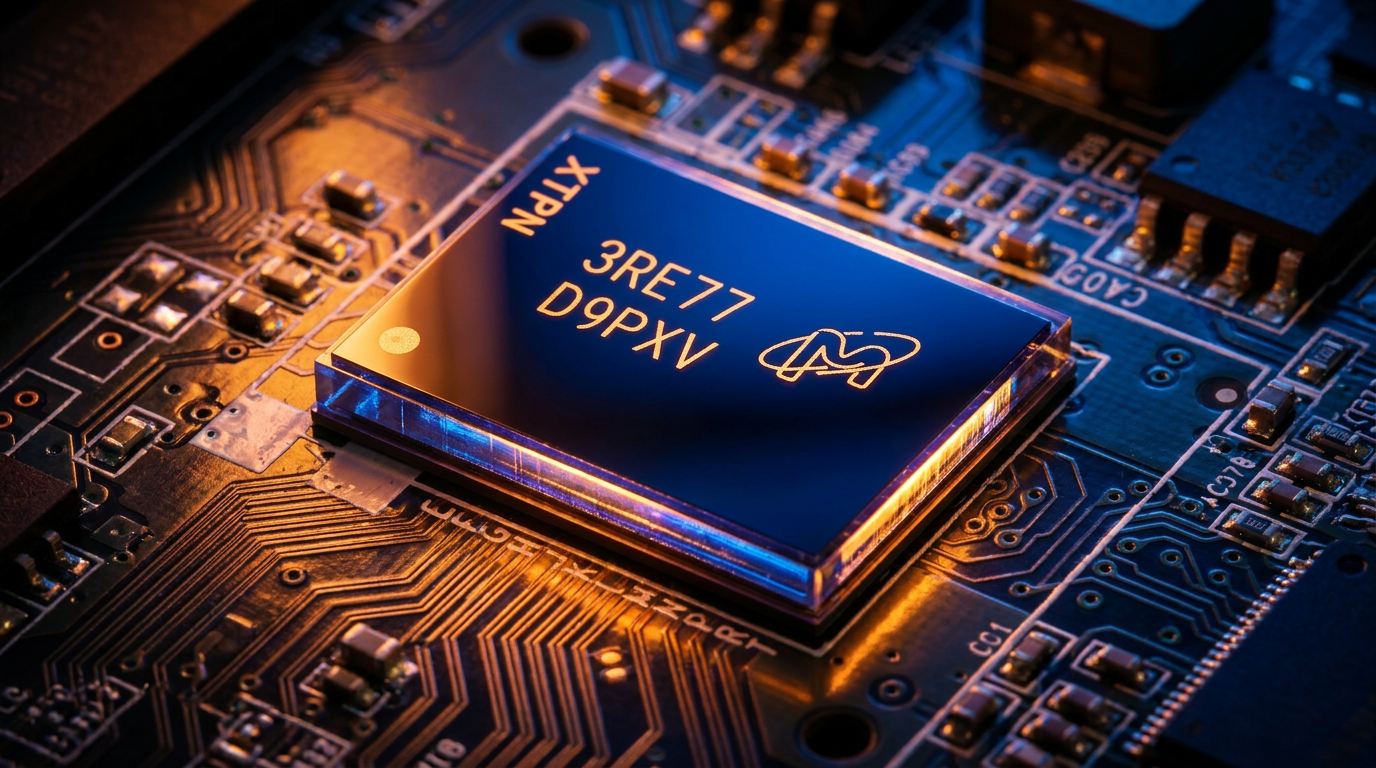
Memory chip manufacturers—the companies producing the essential silicon that allows AI models to store and process data—are posting historic financial results. Micron Technology recently reported year-over-year revenue growth approaching 200%, while South Korea's SK Hynix and Samsung are seeing similar explosive trajectories.[3]
Despite these staggering numbers, the market is treating them like bargain-bin commodities. As of mid-2026, Micron trades at roughly 9 to 11 times its projected earnings over the next twelve months. SK Hynix sits even lower, hovering between 6 and 8 times forward earnings.[1][3][7]
To put that in perspective, Nvidia trades at well over 20 times forward earnings, and the broader S&P 500 index averages around 20.3. The companies providing the critical bottleneck component for the entire AI revolution are priced as if their businesses are about to fall off a cliff.[2]

This glaring disconnect is rooted in the ghosts of cycles past. For decades, the memory chip industry has been notoriously cyclical, driven by the predictable rhythms of consumer electronics like smartphones and personal computers.[2][6]
In a traditional cycle, a surge in demand leads to massive profits. Flush with cash, manufacturers build new fabrication plants. By the time those multi-billion-dollar facilities come online, supply floods the market, prices crash, and profits evaporate. Wall Street has been trained to view peak memory earnings as a warning sign, not a baseline.[2][5]
Bears argue that the current AI boom is just a supercharged version of this same old story. With Micron alone slated to spend over $25 billion in capital expenditures, skeptics warn that a simultaneous capacity push across the "Big Three" memory makers will inevitably flood the market by 2027 or 2028.[5]

Bears argue that the current AI boom is just a supercharged version of this same old story.
But a growing chorus of structural bulls argues that "this time is different." They contend that Wall Street is fundamentally mispricing the transition from consumer-driven commodity memory to AI-driven strategic assets.[6]
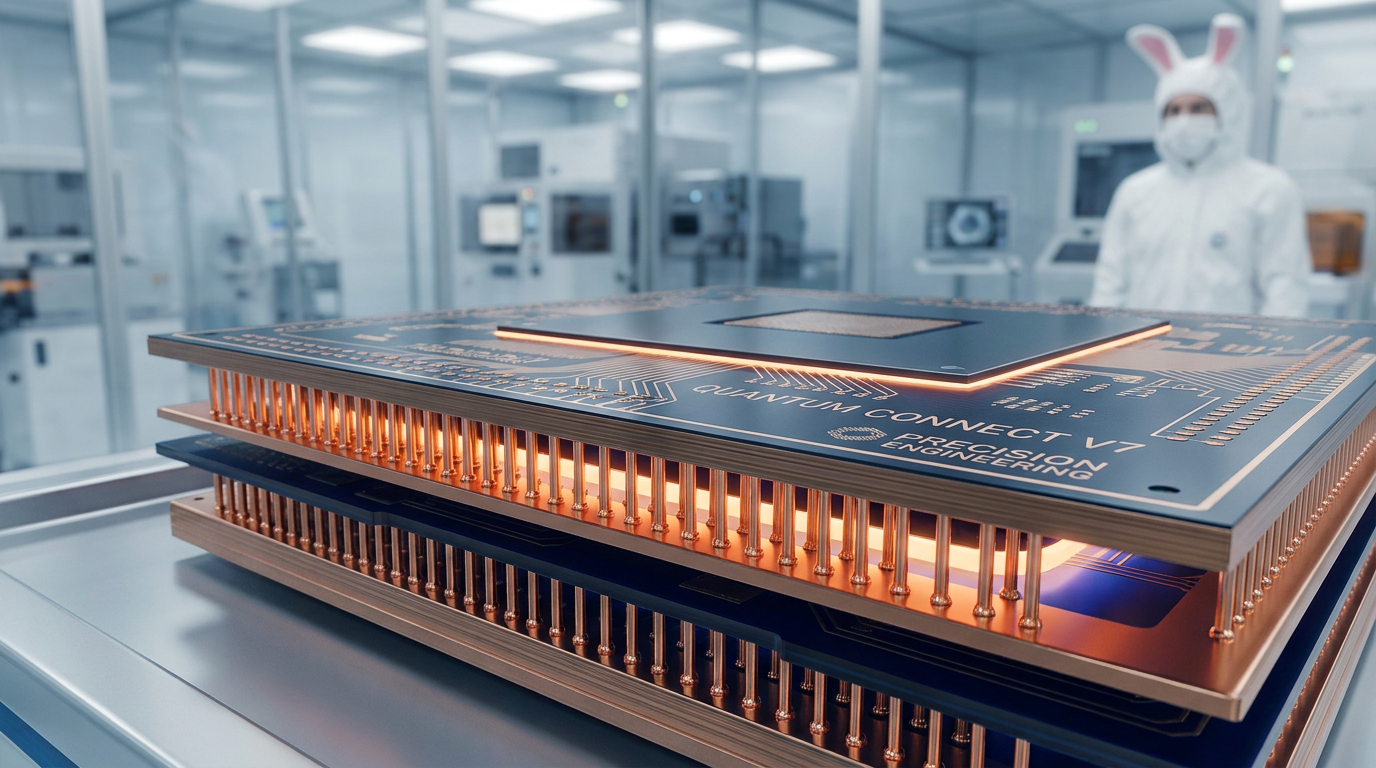
At the heart of this shift is High Bandwidth Memory, or HBM. Unlike traditional memory chips that sit flat on a motherboard, HBM stacks memory dies vertically and connects them directly to the AI processor. This architecture allows massive amounts of data to flow instantly into the GPU, a strict requirement for training and running Large Language Models.[4][6]
HBM is incredibly difficult to manufacture and requires significantly more silicon wafer space than conventional memory. According to industry research firm TrendForce, the major suppliers are aggressively reallocating their factory capacity away from standard PC and smartphone memory to chase the lucrative HBM market.[4]

This reallocation is creating a severe supply squeeze across the entire memory landscape. TrendForce data shows conventional DRAM contract prices surging by roughly 60% quarter-over-quarter in mid-2026 simply because there isn't enough factory space left to produce it.[4]
Meanwhile, the high-end HBM market is effectively sold out. Both Micron and SK Hynix have confirmed that their entire HBM production capacity is fully booked by binding contracts through the end of 2026, providing a level of revenue visibility that the industry has rarely seen.[3][6]
SK Hynix currently dominates this space, having secured the majority of Nvidia's memory supply relationships. Analysts estimate the South Korean giant will supply roughly 60% to 70% of the next-generation HBM4 memory required for Nvidia's upcoming Vera Rubin AI platform.[3]
Micron, however, is rapidly closing the gap, leveraging its position as the sole U.S.-based member of the memory oligopoly. The company's recent earnings blowouts suggest it is successfully capturing high-margin AI data center revenue, even as it races to expand its advanced packaging capabilities.[3]

The valuation gap between these memory giants and the rest of the AI hardware sector ultimately comes down to a debate over permanence. If the bears are right, the current windfall is just borrowed from a cycle peak, and the single-digit P/E ratios are a rational defense against an impending supply glut.[5][6]
But if the bulls are correct, AI has permanently elevated the baseline demand for high-performance memory. In a world where hyperscalers are projected to spend hundreds of billions annually on data center infrastructure, memory is no longer a cyclical commodity—it is the toll road for the AI economy.[1][6]
For investors, the memory sector presents one of the most fascinating risk-reward setups in the modern market. It asks a simple question: are you willing to bet that the defining technology of our generation has finally broken the oldest cycle in silicon?[6]
How we got here
Pre-2023
The memory market experiences a severe downturn due to an oversupply of PC and smartphone chips.
Late 2023
The generative AI boom accelerates, creating an unexpected surge in demand for High Bandwidth Memory.
Early 2026
SK Hynix and Micron announce their HBM production capacity is entirely sold out through the end of the year.
June 2026
Memory stocks report record-breaking revenue growth, yet their valuations remain compressed in the single digits.
Viewpoints in depth
Structural Bulls
Argue that AI has permanently transformed memory from a cyclical commodity into a strategic asset.
This camp believes Wall Street is fundamentally mispricing the memory sector by applying historical boom-and-bust models to an unprecedented technological shift. They point to the fact that High Bandwidth Memory (HBM) is entirely sold out through 2026, providing rare multi-year revenue visibility. Because AI models require exponentially more memory to function, bulls argue that hyperscalers will be forced to buy every chip produced, permanently elevating the baseline earnings power of companies like Micron and SK Hynix.
Cyclical Bears
Warn that the current windfall is a classic cycle peak that will end in massive oversupply.
Skeptics look at the tens of billions of dollars in capital expenditures planned by the "Big Three" memory makers and see a familiar trap. They argue that while AI demand is real, the semiconductor industry has a long history of overestimating sustained demand and overbuilding capacity. When new fabrication plants come online in 2027 and 2028, bears expect the market to be flooded with supply, crushing profit margins and sending single-digit P/E multiples even lower.
Industry Analysts
Focus on the immediate supply chain mechanics and the fierce battle for market share.
Rather than debating the long-term paradigm shift, supply chain analysts are tracking the immediate capacity crunch. They note that the intense focus on manufacturing complex HBM chips is eating up factory floor space, which is inadvertently causing a shortage in conventional memory for PCs and smartphones. For these analysts, the most critical metric is allocation—who can secure enough advanced packaging equipment to meet Nvidia's insatiable demand for the upcoming Vera Rubin architecture.
What we don't know
- Whether the massive capital expenditures planned for 2027 will ultimately result in an oversupply of memory chips.
- How quickly Samsung can close the technological gap with SK Hynix and Micron in the HBM market.
- If hyperscaler demand for AI infrastructure will sustain its current exponential growth rate into the late 2020s.
Key terms
- High Bandwidth Memory (HBM)
- A high-performance computer memory interface that stacks memory chips vertically to achieve higher bandwidth while using less power.
- Forward P/E Ratio
- A valuation metric that compares a company's current stock price to its expected earnings per share over the next 12 months.
- Cyclical Stock
- A stock whose price is heavily affected by macroeconomic or systematic changes in the overall economy, typically experiencing predictable booms and busts.
- Capital Expenditure (Capex)
- Funds used by a company to acquire, upgrade, and maintain physical assets such as property, plants, buildings, or equipment.
- Through-Silicon Via (TSV)
- A vertical electrical connection that passes completely through a silicon wafer or die, essential for stacking HBM chips.
Frequently asked
Why does AI require specialized memory?
Large Language Models require massive amounts of data to be processed simultaneously. High Bandwidth Memory (HBM) solves this by stacking memory chips vertically and connecting them directly to the GPU, vastly increasing the speed of data transfer.
Why are memory stocks considered cyclical?
Historically, memory demand was driven by consumer electronics like PCs and smartphones. When demand spiked, companies built new factories, which eventually flooded the market with supply and caused prices to crash.
What is the difference between Micron and SK Hynix?
SK Hynix is a South Korean company that currently dominates the HBM market and supplies the majority of Nvidia's memory. Micron is the sole U.S.-based major memory manufacturer and is rapidly expanding its capacity to challenge SK Hynix's lead.
Will the memory shortage affect regular consumer electronics?
Yes. Because manufacturers are dedicating their factory space to producing lucrative AI memory chips, the supply of conventional memory for PCs and smartphones is shrinking, driving up costs for those devices.
Sources
Source coverage
7 outlets
3 viewpoints surfaced







[1]MarketWatchIndustry Analysts
Memory stocks are having their best year ever. Why do they still look so cheap?
Read on MarketWatch →[2]MorningstarStructural Bulls
Memory stocks are having their best year ever. Why do they still look so cheap?
Read on Morningstar →[3]BenzingaStructural Bulls
Micron vs. SK Hynix: Side-By-Side Stock Metrics Comparison
Read on Benzinga →[4]TrendForceIndustry Analysts
DRAM Monthly Datasheet May 2026 & HBM Market Forecast
Read on TrendForce →[5]TIKR TerminalCyclical Bears
Micron Technology Valuation and Peer Group Analysis
Read on TIKR Terminal →[6]Factlen Editorial TeamIndustry Analysts
Synthesis by Factlen editorial team
Read on Factlen Editorial Team →[7]GuruFocusCyclical Bears
SK Hynix Forward PE Ratio and Valuation
Read on GuruFocus →

Every angle. Every day.
Get finance stories with full source coverage and perspective breakdowns delivered to your inbox.