
AI Startup 'Artist Included' Launches to Help Legacy Musicians Reclaim Master Recordings
A new music technology company is using ethical AI to help artists re-record their classic hits, allowing them to own their masters and capture lost revenue.
By Factlen Editorial Team
- Artist Advocates
- Argues that AI should be leveraged to return financial control and master ownership to legacy creators.
- Music Tech Innovators
- Views artificial intelligence as an additive studio tool that enhances human performance rather than replacing it.
- Industry Observers
- Cautiously monitors the trend, watching to see if AI-assisted re-records can genuinely compete with original masters.
What's not represented
- · Major Record Labels
- · Music Investment Funds
Why this matters
For decades, legacy musicians have lost out on millions in licensing fees because they do not own their original master recordings. This startup proves that artificial intelligence can be used to empower creators and correct historical industry imbalances, rather than replacing human artists.
Key points
- Artist Included is a new Los Angeles-based startup using ethical AI to help legacy musicians re-record their classic hits.
- The company's first release is a reimagined version of Culture Club's 1983 hit 'Karma Chameleon,' featuring new vocals by Boy George.
- By creating new, artist-owned master recordings, musicians can bypass legacy contracts and capture lucrative streaming and sync licensing revenue.
- The technology relies on a human performance in the studio, using AI to process the audio and match the tonal qualities of the original track.
As the music industry wrestles with the existential threat of artificial intelligence, a new Los Angeles-based startup is attempting to flip the narrative. Launched this week, Artist Included is an "artist-first" music and technology company designed to help legacy musicians re-record their classic hits using ethical AI. The company made its public debut by releasing a reimagined version of Culture Club's 1983 smash hit "Karma Chameleon," timed to coincide with frontman Boy George's 65th birthday. Rather than replacing human creativity, the startup positions its technology as a tool for empowerment, allowing creators to generate new, artist-owned master recordings that can compete in today's digital marketplace.[1][3]
The venture was co-founded by entrepreneur Paul "PK" Kemsley, who manages Boy George, alongside entertainment attorney and film producer Jeremy Rosen. Their core premise is that artificial intelligence, when used responsibly and with explicit consent, can correct decades of historical industry imbalances. For generations, artists signed away the rights to their master recordings in exchange for label backing, meaning the long-term financial value of their life's work slowly migrated away from the original creators. Artist Included aims to reverse that trend, offering a technological bridge that allows musicians to reclaim ownership and participate directly in the future value generated by their catalogs.[1][3]
The financial stakes of master ownership are staggering, particularly when it comes to commercial licensing. Boy George, despite writing and performing "Karma Chameleon," does not own the master rights to the track, which are held by Virgin Records. When the cruise line Virgin Voyages recently paid $4 million to license the song for an advertising campaign, the owners of the master recording received the lion's share of the payout. George, meanwhile, received only an appearance fee for the deal. By creating a new, legally distinct master recording, artists can bypass these legacy contracts and capture the full value of lucrative sync licenses for film, television, and advertising.[2][3]

Re-recording back catalogs to regain financial control is not a new concept in the music industry. Pop superstar Taylor Swift famously popularized the tactic, successfully driving her massive fanbase to stream her "Taylor's Version" albums instead of the originals. However, replicating that success is notoriously difficult for legacy artists. Fans possess a deep emotional attachment to the specific sonic qualities of the original tracks, and as singers age, their vocal timbres naturally change. A 65-year-old vocalist simply does not sound identical to their 22-year-old self, making traditional re-recordings a tough sell for music supervisors and nostalgic listeners who demand the classic sound.[2]
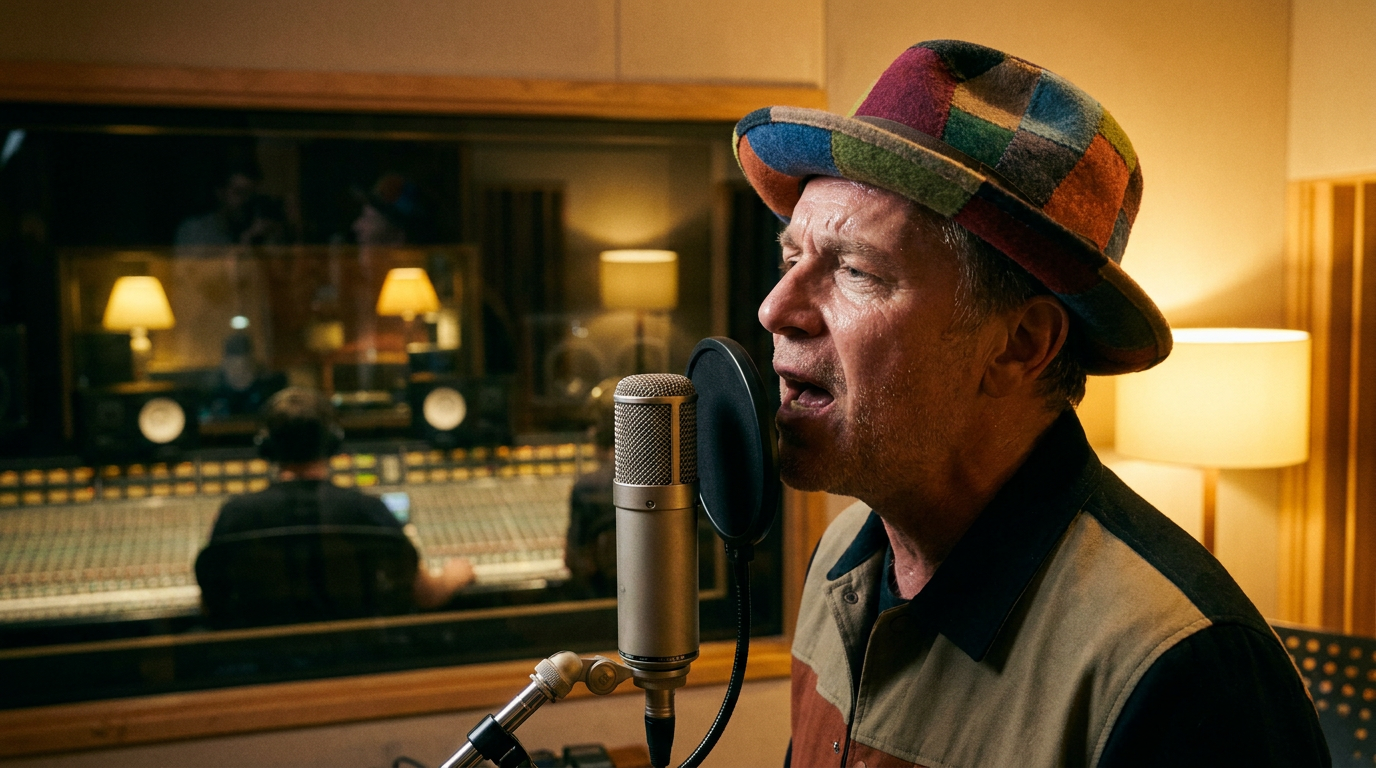
This is where Artist Included's technological infrastructure comes into play. The startup partnered with Syntiant Corp, a California-based provider of low-power physical AI solutions, to develop a proprietary vocal processing platform. Crucially, the company emphasizes that its releases are not synthetic, generative AI recordings created by a prompt. Instead, the artist must actively participate in the creative process. For the new version of "Karma Chameleon," Boy George stepped into the recording studio and performed entirely new vocal takes, ensuring that the emotional delivery and human element remained at the absolute center of the production.[1][4][5]
This is where Artist Included's technological infrastructure comes into play.
Once the new human performance is captured, Syntiant's advanced machine learning algorithms process the audio. The AI is trained to analyze the artist's historical vocal data and apply those characteristics to the modern recording. It effectively bridges the gap between the singer's current voice and their younger self, capturing the recognizable tonal qualities and energy that audiences associate with the original 1983 hit. The technology can also isolate and restore individual instrumental tracks from legacy sessions, allowing producers to build a pristine, modern mix that retains the authentic flavor of the classic release without sounding like a cheap imitation.[4][5]

The resulting product is a brand-new master recording that the artist actually owns. Because the new track sounds remarkably close to the beloved original, it becomes a highly competitive asset in the modern music economy. Artist Included plans to help musicians monetize these new masters across a wide variety of formats. Beyond standard streaming platforms and limited-edition vinyl releases, the artist-owned tracks unlock massive commercial opportunities in sync licensing, brand partnerships, video game soundtracks, and even foreign-language versions or modern club remixes, ensuring the creator is compensated at every step.[1][2]
The launch of Artist Included arrives at a moment of intense anxiety and litigation within the broader music business. Major record labels are currently waging aggressive legal battles against generative AI startups, accusing them of scraping copyrighted material to build song-generating algorithms that threaten to flood the market with synthetic content. In stark contrast, Artist Included is attempting to build what it calls an ethical, creator-owned AI ecosystem. By mandating transparency, securing rights clearance, and requiring the original artist's active participation, the startup hopes to prove that artificial intelligence can be a protective tool for musicians rather than an extractive one.[1][4]

The industry is already taking the model seriously, evidenced by the heavyweight backing the startup has secured. Artist Included's seed investors include Red Light Management, one of the world's largest independent artist management companies, alongside tech veterans like Structure Capital founding partner Mike Walsh. The executive board also features Planet Hollywood founder Robert Earl as Chairman, signaling a strategic focus on broad entertainment integration. This blend of Silicon Valley capital and established music industry clout suggests that the company is well-positioned to navigate the complex legal and commercial hurdles of the legacy music market.[1][2]
Moving forward, Artist Included plans to roll out a steady stream of releases in collaboration with artists spanning the 1960s through the 2000s. The success of the "Karma Chameleon" re-recording will serve as a crucial litmus test for the company's ambitious vision. If the AI-assisted track can genuinely compete with the original Virgin Records master for streaming market share and lucrative sync placements, it could fundamentally alter the economics of legacy music. For thousands of artists who have spent decades watching others profit from their youthful creativity, this technological breakthrough might finally offer a pathway to reclaim their life's work.[1][2][3]
How we got here
1983
Culture Club releases 'Karma Chameleon,' which becomes a global number-one hit, though the master rights remain with Virgin Records.
2021
Taylor Swift begins releasing re-recorded albums to reclaim her master rights, proving the financial viability of the model.
Early 2026
The music industry sees a wave of lawsuits against generative AI platforms accused of scraping copyrighted material.
June 2026
Artist Included launches with an AI-assisted re-recording of 'Karma Chameleon,' offering a new model for legacy artists.
Viewpoints in depth
Artist Advocates
Argues that AI should be leveraged to return financial control and master ownership to legacy creators.
For decades, the standard music industry contract required artists to surrender their master recordings in exchange for distribution and marketing support. Artist advocates view this historical dynamic as inherently exploitative, pointing out that creators often receive pennies on the dollar while corporate rightsholders reap millions from commercial licensing. From this perspective, ethical AI is a long-overdue equalizer. By enabling aging artists to recreate their classic sound with modern fidelity, the technology provides a realistic mechanism to bypass legacy contracts, reclaim ownership, and finally participate in the immense long-term value of their own cultural contributions.
Music Tech Innovators
Views artificial intelligence as an additive studio tool that enhances human performance rather than replacing it.
While generative AI platforms that create entirely synthetic songs from text prompts have sparked widespread industry panic, tech innovators emphasize the distinction between replacement and enhancement. They argue that machine learning algorithms, when applied to audio processing, are simply the next evolution of standard studio tools like auto-tune or digital equalization. By processing a real, modern vocal performance to capture the tonal qualities of a singer's youth, developers believe AI can preserve musical legacies and expand creative possibilities, provided the technology is built on a foundation of explicit consent and transparency.
Traditional Rightsholders
Cautiously monitors the trend, concerned about the potential devaluation of original catalog acquisitions.
Major record labels and music investment funds have spent billions of dollars in recent years acquiring the rights to classic song catalogs, banking on reliable, long-term revenue from streaming and sync licensing. Traditional rightsholders are likely to view AI-assisted re-recordings with a degree of skepticism and concern. If startups successfully produce artist-owned masters that sound identical to the originals and actively undercut the licensing fees of the legacy tracks, it could threaten the valuation of massive catalog portfolios. Consequently, this camp is expected to closely scrutinize the legal boundaries of these new recordings and aggressively defend their existing copyrights.
What we don't know
- It remains unclear how traditional record labels will respond if these AI-assisted re-recordings begin to significantly undercut the licensing fees of the original masters.
- It is not yet known which other legacy artists from the 1960s through the 2000s have signed on to release new masters through the platform.
Key terms
- Master Recording
- The official original recording of a song, from which all later copies and streams are made.
- Sync Licensing
- The process of paying for the right to synchronize music with visual media, such as a film, TV show, or commercial.
- Ethical AI
- Artificial intelligence systems designed with consent, transparency, and fair compensation for the original creators.
- De-mixing
- An AI-powered audio process that isolates individual vocal and instrumental tracks from a single mixed recording.
Frequently asked
Is the new song completely generated by AI?
No. The artist performs new vocals in the studio, and AI is used to process and enhance the audio to match the tonal qualities of the original recording.
Why don't artists just re-record their songs normally?
As artists age, their voices naturally change. AI helps bridge the gap between their current voice and the classic sound fans expect, making the new master commercially competitive.
Who owns the new recordings?
The artists own the new master recordings, allowing them to directly profit from streaming, vinyl sales, and commercial licensing.
Sources
Source coverage
5 outlets
3 viewpoints surfaced





[1]Music Business WorldwideIndustry Observers
Tech startup Artist Included launches with plan to re-record classic songs using AI
Read on Music Business Worldwide →[2]Interspace MusicArtist Advocates
Artist Included, a new startup backed by Red Light Management, has released an AI-reworked version of Culture Club's 'Karma Chameleon'
Read on Interspace Music →[3]ForbesArtist Advocates
Boy George Isn’t Afraid Of AI; A Reborn ‘Karma Chameleon’ Proves Why
Read on Forbes →[4]Business InsiderMusic Tech Innovators
Syntiant Powers Artist Included's AI Music Platform Behind Reimagined Boy George Recording of 'Karma Chameleon'
Read on Business Insider →[5]Mixing.co.krMusic Tech Innovators
AI Re-recording Startup 'Artist Included' Launches with Boy George's 'Karma Chameleon'
Read on Mixing.co.kr →

Every angle. Every day.
Get business stories with full source coverage and perspective breakdowns delivered to your inbox.