
Memo Reveals Secretary of State Marco Rubio Approved ICE Detention of Colombian Activist
A newly revealed memo confirms Secretary of State Marco Rubio approved the ICE detention of a Colombian asylum seeker, arguing his protests against a Trump-backed presidential candidate undermined U.S. foreign policy.
By Factlen Editorial Team
- U.S. Administration & Allies
- Argues that foreign nationals cannot use the U.S. as a base to undermine American foreign policy or act as unregistered foreign agents.
- Colombian Government & Left
- Views the detention as blatant political persecution and unacceptable U.S. interference in Colombia's democratic elections.
- Civil Liberties Advocates
- Warns that using immigration enforcement to punish political speech violates the First Amendment and sets a dangerous precedent for asylum seekers.
What's not represented
- · Colombian diaspora voters in the U.S.
- · Immigration judges and legal scholars
Why this matters
This incident sets a profound precedent for U.S. immigration and foreign policy, suggesting the State Department can direct Homeland Security to detain and deport asylum seekers based on their political speech against U.S. allies abroad.
Key points
- Colombian activist Beto Coral was arrested by ICE agents in Arizona on June 16.
- A newly revealed memo shows Secretary of State Marco Rubio approved the detention.
- The memo argued Coral's protests against a Trump-backed Colombian candidate undermined U.S. foreign policy.
- DHS maintains Coral is an illegal alien who overstayed a tourist visa by 10 years.
- Coral's defenders note he has a pending asylum application and a valid U.S. work permit.
- Colombian President Gustavo Petro has denounced the arrest as political persecution.
On the afternoon of June 16, Franklin Humberto Coral-Garrido—a prominent Colombian political activist known online as Beto Coral—was returning to his home in Phoenix, Arizona, after picking up his young son. He was abruptly intercepted by agents from Homeland Security Investigations (HSI), a division of U.S. Immigration and Customs Enforcement. The agents allowed Coral to briefly enter his home to retrieve his documents before taking him into custody. In a short video recorded just before he was taken away, Coral hugged his son and delivered a defiant message to his hundreds of thousands of followers, urging them not to "bow down to anyone."[3][4]
During the arrest, Coral asked the federal agents why he was being detained, noting that he had no criminal record and possessed valid immigration documents. According to Coral’s account, which was quickly relayed to Colombian journalists, one of the arresting officers showed him a piece of paper and explicitly stated that the detention was a "direct order" from U.S. Secretary of State Marco Rubio. At the time, the assertion seemed extraordinary—a cabinet-level foreign policy official personally directing the street-level immigration arrest of a foreign influencer.[4][7]
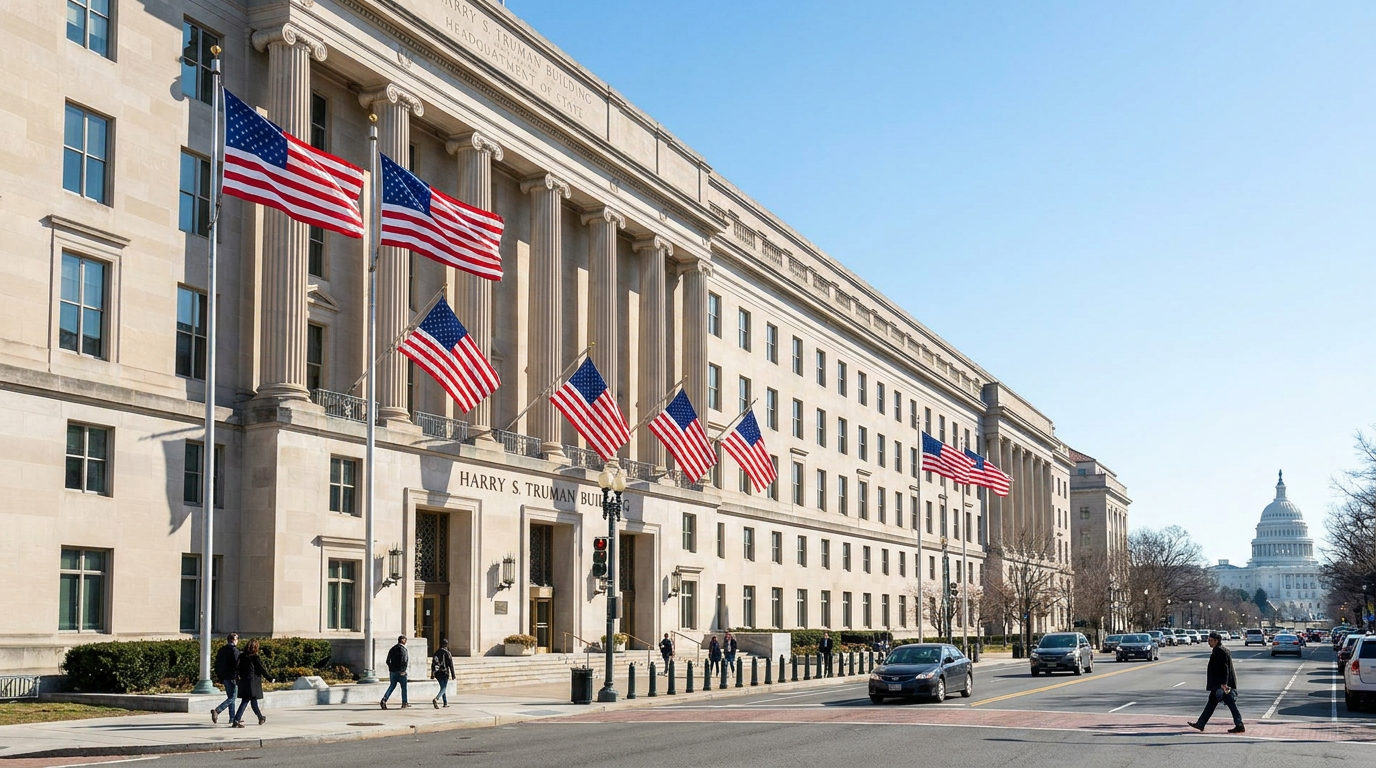
That extraordinary claim was validated days later. A newly revealed State Department memo confirmed that Secretary Rubio had indeed approved Coral’s detention. The internal document explicitly argued that Coral’s vocal criticism of a specific presidential candidate in his home country of Colombia actively "undermined U.S. foreign policy." The revelation transformed what might have been categorized as a routine immigration sweep into a major international incident, exposing a novel legal mechanism where the State Department can flag foreign nationals for expedited domestic deportation based on their political speech.[1]
The target of Coral’s activism was Abelardo de la Espriella, a far-right Colombian presidential candidate who has received strong endorsements from the Trump administration. De la Espriella is a highly polarizing figure in Colombia, known for his past legal defense of paramilitary leaders and his fierce opposition to the country's left-wing political factions. Just days before his arrest, Coral had traveled to Miami—a major hub for the Colombian diaspora—to file a lawsuit against De la Espriella and to lead public demonstrations against his candidacy.[1][3]

The timeline of the arrest suggests a highly coordinated effort between U.S. foreign policy objectives and domestic immigration enforcement. Hours before HSI agents arrived at Coral’s home in Arizona, De la Espriella posted a cryptic message on the social media platform X, writing, "Good news for Colombia and for patriotic Colombians abroad. Dura lex, sed lex… Coming soon." The Latin phrase, meaning "the law is harsh, but it is the law," heavily implied that the candidate had advance knowledge of the impending U.S. federal action against his most vocal critic.[3][5]
To justify the arrest publicly, the Department of Homeland Security relied strictly on immigration statutes rather than the foreign policy rationale outlined in Rubio's memo. A DHS spokesperson stated that Coral entered the United States in December 2015 on a standard B1/B2 tourist visa, which permitted a maximum stay of six months. By remaining in the country for the subsequent decade, the agency argued, Coral became an "illegal alien" living in direct violation of U.S. law, making him eligible for immediate removal proceedings regardless of his political activities.[2]
Coral’s legal defenders and human rights organizations vehemently dispute ICE’s characterization of his status. The Washington Office on Latin America (WOLA) and the Colombian embassy have pointed out that Coral formally applied for political asylum years ago and currently holds a valid U.S. work permit while his case is pending. Coral originally fled Colombia citing severe political persecution and death threats linked to his family history; his father, a police captain, was assassinated in 1994 after helping authorities locate the notorious drug lord Pablo Escobar.[3][4]
Coral’s legal defenders and human rights organizations vehemently dispute ICE’s characterization of his status.
In a highly unusual move, DHS officials publicly framed Coral’s continued detention as a voluntary decision rather than a mandatory federal hold. An agency spokesperson announced that Coral could avoid prolonged incarceration by utilizing the CBP One mobile application to arrange his own immediate departure from the United States. The U.S. government is currently offering undocumented immigrants a $2,600 financial incentive and a free commercial flight to self-deport, with the spokesperson declaring that "being in detention is a choice." They actively encouraged Coral to take the money and leave the country on his own terms, a proposition his legal team views as a coercive tactic to bypass a formal asylum hearing.[2][4]

The detention has ignited a severe diplomatic firestorm between Washington and Bogotá, threatening to derail bilateral cooperation on issues ranging from counter-narcotics to regional trade. Colombian President Gustavo Petro, a leftist leader whom Coral has fiercely defended online for years, immediately denounced the arrest as an act of blatant "political persecution." During a televised cabinet meeting, Petro ordered the Colombian Foreign Ministry to intervene directly, demanding that the U.S. government provide substantive explanations for the arrest and guarantee Coral’s due process rights under the Vienna Convention on Consular Relations. The Colombian embassy in Washington has since formally requested detailed records from both the State Department and DHS.[3][4]
The clash highlights the rapidly deteriorating relationship between the Petro administration and the current U.S. government. The Trump administration has increasingly aligned itself with Colombia's right-wing opposition, viewing Petro's progressive economic policies and diplomatic overtures to Venezuela as detrimental to U.S. security interests in the region. By detaining one of Petro's most prominent digital surrogates on American soil, the State Department has signaled a willingness to use domestic law enforcement tools to exert pressure on foreign political landscapes. Analysts warn that this aggressive posture could prompt retaliatory diplomatic measures from Bogotá, further isolating the U.S. from one of its historically closest South American allies.[5][7]
The fallout has also spilled into the halls of the U.S. Congress, where lawmakers are sharply divided over the legality, ethics, and geopolitical wisdom of the arrest. Representative Jesús "Chuy" García led a coalition of 11 Democratic House members in sending a scathing formal letter to Secretary Rubio and the Department of Justice. The lawmakers condemned the detention as "shameless interference" in Colombia’s democratic elections, warning that utilizing federal agencies to silence critics of U.S.-backed foreign candidates violates fundamental democratic norms. The letter demanded an immediate review of the State Department's involvement and called for an investigation into De la Espriella's financial ties to the United States.[6]
Conversely, conservative lawmakers have rallied behind the State Department's aggressive posture, framing the arrest as a necessary defense of American sovereignty. Senator Bernie Moreno, a vocal supporter of De la Espriella and a key architect of the administration's Latin America policy, publicly celebrated Coral’s arrest on social media. Moreno argued that Coral was effectively operating as an unregistered "foreign agent" by using his U.S. residency to manipulate Colombian elections and attack American foreign policy objectives. "You can't come to the United States, claim asylum, and then act as a foreign agent to that very government while simultaneously undermining our foreign policy," Moreno wrote, adding, "Have a nice life back in Colombia Beto!"[3][5]

Legal experts warn that the Rubio memo establishes a profound and legally perilous precedent regarding the First Amendment rights of non-citizens residing in the United States. While undocumented immigrants and asylum seekers do not possess the full spectrum of constitutional rights granted to U.S. citizens, federal courts have historically protected their right to engage in peaceful political speech. Detaining an asylum seeker explicitly because their political advocacy contradicts the State Department's agenda blurs the line between routine immigration enforcement and ideological censorship. Civil liberties advocates argue that this mechanism effectively allows the executive branch to bypass the judicial system to punish political dissent.[1][6]
The incident is already sending a deep chill through diaspora communities across the United States, many of whom rely on American protections to speak freely about authoritarianism or corruption back home. Millions of foreign nationals living in the U.S.—from Venezuelan dissidents to Iranian activists—routinely organize, protest, and lobby regarding the politics of their home countries. If the State Department can unilaterally declare that criticizing a U.S.-backed foreign politician constitutes a deportable offense, activists fear that the U.S. will no longer serve as a safe haven for international political organizing. The fear of sudden ICE raids could force vibrant diaspora political networks entirely underground.[5][7]
As Coral remains incarcerated in an ICE detention facility in Arizona, his legal team is preparing to fight his removal in federal immigration court. They are expected to argue that deporting him to Colombia would place his life in imminent danger from right-wing paramilitaries, fulfilling the core criteria for political asylum. However, with the State Department actively designating his presence as a direct threat to U.S. foreign policy, the standard judicial pathways for asylum seekers may be heavily circumvented. Coral now sits at the center of a historic test of American legal boundaries, waiting to see if the courts will uphold his right to protest or defer to the executive branch's foreign policy mandate.[1][3][4]
How we got here
2015
Beto Coral enters the United States on a B1/B2 tourist visa.
2020
Coral formally applies for political asylum in the U.S., citing death threats in Colombia.
June 2026
Coral travels to Miami to protest against right-wing Colombian presidential candidate Abelardo de la Espriella.
June 16, 2026
ICE agents arrest Coral outside his home in Phoenix, Arizona.
June 19, 2026
The New York Times reveals a memo showing Secretary of State Marco Rubio approved the detention over foreign policy concerns.
Viewpoints in depth
The State Department's Stance
Foreign nationals cannot use U.S. soil to undermine American foreign policy.
Proponents of the detention argue that asylum seekers and undocumented immigrants are guests in the United States, and that privilege can be revoked if their actions run counter to national interests. By actively campaigning against a U.S.-endorsed presidential candidate in Colombia, officials argue Coral crossed the line from protected speech into acting as an unregistered foreign agent. From this perspective, the State Department is well within its rights to flag individuals who use American soil as a staging ground to destabilize allied political movements abroad.
The Civil Liberties View
Using immigration enforcement to punish political speech violates fundamental democratic norms.
Legal experts and civil rights advocates view the Rubio memo as a dangerous escalation of executive power. They argue that while non-citizens face immigration restrictions, the U.S. Constitution has historically protected their right to engage in peaceful political speech. By explicitly citing Coral's criticism of a foreign politician as the basis for his arrest, critics warn the administration is effectively criminalizing dissent. This sets a precedent where any diaspora activist protesting their home country's U.S.-backed government could face sudden deportation.
The Colombian Government's View
The arrest is an act of blatant political persecution and electoral interference.
For President Gustavo Petro and his allies, Coral's detention is seen as a direct attack on Colombia's sovereignty and democratic process. They view the arrest as a coordinated effort between the U.S. government and the Colombian far-right to silence a highly effective digital organizer ahead of a crucial election. By removing one of the left's most prominent voices from the public sphere, Bogotá argues Washington is abandoning diplomatic neutrality and actively attempting to tilt the scales in favor of its preferred candidate.
What we don't know
- Whether a federal immigration judge will uphold the State Department's foreign policy rationale for deportation.
- If other diaspora activists in the U.S. have been similarly flagged for expedited removal.
- How the diplomatic standoff will affect broader U.S.-Colombia security and trade agreements.
Key terms
- B1/B2 Visa
- A standard U.S. non-immigrant visa issued for temporary business (B1) or tourism (B2) purposes, typically allowing stays of up to six months.
- Homeland Security Investigations (HSI)
- The principal investigative arm of the U.S. Department of Homeland Security, responsible for investigating transnational crime and threats, including complex immigration violations.
- CBP One App
- A mobile application used by U.S. Customs and Border Protection to allow migrants to schedule appointments or, in this context, arrange for voluntary self-deportation.
- Foreign Agent
- An individual or entity operating within a host country on behalf of a foreign government or political faction, often requiring formal registration under U.S. law.
Frequently asked
Why was Beto Coral arrested?
ICE officially states he overstayed a tourist visa by 10 years. However, a leaked memo reveals Secretary of State Marco Rubio approved the detention because Coral's political activism undermined U.S. foreign policy.
Who is Abelardo de la Espriella?
He is a far-right Colombian presidential candidate endorsed by Donald Trump. Coral had recently traveled to Miami to protest against him.
Can the State Department order an ICE arrest?
While ICE operates under the Department of Homeland Security, the State Department can flag individuals whose presence or actions are deemed detrimental to U.S. foreign policy, accelerating immigration enforcement.
What is Coral's current legal status?
Coral claims to have a pending political asylum application and a valid U.S. work permit, though ICE classifies him as an undocumented immigrant subject to deportation.
Sources
Source coverage
7 outlets
3 viewpoints surfaced






[1]The New York TimesCivil Liberties Advocates
Memo by Rubio Approved Detention of Immigrant Who Criticized Trump Ally
Read on The New York Times →[2]NewsweekU.S. Administration & Allies
ICE Detains Petro Ally as Trump Accused of Interfering in Colombia Election
Read on Newsweek →[3]El PaísColombian Government & Left
Petro denuncia la injerencia de Estados Unidos ante la detención del activista Beto Coral por el ICE: 'Es una persecución política'
Read on El País →[4]Caracol RadioColombian Government & Left
Embajada de Colombia interviene tras captura de Beto Coral y señala indicios de motivación política
Read on Caracol Radio →[5]Center for Economic and Policy ResearchU.S. Administration & Allies
US Escalation in the Caribbean and Latin America - Live Updates
Read on Center for Economic and Policy Research →[6]Office of Rep. Jesús GarcíaCivil Liberties Advocates
Congressman García Leads Colleagues in Letter Opposing U.S. Interference in Colombia's Presidential Election
Read on Office of Rep. Jesús García →[7]ColombiaOneColombian Government & Left
Claims in Colombia Link Marco Rubio to Beto Coral's US Arrest
Read on ColombiaOne →
Every angle. Every day.
Get news politics stories with full source coverage and perspective breakdowns delivered to your inbox.