
How Solid-State Batteries Work: The Breakthrough Powering the Next Generation of EVs
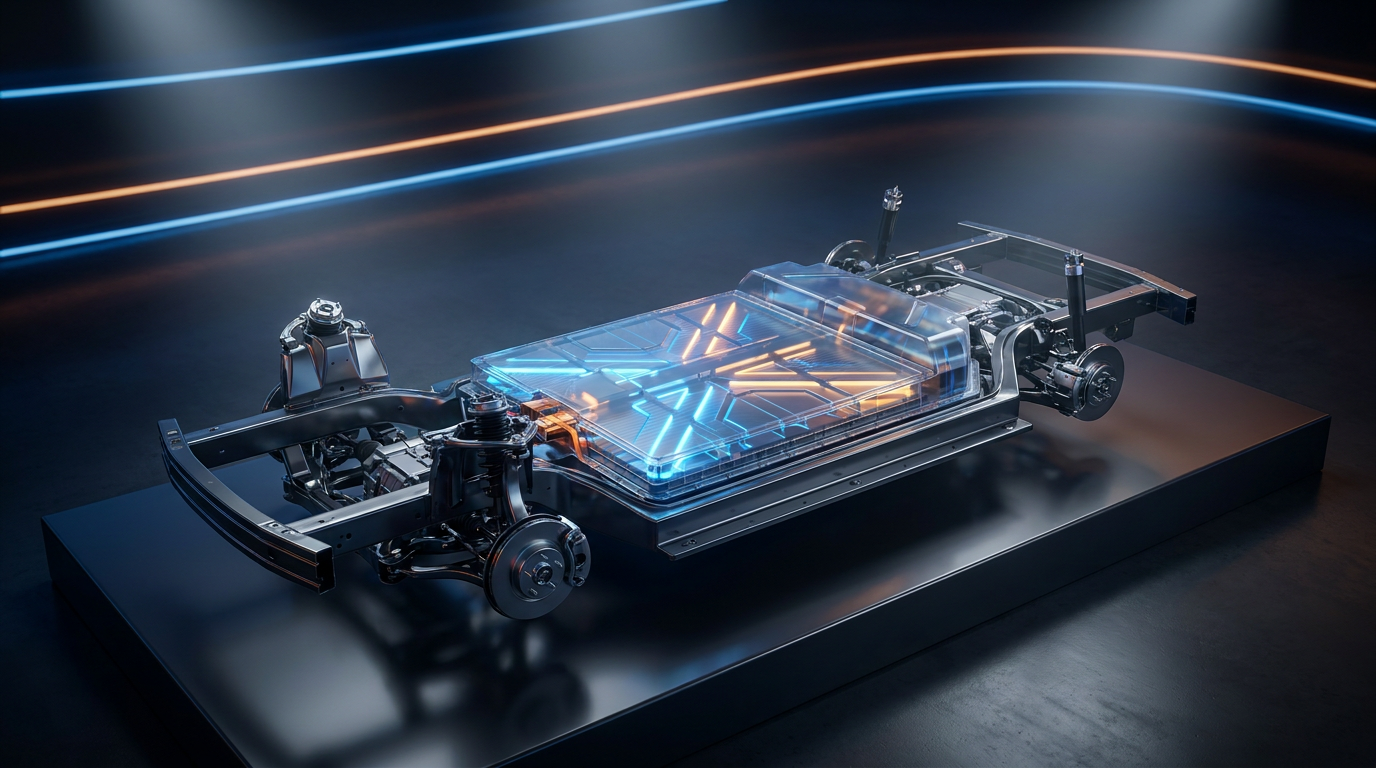
After decades of lab research, solid-state batteries are entering commercial production in 2026, promising to double electric vehicle ranges and cut charging times to under 15 minutes. By replacing flammable liquid electrolytes with solid materials, this technology unlocks safer, lighter, and vastly more energy-dense power storage.
By Factlen Editorial Team
- Battery Tech Innovators
- Startups and specialized manufacturers pushing for rapid commercialization and IP licensing.
- Legacy Automakers
- Established car manufacturers focused on rigorous safety testing and manufacturing scale.
- Materials Scientists & Analysts
- Researchers focused on solving the fundamental chemical bottlenecks of solid electrolytes.
What's not represented
- · Lithium Mining Industry
- · Grid Storage Operators
Why this matters
Solid-state batteries are the key to eliminating EV range anxiety and fire risks. By drastically reducing charging times and extending vehicle lifespans, this technology will accelerate the global transition away from fossil fuels.
Key points
- Solid-state batteries replace flammable liquid electrolytes with stable solid materials, virtually eliminating the risk of battery fires.
- The technology prevents the growth of microscopic dendrites, allowing the use of energy-dense lithium-metal anodes.
- Next-generation cells are targeting energy densities of 400–500 Wh/kg, potentially doubling the driving range of current EVs.
- Major automakers like Toyota and Honda are targeting 2027–2028 for the mass-market launch of solid-state passenger vehicles.
For the past decade, the electric vehicle revolution has been tethered to a single, stubborn chemical reality: the lithium-ion battery. While these power cells have successfully driven millions of EVs off assembly lines, they are approaching their theoretical limits. Drivers still face range anxiety on long road trips, charging times that stretch into the better part of an hour, and heavy battery packs that drag down vehicle efficiency. The industry has long chased a "holy grail" solution that could simultaneously slash weight, double range, and eliminate fire risks.[1]
In 2026, that theoretical solution is finally crossing the threshold from laboratory experiment to commercial reality. Solid-state battery technology, which replaces the volatile liquid components of traditional batteries with stable solid materials, is now entering pilot production. Major automakers and specialized battery startups are locking in manufacturing partnerships, with the first commercial applications already hitting the road in electric motorcycles and high-end prototypes.[1][2]
To understand why this shift is so transformative, it helps to look inside a conventional lithium-ion cell. Every battery has three main components: a positive electrode (cathode), a negative electrode (anode), and an electrolyte that sits between them. In traditional batteries, this electrolyte is a liquid chemical solvent. When the battery charges or discharges, lithium ions swim through this liquid bath from one side to the other.[6][7]

However, that liquid electrolyte is the Achilles' heel of current EV technology. It is highly flammable, meaning that if a battery is punctured in a crash or overheats during rapid charging, it can trigger a catastrophic chain reaction known as thermal runaway. Furthermore, as liquid batteries age and undergo repeated fast-charging cycles, they can form microscopic, needle-like metallic structures called dendrites.[6][7]
These dendrites grow from the anode and can eventually pierce the physical separator inside the battery, causing a short circuit. Solid-state batteries solve this by entirely removing the liquid. Instead, they use a dense, solid material—typically a ceramic, glass, or sulfide-based polymer—to conduct the ions. This solid barrier is physically tough enough to suppress dendrite growth, effectively neutralizing the risk of internal short circuits and making the battery virtually fireproof even under extreme stress.[6][7]
Beyond safety, the rigid nature of a solid electrolyte unlocks a massive leap in energy density. Because the solid barrier prevents dendrites, engineers can safely replace the bulky graphite anodes used in today's batteries with pure lithium metal. This single material swap drastically increases the amount of energy the battery can store. While today's best lithium-ion cells max out around 250 to 300 watt-hours per kilogram, solid-state designs are consistently hitting 400 to 500 watt-hours per kilogram in testing.[5][7]

For the average driver, this density translates to a fundamentally different EV experience. Toyota, which has been quietly developing sulfide-based solid-state technology for a decade, projects that its upcoming vehicles will achieve driving ranges of up to 1,200 kilometers (about 745 miles) on a single charge. Just as importantly, the superior thermal stability of solid materials allows the battery to accept electricity at a much faster rate, enabling a 10% to 80% charge in under ten minutes.[3]
For the average driver, this density translates to a fundamentally different EV experience.
The race to commercialize this technology has fractured into several distinct material strategies. Some developers are betting on sulfide-based solid electrolytes, which offer excellent ionic conductivity but require highly controlled manufacturing environments to prevent moisture contamination. Others are pursuing oxide-based ceramics, which are incredibly stable and safe but can be brittle and difficult to scale into large automotive battery packs.[5][7]
Toyota is currently leading the charge on the sulfide route, having secured a major collaboration with materials giant Idemitsu Kosan to overcome production bottlenecks. The Japanese automaker has officially received production approval from its government and is targeting 2027 or 2028 for its first mass-market solid-state vehicles, likely debuting the technology in its flagship Lexus models before scaling down to more affordable cars.[3]
Meanwhile, California-based QuantumScape is taking a different approach, focusing on a proprietary ceramic separator paired with a lithium-metal anode. Rather than building its own massive battery factories, QuantumScape is operating as a technology licensor. In June 2026, the company announced a landmark joint research agreement with Honda, adding the Japanese automaker to a partner roster that already includes Volkswagen. QuantumScape's latest B-sample cells have demonstrated the ability to fast-charge in just 12.2 minutes while maintaining exceptional energy density.[2][4]

The momentum is equally fierce in China, where battery manufacturers are aggressively pushing their own timelines. Greater Bay Technology (GBT), backed by the GAC Group, recently announced that its A-sample all-solid-state cells successfully passed rigorous needle penetration and thermal shock tests without igniting. GBT is aiming to launch the world's first mass-producible all-solid-state battery by the end of 2026, targeting energy densities that could redefine the domestic Chinese EV market.[2]
While passenger cars remain the ultimate prize, the first wave of solid-state commercialization is happening in smaller formats. Electric motorcycles, which require lightweight, compact power sources, are serving as the perfect proving ground. Startups have already integrated solid-state cells into production motorcycles in early 2026, proving that the technology can survive the vibrations, temperature swings, and rapid discharge demands of real-world roads.[1][2]
Despite these breakthroughs, the transition from lab-scale prototypes to gigawatt-hour manufacturing remains a monumental challenge. Building a solid-state battery requires entirely new assembly lines, specialized pressing equipment to ensure perfect contact between the solid layers, and ultra-dry cleanrooms. The initial production costs will be significantly higher than those of mature lithium-ion factories, meaning early solid-state vehicles will carry a premium price tag.[4][5]
However, the long-term economics and environmental benefits could easily offset the initial sticker shock. Because solid-state batteries experience minimal degradation over time, they boast an extraordinary lifespan. Toyota's engineering teams estimate that their solid-state packs could retain 90% of their capacity for up to 40 years. This longevity opens the door to a circular economy where a single battery pack could outlast the car it was built for, eventually being swapped into a second or third vehicle.[3]

As 2026 unfolds, the battery industry is crossing a point of no return. The fundamental chemistry has been proven, the safety benefits are undeniable, and the world's largest automakers have committed billions to retooling their supply chains. While it may take until the end of the decade for solid-state technology to reach price parity with lithium-ion, the foundation is now set for an era where electric vehicles can finally outperform combustion engines on every metric.[1][5]
How we got here
2010s
Early laboratory research and DARPA funding lay the groundwork for solid-state electrolytes.
2020
QuantumScape goes public, revealing promising early performance data for its ceramic separators.
2025
Toyota signs major collaboration agreements to mass-produce sulfide-based cathode materials.
Q1 2026
The first commercial solid-state batteries hit the road in electric motorcycles.
June 2026
Honda and QuantumScape announce a landmark joint research agreement for EV integration.
2027–2028
Projected launch window for the first mass-market solid-state passenger vehicles.
Viewpoints in depth
Battery Tech Innovators
Startups and specialized manufacturers pushing for rapid commercialization and IP licensing.
Companies like QuantumScape and Greater Bay Technology argue that the fastest route to market is through specialized innovation rather than vertical integration. By focusing purely on the cell chemistry—such as proprietary ceramic separators and lithium-metal anodes—these firms aim to license their breakthroughs to multiple automakers simultaneously. They prioritize pushing the absolute limits of energy density and fast-charging capabilities to prove the technology's viability.
Legacy Automakers
Established car manufacturers focused on rigorous safety testing and manufacturing scale.
Automotive giants like Toyota, Honda, and Volkswagen view solid-state batteries as a long-term structural advantage rather than a quick software update. Their primary concern is scaling the technology safely across millions of vehicles. They emphasize that while lab results are promising, the real challenge lies in building gigawatt-hour factories, securing new supply chains for sulfide materials, and ensuring the batteries can survive decades of real-world road abuse.
Materials Scientists
Researchers focused on solving the fundamental chemical bottlenecks of solid electrolytes.
The academic and analytical community points out that solid-state technology still faces significant physical hurdles. Researchers highlight the ongoing trade-offs between different materials: sulfide-based electrolytes offer excellent conductivity but react poorly with moisture, while oxide-based ceramics are safer but brittle. They caution that achieving perfect contact between the solid layers during mass manufacturing remains a complex engineering problem that will dictate the ultimate cost of the batteries.
What we don't know
- It remains unclear how quickly manufacturing costs can be reduced to reach price parity with mature lithium-ion batteries.
- The long-term durability of brittle ceramic electrolytes under decades of real-world road vibrations is still being tested at scale.
Key terms
- Electrolyte
- The medium inside a battery that allows ions to flow between the positive and negative electrodes.
- Dendrite
- Microscopic, needle-like metallic structures that can grow inside liquid batteries and cause short circuits.
- Energy Density
- A measure of how much power a battery can store relative to its weight, typically expressed in watt-hours per kilogram (Wh/kg).
- Thermal Runaway
- A dangerous chain reaction where a battery overheats uncontrollably, often resulting in a fire.
- Lithium-Metal Anode
- A highly efficient negative electrode made of pure lithium, enabled by solid-state technology, which drastically increases energy storage.
Frequently asked
Will solid-state batteries make EVs cheaper?
Initially, no. The new manufacturing processes will make early solid-state EVs more expensive, but prices are expected to drop as production scales up.
Are solid-state batteries completely fireproof?
While no energy storage is perfectly invincible, solid-state batteries eliminate the flammable liquid solvents, making them vastly safer and highly resistant to thermal runaway.
When can I buy an EV with a solid-state battery?
Major automakers like Toyota and Honda are targeting 2027 and 2028 for their first solid-state passenger vehicles, likely starting with luxury models.
Can my current EV be upgraded to a solid-state battery?
No. Solid-state batteries require entirely different vehicle architectures, cooling systems, and software management, meaning they cannot be retrofitted into older cars.
Sources
Source coverage
7 outlets
3 viewpoints surfaced





[1]Factlen Editorial TeamMaterials Scientists & Analysts
Synthesis by Factlen editorial team
Read on Factlen Editorial Team →[2]ElectrekBattery Tech Innovators
Honda, QuantumScape enter solid-state battery tie-up
Read on Electrek →[3]CarExpertLegacy Automakers
Toyota targets 40-year lifespan for next-gen EV batteries
Read on CarExpert →[4]Battery TechnologyBattery Tech Innovators
QuantumScape Updates Solid-State Battery Strategy
Read on Battery Technology →[5]IDTechExMaterials Scientists & Analysts
Solid-State Batteries 2026-2036: Technology, Forecasts, Players
Read on IDTechEx →[6]American Chemical SocietyMaterials Scientists & Analysts
Working Principle of Solid-State Batteries
Read on American Chemical Society →[7]Volta FoundationMaterials Scientists & Analysts
Solid-State Batteries: Mechanisms and Materials
Read on Volta Foundation →


Every angle. Every day.
Get guides stories with full source coverage and perspective breakdowns delivered to your inbox.