
U.S.-Iran Peace Talks Halted by Lebanon Clashes as Vance Rebukes Israeli Critics
Planned diplomatic talks between the U.S. and Iran in Switzerland were abruptly postponed following deadly clashes between Israel and Hezbollah. The violence prompted Vice President JD Vance to sharply criticize Israeli officials for their reliance on military force.
By Factlen Editorial Team
- U.S. Diplomatic Strategy
- Argues that a comprehensive diplomatic deal with Iran is the only viable path to long-term regional stability.
- Israeli Security Imperative
- Maintains that Israel cannot rely on diplomatic promises and must retain the right to use military force to neutralize immediate threats.
- Iranian and Allied Demands
- Interprets the U.S.-Iran agreement as mandating a complete cessation of hostilities and a full Israeli withdrawal from Lebanon.
What's not represented
- · Lebanese civilians displaced by the fighting
- · European diplomats facilitating the Swiss talks
Why this matters
The suspension of these talks threatens a fragile diplomatic framework designed to end a major regional war, stabilize global energy markets, and reopen the Strait of Hormuz. The public rift between the U.S. administration and Israel also signals a significant shift in American diplomatic strategy in the Middle East.
Key points
- Intense fighting between Israel and Hezbollah forced the postponement of U.S.-Iran talks in Switzerland.
- Hezbollah killed four Israeli soldiers, prompting Israeli airstrikes that killed at least 47 people in Lebanon.
- Vice President JD Vance criticized Israeli leadership, stating they cannot 'kill their way out' of security problems.
- A renewed ceasefire was brokered by the U.S. and Qatar, though disputes over Israeli troop presence remain.
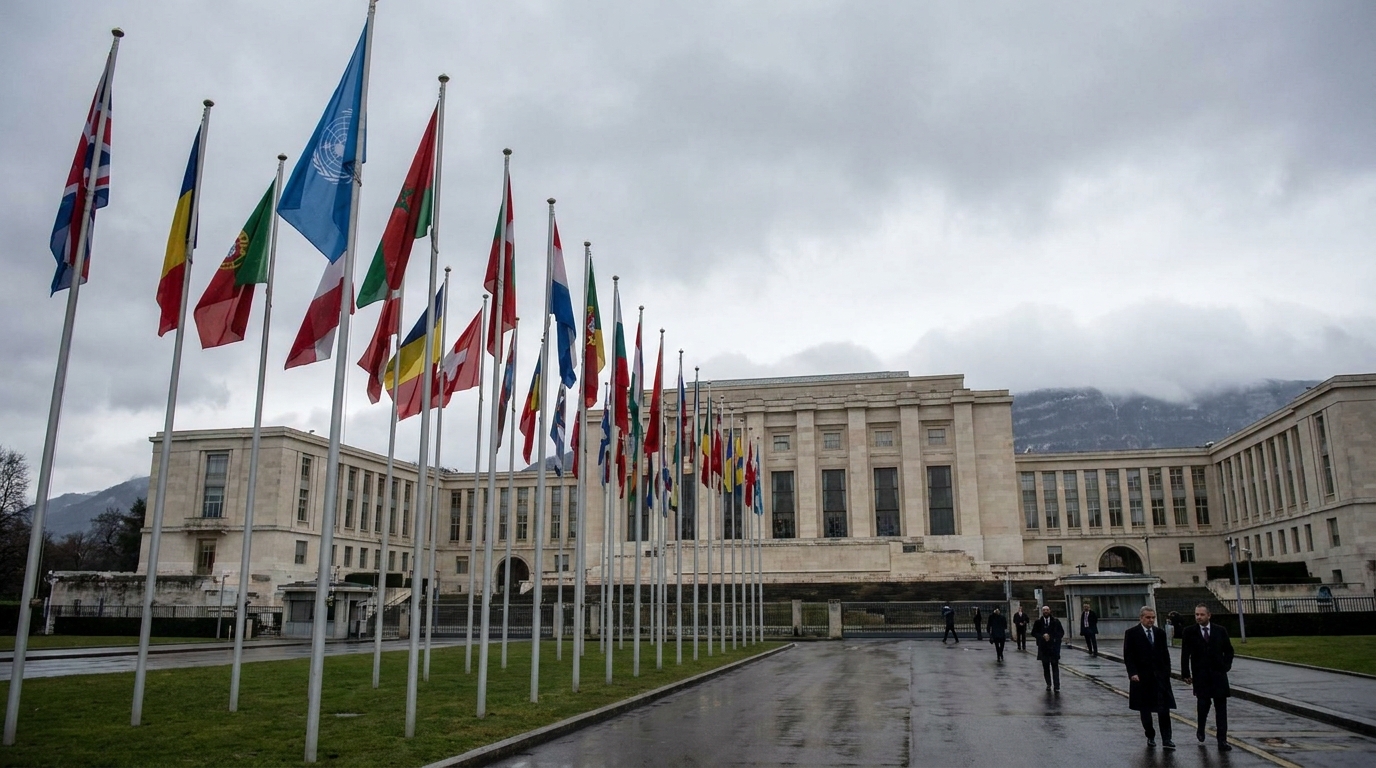
A fragile new peace framework between the United States and Iran faced its first major stress test on Friday after intense fighting erupted between Israel and Hezbollah in southern Lebanon, abruptly halting planned diplomatic talks in Switzerland. The violence forced the cancellation of U.S. Vice President JD Vance's trip to Geneva, where American and Iranian delegations were scheduled to begin technical negotiations on a broader Middle East settlement.[1][2][3]
The escalation began overnight when Hezbollah militants ambushed an Israeli tank near the Lebanese village of Kfar Tebnit, killing four soldiers, including a battalion commander. The attack marked the deadliest incident for Israeli forces since a previous, fragile ceasefire took effect earlier in the month. In response, the Israel Defense Forces launched a massive wave of roughly 150 retaliatory airstrikes across southern and eastern Lebanon.[1][3]
The scale of the Israeli retaliation sent thousands of Lebanese civilians fleeing northward, reversing a brief period of return that followed the initial announcement of the U.S.-Iran deal. The Lebanese Health Ministry reported that at least 47 people were killed and 97 wounded in the bombardment, noting that the casualties included women and children, though the figures did not differentiate between civilians and Hezbollah combatants.[1][4]

The sudden spike in violence immediately derailed the diplomatic schedule established by a memorandum of understanding signed just days earlier by U.S. President Donald Trump and Iranian President Masoud Pezeshkian. Iranian officials reportedly suspended their participation in the Swiss talks, demanding guarantees that Israel would cease operations in Lebanon. Tehran views the ongoing Israeli military presence as a violation of the interim agreement, which calls for an end to hostilities on all fronts.[2][3][6]
The crisis exposed deep, public rifts between the Trump administration and the Israeli government regarding the broader strategy for the region. In a striking rebuke of Israeli officials who have heavily criticized the U.S.-Iran pact, Vice President Vance accused Israeli leadership of a "weird panic" and a "freakout" over the deal. "You're a country of nine million people. You can't just kill your way out of solving every single national security problem that you have," Vance said.[4][5]
The crisis exposed deep, public rifts between the Trump administration and the Israeli government regarding the broader strategy for the region.
Vance further argued that the Israeli government should place more faith in the United States, asserting that the administration had "destroyed" Iran's nuclear program through the new diplomatic framework. He challenged Israeli critics to offer a viable alternative to the negotiated settlement, suggesting that Israel relies too heavily on military force rather than diplomatic leverage to secure its borders.[4][5]
Vance's remarks drew immediate fury from hardline members of Israeli Prime Minister Benjamin Netanyahu's cabinet. National Security Minister Itamar Ben-Gvir and Finance Minister Bezalel Smotrich, who had already condemned the U.S.-Iran memorandum, called for an uncompromising military response in Lebanon. Ben-Gvir declared that "all of Lebanon must burn" and retorted that Israel's strategy was to deal with the "Nazis of the 21st century" just as America had dealt with its enemies in the past.[1][4]

Despite the fiery rhetoric, a renewed ceasefire took effect by late Friday afternoon. The truce was hastily brokered by the United States and Qatar, who reportedly worked directly with Tehran to leverage its influence over Hezbollah, bypassing the Lebanese government. President Trump confirmed in a phone interview that he had personally asked Israeli leadership to agree to the halt in fighting, describing the ceasefire as a "positive" step to keep the broader peace process alive.[2][4]
The durability of the new ceasefire remains highly uncertain, largely due to fundamentally conflicting interpretations of the U.S.-Iran agreement. While Iran and Hezbollah insist that the deal requires a complete withdrawal of Israeli forces from Lebanese territory, Israeli officials maintain that the IDF will keep troops in a southern buffer zone to protect northern Israeli communities from rocket and drone attacks.[3][4]
The diplomatic focus now shifts to salvaging the 60-day window established by the memorandum of understanding. The delayed technical talks in Switzerland are intended to address complex, unresolved issues, including the specifics of Iran's nuclear stockpile and the reopening of the Strait of Hormuz to global shipping. However, as Friday's violence demonstrated, the entire framework remains highly vulnerable to the volatile tactical realities on the ground in Lebanon.[1][2][3]
How we got here
Mid-June 2026
The U.S. and Iran sign a memorandum of understanding aimed at ending hostilities and negotiating a broader peace deal.
June 18, 2026
Hezbollah militants ambush an Israeli tank in southern Lebanon, killing four soldiers.
June 19, 2026 (Morning)
Israel launches roughly 150 retaliatory airstrikes across Lebanon, killing at least 47 people.
June 19, 2026 (Afternoon)
U.S. and Iranian officials postpone planned technical talks in Switzerland due to the escalating violence.
June 19, 2026 (Evening)
A renewed ceasefire between Israel and Hezbollah takes effect following mediation by the U.S., Qatar, and Iran.
Viewpoints in depth
U.S. Administration's View
The Trump administration argues that a comprehensive diplomatic deal with Iran is the only viable path to long-term regional stability.
U.S. officials believe that military force has limits, as articulated by Vice President Vance, and that securing an agreement to halt Iran's nuclear program and reopen global shipping lanes outweighs the tactical risks of pausing military operations against proxy groups. They view the Israeli government's intense opposition as a counterproductive 'panic' that undermines a historic diplomatic opportunity.
Israeli Government's View
Israeli leadership views the U.S.-Iran memorandum with deep suspicion, arguing it prematurely relieves pressure on Tehran without dismantling its proxy networks.
Officials in Jerusalem maintain that Israel cannot rely on diplomatic promises for its security and must retain the right to use military force to neutralize immediate threats. They argue that maintaining a physical buffer zone in southern Lebanon is non-negotiable to protect northern Israeli communities from Hezbollah rocket and drone attacks, regardless of the broader U.S.-Iran negotiations.
Iranian and Hezbollah View
Tehran and its allied militia argue that the U.S.-Iran agreement mandates a complete cessation of hostilities, including a full Israeli withdrawal from Lebanon.
From this perspective, ongoing Israeli military operations in southern Lebanon are blatant violations of the memorandum of understanding. Iran reportedly suspended its participation in the Swiss talks specifically to demand guarantees that Israel would halt its strikes and withdraw its forces, viewing Hezbollah's attacks as justified retaliation against an occupying force.
What we don't know
- When the postponed technical talks between the U.S. and Iran will be rescheduled.
- Whether Iran will accept Israel's continued military presence in a southern Lebanon buffer zone.
- How the public rift between the Trump administration and the Israeli cabinet will affect future military aid.
Key terms
- Memorandum of Understanding (MOU)
- A formal agreement between two or more parties that outlines the terms and details of a mutual understanding, serving as a framework for future negotiations.
- Buffer Zone
- A neutral area serving to separate hostile forces or nations, which Israel insists on maintaining in southern Lebanon to prevent cross-border attacks.
- Strait of Hormuz
- A highly strategic waterway between the Persian Gulf and the Gulf of Oman, crucial for global oil shipments, whose reopening is a key goal of the U.S.-Iran talks.
Frequently asked
Why were the U.S.-Iran talks in Switzerland cancelled?
The talks were postponed after intense fighting erupted between Israel and Hezbollah in Lebanon, which Iran viewed as a violation of the newly signed memorandum of understanding.
What did JD Vance say about Israel's reaction to the deal?
Vice President Vance criticized Israeli officials for a "freakout" over the agreement, stating that a country cannot "kill its way out" of every national security problem.
Is there a ceasefire currently in place?
Yes, a renewed ceasefire between Israel and Hezbollah was brokered late Friday by the U.S. and Qatar, though its durability remains fragile due to disputes over Israeli troop presence in Lebanon.
Sources
Source coverage
6 outlets
3 viewpoints surfaced






[1]The Washington PostU.S. Diplomatic Strategy
Clashes in Lebanon seemed to imperil the U.S.-Iran peace deal
Read on The Washington Post →[2]CBS NewsU.S. Diplomatic Strategy
Israel and Hezbollah reach ceasefire agreement after deadly clashes delay U.S.-Iran talks
Read on CBS News →[3]The GuardianIranian and Allied Demands
US-Iran meeting in Switzerland on implementation of peace deal cancelled over clashes in southern Lebanon
Read on The Guardian →[4]Times of IsraelIsraeli Security Imperative
Vance slams Israeli 'freakout' over Iran deal: 'You can't just kill your way out of solving' every security problem
Read on Times of Israel →[5]Fox NewsU.S. Diplomatic Strategy
JD Vance tells Israeli critics 'you can't kill your way' out of national security problems
Read on Fox News →[6]Al JazeeraIranian and Allied Demands
Iran war live: Tehran says US must ensure Israel ends attacks on Lebanon
Read on Al Jazeera →
Every angle. Every day.
Get news politics stories with full source coverage and perspective breakdowns delivered to your inbox.