
US Envoys Head to Switzerland for Iran Talks as Vance Clashes with Israel Over Ceasefire
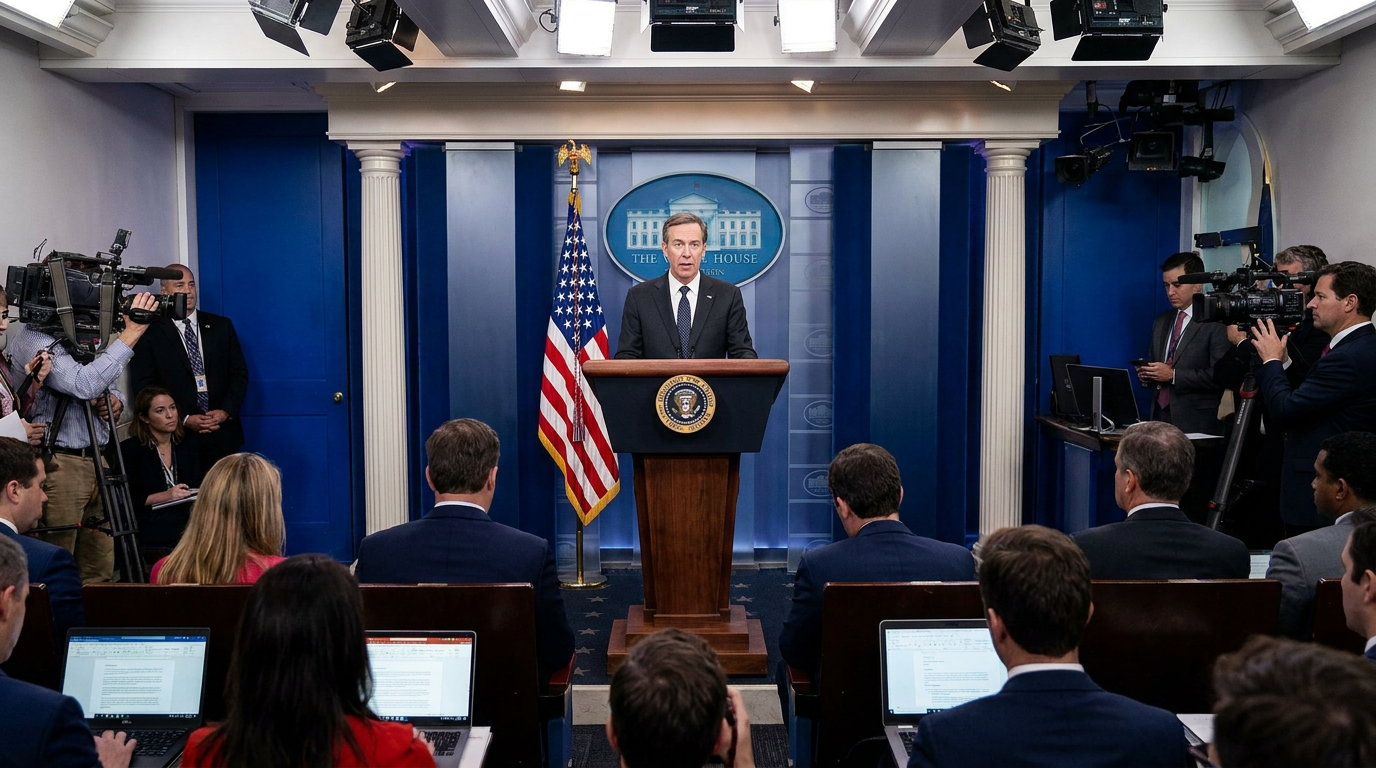
US negotiators are traveling to Switzerland to advance a landmark peace agreement with Iran, even as Vice President JD Vance publicly rebukes Israeli officials for opposing the deal.
By Factlen Editorial Team
- US Administration
- Argues the MoU is a historic victory that neutralizes Iran's nuclear threat and forces behavioral change through economic pressure.
- Iranian Government
- Views the diplomatic process as a step forward but insists the US must rein in Israeli military operations in Lebanon as a strict condition for compliance.
- Israeli Security Hardliners
- Fiercely opposes the deal, arguing it fails to dismantle Iran's capabilities permanently and inappropriately constrains Israel's fight against Hezbollah.
What's not represented
- · Lebanese Civilians
- · European Union Negotiators
Why this matters
The friction over the US-Iran agreement threatens to unravel a historic diplomatic effort to end the Middle East conflict. If the talks in Switzerland collapse over the ongoing fighting in Lebanon or Israeli opposition, the region could rapidly plunge back into open warfare, disrupting global energy markets and drawing the US deeper into the conflict.
Key points
- US envoys are traveling to Switzerland to negotiate a permanent nuclear and peace agreement with Iran following a recently signed MoU.
- Iran insists that the US must force Israel to halt its military operations in Lebanon as a strict condition of the deal.
- Hardline Israeli ministers have fiercely criticized the agreement, arguing it leaves Iran's nuclear and proxy networks intact.
- Vice President JD Vance rebuked the Israeli criticism as a 'freakout,' stating that Israel 'can't just kill your way out' of security problems.
- Early phases of the MoU are holding, with the US lifting its naval blockade and Iran pausing attacks in the Strait of Hormuz.
US envoys are heading to Switzerland to advance a landmark peace and nuclear agreement with Iran, even as the fragile diplomatic effort faces intense friction over ongoing fighting in Lebanon and fierce pushback from Israeli officials.[2][6]
White House envoy Steve Witkoff and former adviser Jared Kushner are en route to Switzerland for the next phase of negotiations following the recently signed US-Iran Memorandum of Understanding (MoU). The talks, initially slated to begin Friday, were delayed by ongoing hostilities between Israel and the Iran-backed militant group Hezbollah. Vice President JD Vance, who was expected to lead the US delegation, postponed his trip due to the volatile situation on the ground in Lebanon.[2]
For Tehran, the cessation of Israeli military operations in Lebanon is a non-negotiable component of the broader peace effort. Iranian Deputy Foreign Minister Saeed Khatibzadeh stated that while Iran is "ready to move forward step by step," the United States must ensure that Israel abides by the terms of the ceasefire. Iranian Foreign Minister Abbas Araghchi echoed this sentiment, calling the end of the war in Lebanon an "inseparable part" of the agreement and warning that any continued Israeli occupation of Lebanese territory would constitute a violation.[1][6][8]

The linkage between the US-Iran deal and the Lebanon conflict has created a significant diplomatic hurdle. Iranian officials claim a specific mechanism in the MoU will be triggered if Israel violates the ceasefire, arguing that Washington committed to ending the war on all fronts on behalf of its partners. However, Israeli officials have publicly insisted that the US-Iran agreement does not bind their military actions, and Israeli forces have continued to carry out strikes against Hezbollah targets in southern Lebanon.[2][6]
Inside Israel, the MoU has sparked widespread alarm across the political spectrum. Hardline ministers, including National Security Minister Itamar Ben-Gvir and Finance Minister Bezalel Smotrich, have fiercely criticized the agreement. They argue that the deal fails to permanently dismantle Iran's ballistic missile and nuclear programs, providing Tehran with an economic lifeline while inappropriately constraining Israel's ability to defend itself against regional proxies.[4][5][7]
Inside Israel, the MoU has sparked widespread alarm across the political spectrum.
The Israeli backlash prompted a blunt and highly public rebuke from Vice President JD Vance. In an interview with The New York Times, Vance dismissed the Israeli opposition as a "freakout" fueled by mistrust and misinformation. He defended the Trump administration's handling of the negotiations, asserting that the US had earned the trust of the region and that the deal would ultimately make Israel and the broader Middle East safer.[3][4][7]

Vance directly challenged the right-wing Israeli ministers, questioning their alternative strategy. "What is your exact proposal? You're a country of nine million people. You can't just kill your way out of solving every single national security problem that you have," Vance stated. He argued that the US military campaign preceding the MoU had successfully destroyed Iran's nuclear infrastructure, placing Tehran in an "economic chokehold" that would not be released until the regime fundamentally changed its behavior.[3][4][5]
The Vice President's remarks drew an immediate and fiery response from the Israeli cabinet. Ben-Gvir took to social media to fire back at Vance, declaring that Israel's proposal is "to deal with the Nazis of the 21st century, just as the United States dealt with the Nazis of the 20th century." The exchange highlighted a growing rift between the Trump administration and Prime Minister Benjamin Netanyahu's government over the strategic approach to Iran, even as Netanyahu himself has largely avoided directly criticizing the deal.[4][5][7]

Despite the rhetorical clashes, early signs suggest the initial phases of the MoU are holding. Iranian officials confirmed that the US naval blockade of Iranian ports has been lifted, and Tehran has reportedly paused its attacks on international shipping in the Strait of Hormuz. Khatibzadeh noted that Iran will not impose passage fees during the 60-day period outlined by the agreement, though a new mechanism for managing the waterway will be introduced afterward.[6][8]
The success of the Switzerland talks now hinges on whether the US can navigate the competing demands of its closest Middle Eastern ally and its primary regional adversary. With the 60-day clock ticking, negotiators face the daunting task of translating a fragile, multi-front truce into a permanent diplomatic settlement that addresses Iran's nuclear ambitions without alienating Israel.[2][4][6]
How we got here
Feb 2026
A major regional conflict erupts following US-Israeli military strikes on Iranian targets.
June 14, 2026
The US and Iran announce a Memorandum of Understanding to halt hostilities and begin a 60-day negotiation window.
June 18, 2026
Vice President JD Vance gives a blunt interview criticizing Israeli opposition to the diplomatic deal.
June 19, 2026
US Envoy Steve Witkoff travels to Switzerland for the next phase of negotiations, while VP Vance postpones his trip due to fighting in Lebanon.
Viewpoints in depth
US Administration's view
The Trump administration views the MoU as a historic triumph that neutralized Iran's nuclear capabilities through decisive military action.
US officials argue that the recent military campaign successfully destroyed Iran's nuclear infrastructure, allowing Washington to negotiate from a position of overwhelming strength. They believe the 60-day window places Tehran in an 'economic chokehold' that forces behavioral change, and they are increasingly frustrated by Israeli officials who they believe are panicking over misinformation rather than trusting US strategy.
Iranian Government's view
Tehran frames the agreement as a mutual de-escalation that must apply to all fronts, specifically demanding a halt to Israeli operations in Lebanon.
Iranian diplomats insist that any continued Israeli presence in southern Lebanon violates the core terms of the MoU, threatening to trigger mechanisms that could collapse the fragile truce. They argue that the United States, as a signatory, is responsible for ensuring its regional partners abide by the ceasefire, viewing the Lebanon conflict as an inseparable part of the broader peace process.
Israeli Security Hardliners' view
Right-wing Israeli leaders view the US-Iran deal as a dangerous capitulation that leaves the Iranian regime intact.
Israeli hardliners argue that the agreement provides Iran with an economic lifeline while failing to permanently dismantle its ballistic missile and proxy networks. They believe the US is inappropriately tying Israel's hands in its existential fight against Hezbollah and Hamas, maintaining that overwhelming military force is the only reliable deterrent against Tehran's regional ambitions.
What we don't know
- Whether the US and Iran will successfully sign a final nuclear agreement within the 60-day window.
- How the US plans to enforce the Lebanon ceasefire mechanism if Israel continues its military operations against Hezbollah.
- Whether the public rift between the Trump administration and Israeli leadership will impact broader US-Israel security coordination.
Key terms
- Memorandum of Understanding (MoU)
- A formal agreement between two or more parties that outlines the terms and details of a mutual understanding, often preceding a final binding treaty.
- Hezbollah
- A heavily armed, Iran-backed Shia Islamist political party and militant group based in Lebanon.
- Strait of Hormuz
- A crucial waterway between the Persian Gulf and the Gulf of Oman through which a significant portion of the world's oil supply passes.
Frequently asked
What is the US-Iran Memorandum of Understanding?
It is a newly signed agreement establishing a 60-day window to halt hostilities, lift blockades, and negotiate a broader nuclear and security deal.
Why did JD Vance criticize Israeli officials?
He accused them of panicking over the deal and relying too heavily on military force, stating they 'can't just kill your way out' of security problems.
How does Lebanon factor into the agreement?
Iran insists the deal requires the US to ensure Israel halts its military operations against Hezbollah in Lebanon, calling it an inseparable condition for peace.
Sources
Source coverage
8 outlets
3 viewpoints surfaced








[1]Al JazeeraIranian Government
Iran war live: Tehran says US must ensure Israel ends attacks on Lebanon
Read on Al Jazeera →[2]AxiosUS Administration
Trump envoy Witkoff heads to Switzerland ahead of potential Iran talks
Read on Axios →[3]Fox NewsUS Administration
JD Vance tells Israeli critics 'you can't kill your way' out of national security problems
Read on Fox News →[4]The GuardianIsraeli Security Hardliners
US vice-president JD Vance has lashed out at Israeli critics of the Iran deal
Read on The Guardian →[5]The Jerusalem PostIsraeli Security Hardliners
'Can't kill your way out of every problem': JD Vance spars with Ben-Gvir, Smotrich over Iran deal
Read on The Jerusalem Post →[6]CBS NewsIranian Government
Iran says Israeli troops must leave Lebanon under agreement with U.S.
Read on CBS News →[7]Times of IsraelIsraeli Security Hardliners
Vance slams Israeli 'freakout' over Iran deal: 'You can't just kill your way out of solving' every security problem
Read on Times of Israel →[8]DawnIranian Government
Iran's deputy foreign minister urges US to ensure Israel complies with deal
Read on Dawn →

Every angle. Every day.
Get news politics stories with full source coverage and perspective breakdowns delivered to your inbox.