
Marco Odermatt and Mikaela Shiffrin Cement Legacies in Historic 2026 FIS Alpine Ski World Cup Standings
As the ski world transitions to summer training, Marco Odermatt and Mikaela Shiffrin sit atop the final 2025-2026 FIS World Cup standings after securing their fifth and sixth overall titles, respectively.
By Factlen Editorial Team
- U.S. Ski Team Supporters
- Celebrate Shiffrin's record-tying sixth overall title and unmatched slalom consistency.
- Swiss Alpine Enthusiasts
- Focus on Odermatt's absolute dominance, his 16 Crystal Globes, and the legacy of Swiss skiing.
- Emerging Ski Nations
- Highlight the rise of Lucas Pinheiro Braathen and Emma Aicher as the dynamic future of the sport.
- FIS Competition Officials
- Emphasize the successful execution of the 60th season and the strategic calendar shifts for the future.
What's not represented
- · Downhill Specialists
- · Southern Hemisphere Athletes
Why this matters
The final World Cup standings dictate the balance of power in international alpine skiing, setting the narrative and sponsorship stakes for the upcoming 2026-2027 season while cementing Odermatt and Shiffrin among the greatest athletes in winter sports history.
Key points
- Marco Odermatt secured his fifth consecutive men's overall World Cup title by a 568-point margin.
- Mikaela Shiffrin won her sixth women's overall title, tying the all-time record set by Annemarie Moser-Pröll.
- Lucas Pinheiro Braathen finished second overall, making history for Brazil.
- Emma Aicher pushed Shiffrin closely in the standings, finishing second with 1,301 points.
- The proposed 2026-2027 FIS calendar shifts the balance slightly toward giant slalom and speed events.
It is June 2026, and while the snow has melted across the Northern Hemisphere's premier alpine resorts, the world's elite skiers are deep into dryland training. The echoes of the historic 2025-2026 FIS Alpine Ski World Cup season, however, are still reverberating as athletes calibrate their goals for the upcoming winter.[1]
The final standings reveal a season of unprecedented milestones, capped by the overall victories of Switzerland's Marco Odermatt and the United States' Mikaela Shiffrin. Both athletes cemented their status as generational talents, navigating a grueling 60th anniversary season that was punctuated by the Milano Cortina 2026 Winter Olympics.[1][5]
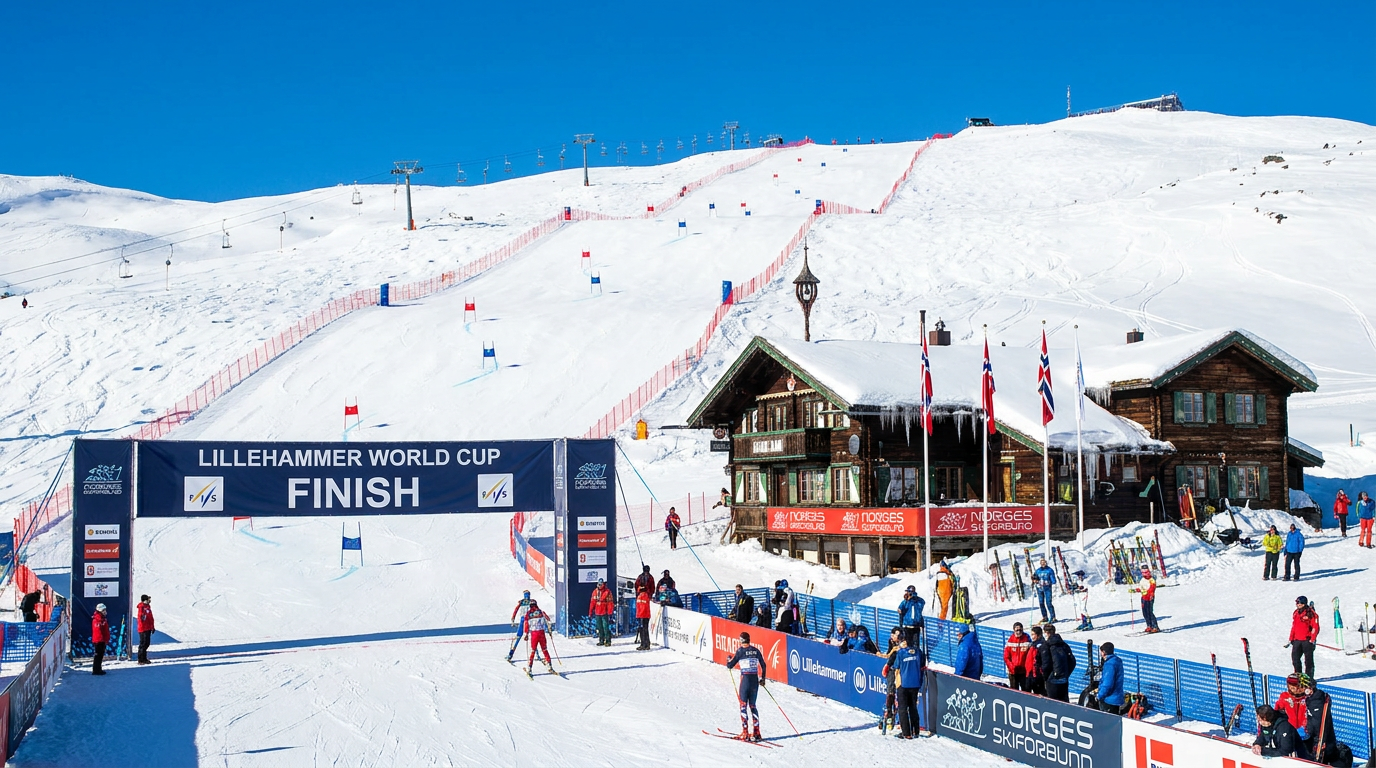
Odermatt's dominance on the men's side was absolute. The 28-year-old Swiss superstar secured his fifth consecutive overall Crystal Globe, amassing a staggering 1,626 points by the time the circuit concluded in Lillehammer, Norway.[3][5]
His final tally put him 568 points ahead of the runner-up, Lucas Pinheiro Braathen. Braathen made history of his own this season, becoming the first skier to win an Alpine World Cup race and secure a discipline globe—the giant slalom—while representing Brazil.[1][5]

Beyond the overall title, Odermatt swept the downhill and super-G discipline titles. This brought his career total to 16 Crystal Globes, elevating him to third on the all-time men's list, trailing only Marcel Hirscher and Ingemar Stenmark.[3]
On the women's side, the race was a thrilling, season-long battle that concluded with Shiffrin tying one of the sport's most revered records. She claimed her sixth overall World Cup title with 1,386 points, matching the legendary mark set by Austrian Annemarie Moser-Pröll in the 1970s.[1][5]
On the women's side, the race was a thrilling, season-long battle that concluded with Shiffrin tying one of the sport's most revered records.
The American's campaign was highlighted by her continued mastery of the technical events. In March, she delivered a flawless second run in Åre, Sweden, to secure a record-extending 109th career World Cup victory, just weeks after taking Olympic slalom gold in Italy.[1]

However, Shiffrin was pushed to the absolute limit by 22-year-old German sensation Emma Aicher. Competing in every discipline, Aicher finished a close second in the overall standings with 1,301 points, proving herself as a versatile all-rounder capable of challenging the American's reign.[1][5]
The women's overall race was dramatically reshaped early in the season when defending super-G champion Lara Gut-Behrami suffered a season-ending torn ACL during a November training run at Copper Mountain. The Swiss veteran's absence removed one of Shiffrin's primary historical rivals from the standings math.[4][6]

As the dust settles on the 2026 standings, the ski world is already analyzing the proposed FIS calendar for the 2026-2027 season, which suggests a structural shift that could alter the competitive landscape.[2]
The draft schedule increases the number of giant slalom and super-G races, slightly reducing the relative influence of the slalom events that Shiffrin has historically dominated. Across 39 proposed women's races, the balance is shifting to reward athletes with a broader speed and technical profile.[2]

How we got here
Oct 2025
The 60th FIS Alpine Ski World Cup season opens in Sölden, Austria.
Nov 2025
Defending super-G champion Lara Gut-Behrami suffers a season-ending ACL injury.
Feb 2026
The World Cup circuit pauses for the Milano Cortina 2026 Winter Olympics.
Mar 2026
Mikaela Shiffrin secures her 109th career win in Åre, Sweden.
Mar 2026
The season concludes in Lillehammer, Norway, with Odermatt and Shiffrin crowned overall champions.
Viewpoints in depth
The Reigning Champions' Camp
Focuses on the historical magnitude of Odermatt and Shiffrin's sustained dominance.
Supporters and national federations backing Odermatt and Shiffrin emphasize that their 2026 victories are not just single-season achievements, but the cementing of generational legacies. Odermatt's fifth consecutive title and Shiffrin's record-tying sixth overall globe demonstrate an unparalleled ability to maintain peak physical and mental form across grueling, multi-month campaigns. They argue that true greatness in alpine skiing is measured by this exact kind of year-over-year consistency.
The Rising Challengers
Highlights the emergence of young stars pushing the veterans to their limits.
Analysts focusing on the future of the sport point to Emma Aicher and Lucas Pinheiro Braathen as the defining stories of the season. Aicher's ability to score heavily across all disciplines pushed Shiffrin until the final weeks, proving that the next generation is ready to contest the overall crown. Meanwhile, Braathen's historic success for Brazil has injected new global energy into the men's circuit, signaling that Odermatt will face increasingly diverse and dynamic threats in the years to come.
Calendar Strategists
Examines how proposed changes to the race schedule will impact future standings.
Technical analysts and team coaches are already dissecting the proposed 2026-2027 FIS calendar, which shifts the balance slightly away from pure slalom in favor of giant slalom and super-G. This camp argues that the overall standings are heavily dictated by the schedule's composition. They suggest that while Shiffrin and Odermatt are versatile enough to adapt, the expanded speed calendar mathematically favors all-rounders like Aicher, setting the stage for an even tighter points race next winter.
What we don't know
- Whether Lara Gut-Behrami will return to elite competition for the 2026-2027 season following her ACL recovery.
- If the proposed FIS calendar changes will be fully ratified before the start of the next season.
Key terms
- Crystal Globe
- The trophy awarded by the International Ski Federation (FIS) to the season-long points winner in a specific discipline or the overall standings.
- Overall Title
- The championship awarded to the skier who accumulates the most points across all racing disciplines throughout the World Cup season.
- Giant Slalom (GS)
- A technical alpine skiing event involving skiing between sets of poles spaced at a greater distance than in slalom, requiring high-speed precision.
- Super-G
- A speed event in alpine skiing that combines the high speeds of downhill with the technical turns of giant slalom.
Frequently asked
Who won the 2025-2026 FIS Alpine Ski World Cup?
Switzerland's Marco Odermatt won the men's overall title, and the United States' Mikaela Shiffrin won the women's overall title.
How many overall titles does Mikaela Shiffrin have?
She now has six overall World Cup titles, tying the all-time women's record held by Austrian legend Annemarie Moser-Pröll.
Why didn't Lara Gut-Behrami compete this season?
The Swiss star suffered a season-ending torn ACL during a training run at Copper Mountain in November 2025.
Who finished second in the men's standings?
Lucas Pinheiro Braathen finished second overall, making history by winning the giant slalom discipline globe while representing Brazil.
Sources
Source coverage
6 outlets
4 viewpoints surfaced






[1]Olympics.comFIS Competition Officials
FIS Alpine Ski World Cup 2025/2026 standings: Updated overall and discipline rankings for the crystal globes
Read on Olympics.com →[2]Ski Racing MediaU.S. Ski Team Supporters
Proposed Women's World Cup Calendar: Balance Shifts Across Disciplines
Read on Ski Racing Media →[3]Alpine Ski World CupSwiss Alpine Enthusiasts
FIS Alpine Ski World Cup 2026 Overall Winner Marco Odermatt
Read on Alpine Ski World Cup →[4]NBC OlympicsFIS Competition Officials
Olympic Alpine skiing champion Lara Gut-Behrami to miss Milano Cortina 2026
Read on NBC Olympics →[5]WikipediaEmerging Ski Nations
2025–26 FIS Alpine Ski World Cup
Read on Wikipedia →[6]FISSwiss Alpine Enthusiasts
Lara Gut-Behrami Athlete Profile
Read on FIS →
More in sports
See all 9 stories →Injury
Major Weightlifters Return to the Platform Following Sidelining Injuries
6 sources
Standings
Global Weightlifting Rankings Upended as Athletes Scramble for New Weight Classes Ahead of Ningbo Worlds
8 sources
Injury
Fencing Stars Oh Sang-uk and Misaki Emura Mount Triumphant Injury Comebacks at Asian Championships
6 sources
Snowboard Tech
The Engineering Behind Snowboarding's Quick-Entry Revolution
7 sources
Every angle. Every day.
Get sports stories with full source coverage and perspective breakdowns delivered to your inbox.