
Boy George Launches 'Artist Included', an AI Startup Aiming to Help Legacy Musicians Reclaim Their Masters
A new music technology company backed by major industry players is using 'artist-approved' AI to help heritage acts re-record their classic hits and regain control of their commercial rights.
By Factlen Editorial Team

- Artist Empowerment Advocates
- Proponents argue that ethical AI can correct historic industry imbalances by giving legacy artists control over their masters.
- Music Industry Skeptics
- Critics question the consumer demand for AI-assisted re-recordings compared to the beloved originals.
- AI Technology Developers
- Technologists emphasize the collaborative, human-in-the-loop nature of this specific AI application.
What's not represented
- · Major Record Labels
- · Everyday Music Fans
Why this matters
For decades, legacy musicians have watched the long-term value of their most famous songs flow to record labels who own the master rights. If this AI-assisted re-recording model succeeds, it could fundamentally shift the balance of power and wealth back to the original creators.
Key points
- Artist Included is a newly launched music tech startup aiming to help legacy musicians reclaim their master recordings.
- The company uses 'artist-approved' AI to process newly recorded vocals, matching the historic sound of classic hits.
- Boy George serves as a creative director and launched the platform with a new version of the 1983 hit 'Karma Chameleon.'
- The model allows artists to bypass traditional record labels and own their new masters outright, unlocking lucrative licensing opportunities.
- The venture is backed by major Silicon Valley seed investors and music industry management firms.
The music industry’s relationship with artificial intelligence has largely been defined by fear, lawsuits, and unauthorized deepfakes. But a newly launched startup is attempting to flip the narrative, pitching AI as a tool for financial liberation rather than exploitation.[1][2]
"Artist Included," a Los Angeles-based music technology company, officially launched this week with a provocative mission: using AI to help legacy musicians reclaim ownership of their classic catalogs.[2][4]
The company was co-founded by entrepreneur Paul "PK" Kemsley and entertainment attorney Jeremy Rosen, with Culture Club frontman Boy George serving as a marquee collaborator and creative director.[1][2]
To demonstrate the model, Artist Included released a newly recorded version of Culture Club’s 1983 global smash "Karma Chameleon," timed to coincide with Boy George’s 65th birthday.[2][4]

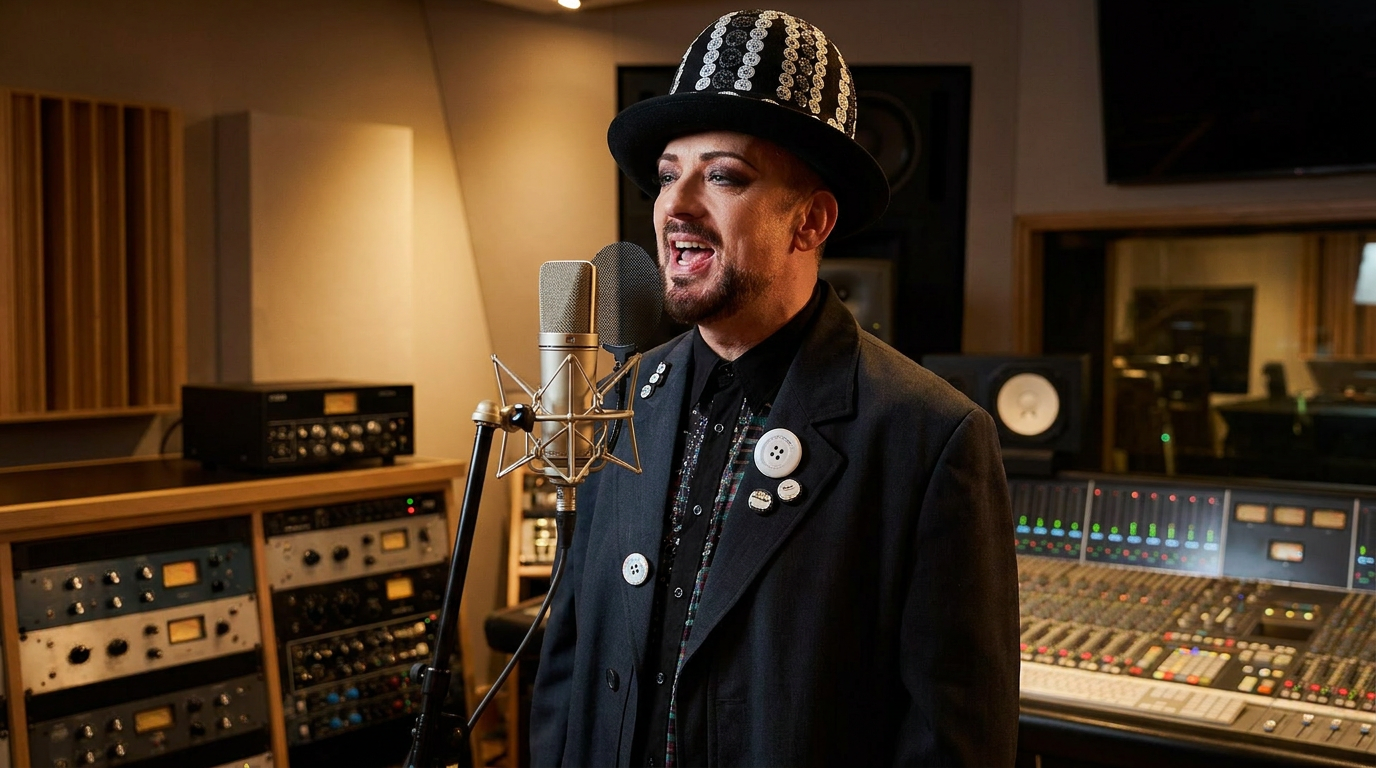
The process relies on what the company calls "artist-approved" and "ethical" voice AI. Rather than generating a synthetic track from scratch, Boy George performed new vocals in the studio.[4][6]
The AI platform—developed by Irvine, California-based tech partner Syntiant—was then used to process the new performance. The software captures the specific tonal qualities and youthful timbre that audiences associate with the original 1980s recording, blending the artist's current performance with their historic sound.[5][6]
The business mechanism behind the technology is where the true disruption lies. By creating a new, sonically identical or enhanced master recording, artists can bypass the original master rights typically held by major record labels.[1][4]
The business mechanism behind the technology is where the true disruption lies.
This allows heritage acts from the 1960s through the 2000s to own their new masters outright, unlocking fresh commercial opportunities across streaming, film and TV syncs, advertising, and video games.[2][6]
Seed investors in the venture include major players from both Silicon Valley and the music establishment, such as Structure Capital founding partner Mike Walsh—an early investor in Uber and Salesforce—and Red Light Management, one of the world's largest independent artist management firms.[2]

The launch arrives at a critical inflection point for music economics. For decades, artists signed away their master rights in perpetuity in exchange for upfront advances and distribution, leaving them with fraction-of-a-penny streaming royalties while their labels reaped the long-term value.[2][4]
While Taylor Swift famously re-recorded her early albums to regain control of her masters, that strategy requires massive capital, studio time, and a rabid fanbase willing to stream the new versions over the originals. Artist Included is betting that AI can democratize this reclamation process for a much wider array of legacy acts.[3]
Skeptics, however, question whether fans will actually embrace AI-assisted re-recordings. Music critics note that while the technology might be impressive, listeners often prefer the original tracks they grew up with, complete with their analog imperfections.[3]
Yet the commercial applications for sync licensing—where ad agencies and film supervisors need high-quality, easily clearable tracks—could prove highly lucrative, even if everyday fans stick to the originals on Spotify. When an artist owns the master, they can approve a lucrative commercial placement instantly, without needing a label's sign-off.[1][2]

How we got here
1983
Culture Club releases 'Karma Chameleon,' which becomes a global smash hit, though the master rights remain with the record label.
2019-2023
High-profile master rights disputes, most notably involving Taylor Swift, bring mainstream attention to the economics of music ownership.
2023-2025
Generative AI sparks panic in the music industry as unauthorized deepfakes of popular artists flood streaming platforms.
June 2026
Artist Included officially launches, releasing an AI-assisted re-recording of 'Karma Chameleon' to demonstrate a consent-based, artist-owned model.
Viewpoints in depth
Artist Empowerment Advocates
Proponents argue that ethical AI can correct historic industry imbalances by giving legacy artists control over their masters.
Founders and allied artists view the traditional record label model as inherently extractive, locking creators out of the long-term value of their own work. By using AI to efficiently produce high-quality re-recordings, they argue that heritage acts can finally participate in the lucrative sync licensing and streaming markets on their own terms, turning a technology often feared by musicians into a tool for financial liberation.
Music Industry Skeptics
Critics question the consumer demand for AI-assisted re-recordings compared to the beloved originals.
While the economic logic for artists is clear, skeptics point out that music is fundamentally emotional. Fans form deep attachments to the specific analog recordings they grew up with, complete with their flaws and era-specific production. Observers note that while mega-stars like Taylor Swift successfully convinced fans to switch to re-recorded masters, it remains unproven whether audiences will accept AI-enhanced versions of classic hits from artists with smaller, less mobilized fanbases.
AI Technology Developers
Technologists emphasize the collaborative, human-in-the-loop nature of this specific AI application.
Rather than focusing on fully synthetic generation—which has sparked massive copyright lawsuits across the industry—technology partners in this space highlight their role as an advanced production tool. By requiring the original artist to perform new vocals in the studio and using AI solely to process and match historic tonal qualities, developers argue they are building a consent-based framework that enhances human creativity rather than replacing it.
What we don't know
- Whether everyday fans will choose to stream AI-assisted re-recordings over the original analog tracks they grew up with.
- How major record labels, who hold the original master rights, will respond to a scaled effort to devalue their catalogs through soundalike re-recordings.
- If the model will prove financially viable for mid-tier legacy artists who lack the massive cultural footprint of acts like Culture Club.
Key terms
- Master Rights
- The legal ownership of the original sound recording of a song, which dictates who gets paid when the track is streamed, sold, or licensed.
- Sync Licensing
- The process of obtaining permission to synchronize a piece of music with visual media, such as a film, television show, commercial, or video game.
- Voice AI
- Artificial intelligence technology designed to analyze, replicate, or enhance the specific tonal qualities and timbre of a human voice.
Frequently asked
What exactly is Artist Included?
It is a Los Angeles-based music technology startup that uses AI to help legacy artists re-record their classic songs and create new, artist-owned master recordings.
Is the new 'Karma Chameleon' entirely AI-generated?
No. Boy George recorded new vocals in the studio, and AI was used to process the audio to capture the tonal qualities of the original 1980s track.
Why do artists need to re-record their songs?
Most legacy artists do not own the master rights to their original recordings, meaning record labels collect the majority of the royalties from streaming and licensing. Re-recording creates a new master that the artist owns.
Sources
Source coverage
6 outlets
3 viewpoints surfaced





[1]ForbesArtist Empowerment Advocates
Boy George Isn’t Afraid Of AI; A Reborn ‘Karma Chameleon’ Proves Why
Read on Forbes →[2]Music Business Worldwide
Tech startup Artist Included launches with plan to re-record classic songs using AI
Read on Music Business Worldwide →[3]MusicRadarMusic Industry Skeptics
Boy George has joined forces with an AI company that claims will help artists to 'reclaim' their hits
Read on MusicRadar →[4]Business WireArtist Empowerment Advocates
Artist Included launches with Boy George's new “Karma Chameleon” recording, using artist-approved AI to help creators own more of their work
Read on Business Wire →[5]SyntiantAI Technology Developers
Syntiant Provides AI Technology for Artist Included
Read on Syntiant →[6]mxdwnArtist Empowerment Advocates
Artist Included Launches With Boy George’s “Karma Chameleon”
Read on mxdwn →
Every angle. Every day.
Get business stories with full source coverage and perspective breakdowns delivered to your inbox.