
Evidence Pack: Do State Media Literacy Laws Actually Work?
As 25 states mandate media literacy education to combat misinformation, new data reveals that specific techniques like "lateral reading" dramatically improve students' ability to spot fake news, though unfunded mandates threaten implementation.
By Factlen Editorial Team
- Educational Researchers
- Argue that media literacy must be grounded in evidence-based techniques like lateral reading to measurably improve civic online reasoning.
- Media Literacy Advocates
- Push for universal K-12 legislative mandates to combat toxic cynicism and build healthy skepticism among youth.
- Classroom Educators
- Highlight the practical difficulties of implementing unfunded mandates and bridging the generational digital divide without adequate resources.
What's not represented
- · Students
- · Social Media Platforms
Why this matters
With generative AI flooding the internet with synthetic content, the ability to evaluate digital information is now a fundamental survival skill. Understanding which educational interventions actually work ensures that communities invest in building genuine civic resilience rather than wasting time on obsolete checklists.
Key points
- Twenty-five U.S. states now mandate some form of media literacy education in K-12 schools.
- Outdated evaluation methods like checking a site's 'About' page are no longer effective against modern disinformation.
- Teaching 'lateral reading'—verifying sources via external tabs—doubles students' ability to spot fake news in just six lessons.
- A 2025 report found 84% of teens hold negative, cynical views of the news media.
- Short video interventions have also proven highly effective at improving the digital literacy of older adults.
- Teachers face significant hurdles due to unfunded mandates and a generational digital divide with their students.
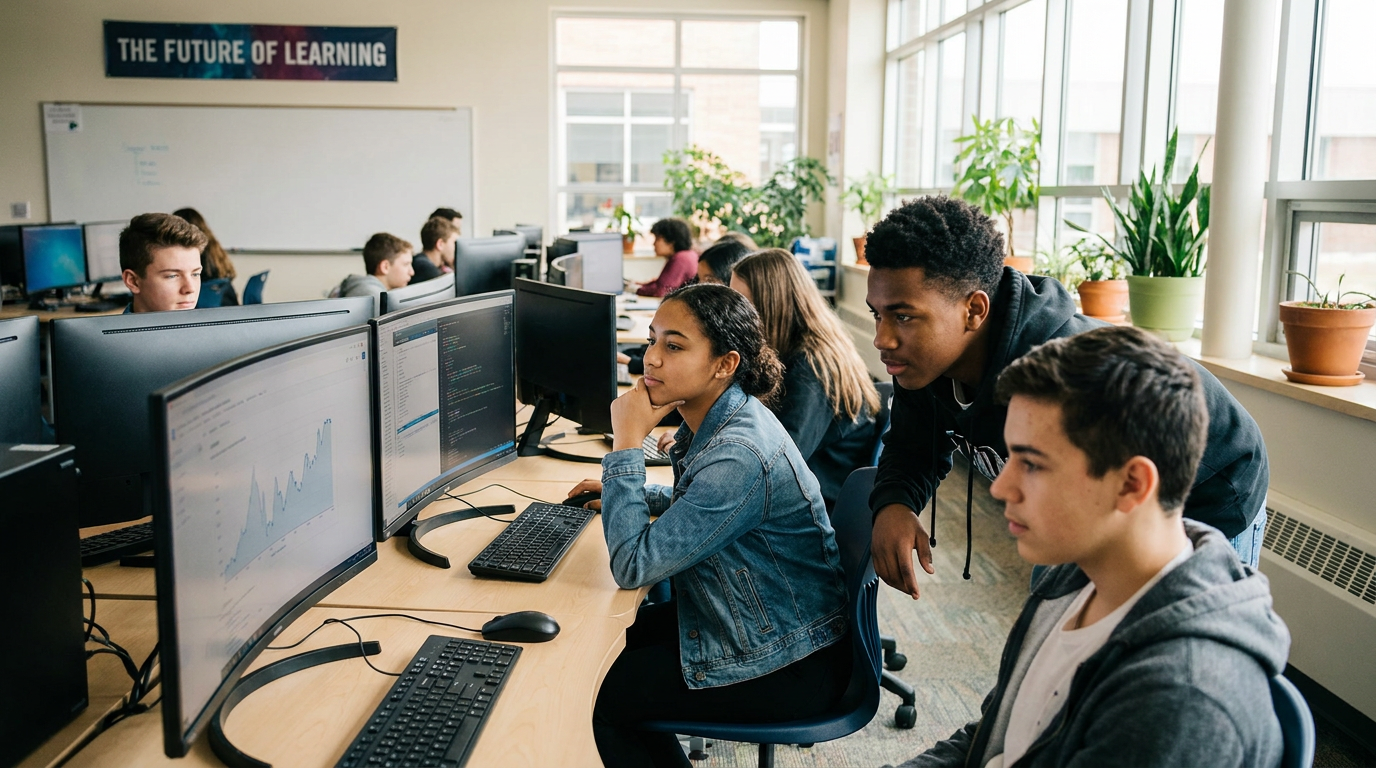
The explosion of artificial intelligence and digital misinformation has prompted a quiet legislative revolution across the United States. As of early 2026, twenty-five states have enacted laws requiring some form of media literacy education in K-12 schools, with eleven states passing new legislation since 2024 alone.[1]
This bipartisan push reflects a growing consensus that simply banning smartphones or restricting social media access is insufficient to protect students. Instead, advocates argue that schools must actively inoculate young people against algorithmic manipulation and fake news by teaching them how information systems actually operate.[1][8]
But as these mandates roll out nationwide, a critical question emerges: do media literacy classes actually work? For years, the answer was murky, as educators relied on outdated checklists that asked students to evaluate a website's domain name or read its "About" page—tactics easily defeated by modern, polished disinformation sites.[2][8]
The landscape shifted dramatically with the introduction of "lateral reading," an evidence-based strategy pioneered by the Stanford Digital Inquiry Group. Researchers observed that professional fact-checkers do not stay on an unfamiliar webpage to evaluate it. Instead, they immediately open new browser tabs to see what other trusted, independent sources say about the original site.[2]

The empirical evidence supporting lateral reading is striking. A landmark study published in the Journal of Educational Psychology tested a curriculum based on this technique with high school students in an urban midwestern district, aiming to measure concrete improvements in civic online reasoning.[3]
The results showed that after receiving just six 50-minute lessons in digital literacy, students were twice as likely to successfully identify questionable websites and hidden agendas compared to their baseline performance before the intervention.[3]
The urgency of scaling these effective interventions is underscored by a deepening crisis of trust among youth. A 2025 comprehensive report by the News Literacy Project revealed that 84 percent of American teenagers hold negative views of the news media, frequently associating journalism with words like "fake," "false," and "lies."[4]
The urgency of scaling these effective interventions is underscored by a deepening crisis of trust among youth.
Educational researchers warn that this "toxic cynicism" is just as dangerous to a functioning democracy as outright gullibility. The goal of modern media literacy is not to make students distrust everything they read, but to replace blanket cynicism with targeted, healthy skepticism grounded in verification.[4][8]
To that end, organizations are rapidly expanding their reach to meet the legislative demand. The News Literacy Project's Checkology platform, which teaches these critical evaluation skills, was utilized by more than 575,000 students across 4,800 school districts in 2025.[4]

The success of these cognitive interventions is not limited to teenagers. A 2026 field study conducted by the Stanford Social Media Lab demonstrated that lateral reading concepts can be effectively taught to older adults—a demographic frequently targeted by online scams and political misinformation.[5]
By deploying 15-second educational videos as YouTube advertisements, the Stanford team reached over 10 million older adults. The intervention measurably improved the quality of the participants' subsequent web browsing and digital diets, achieving these gains at a highly efficient cost of just 22 cents per person.[5]
Despite these pedagogical breakthroughs, the reality of implementing media literacy laws in public schools remains fraught with systemic challenges. A 2025 study from the University of Illinois examining the rollout of that state's media literacy mandate uncovered a severe "digital divide" between instructors and their classrooms.[6]
Researchers found that teachers primarily consume legacy news media and utilize older social networks like Facebook, while their students inhabit entirely different information ecosystems dominated by TikTok, Snapchat, and YouTube influencers. This disconnect makes it exceedingly difficult for educators to contextualize lessons within their students' actual lived experiences.[6]
Furthermore, classroom educators frequently point out that many of these new state laws function as unfunded mandates. Legislatures are directing schools to teach complex digital literacy skills without providing the necessary curriculum guidance, dedicated funding, or professional development time required to do so effectively.[6][8]

The rapid proliferation of generative artificial intelligence is only compounding this pressure on an already strained educational system. According to a 2026 survey by Education Week, 61 percent of elementary school educators report that their students struggle significantly to distinguish AI-generated content from authentic media.[7]
In response to this shifting landscape, states are beginning to update their frameworks. California recently became the fourth state to mandate comprehensive K-12 media literacy for all students, while Idaho and Florida have drafted specific AI literacy standards set to take effect in July 2026.[1][7]
Ultimately, the data proves that media literacy education is highly effective when grounded in proven techniques like lateral reading. The challenge for the remainder of the decade will be bridging the gap between legislative ambition and classroom reality, ensuring that every teacher has the resources to guide students through an increasingly synthetic digital world.[8]
How we got here
2019
Stanford researchers publish foundational studies demonstrating that professional fact-checkers use 'lateral reading' to evaluate information.
2022
A landmark study proves that just six lessons in lateral reading can double high school students' ability to spot fake news.
2024–2025
Eleven U.S. states pass new or expanded media literacy laws, bringing the national total to 25 states.
July 2026
New educational standards explicitly requiring artificial intelligence (AI) literacy go into effect in states like Florida and Idaho.
Viewpoints in depth
Educational Researchers
Focus on the measurable efficacy of specific cognitive interventions.
Academic researchers argue that the broad mandate to 'teach media literacy' is useless unless it is anchored in evidence-based techniques. They point to studies demonstrating that traditional methods—like evaluating a website's design or reading its 'About' page—actually make students more susceptible to polished disinformation. Instead, they advocate for universal instruction in 'lateral reading,' emphasizing that short, targeted interventions can yield massive, measurable improvements in civic online reasoning across all age groups.
Media Literacy Advocates
Emphasize the urgent need for universal K-12 mandates to build civic resilience.
Advocacy organizations view media literacy not just as an academic skill, but as a fundamental requirement for a functioning democracy. Pointing to data showing that 84 percent of teenagers view the news media with deep cynicism, these groups argue that schools must actively intervene to replace this 'toxic cynicism' with healthy skepticism. They push state legislatures to adopt comprehensive frameworks that require media and AI literacy from elementary school through graduation.
Classroom Educators
Highlight the practical challenges of implementing these laws without adequate support.
While teachers generally support the goal of media literacy, they frequently express frustration with how state laws are implemented. Many educators view these requirements as unfunded mandates, noting that legislatures demand new instruction without providing curriculum, training, or dedicated classroom time. Furthermore, teachers report struggling with a generational digital divide, finding it difficult to apply abstract media literacy concepts to the rapidly changing, algorithm-driven platforms like TikTok and Snapchat that their students actually use.
What we don't know
- How effectively states will fund and enforce these new media literacy mandates over the next five years.
- Whether current lateral reading techniques will remain effective as generative AI becomes capable of fabricating entire networks of corroborating websites.
Key terms
- Lateral Reading
- The practice of leaving an unfamiliar website and opening new browser tabs to verify the source's credibility through independent sites.
- Vertical Reading
- The outdated method of evaluating a website by staying on the page and looking at its own content, design, or 'About' section.
- Unfunded Mandate
- A statute or regulation that requires a school district to perform certain actions, like teaching a new curriculum, without providing the money or resources to fulfill the requirement.
- Digital Divide
- In this context, the gap in media consumption habits and platform familiarity between older generations (teachers) and younger generations (students).
- Civic Online Reasoning
- The ability to effectively search for, evaluate, and verify digital information regarding social and political issues.
Frequently asked
What is lateral reading?
Lateral reading is an evidence-based evaluation strategy where a user leaves an unfamiliar website and opens new browser tabs to see what other trusted, independent sources say about the original site's credibility.
Do media literacy classes actually work?
Yes. Studies show that just six 50-minute lessons in evidence-based techniques can double a high school student's ability to successfully identify questionable websites and hidden agendas.
Why are teachers struggling to teach media literacy?
Many state laws are unfunded mandates that provide no curriculum or training. Additionally, a digital divide exists between the legacy platforms teachers use and the newer social media ecosystems their students inhabit.
Does media literacy only apply to teenagers?
No. Recent field studies show that short video interventions teaching lateral reading can measurably improve the web browsing habits of older adults at a very low cost per person.
Sources
Source coverage
8 outlets
3 viewpoints surfaced








[1]Media Literacy NowMedia Literacy Advocates
Media Literacy Policy & Impact Report 2026
Read on Media Literacy Now →[2]Stanford Digital Inquiry GroupEducational Researchers
Lateral Reading and Civic Online Reasoning
Read on Stanford Digital Inquiry Group →[3]Journal of Educational PsychologyEducational Researchers
Educating for Civic Reasoning in a Digital Age
Read on Journal of Educational Psychology →[4]News Literacy ProjectMedia Literacy Advocates
“Biased,” “Boring” and “Bad”: Unpacking perceptions of news media among U.S. teens
Read on News Literacy Project →[5]Stanford Social Media LabEducational Researchers
Scaling Digital Literacy Interventions to Diverse Communities
Read on Stanford Social Media Lab →[6]Journal of Media Literacy EducationClassroom Educators
The Digital Divide in State-Mandated Media Literacy Instruction
Read on Journal of Media Literacy Education →[7]Education WeekClassroom Educators
AI Is Picking Up Speed. Are Schools Keeping Pace?
Read on Education Week →[8]Factlen Editorial TeamEducational Researchers
Synthesis by Factlen editorial team
Read on Factlen Editorial Team →


Every angle. Every day.
Get news politics stories with full source coverage and perspective breakdowns delivered to your inbox.