
Fractional Real Estate Investing: How Everyday Investors Are Buying Property in Micro-Shares
New financial platforms and blockchain tokenization are allowing retail investors to buy shares of rental properties for as little as $50. Here is how the mechanism works, the regulatory framework protecting investors, and the risks of micro-investing.
By Factlen Editorial Team
- Retail Investors
- Argue that fractional investing democratizes wealth creation and provides passive income without the burden of property management.
- Blockchain Advocates
- Focus on tokenization as the future of the industry, emphasizing smart contracts and the potential for instant liquidity.
- Traditional Homebuyers
- Express concern that platforms buying up single-family homes to sell as shares exacerbates housing shortages and drives up prices.
- Financial Regulators
- Prioritize investor protection, ensuring platforms comply with SEC disclosure rules and accurately represent the risks of illiquidity.
What's not represented
- · Traditional Property Managers
- · Local Municipal Tax Authorities
Why this matters
Real estate has historically been one of the most reliable wealth-building assets, but massive down payments locked out the average person. Understanding how fractional ownership works allows everyday investors to diversify their portfolios and earn passive rental income without the traditional barriers to entry.
Key points
- Fractional investing allows individuals to buy micro-shares of rental properties for as little as $50, lowering traditional barriers to entry.
- Investors purchase equity in a Special Purpose Vehicle (SPV) that holds the property, entitling them to a proportional share of rental income and appreciation.
- The SEC regulates these offerings under frameworks like Regulation A+, requiring platforms to provide thorough financial disclosures to protect retail investors.
- While the model offers passive income and diversification, investors face significant risks regarding illiquidity and platform management fees.
For decades, commercial and residential real estate has been one of the most reliable engines for wealth creation. Yet, the traditional barrier to entry—saving tens or hundreds of thousands of dollars for a down payment—has effectively locked out the average retail investor. Today, a rapidly maturing financial mechanism known as fractional real estate investing is fundamentally rewriting that math. By allowing individuals to purchase micro-shares of a property for as little as $50, the model democratizes access to an asset class previously reserved for the wealthy and institutional players.[1][2]
The core mechanism behind fractional investing relies on established corporate structures rather than direct property deeds. When a platform identifies a lucrative rental property, it does not sell the physical house to a thousand different people. Instead, the company purchases the asset and places it inside a Special Purpose Vehicle (SPV) or a Limited Liability Company (LLC) created solely to hold that specific property. Investors then purchase equity shares in that LLC. Because the investors own the company that owns the building, they are legally entitled to a proportional cut of the monthly rental income and any eventual capital appreciation when the property is sold.[1][4]

This structure transforms real estate from a hands-on physical asset into a passive financial security. Everyday investors are entirely shielded from the traditional headaches of being a landlord. The platform or a designated property management firm handles tenant screening, midnight plumbing emergencies, and routine maintenance. In exchange, the platform charges sourcing and asset management fees, which are deducted from the property's gross revenue before dividends are distributed to the fractional owners.[1][2]
While the concept of pooling money to buy property is not new—Real Estate Investment Trusts (REITs) have existed for decades—the modern fractional model offers unprecedented granularity. Instead of buying into a massive, opaque fund of hundreds of commercial buildings, an investor can scroll through a digital marketplace and select a specific single-family home in Austin, a vacation rental in Bali, or a commercial storefront in Miami. This allows retail investors to build highly customized, geographically diversified portfolios with a few taps on a smartphone.[1][3]
The legal viability of this model in the United States hinges heavily on the Securities and Exchange Commission (SEC). Because fractional shares are classified as securities, platforms must navigate strict regulatory frameworks. Many utilize SEC Regulation A+ (Reg A+), a rule designed to help smaller companies raise capital. Reg A+ Tier 2 allows platforms to raise up to $75 million annually from both accredited and non-accredited (everyday) investors, provided they file thorough financial disclosures and risk assessments. This regulatory oversight ensures a baseline of transparency, meaning investors have access to offering circulars and operating agreements before committing their capital.[4]
The legal viability of this model in the United States hinges heavily on the Securities and Exchange Commission (SEC).
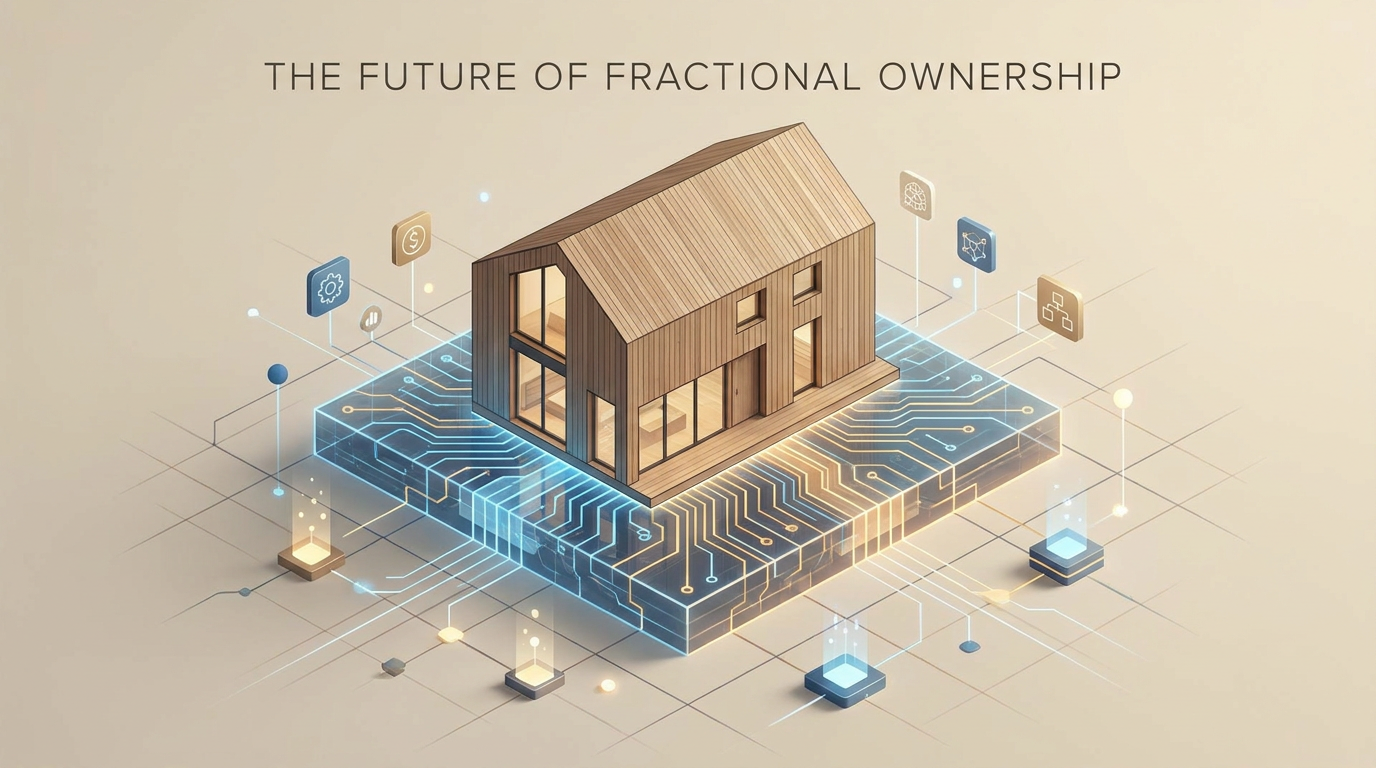
The most significant technological evolution in this space is "real estate tokenization," which merges fractional ownership with blockchain technology. Instead of traditional paper shares, ownership rights are minted as digital security tokens on a blockchain. Smart contracts automatically execute the distribution of rental yields directly to investors' digital wallets. The tokenized real estate market is expanding rapidly, valued at roughly $3.5 billion in 2024 and projected to reach nearly $19.4 billion by 2033.[3][5]

Proponents of tokenization argue that blockchain solves one of real estate's biggest historical drawbacks: illiquidity. Traditionally, selling a house takes months of negotiations, inspections, and escrow. By tokenizing the asset, platforms aim to create secondary digital markets where investors can trade their property tokens as easily as trading stocks. However, true instant liquidity remains largely theoretical today; secondary markets for fractional real estate are still nascent, and selling a share often depends on finding a willing buyer on that specific platform.[1][2][3]
Despite the low barriers to entry, financial experts urge caution regarding the hidden costs of micro-investing. The multiple layers of fees—ranging from platform administrative costs to property management cuts—can significantly dilute the net returns, which typically target between 5% and 12% annually. Furthermore, investors face "platform risk." If the startup managing the fractional marketplace goes bankrupt, the underlying properties still exist within their LLCs, but the administrative process of unwinding the investments or transferring management can be complex and legally fraught.[1][2]

There is also a broader macroeconomic debate surrounding the rise of fractional platforms. Critics warn that by allowing thousands of micro-investors to pool their capital, these platforms introduce new competition into the housing market. When tech companies purchase single-family homes to slice into shares, it removes inventory from the market, potentially driving up prices and making it even more difficult for traditional first-time buyers to purchase a starter home of their own.[1]
Ultimately, fractional real estate and tokenization represent a profound shift in how property is bought, held, and traded. For the retail investor, it offers a legitimate, SEC-regulated pathway to earn passive real estate income without the need for a massive down payment or a toolbox. As the technology matures and secondary markets gain volume, the line between liquid digital securities and physical brick-and-mortar assets will continue to blur, permanently altering the landscape of modern property investing.[2][3][4][6]
How we got here
1960
Congress creates Real Estate Investment Trusts (REITs), allowing public investment in large commercial portfolios.
2012
The JOBS Act is signed into law, easing securities regulations and paving the way for modern real estate crowdfunding.
2015
The SEC adopts final rules for Regulation A+, officially allowing non-accredited investors to participate in private real estate offerings.
2024
The global tokenized real estate market surpasses $3.5 billion in total value as blockchain integration accelerates.
Viewpoints in depth
Retail Investors' view
Fractional platforms offer a long-overdue entry point into real estate wealth creation.
For everyday investors, the primary appeal is breaking down the massive capital wall that has historically surrounded real estate. By lowering minimums to $50 or $100, these platforms allow individuals to build diversified portfolios across different cities and property types. They value the passive nature of the investment—earning dividend yields from rent without ever having to screen a tenant or fix a broken appliance.
Traditional Homebuyers' view
The micro-investing trend threatens to remove vital starter-home inventory from the market.
Housing advocates and prospective first-time buyers view the fractional boom with skepticism. When tech platforms acquire single-family homes to slice into digital shares, they are effectively competing with local families for limited housing stock. Critics argue that democratizing real estate investment on a global scale inadvertently makes actual homeownership less accessible for the people who simply want a place to live.
Blockchain Advocates' view
Tokenization will solve real estate's historical lack of liquidity through digital secondary markets.
Technologists see the current LLC-based fractional model as just a stepping stone. By moving property shares onto a blockchain as security tokens, they argue the industry can automate rent distributions via smart contracts and eliminate costly middlemen. Their ultimate goal is a frictionless secondary market where a token representing a fraction of a Miami condo can be traded globally in seconds, much like a traditional stock.
Financial Regulators' view
Innovation must be balanced with strict disclosures to protect non-accredited investors from hidden risks.
Regulatory bodies like the SEC are focused on ensuring that fractional shares are properly classified and sold as securities. They emphasize that retail investors must be fully informed about the risks of illiquidity, platform insolvency, and complex fee structures. Through frameworks like Regulation A+, regulators aim to provide a safe harbor for capital formation while mandating the transparency necessary to prevent fraud in a novel digital market.
What we don't know
- How fractional real estate platforms will perform during a severe, prolonged housing market crash, as the modern iteration of this model has primarily existed during periods of property appreciation.
- Whether secondary markets for tokenized real estate will ever achieve enough trading volume to offer true, instant liquidity for retail investors.
Key terms
- Fractional Ownership
- A method where multiple investors pool their money to collectively own shares of a single asset, such as a rental property.
- Special Purpose Vehicle (SPV)
- A separate legal entity, often an LLC, created specifically to hold the title of a single property and isolate financial risk.
- Tokenization
- The process of converting ownership rights of a real-world asset into digital security tokens recorded on a blockchain.
- Regulation A+ (Reg A+)
- An SEC rule that allows companies to offer and sell securities to the general public, including non-accredited investors, with specific disclosure requirements.
- Illiquidity
- The state of an asset that cannot easily or quickly be sold or exchanged for cash without a substantial loss in value.
Frequently asked
Do I have to manage the property or fix repairs?
No. Fractional real estate is a passive investment. The platform or a hired property management company handles all tenant relations, maintenance, and repairs.
Can I live in or visit the property I invest in?
Generally, no. You own a financial security (a share of the LLC that owns the property), not the physical deed, so you do not have physical access or residency rights.
How quickly can I sell my fractional shares?
Fractional real estate is highly illiquid. While some platforms offer secondary markets, selling your shares depends on finding a willing buyer, which can take months or longer.
What happens if the investment platform goes bankrupt?
The physical property is typically held in a separate legal entity (an LLC or SPV). If the platform fails, the property remains intact, though the administrative process of transferring management can be complex.
Sources
Source coverage
6 outlets
4 viewpoints surfaced






[1]ForbesTraditional Homebuyers
Fractional Real Estate Investing: How It Works And How To Get Started
Read on Forbes →[2]KiplingerRetail Investors
Real Estate Crowdfunding: What to Know Before You Invest
Read on Kiplinger →[3]InvestaxBlockchain Advocates
Real Estate Tokenization Explained
Read on Investax →[4]RealbricksFinancial Regulators
Understanding the Legal Framework of Fractional Real Estate Investing
Read on Realbricks →[5]Custom Market InsightsBlockchain Advocates
Global Real Estate Tokenization Market 2024–2033
Read on Custom Market Insights →[6]Factlen Editorial TeamFinancial Regulators
Synthesis by Factlen editorial team
Read on Factlen Editorial Team →
Every angle. Every day.
Get real estate stories with full source coverage and perspective breakdowns delivered to your inbox.