
Global Handball Transfer Window: SC Magdeburg Secures Kuzmanovic as Asian and Balkan Clubs Make Major Moves
The summer 2026 handball transfer window is heating up globally, highlighted by SC Magdeburg signing Croatian goalkeeper Dominik Kuzmanovic and ambitious roster moves across the Balkans and the Middle East.
By Factlen Editorial Team
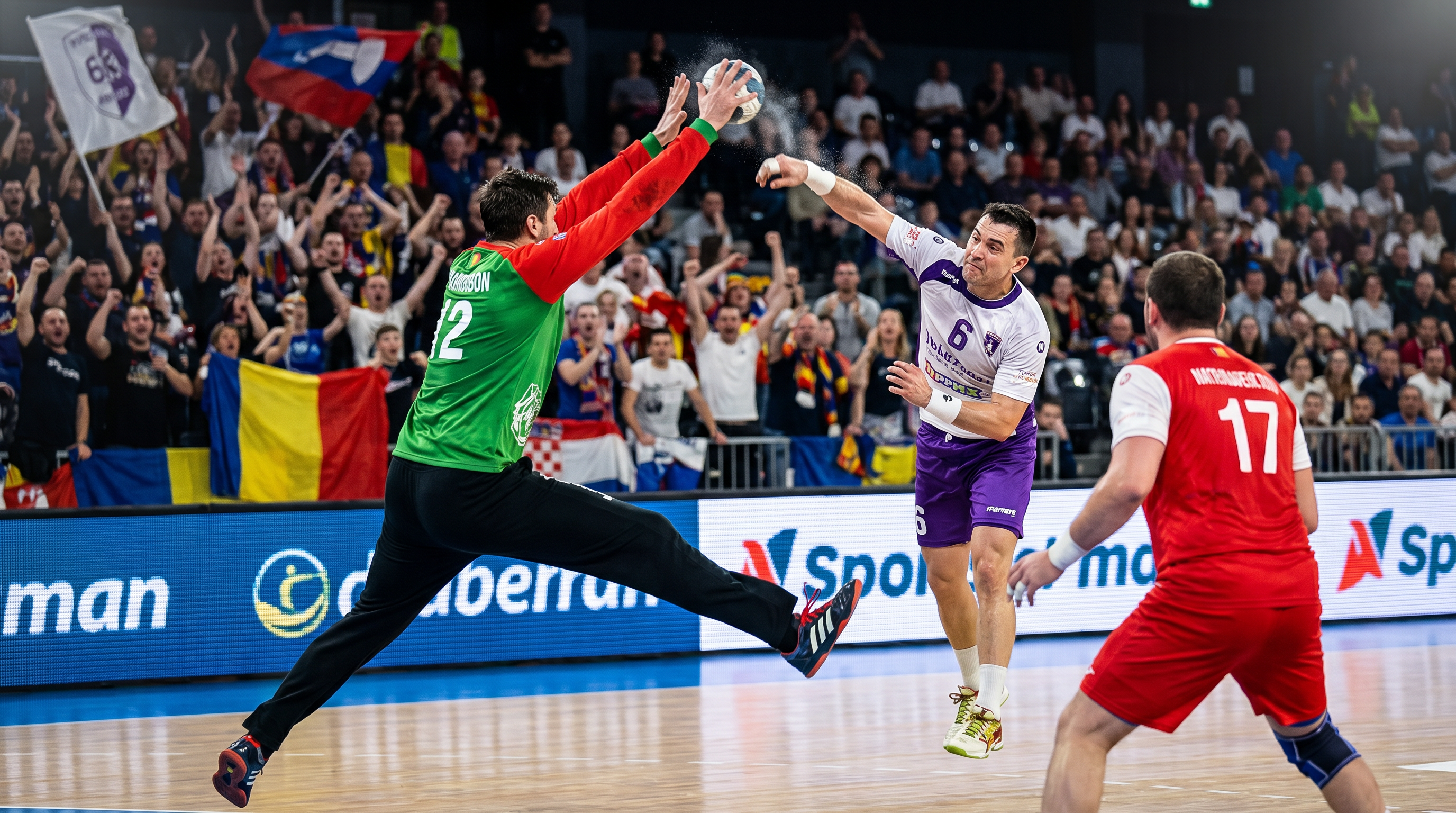
- Bundesliga Powerhouses
- Focused on stockpiling elite international talent to maintain domestic and European dominance.
- Emerging European Challengers
- Using targeted international signings to disrupt traditional domestic hierarchies.
- Middle Eastern Contenders
- Leveraging short-term strategic signings to win continental championships.
- European Traditionalists
- Managing complex roster transitions to maintain historical standards of excellence.
What's not represented
- · VfL Gummersbach supporters reacting to losing their star goalkeeper
- · Asian domestic players competing for minutes against European imports
Why this matters
The sheer volume and geographical spread of these transfers highlight the rapid globalization of professional handball. As elite talent flows not just to traditional European powerhouses but also to emerging leagues in the Balkans and the Middle East, the sport is becoming more competitive and financially dynamic worldwide.
Key points
- SC Magdeburg secured 23-year-old Croatian goalkeeper Dominik Kuzmanovic on a five-year contract from VfL Gummersbach.
- North Macedonian club HC Ohrid signed Japanese national team pivot Shuichi Yoshida to bolster their European ambitions.
- Qatari side Al-Arabi executed a triple-signing of European talent ahead of the AHF Asian Men's Club League Championship.
- The sheer volume of international movement highlights the expanding financial and geographical footprint of professional handball.
The global handball transfer market has accelerated into a frenzy in June 2026, with major clubs across Europe and Asia executing strategic roster overhauls. From the German Bundesliga to the Macedonian Super League and the Qatari domestic championship, front offices are locking in cornerstone talent to secure their competitive futures.[2][3][4]
Unlike previous cycles dominated entirely by a few wealthy Western European giants, the 2026 window demonstrates the sport's expanding geographical footprint. While traditional powerhouses continue their high-stakes arms race, ambitious clubs in the Balkans and the Middle East are aggressively recruiting international stars to elevate their continental and global standing.[2][3]
The most significant transaction of the early summer window comes from Germany, where reigning EHF Champions League contenders SC Magdeburg have secured Croatian national team goalkeeper Dominik Kuzmanovic. The 23-year-old rising star signed a five-year contract that will keep him in Saxony-Anhalt until 2031.[1][4]
Kuzmanovic arrives from Bundesliga rival VfL Gummersbach, where he established himself as one of the league's elite shot-stoppers. During his final season in North Rhine-Westphalia, he recorded 285 saves across 34 matches, boasting an impressive 30.29 percent save rate against some of the world's most lethal attackers.[1]

SC Magdeburg's head coach and sporting director Bennet Wiegert emphasized the strategic nature of the acquisition. Following the departures of Sergey Hernandez and Nicola Portner, Kuzmanovic will form a formidable goaltending duo with compatriot Matej Mandic. Wiegert noted that the two Croatians complement each other technically and will be crucial for Magdeburg's domestic and European ambitions.[1][4]
"The move to Magdeburg is a significant milestone for me, which I approach with great motivation, great ambition, and the clear goal of developing further," Kuzmanovic stated during his presentation. He recently anchored the Croatian national team to a bronze medal at the EHF European Championship, elevating his global stock.[1]
Magdeburg's aggressive move is part of a broader arms race within the Bundesliga. Arch-rivals THW Kiel have countered by raiding Gummersbach as well, securing German national team backcourt star Julian Köster on a four-year deal. Meanwhile, Füchse Berlin is already preparing for the 2027 arrival of French superstar Dika Mem, ensuring the German top flight remains the most fiercely contested league in the world.[6]
Magdeburg's aggressive move is part of a broader arms race within the Bundesliga.
Beyond the Bundesliga, the transfer market is shaking up the Balkan hierarchies. North Macedonian club HC Ohrid has made a massive statement of intent by signing Japanese national team line player Shuichi Yoshida from French heavyweights HBC Nantes.[2][5]
Yoshida, who stands at 193 centimeters, signed a one-year contract with an option for an additional season. The 25-year-old brings invaluable EHF Champions League experience from his time in France and was recently named the best pivot at the Asian Men's Handball Championship.[2][5]

"I am extremely happy to wear the GRK Ohrid jersey and I can't wait to play for this club and meet our fans," Yoshida announced to the Macedonian supporters. His arrival marks Ohrid's sixth major signing of the summer, signaling their determination to disrupt the domestic dominance of Eurofarm Pelister and Vardar, while making a deep run in the EHF European Cup.[2][5]
The globalization of the sport is perhaps most evident in the Middle East, where clubs are heavily investing in European talent ahead of the 28th AHF Asian Men's Club League Handball Championship in Kuwait. The tournament serves as the official qualifier for the 2026 IHF Men's Club World Championship.[3]
Qatari powerhouse Al-Arabi has executed a stunning triple-signing to bolster their squad for the continental tournament. They secured towering Ukrainian left back Ihor Turchenko, Georgian right back Giorgi Tskhovrebadze, and Portuguese left back Pedro Valdez, who spent the previous season competing in the Champions League with Dinamo Bucuresti.[3]

Al-Arabi's regional rivals are matching their ambition. Saudi Arabia's Khaleej Club has added experienced goalkeeper Kristian Pilipovic and right back Janko Bozovic to their roster, while Kuwaiti side Burgan reinforced their backcourt with Hassan Kaddah from Egyptian giants Zamalek. The influx of international ringers has transformed the Asian Club Championship into a high-stakes, star-studded spectacle.[3]
Back in Western Europe, traditional giants are quietly executing succession plans. FC Barcelona has officially integrated Icelandic goalkeeper Viktor Hallgrimsson into their squad. The 25-year-old, arriving on a two-year contract, is tasked with the monumental challenge of replacing departing club legend Gonzalo Perez de Vargas.[7]
As the June 2026 transfer window progresses, the sheer volume and geographical diversity of these transactions highlight a rapidly evolving sport. Whether it is a Croatian prodigy anchoring a German defense, a Japanese pivot moving to Macedonia, or European veterans chasing glory in Kuwait, global handball has never been more interconnected.[2][3][4]
How we got here
Jan 2026
Füchse Berlin announces the blockbuster 2027 signing of French superstar Dika Mem, escalating the Bundesliga arms race.
Feb 2026
SC Magdeburg and VfL Gummersbach finalize the transfer of Croatian goalkeeper Dominik Kuzmanovic.
May 2026
HC Ohrid confirms the acquisition of Japanese national team pivot Shuichi Yoshida from HBC Nantes.
Jun 2026
Middle Eastern clubs finalize short-term European signings ahead of the Asian Club League Championship in Kuwait.
Viewpoints in depth
Bundesliga Powerhouses
Top German clubs focus on stockpiling elite international talent to maintain domestic and European dominance.
For clubs like SC Magdeburg, THW Kiel, and Füchse Berlin, the transfer strategy is straightforward: acquire the absolute best players in the world, regardless of cost. The Bundesliga's grueling 34-game schedule, combined with EHF Champions League commitments, requires immense squad depth. By securing players like Dominik Kuzmanovic and Julian Köster on long-term deals, these clubs ensure they have the rotational strength to compete on all fronts while simultaneously weakening domestic rivals like VfL Gummersbach.
Emerging European Challengers
Ambitious clubs in smaller leagues use targeted international signings to disrupt traditional hierarchies.
Clubs like North Macedonia's HC Ohrid operate with different strategic imperatives. Unable to outspend the German or French giants, they look for high-impact international players—like Japanese pivot Shuichi Yoshida—who bring top-flight experience but are seeking larger roles. These signings are designed to break the domestic duopoly of established clubs like Vardar and Eurofarm Pelister, while providing the firepower needed for deep runs in second-tier continental competitions like the EHF European Cup.
Middle Eastern Contenders
Clubs in Qatar, Saudi Arabia, and Kuwait leverage short-term contracts to attract European stars for major tournaments.
The Middle Eastern transfer strategy often revolves around specific, high-stakes tournaments like the AHF Asian Men's Club League Championship. Clubs such as Al-Arabi and Khaleej Club temporarily bolster their rosters with European ringers—like Pedro Valdez and Ihor Turchenko—to secure continental titles. Winning these tournaments guarantees a lucrative spot in the IHF Men's Club World Championship, justifying the heavy, concentrated financial investment in international talent.
What we don't know
- It remains to be seen how quickly Dominik Kuzmanovic will adapt to the immense pressure of leading SC Magdeburg's defense in the EHF Champions League.
- The long-term impact of Middle Eastern clubs heavily relying on short-term European signings for continental tournaments is still debated among handball purists.
Key terms
- EHF Champions League
- The premier men's club handball competition in Europe, featuring the top domestic champions from across the continent.
- Pivot (Line Player)
- An offensive player who positions themselves among the opposing team's defenders near the six-meter line to create space and receive close-range passes.
- Save Percentage
- A key goaltending statistic calculated by dividing the number of saves made by the total number of shots faced.
- IHF Men's Club World Championship
- An international tournament organized by the International Handball Federation, featuring the champion clubs from each continental confederation.
Frequently asked
Why did Dominik Kuzmanovic leave VfL Gummersbach?
Kuzmanovic transferred to SC Magdeburg to join a reigning EHF Champions League contender and take the next step in his career, signing a five-year contract to form a goaltending duo with Matej Mandic.
Where is Shuichi Yoshida playing next season?
The Japanese national team line player is moving from French club HBC Nantes to North Macedonian side HC Ohrid on a one-year contract with an option for a second.
Why are Middle Eastern clubs signing European players in June?
Clubs like Al-Arabi and Khaleej Club are reinforcing their rosters ahead of the AHF Asian Men's Club League Championship, which serves as the direct qualifier for the IHF Men's Club World Championship.
Sources
Source coverage
7 outlets
4 viewpoints surfaced






[1]SC Magdeburg OfficialBundesliga Powerhouses
SC Magdeburg verpflichtet Torhüter Dominik Kuzmanovic
Read on SC Magdeburg Official →[2]Handball PlanetEmerging European Challengers
HC Ohrid continue to shake up the transfer market – Shuichi Yoshida arrives from Nantes
Read on Handball Planet →[3]IHFMiddle Eastern Contenders
28th AHF Asian Men's Club League Handball Championship throws off in Kuwait
Read on IHF →[4]Sport1Bundesliga Powerhouses
Handball: Magdeburg holt Kuzmanovic aus Gummersbach
Read on Sport1 →[5]Sloboden PecatEmerging European Challengers
Ohrid strengthened its squad with a Japanese international who played in the Champions League
Read on Sloboden Pecat →[6]EHFEuropean Traditionalists
Dika Mem on transfer to Füchse: 'I decided to discover something new'
Read on EHF →[7]FC Barcelona OfficialEuropean Traditionalists
Viktor Hallgrímsson - Goalkeeper
Read on FC Barcelona Official →

More in sports
See all 337 stories →Pro Volleyball Boom
The $100M Turf War Building America's First Sustainable Pro Volleyball Ecosystem
6 sources
Adaptive Gaming
How Adaptive Tech and Modular Design Are Leveling the Esports Playing Field
7 sources
Sports Tech
How Artificial Intelligence is Revolutionizing Soccer Scouting and Player Recruitment
8 sources

Fighter Safety
How Impact-Sensing Smart Gloves Are Changing the Science of Boxing Safety
7 sources
Every angle. Every day.
Get sports stories with full source coverage and perspective breakdowns delivered to your inbox.