
Free Streaming Channels Officially Eclipse Cable TV as 'Subscription Fatigue' Peaks
Free Ad-Supported Streaming Television (FAST) has surpassed traditional cable in household adoption, offering consumers high-quality content and live sports without monthly fees.
By Factlen Editorial Team
- Cost-Conscious Viewers
- Consumers prioritizing budget discipline and simplified discovery over expensive premium subscriptions.
- Streaming Platforms
- Tech giants and media companies capitalizing on the shift by investing heavily in original content and live sports for free channels.
- Advertisers & Analysts
- Industry observers tracking the migration of ad dollars from traditional broadcast to highly targeted, free streaming environments.
What's not represented
- · Independent Content Creators
- · Premium Cable Networks
Why this matters
As the cost of living and premium streaming subscriptions continue to rise, the maturation of free television platforms is putting an estimated $1,800 a year back into the pockets of cord-cutting households without sacrificing access to premium entertainment.
Key points
- Free Ad-Supported Streaming Television (FAST) has officially surpassed traditional cable TV in household adoption.
- Over 200 million monthly active users globally now rely on free streaming platforms.
- Households are saving an estimated $1,800 annually by cutting cable and switching to FAST services.
- More than 70% of programming on free platforms was produced after 2010, dispelling the myth of 'old reruns.'
- Live sports and local news have become major drivers of viewership on free streaming channels.
- Smart TV manufacturers are fueling growth by pre-installing free channels directly onto home screens.
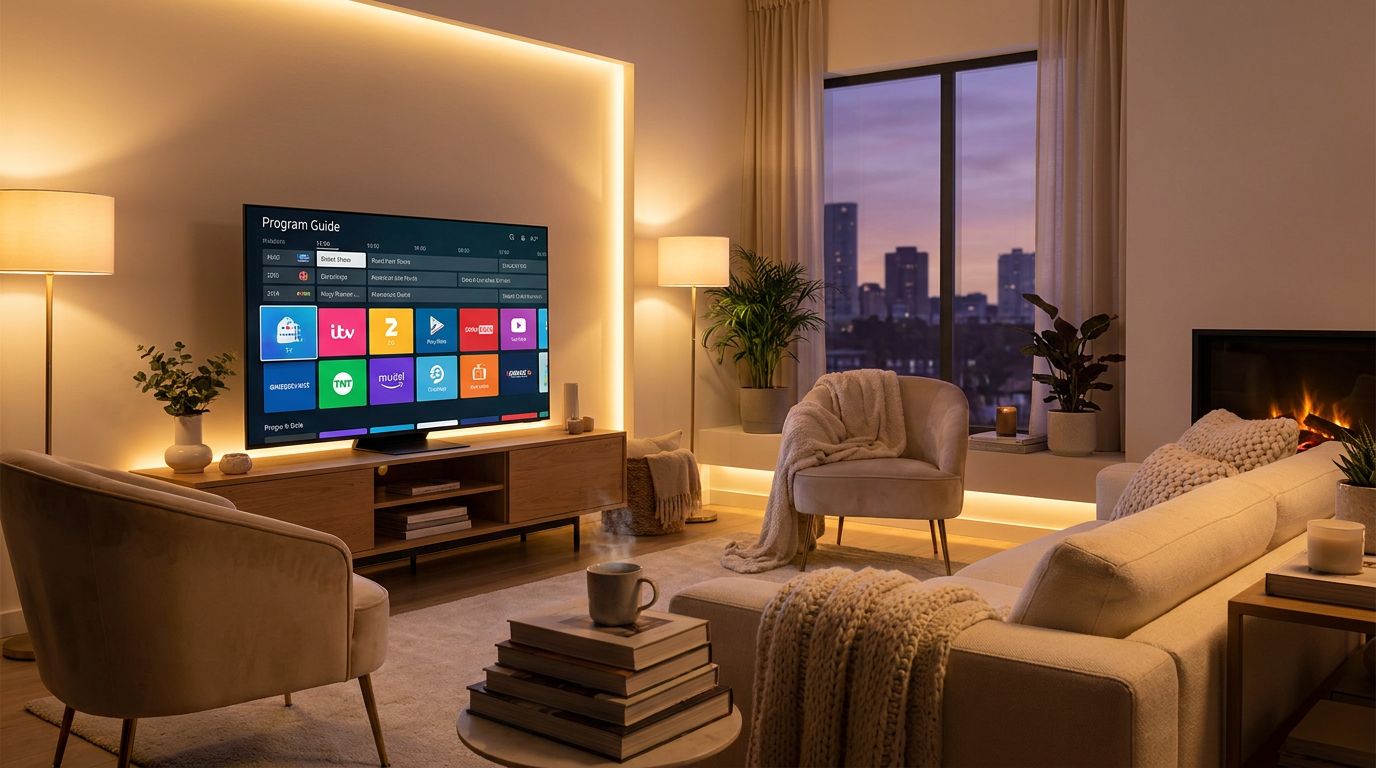
In a milestone moment for the entertainment industry, Free Ad-Supported Streaming Television (FAST) has officially eclipsed traditional cable TV in household adoption in 2026. Driven by widespread subscription fatigue and rising living costs, platforms like Tubi, Pluto TV, and The Roku Channel have transformed from secondary repositories of old reruns into primary entertainment hubs for millions of families.[1][4]
The numbers reflect a seismic shift in consumer behavior. While traditional cable subscriptions have plummeted to roughly 46 million U.S. households, FAST viewership has surged past 200 million monthly active users globally. The FAST market is now valued at over $14.3 billion, growing at a double-digit rate as viewers seek immediate relief from mounting monthly subscription fees.[3][4]

For years, consumers complained about the rising costs of premium streaming services, which effectively recreated the expensive cable bundles they initially tried to escape. The average cable bill, laden with hidden fees and equipment rentals, now exceeds $150 a month. By switching to FAST platforms, households are saving an estimated $1,800 annually while still enjoying a vast array of high-quality programming.[1][4]
Crucially, the content on free platforms has dramatically improved, shedding its former reputation as a dumping ground for decades-old sitcoms. Industry data reveals that more than 70% of FAST programming was produced after 2010. Platforms are increasingly investing in original content, live news, and niche genres to keep viewers engaged and cater to specific audience interests.[2][5]

Crucially, the content on free platforms has dramatically improved, shedding its former reputation as a dumping ground for decades-old sitcoms.
Live sports and local news—once the exclusive domain of expensive cable packages—have become major drivers of FAST growth. Sports channels on free platforms have seen a 105% viewership increase over the past year. Fans who previously relied on costly regional sports networks are now finding local leagues, international tournaments, and dedicated team channels available entirely for free.[5][6]
The frictionless nature of FAST is also fueling its rapid rise. Smart TV manufacturers like Samsung, LG, and Vizio now pre-install their own branded FAST services directly onto the home screen. Viewers can instantly access hundreds of channels the moment they turn on their television, seamlessly replicating the classic "lean-back" channel-surfing experience without the need for logins, passwords, or credit cards.[1][3]

Advertisers are aggressively following the eyeballs. With major subscription platforms tightening budgets and raising prices, brands are pouring money into FAST channels to reach engaged, price-sensitive audiences. The advertising load on most FAST platforms averages 8 to 12 minutes per hour—significantly less intrusive than traditional broadcast television, which can exceed 18 minutes of commercials per hour.[4][7]
As 2026 progresses, the line between premium streaming and free television will continue to blur. Industry analysts predict that FAST platforms will secure even more exclusive live sports rights and premium original series to maintain their momentum. For the everyday consumer, the "free-first" household is no longer a compromise—it is the new standard for high-quality, accessible entertainment.[1][2]
How we got here
2010
Cable TV subscriptions peak at roughly 100 million U.S. households.
2020
Streaming begins to aggressively outpace cable, though mostly through paid subscription models.
2024
Consumers report widespread 'subscription fatigue' as premium platforms raise prices and introduce ads.
Early 2026
FAST viewership surpasses 200 million globally, officially eclipsing traditional cable adoption.
Viewpoints in depth
Cost-Conscious Viewers
Consumers are prioritizing budget discipline and simplified discovery over expensive premium subscriptions.
For everyday viewers, the shift to FAST is purely economic and practical. After years of accumulating multiple $15-a-month subscriptions to recreate the cable bundle they originally fled, consumers have hit a breaking point known as 'subscription fatigue.' By embracing free platforms, households are reclaiming hundreds of dollars a month. Furthermore, viewers appreciate the 'lean-back' nature of FAST channels, which eliminates the paradox of choice by offering curated, always-on programming that requires no active decision-making.
Streaming Platforms
Tech giants and media companies are capitalizing on the shift by investing heavily in original content and live sports.
For platform operators like Roku, Tubi, and Pluto TV, the FAST ecosystem has evolved from a secondary revenue stream into a core business pillar. Recognizing that they can no longer rely solely on back-catalog reruns to retain audiences, these companies are aggressively acquiring live sports rights, launching original series, and partnering with independent creators. By embedding their services directly into smart TV operating systems, they have effectively become the new gatekeepers of the living room.
Advertisers & Analysts
Industry observers are tracking the massive migration of ad dollars from traditional broadcast to free streaming environments.
Advertisers view the rise of FAST as a golden opportunity to reach cord-cutters who are entirely inaccessible via traditional linear television. Unlike legacy broadcast TV, FAST platforms offer precise, data-driven targeting capabilities, allowing brands to serve relevant ads to specific demographics. Analysts note that because FAST platforms maintain a lighter ad load—typically 8 to 12 minutes per hour compared to cable's 18 minutes—viewer retention during commercial breaks is significantly higher, resulting in a better return on investment for marketers.
What we don't know
- How premium subscription services will adjust their pricing models to compete with the surge in free alternatives.
- Whether FAST platforms will eventually increase their ad loads as they acquire more expensive live sports rights.
Key terms
- FAST
- Free Ad-Supported Streaming Television; platforms that offer free, linear channels and on-demand content supported by advertising.
- Cord-Cutting
- The trend of consumers canceling their traditional cable or satellite television subscriptions in favor of internet-based streaming services.
- Linear TV
- Traditional television viewing where programs are broadcast at scheduled times on specific channels, as opposed to on-demand streaming.
- Smart TV OEM
- Original Equipment Manufacturers (like Samsung or LG) that build televisions with integrated internet connectivity and pre-installed streaming platforms.
Frequently asked
What is a FAST channel?
FAST stands for Free Ad-Supported Streaming Television. These platforms offer scheduled, linear TV channels and on-demand content for free, supported by commercial breaks.
Do I need a subscription or login to watch?
No. Most FAST services, like Pluto TV, Tubi, and The Roku Channel, require no account creation or credit card to start watching.
Are FAST channels just old reruns?
Not anymore. Over 70% of FAST programming was produced after 2010, and platforms are increasingly offering live sports, local news, and original series.
How many ads do these platforms show?
FAST channels typically show 8 to 12 minutes of ads per hour, which is noticeably less than the 18-plus minutes often found on traditional cable networks.
Sources
Source coverage
7 outlets
3 viewpoints surfaced







[1]ForbesCost-Conscious Viewers
The Rise of the Free-First Household
Read on Forbes →[2]Media Play NewsStreaming Platforms
FAST Channels Evolve Into Core Revenue Drivers
Read on Media Play News →[3]Mordor IntelligenceAdvertisers & Analysts
Free Ad-Supported Streaming TV Market Analysis
Read on Mordor Intelligence →[4]TackendoCost-Conscious Viewers
FAST TV vs Cable TV Comparison 2026
Read on Tackendo →[5]AdwaveStreaming Platforms
The FAST Landscape Expansion
Read on Adwave →[6]Streaming MediaStreaming Platforms
Strength in Streaming: 2026 Trends
Read on Streaming Media →[7]AudacyAdvertisers & Analysts
Expand Your Reach with FAST Channels
Read on Audacy →
Every angle. Every day.
Get entertainment stories with full source coverage and perspective breakdowns delivered to your inbox.