
How Aerospace Tech and Hydrofoils Are Finally Making Electric Boats Viable
By lifting hulls out of the water to eliminate drag, a new generation of electric hydrofoil boats is solving the range anxiety that has long plagued maritime EVs.
By Factlen Editorial Team
- Marine Technologists
- Focusing on the physics and aerospace integration required to make electric boats viable.
- Environmental Advocates
- Prioritizing the secondary ecological benefits of zero-wake and silent operation.
- Traditional Boating Enthusiasts
- Balancing the impressive ride quality against high costs and practical risks.
What's not represented
- · Commercial Marina Operators
- · Marine Wildlife Biologists
Why this matters
Maritime shipping and recreational boating rely heavily on polluting diesel and gasoline engines because traditional electric boats lack the range for practical use. Hydrofoiling technology solves this physics bottleneck, paving the way for zero-emission, silent, and wake-free water transit.
Key points
- Water density traditionally makes electric boats inefficient, draining batteries too quickly for practical high-speed use.
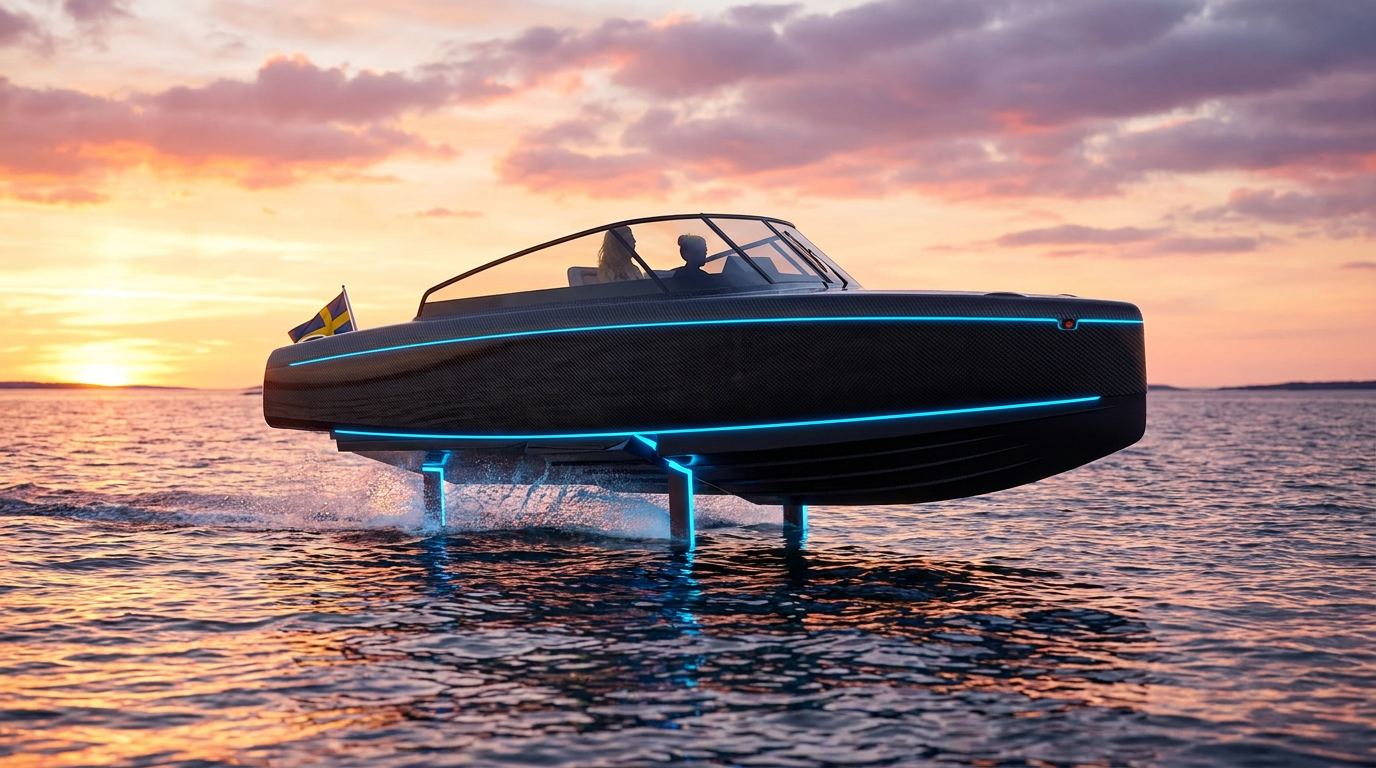
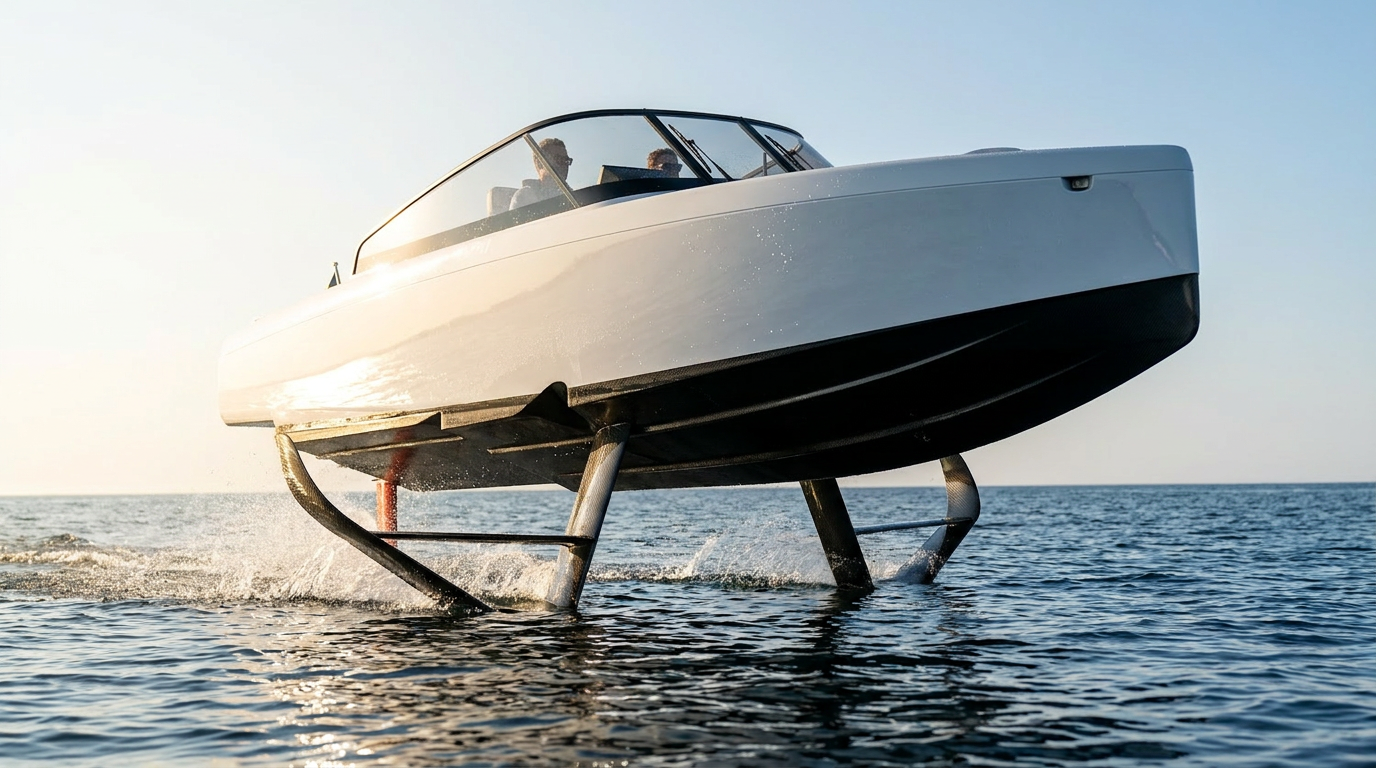
- Hydrofoils lift the hull out of the water, reducing drag by up to 95 percent and unlocking viable EV range.
- Aerospace-grade flight controllers adjust the underwater wings up to 100 times per second to maintain stability.
- Foiling boats produce virtually no wake and operate in near silence, protecting shorelines and marine ecosystems.
- While initial purchase prices remain high, operating and maintenance costs are a fraction of gas-powered vessels.
- The market is projected to reach $4.6 billion by 2034, though charging infrastructure and debris risks remain hurdles.
The core problem with electrifying maritime transport has always been a matter of basic physics. Water is roughly 800 times denser than air. Pushing a traditional boat hull through this dense medium requires massive amounts of continuous energy. For decades, this hydrodynamic reality meant that electric boats were largely relegated to slow, golf-cart-like harbor cruisers. If a captain wanted to push an electric vessel to planing speeds, the battery would drain in a matter of minutes, resulting in severe range anxiety. Unlike the automotive industry, where rolling resistance on a highway is relatively low, marine engineers could not simply pack more lithium-ion cells into a hull; the added weight would only push the boat deeper into the water, creating even more drag and defeating the purpose of the larger battery.[7]
The breakthrough solving this bottleneck isn't a magical new battery chemistry—it is a century-old aerodynamic concept paired with modern aerospace software. By equipping electric boats with hydrofoils, which are essentially underwater wings that lift the hull entirely out of the water, marine engineers are effectively turning boats into low-flying aircraft. The concept of the hydrofoil dates back to the early 1900s, pioneered by inventors like Alexander Graham Bell, but it was historically limited by the heavy, inefficient combustion engines required to achieve liftoff. Today, the high torque of electric motors combined with ultra-lightweight carbon-fiber construction has breathed new life into the technology, making it the definitive solution for the future of sustainable maritime transport.[6][7]
The result of this integration is a paradigm shift in maritime efficiency. When a modern electric hydrofoil boat accelerates and reaches its takeoff speed—typically around 15 to 18 miles per hour—the hull rises completely above the surface. This action sheds up to 80 to 95 percent of the vessel's hydrodynamic drag. With the hull no longer fighting the dense water, the electric motors suddenly require a fraction of the power to maintain high cruising speeds. This drastic reduction in resistance is the key that allows electric vessels to finally achieve the long range and high speeds necessary to compete with, and in many cases outperform, traditional fossil-fueled boats.[1][6]

“We implemented a technology called hydrofoils, which are like wings that sit underneath the hull, lifts the entire hull out of the water and gets rid of all that resistance,” explains Paul Masojc, the Chief Operating Officer of Canadian marine startup ENVGO. The company’s flagship NV1 vessel relies on this exact mechanism to achieve top speeds approaching 50 miles per hour without sacrificing its battery life. By focusing on removing drag rather than simply adding heavier battery packs, startups like ENVGO are proving that the electric lifestyle can translate to the water without forcing consumers to compromise on performance or utility.[4]
But lifting a boat entirely out of the water creates a new, complex engineering challenge: instability. A vessel balanced on submerged wings is inherently top-heavy and highly sensitive to shifting passenger weight, crosswinds, and rolling waves. In the past, this instability made hydrofoils difficult and exhausting to pilot manually. This is where modern computing bridges the gap. Today’s electric hydrofoils do not rely on the captain to maintain balance; instead, they utilize proprietary “flight controllers”—highly sophisticated software systems adapted directly from the aerospace, drone, and autonomous vehicle industries.[2][7]
These advanced flight controllers process continuous streams of data from an array of onboard sensors, constantly measuring the vessel's ride height, pitch, and roll. The software then sends rapid-fire commands to mechanical actuators that adjust the angle and twist of the underwater wings up to 100 times per second. This relentless micro-adjusting keeps the vessel perfectly level, absorbing the impact of oncoming waves and delivering a ride so smooth that early adopters have compared it to riding on a 'magic carpet.' The captain simply steers the wheel and pushes the throttle, while the computer handles the complex physics of flight.[2][3]
Several innovative companies are currently racing to commercialize this technology for the consumer market. In Sweden, Candela has emerged as a clear early market leader. Their flagship C-8 daycruiser utilizes a 69-kilowatt-hour battery—supplied by the automotive manufacturer Polestar—to deliver a range of roughly 65 miles at a cruising speed of 25 miles per hour. Built entirely from vacuum-infused carbon fiber to keep its weight down to just 3,500 pounds, the C-8 recently made headlines by becoming the first electric boat to successfully cross the Baltic Sea, proving the viability of long-distance foiling.[1][2]

Several innovative companies are currently racing to commercialize this technology for the consumer market.
In the United States, San Francisco-based Navier is pushing the boundaries of autonomous and aerospace-grade marine technology. Founded by MIT mechanical engineer Sampriti Bhattacharyya and veteran America's Cup naval architect Paul Bieker, Navier's N30 vessel boasts an impressive 75-mile range. The company envisions these vessels not just as high-end recreational toys for early adopters, but as the foundational platform for scalable, high-speed coastal water taxis. By integrating autonomous docking features and advanced sensor arrays, Navier aims to make maritime transit as seamless and reliable as hailing a ride on land.[3]
Meanwhile, New Zealand's Vessev is applying cutting-edge America's Cup foiling technology to its VS-9 passenger vessel. Designed specifically for commercial transport, the VS-9 can carry up to ten passengers and is currently undergoing rigorous sea trials in the waters off Auckland. Vessev's ultimate goal is to scale this technology into much larger ferries capable of transporting up to 100 passengers at a time. By targeting the commercial maritime sector—which currently relies heavily on highly polluting diesel engines—these companies hope to trigger a massive reduction in global maritime emissions.[1]
The environmental benefits of foiling technology extend far beyond the elimination of tailpipe greenhouse gases. Traditional fast boats displace massive amounts of water as they plow through the sea, creating large, powerful wakes that erode fragile shorelines, damage docked vessels, and disrupt shallow marine ecosystems. Because a foiling boat glides above the surface with only its slender, aerodynamic struts piercing the water, it produces virtually no wake. This allows foiling vessels to travel at high speeds through sensitive coastal areas and narrow channels without causing ecological damage or disturbing other boaters.[3][7]
Furthermore, the underwater electric pod motors used by these vessels are nearly silent. 'Flying over the Åland Sea in total silence and without slamming was absolutely magical,' noted Candela CEO Gustav Hasselskog after their record-breaking Baltic crossing. This acoustic stealth is a massive boon for marine life. Traditional combustion engines generate severe underwater noise pollution, which marine biologists have long warned interferes with the communication, navigation, and hunting patterns of marine mammals like whales and dolphins. Electric hydrofoils offer a way to traverse the oceans without adding to this acoustic smog.[1][2]

The economics of electric foiling are also proving to be highly compelling, despite the undeniably high initial purchase prices. While a carbon-fiber vessel like the Navier N30 or the Candela C-8 can cost anywhere from $400,000 to $850,000, the day-to-day operating costs are a mere fraction of their gas-powered counterparts. During Vessev's recent sea trials in New Zealand, the company reported that the gasoline required to fuel their conventional chase boat cost 25 times more than the electricity used to charge the foiling VS-9 over the exact same distance.[1][3]
Routine maintenance is similarly drastically reduced. Traditional marine combustion engines require frequent oil changes, winterization, impeller replacements, and constant mechanical upkeep to survive the harsh saltwater environment. In contrast, electric pod motors are entirely sealed, require no internal fluids, and are naturally cooled by the surrounding water, leaving them with very few moving parts. As one Navier owner—who previously owned multiple Tesla vehicles—noted, the transition to electric foiling brings the exact same low-maintenance, plug-and-play appeal that has driven the massive consumer shift in the automotive EV sector.[2][3]
The broader maritime market is taking serious notice of this technological shift. Industry analysts project that the global electric hydrofoil boat market will grow from roughly $800 million in 2025 to a staggering $4.6 billion by 2034, expanding at a robust compound annual growth rate of 18.5 percent. This rapid market expansion is expected to be fueled by steadily falling battery costs, tightening municipal maritime emission regulations, and the aggressive deployment of commercial foiling ferry networks in coastal and island cities like Venice, Singapore, and Copenhagen.[5]

However, significant challenges remain before foiling EVs can achieve true mainstream dominance. The most pressing hurdle is charging infrastructure. While these boats can charge slowly overnight using the standard 220-volt shore power available at most marinas, widespread adoption for high-speed coastal transit will require the installation of high-voltage DC fast chargers directly at the docks. Upgrading marina electrical grids to support megawatt-level charging for fleets of commercial ferries is a costly and complex infrastructure project that will require heavy cooperation between private companies and municipal governments.[5][7]
Additionally, the submerged carbon-fiber foils are inherently vulnerable to debris strikes. Hitting a submerged log, a shipping container, or a large marine animal at 30 miles per hour could severely damage the wings and instantly drop the boat off its foils. Manufacturers are actively mitigating this risk by designing foils with designated shear points—allowing the wing to break off cleanly without breaching the hull—but the risk of expensive repairs in debris-heavy waters remains a valid concern for prospective buyers accustomed to rugged, shallow-draft aluminum hulls.[2][7]
Despite these infrastructural and practical hurdles, the convergence of aerospace engineering, advanced software, and electric propulsion has definitively solved the maritime range problem. By using the physics of flight to lift the hull entirely out of the water, the boating industry is no longer constrained by the crushing density of the sea. As battery costs continue to fall and coastal charging networks expand, electric hydrofoils are charting a clear, undeniable course toward a quieter, cleaner, and remarkably smoother future on the water.[7]
Viewpoints in depth
Marine Technologists' view
Focusing on the physics and aerospace integration required to make electric boats viable.
For engineers, the core issue with electric boats has always been energy density. Water is incredibly dense, and pushing a hull through it drains batteries too quickly for practical use. Technologists view hydrofoiling not as a luxury feature, but as a mandatory physics hack. By borrowing flight controllers and carbon-fiber manufacturing from the aerospace sector, they argue the marine industry can finally overcome the hydrodynamic drag that has stalled maritime electrification for decades.
Environmental Advocates' view
Prioritizing the secondary ecological benefits of zero-wake and silent operation.
While zero carbon emissions are the headline, ecological advocates emphasize the immediate local benefits of foiling technology. Traditional fast boats displace massive amounts of water, generating wakes that erode fragile shorelines and damage coastal habitats. Furthermore, the acoustic stealth of sealed electric pod motors drastically reduces underwater noise pollution, which is a major disruptor to the communication and navigation of marine mammals. For this camp, the technology is a holistic environmental win.
Traditional Boating Enthusiasts' view
Balancing the impressive ride quality against high costs and practical risks.
Veteran boaters acknowledge the 'magic carpet' ride and the appeal of zero-maintenance electric motors, but they remain cautious about real-world practicality. The primary concerns are the exorbitant upfront costs—often nearing a million dollars for a daycruiser—and the vulnerability of submerged carbon-fiber wings to debris strikes. Hitting a submerged log at 30 knots could result in catastrophic foil damage, leaving skeptics waiting for the technology to become cheaper and more robust before abandoning their combustion engines.
What we don't know
- How quickly municipal governments and private marinas will fund and install the high-voltage DC fast chargers required for commercial ferry fleets.
- Whether the high manufacturing costs of carbon-fiber hulls and aerospace actuators can be reduced enough to reach the mass-market recreational boater.
Key terms
- Hydrofoil
- An underwater wing that generates lift as it moves through the water, raising a boat's hull above the surface to drastically reduce drag.
- Flight Controller
- Sophisticated software and sensor systems that constantly adjust the angle of the hydrofoils to keep the boat stable and level.
- Hydrodynamic Drag
- The physical resistance a boat experiences as it pushes through the dense medium of water, which traditionally drains electric batteries rapidly.
- Actuator
- A mechanical device controlled by the boat's software that physically moves and adjusts the hydrofoil wings in real-time.
Frequently asked
Do electric hydrofoil boats work in rough water?
Yes, up to a point. Because the hull flies above the surface, they can glide smoothly over moderate chop without slamming. However, in extreme waves that exceed the height of the foil struts, the boat must retract its wings and operate as a traditional displacement vessel.
What happens if a hydrofoil hits a submerged object?
Debris strikes are a known risk. To prevent catastrophic hull damage, manufacturers design the carbon-fiber foils with designated shear points, allowing the wing to break off cleanly if it hits a heavy object at high speed.
Can you charge these boats at a normal marina?
Yes. Most electric hydrofoils can charge overnight using standard 220-volt shore power available at marinas. For faster turnarounds, they require high-voltage DC fast chargers, which are currently being rolled out in select coastal hubs.
Sources
Source coverage
7 outlets
3 viewpoints surfaced







[1]ElectrekEnvironmental Advocates
Vessev emerges from stealth with VS-9 electric hydrofoil boat
Read on Electrek →[2]Boating MagazineTraditional Boating Enthusiasts
Candela C-8 Open Daycruiser Review
Read on Boating Magazine →[3]MegaYacht NewsMarine Technologists
Navier N30: The Magic Carpet of Electric Hydrofoil Boats
Read on MegaYacht News →[4]CP24Traditional Boating Enthusiasts
Waterloo startup ENVGO secures funding for electric hydrofoil boat
Read on CP24 →[5]MarketIntelo
Electric Hydrofoil Boat Market Outlook 2025-2034
Read on MarketIntelo →[6]Wikipedia
Hydrofoil
Read on Wikipedia →[7]Factlen Editorial TeamMarine Technologists
Synthesis by Factlen editorial team
Read on Factlen Editorial Team →

Every angle. Every day.
Get automotive stories with full source coverage and perspective breakdowns delivered to your inbox.