
The Analog Renaissance: Why Gen Z is Reclaiming Physical Media and 'Dumb' Tech
Driven by digital fatigue and a desire for true ownership, young adults are trading smartphones and streaming services for flip phones, vinyl records, and DVDs.
By Factlen Editorial Team
- Digital Minimalists
- Advocates focused on mental health, digital detox, and the psychological relief of disconnecting via dumb phones.
- Physical Media Advocates
- Collectors focused on the joy of ownership, the tactile experience of vinyl and DVDs, and the pushback against ephemeral streaming licenses.
- Cultural Psychologists
- Experts analyzing the concept of historical nostalgia and how Gen Z uses the analog past to navigate an uncertain future.
What's not represented
- · Tech executives defending the value of algorithmic curation
- · Older generations who view the return to analog as inconvenient
Why this matters
As digital fatigue reaches a breaking point, the shift toward physical media and basic technology highlights a growing consumer demand for true ownership, mental well-being, and authentic human connection in an increasingly automated world.
Key points
- Purchases of basic 'brick phones' among young adults surged 148% between 2021 and 2024.
- 80% of Gen Z adults express concern that their generation is too dependent on technology.
- Physical media like vinyl, CDs, and DVDs are seeing a major revival driven by a desire for true ownership.
- The trend is fueled by 'historical nostalgia,' a longing for the simplicity of the pre-digital era.
- Young consumers are actively seeking out human-curated, high-texture experiences to combat AI-generated content.
Generation Z, the first demographic cohort raised entirely with high-speed internet and smartphones, is orchestrating a quiet rebellion against the digital world in 2026.[2]
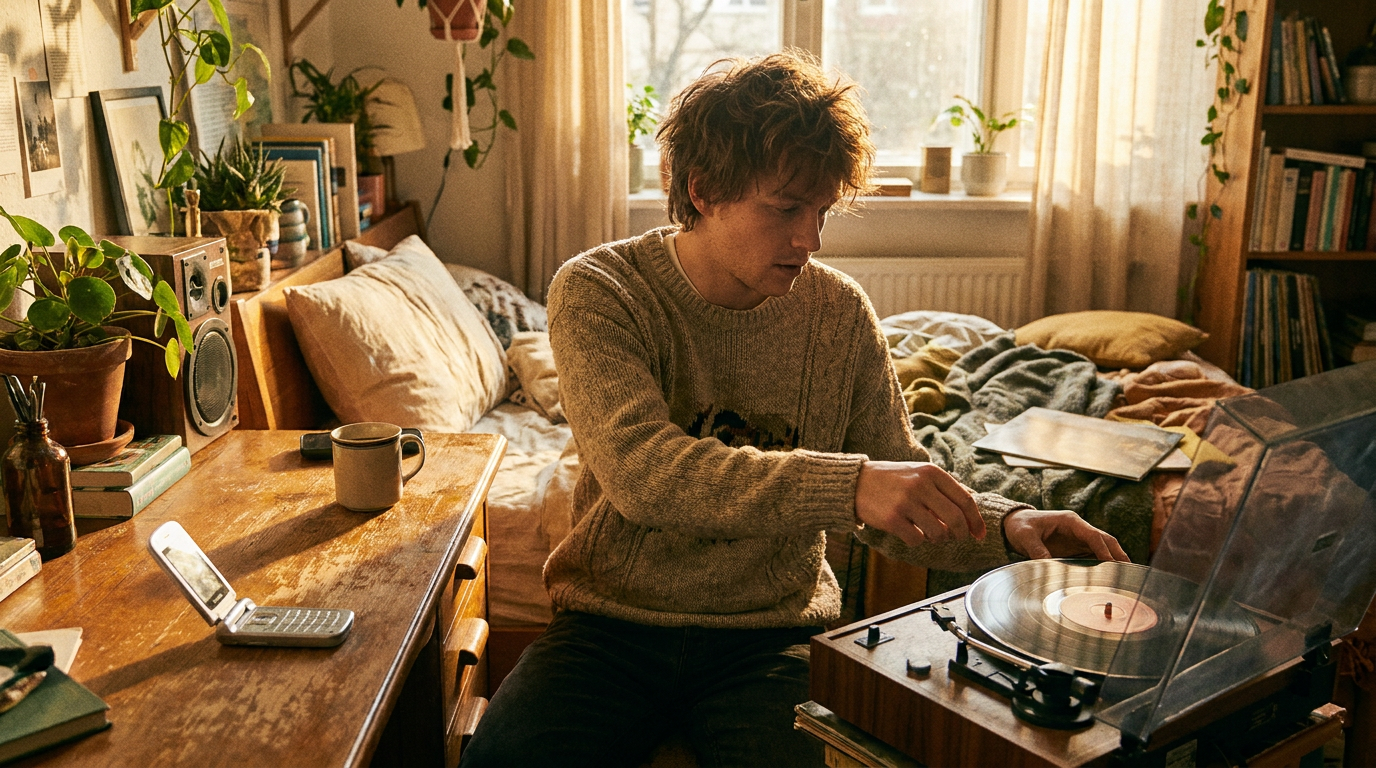
The shift is most visible in the sudden ubiquity of "dumb phones"—basic handsets that only call, text, and perhaps offer a simple map. Between 2021 and 2024, brick phone purchases among 18-to-24-year-olds surged by 148 percent, while smartphone usage in that same demographic saw a noticeable dip.[8]
For many young adults, this hardware downgrade is entirely intentional. Devices like the Light Phone, Punkt, or classic flip phones are evolving from outdated relics into modern status symbols of self-control and intentional living.[4]
The driving force behind this analog pivot is a profound sense of digital fatigue. A recent Harris Poll revealed that 80 percent of Gen Z adults worry their generation is too dependent on technology, and 75 percent are concerned about social media's impact on mental health.[1]

Beyond communication hardware, this analog renaissance is fundamentally reshaping how young people consume art and entertainment. The era of infinite streaming is losing its luster, replaced by a fierce demand for physical media.[2][7]
Vinyl records, once considered a niche hobby for older audiophiles, are now a Gen Z staple. A global survey by the Vinyl Alliance found that 76 percent of Gen Z enthusiasts purchase a record at least once a month, and 80 percent own their own turntable.[3]
Interestingly, the primary motivation isn't necessarily audio fidelity. Half of the surveyed Gen Z buyers cited the need to disconnect from screens as their main reason for spinning records, using the tactile process to enforce a break from digital life.[3]
Interestingly, the primary motivation isn't necessarily audio fidelity.
Marketing experts refer to this phenomenon as "symbolic consumption." Buying a physical album allows young fans to signal their dedication to an artist while securing a tangible piece of affordable art that can be displayed in their homes.[5]

The physical media revival extends well beyond music. DVDs, Blu-rays, and even CDs are experiencing a massive resurgence as consumers grow frustrated with the ephemeral nature of streaming platforms.[7]
When a favorite movie or television series can vanish from a streaming service overnight due to licensing disputes, physical discs offer a guarantee of true ownership and permanence.[7]
Psychologists identify this broader cultural movement as a form of "historical nostalgia"—a deep yearning for a time period the individual never actually lived through.[1]
Dr. Clay Routledge, a social psychologist specializing in nostalgia, notes that 60 percent of Gen Z adults explicitly wish they could return to a time before everyone was "plugged in."[1]

This longing for a pre-digital past provides a sense of comfort and rootedness in an era defined by constant flux, algorithmic unpredictability, and the rapid acceleration of technology.[6]
The analog shift is also redefining social spaces. The default solo-watching experience of streaming is being traded for communal activities, sparking a boom in board game cafes, shared physical media libraries, and group trips to local record stores.[2][3]
Furthermore, as AI-generated content—often dubbed "AI slop"—floods the internet in 2026, young people are actively seeking out human curation. Print magazines and high-texture, analog experiences offer a friction and authenticity that algorithms simply cannot replicate.[2]

How we got here
2007
Streaming begins to dominate as platforms like Netflix pivot from physical DVDs to digital delivery.
2016
The premiere of 'Stranger Things' sparks a massive wave of 1980s aesthetic nostalgia among Gen Z.
2021–2024
Purchases of basic 'brick phones' among 18-to-24-year-olds surge by 148% as digital fatigue sets in.
2026
The 'Analog Renaissance' reaches mainstream culture, with physical media and dumb phones becoming status symbols for intentional living.
Viewpoints in depth
Digital Minimalists
Advocates focused on mental health and the psychological relief of disconnecting.
This camp argues that the human brain was not built for the infinite scroll of modern social media algorithms. By intentionally downgrading to 'dumb phones' and limiting screen time, they believe individuals can reclaim their attention spans, reduce anxiety, and foster deeper real-world connections. For them, digital minimalism is not a rejection of technology, but a necessary boundary to protect mental well-being.
Physical Media Advocates
Collectors focused on the joy of ownership and the tactile experience of art.
Physical media enthusiasts point out the inherent flaws in the modern streaming ecosystem, where users pay monthly fees but own nothing. They argue that building a collection of DVDs, CDs, and vinyl records provides a safeguard against content disappearing due to licensing disputes. Furthermore, they champion the 'high-texture' sensory experience of physical media—reading liner notes, admiring cover art, and the intentionality required to play a record from start to finish.
Cultural Psychologists
Experts analyzing how Gen Z uses the analog past to navigate an uncertain future.
Psychologists view the analog renaissance through the lens of 'historical nostalgia.' They suggest that Gen Z, having grown up in an era of rapid technological acceleration, climate anxiety, and algorithmic unpredictability, is seeking the perceived stability of the past. By adopting the aesthetics and tools of the 1990s and early 2000s, young people are attempting to anchor themselves in a simpler time, using the past as a compass to find rootedness in the present.
What we don't know
- Whether this analog shift will permanently alter the dominance of streaming platforms or remain a niche lifestyle choice.
- How major tech companies will adapt their hardware and algorithms to address growing digital fatigue among their core demographic.
Key terms
- Dumb phone
- A basic mobile phone that lacks advanced smartphone features, typically limited to calls, texts, and essential tools.
- Historical nostalgia
- A sentimental longing for a past era that predates one's own lived experience, often romanticizing its simplicity.
- Digital minimalism
- A lifestyle philosophy focused on intentionally reducing screen time and optimizing technology use to prioritize mental well-being and real-world experiences.
- AI slop
- A colloquial term for low-quality, mass-produced digital content generated by artificial intelligence, which has driven a counter-demand for human-curated media.
Frequently asked
Why are young people buying flip phones in 2026?
Many Gen Z users are switching to basic "dumb phones" to reduce screen time, combat digital fatigue, and reclaim their attention from addictive social media algorithms.
Do Gen Z actually listen to the vinyl records they buy?
Yes, though motivations vary. While some appreciate the audio quality, many buy records to intentionally disconnect from screens, support artists directly, or use them as aesthetic room decor.
What is 'historical nostalgia'?
It is a psychological phenomenon where people feel nostalgic for a time period they never actually lived through, often seeking the comfort and simplicity of that era.
Are streaming services losing subscribers to physical media?
While streaming remains dominant, there is a growing frustration with disappearing content and price hikes, leading many young consumers to build physical DVD and Blu-ray collections to ensure true ownership.
Sources
Source coverage
8 outlets
3 viewpoints surfaced








[1]Archbridge InstituteCultural Psychologists
What Gen Z's Retro Revival Teaches Us About the Value of Historical Nostalgia
Read on Archbridge Institute →[2]ForbesPhysical Media Advocates
The Resurgence Of Physical Media And The Analog Lifestyle
Read on Forbes →[3]MakeUseOfPhysical Media Advocates
Why Gen Z Is Driving the Vinyl Record Resurgence
Read on MakeUseOf →[4]VertuDigital Minimalists
Why is Gen Z Buying Dumb Phones? The Rise of Digital Minimalism in 2026
Read on Vertu →[5]The Toledo BladePhysical Media Advocates
Vinyl records are popular again, and Gen Z is fueling the resurgence
Read on The Toledo Blade →[6]First ThingsCultural Psychologists
The Analog Longing of Gen Z
Read on First Things →[7]MediumDigital Minimalists
From bookstores to vinyls, Gen Z drives a comeback in physical media
Read on Medium →[8]Brennan BrownDigital Minimalists
The Kids Who Chose the Long Way
Read on Brennan Brown →
Every angle. Every day.
Get lifestyle stories with full source coverage and perspective breakdowns delivered to your inbox.