
U.S. and Iran Postpone High-Stakes Nuclear Talks in Switzerland Amid Regional Tensions
A planned summit in Switzerland to negotiate a permanent U.S.-Iran nuclear agreement has been delayed after Vice President JD Vance and Iranian officials postponed their travel. The talks aim to build on a fragile ceasefire and reopen the Strait of Hormuz, though ongoing Israeli strikes in Lebanon have complicated the diplomatic timeline.
By Factlen Editorial Team
- Trump Administration Negotiators
- Argues that the conditional, phased agreement is the most realistic path to verifiable nuclear disarmament and regional economic stability.
- Israeli & Congressional Skeptics
- Warns that sanctions relief and reconstruction funds will ultimately finance Tehran's broader military network and proxy groups.
- Iranian Leadership
- Demands immediate economic relief and links the continuation of technical talks to the cessation of Israeli strikes in Lebanon.
What's not represented
- · Lebanese Civilians
- · European Allies
Why this matters
These negotiations are the linchpin of a fragile ceasefire intended to end the recent U.S.-Iran conflict and secure the Strait of Hormuz, a critical artery for global oil. A collapse in talks could reignite hostilities, spike global energy prices, and accelerate Tehran's nuclear timeline.
Key points
- The White House postponed VP JD Vance's trip to Switzerland for technical nuclear talks with Iran.
- Iran also reportedly delayed its delegation due to ongoing Israeli strikes in Lebanon.
- The talks aim to formalize a 60-day ceasefire and ensure the reopening of the Strait of Hormuz.
- U.S. Envoy Steve Witkoff told Congress that Iran will allow IAEA inspectors access to its nuclear sites.
- The proposed deal includes conditional sanctions relief and a potential $300 billion reconstruction fund.
The White House has abruptly postponed Vice President JD Vance's trip to Switzerland, delaying the start of complex technical negotiations over Iran's nuclear program. The high-stakes talks, scheduled to take place at the Bürgenstock resort, were intended to build upon a newly signed Memorandum of Understanding (MoU) between U.S. President Donald Trump and Iranian President Masoud Pezeshkian.[2][4][7]
The diplomatic pause underscores the extreme volatility of the broader Middle East. While the White House cited "logistical challenges" for the delay and noted that the U.S. delegation remains prepared to depart at the first available opportunity, regional dynamics appear to be the primary driver. Reports indicate that Iran also suspended its delegation's travel plans, pointing to ongoing Israeli military operations against Hezbollah in southern Lebanon as a complicating factor.[2][4][7]
The Switzerland summit is designed to hammer out the details of a 14-point interim agreement that established a 60-day ceasefire following a brief but intense U.S.-Iran military conflict. A primary condition of the truce is the reopening of the Strait of Hormuz, a vital global oil chokepoint. Following the U.S. lifting its blockade, roughly 12.5 million barrels of oil transited the strait on Wednesday night, providing immediate relief to global energy markets.[5][6]

At the core of the negotiations are sweeping nuclear concessions. U.S. Special Envoy Steve Witkoff recently briefed congressional leaders on the specifics secured in the MoU. According to Witkoff, Iran has agreed to invite International Atomic Energy Agency (IAEA) Director-General Rafael Grossi to inspect its nuclear sites, a significant reversal of Tehran's recent posture.[1][2][3]
The agreement reportedly requires Iran to dilute its highly enriched uranium stockpile under international supervision. Furthermore, the IAEA will be tasked with identifying and uncovering enriched material that is believed to be buried under rubble following recent military strikes on Iranian facilities.[2][3][6]

The agreement reportedly requires Iran to dilute its highly enriched uranium stockpile under international supervision.
Despite these concessions, the tentative deal has faced fierce pushback from some congressional Republicans and Israeli Cabinet ministers, who argue that Washington is giving up too much leverage. Critics are particularly alarmed by the prospect of sweeping sanctions relief and a proposed $300 billion reconstruction fund for Iran, arguing the deal fails to adequately address Tehran's ballistic missile program and its support for regional proxy groups.[6][7]
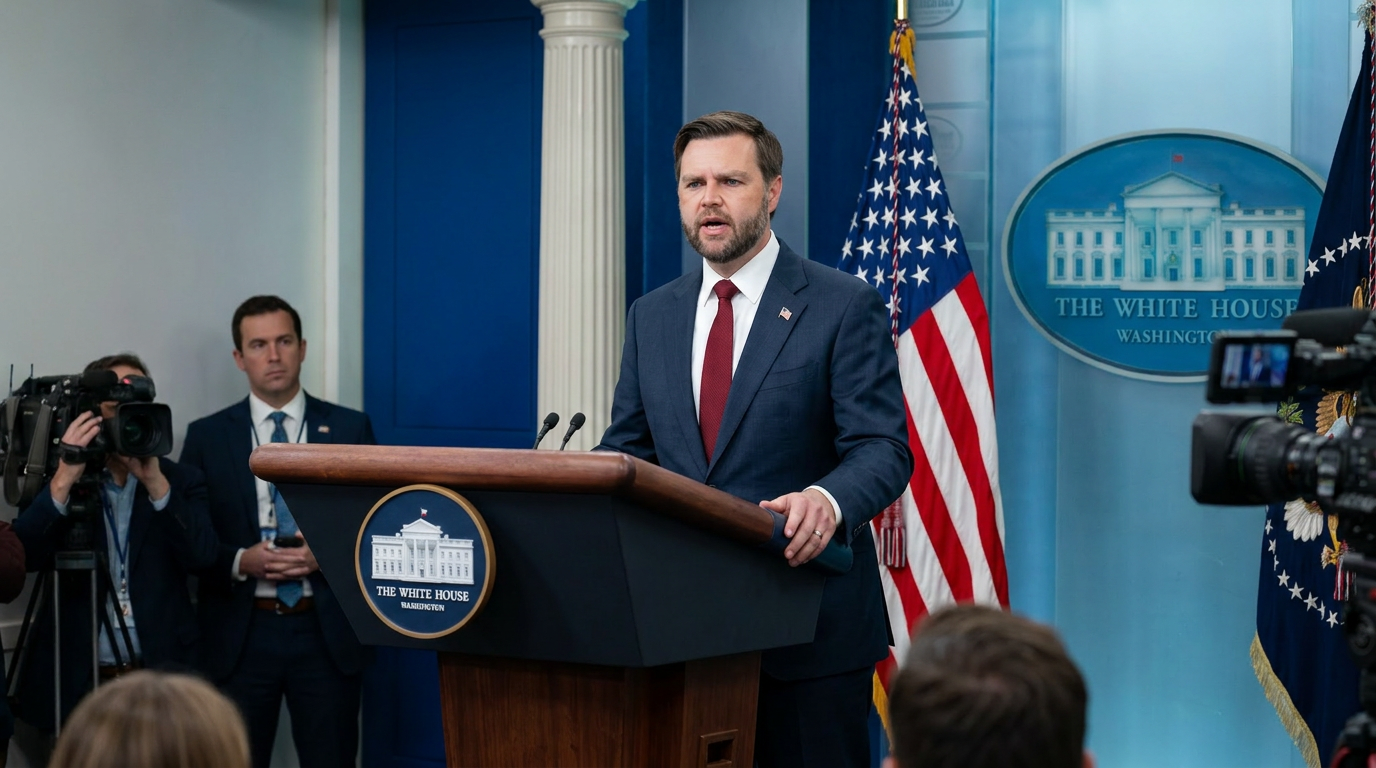
Vice President Vance made an unusual appearance at the White House briefing room on Thursday to defend the administration's strategy, emphasizing that economic relief is strictly conditional and tied to verifiable compliance. "As they dial up their good behavior, we can dial up the economic relief," Vance told reporters. "If they dial down their good behavior, we can turn it off."[2][6][7]
Vance also issued a firm rebuke to members of the Israeli Cabinet who have publicly attacked the agreement. He reminded critics that the current U.S. administration remains Israel's most sympathetic ally on the global stage, urging them not to undermine the diplomatic effort.[3][7]

Meanwhile, Tehran has issued its own warnings. Iranian lead negotiators cautioned that the United States would face severe consequences if it violates the emerging agreement, while state media reported that Iranian officials want to see concrete signs of U.S. implementation before committing to further technical talks.[3][5]
The timeline for the Switzerland talks remains highly uncertain. While the 60-day ceasefire window provides a temporary buffer, the intertwined nature of the U.S.-Iran negotiations and the ongoing Israel-Hezbollah conflict means that any escalation in Lebanon could easily derail the fragile progress made in Geneva.[4][5][6]
How we got here
June 2026
A brief U.S.-Iran military conflict disrupts the region and closes the Strait of Hormuz.
Mid-June 2026
President Trump and Iranian President Pezeshkian sign a Memorandum of Understanding to establish a 60-day ceasefire.
June 17, 2026
The U.S. lifts its blockade on the Strait of Hormuz, allowing oil tankers to resume transit.
June 18, 2026
The White House abruptly postpones VP JD Vance's trip to Switzerland for technical nuclear negotiations.
Viewpoints in depth
The Trump Administration's View
Defends the agreement as a necessary step to secure verifiable nuclear disarmament and stabilize global energy markets.
Administration officials, led by Vice President JD Vance and Special Envoy Steve Witkoff, argue that the 14-point Memorandum of Understanding is a pragmatic triumph. By tying economic relief directly to verifiable compliance—such as allowing IAEA inspectors into previously restricted sites—the administration believes it has created a mechanism to peacefully dismantle Iran's nuclear ambitions. They emphasize that the immediate reopening of the Strait of Hormuz proves the deal is already yielding tangible benefits for the global economy.
Israeli & Congressional Skeptics
Views the concessions as a dangerous capitulation that will ultimately fund regional instability.
Critics in the U.S. Congress and the Israeli Cabinet are deeply alarmed by the prospect of a $300 billion reconstruction fund and sweeping sanctions relief. They argue that any financial windfall provided to Tehran will inevitably be funneled to proxy groups like Hezbollah and Hamas. Furthermore, skeptics contend that focusing solely on uranium enrichment ignores the immediate threat posed by Iran's advanced ballistic missile program, leaving regional allies vulnerable to future attacks.
Iranian Leadership's View
Seeks immediate economic relief while maintaining leverage through regional alliances.
For Tehran, the negotiations are primarily a vehicle to lift crippling economic sanctions and secure funds for domestic reconstruction following the recent conflict. However, Iranian officials remain deeply distrustful of U.S. commitments. By delaying their delegation's trip to Switzerland in response to Israeli strikes in Lebanon, Iran is signaling that it views the nuclear negotiations as inextricably linked to the broader geopolitical balance of the Middle East, refusing to isolate the nuclear issue from its regional security interests.
What we don't know
- When the postponed Switzerland summit will officially be rescheduled.
- Whether ongoing Israeli military operations in Lebanon will cause Iran to abandon the MoU entirely.
- The exact mechanisms the IAEA will use to verify the dilution of Iran's buried enriched uranium.
Key terms
- Memorandum of Understanding (MoU)
- A formal, non-binding agreement outlining the terms and details of an understanding, used here as the framework for the 60-day ceasefire.
- Strait of Hormuz
- A critical maritime chokepoint between the Persian Gulf and the Gulf of Oman, through which roughly one-fifth of the world's oil supply passes.
- IAEA
- The International Atomic Energy Agency, the United Nations' nuclear watchdog responsible for inspecting and verifying nuclear programs.
- Highly Enriched Uranium
- Uranium that has been processed to increase the concentration of the U-235 isotope, a critical step in developing nuclear weapons.
Frequently asked
Why were the Switzerland talks delayed?
The White House cited logistical challenges, while reports indicate Iran paused its delegation's travel due to ongoing Israeli military operations against Hezbollah in Lebanon.
What is in the U.S.-Iran interim agreement?
The 14-point MoU includes a 60-day ceasefire, the reopening of the Strait of Hormuz, IAEA inspections of Iranian nuclear sites, and potential U.S. economic relief.
Why are some U.S. lawmakers criticizing the deal?
Skeptics argue the agreement offers too much economic relief—including a potential $300 billion reconstruction fund—without permanently dismantling Iran's ballistic missile capabilities.
Sources
Source coverage
7 outlets
3 viewpoints surfaced







[1]AxiosIranian Leadership
Trump envoy Witkoff heads to Switzerland ahead of potential Iran talks
Read on Axios →[2]Associated PressTrump Administration Negotiators
White House postpones sending Vance to Switzerland for talks with Iran negotiators
Read on Associated Press →[3]Fox NewsIsraeli & Congressional Skeptics
Trump team halts Vance's Switzerland trip as Iran issues stark warning over deal
Read on Fox News →[4]ForbesTrump Administration Negotiators
Vance's Switzerland Trip Delayed, Pushing Back Start Of Technical Talks With Iran
Read on Forbes →[5]CBCTrump Administration Negotiators
JD Vance cancels trip to Europe for peace talks with Iran this weekend
Read on CBC →[6]Ynet NewsIsraeli & Congressional Skeptics
Vance delays Switzerland trip to lead new US-Iran nuclear talks
Read on Ynet News →[7]Washington Jewish WeekIsraeli & Congressional Skeptics
US-Iran Talks Canceled as Vance Postpones Switzerland Trip
Read on Washington Jewish Week →

More in news politics
See all 5 stories →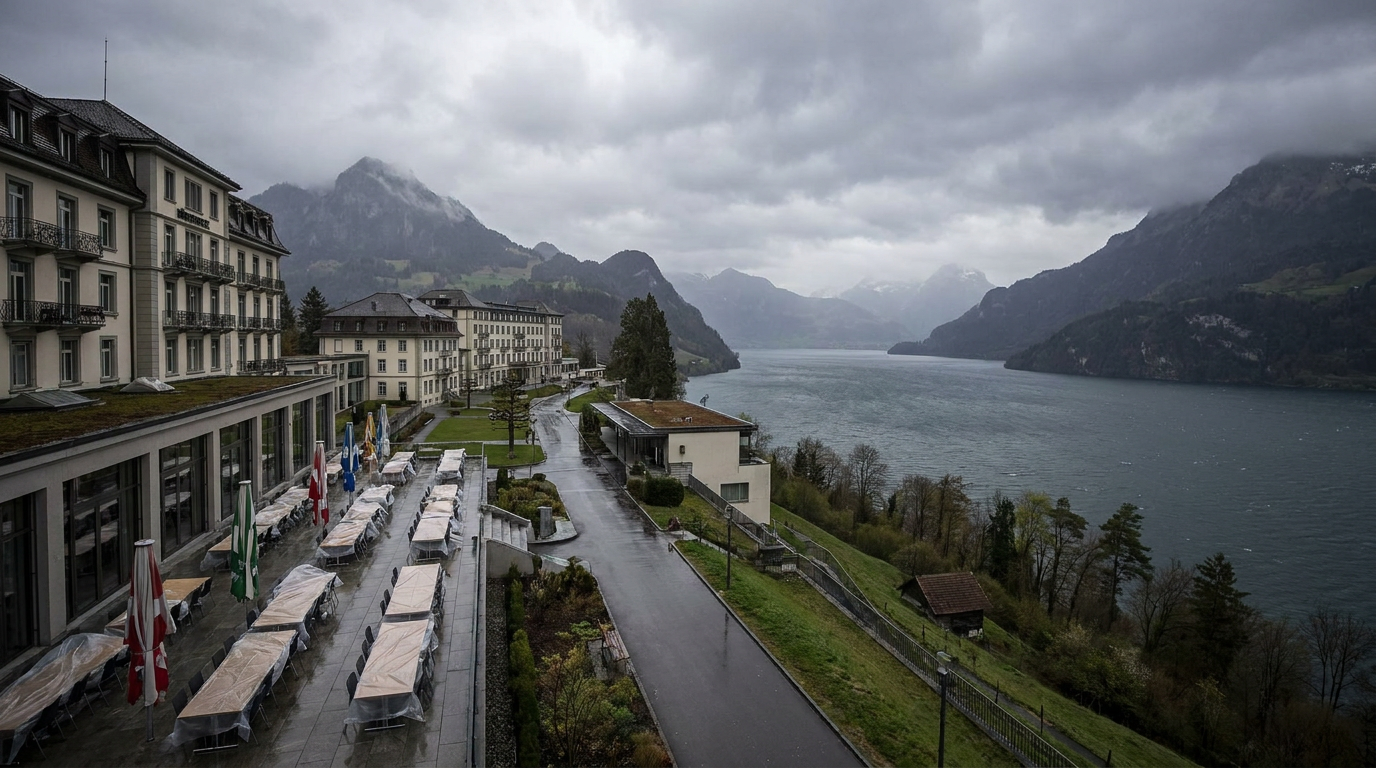

Every angle. Every day.
Get news politics stories with full source coverage and perspective breakdowns delivered to your inbox.