
Japan's Largest Taxi App Raises $553 Million to Solve Driver Shortage with Robotaxis
Ride-hailing giant Go completed Japan's largest IPO of 2026, securing massive capital to deploy autonomous vehicles and combat the country's severe demographic labor crunch.
By Factlen Editorial Team
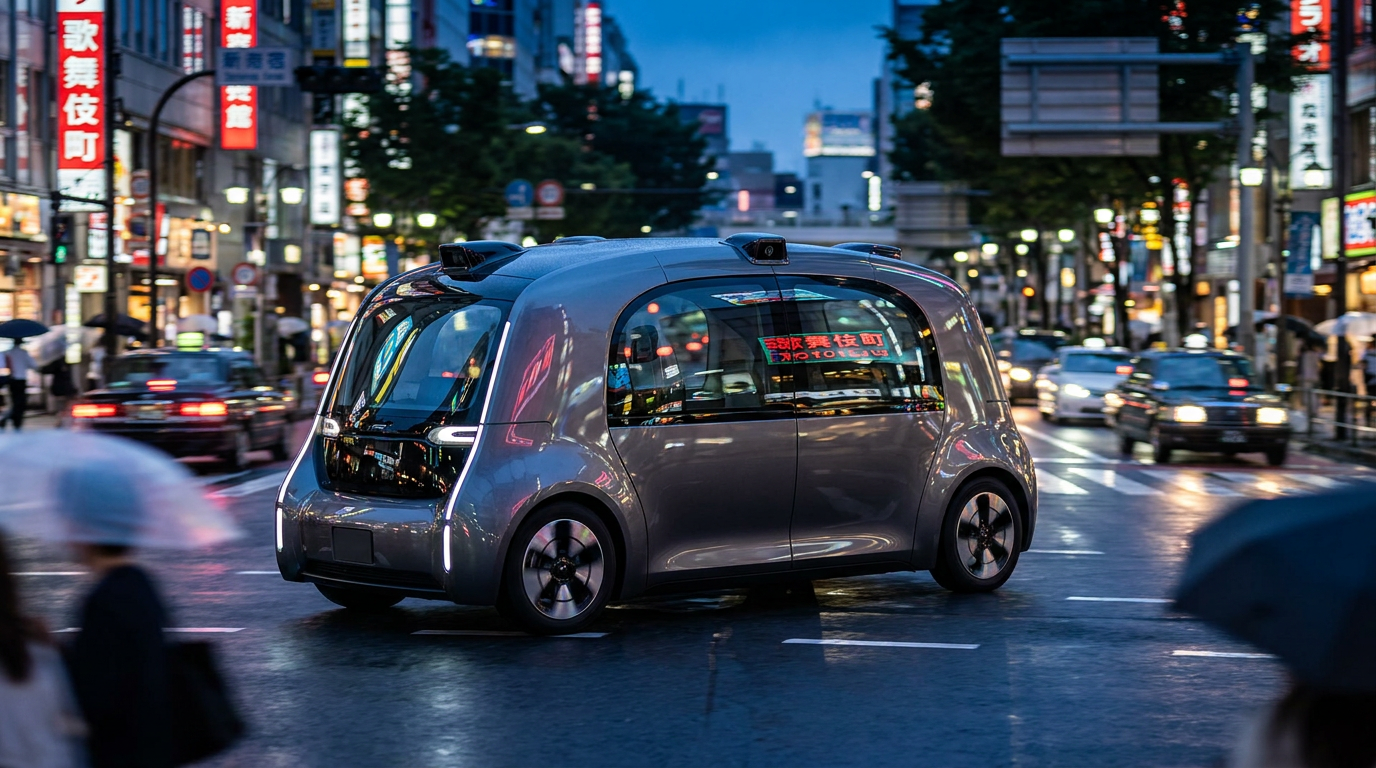
- Mobility Platforms
- View autonomous technology as the inevitable and necessary solution to structural labor shortages.
- Institutional Investors
- See Japan's regulatory-compliant aggregation model as a highly profitable, lower-risk bet.
- Japanese Policymakers
- View autonomous driving as a strategic national asset required to sustain economic activity.
What's not represented
- · Traditional Taxi Drivers
- · Rural Japanese Residents
- · Pedestrian Safety Advocates
Why this matters
As populations age across the developed world, Japan is serving as the ultimate testing ground for whether autonomous technology can successfully replace a shrinking human workforce and keep vital urban infrastructure running.
Key points
- Go Inc. raised $553 million in Japan's largest IPO of 2026, with shares surging 21% on their trading debut.
- The company plans to use the capital to fund the research, development, and deployment of robotaxis across its network.
- Japan's taxi industry has lost roughly 20% of its drivers in recent years due to the country's rapidly aging population.
- Go is partnering with Waymo and traditional fleet operators to integrate autonomous vehicles into its dominant digital dispatch platform.
- The Japanese government is actively supporting the transition, targeting a 26% global share in self-driving cars by the 2030s.
Japan is running out of people to drive its cars. In a nation defined by its hyper-efficient transportation networks, an aging population has quietly hollowed out the workforce required to keep urban mobility functioning. Over the past few years, the number of licensed taxi drivers in the country has plummeted by roughly 20 percent, leaving fleets idle and passengers stranded.[1]
It is a demographic crisis that cannot be solved by simply raising wages or tweaking labor laws. Instead, the country is turning to a technological silver bullet: the robotaxi.
That structural reality was the driving force behind the Tokyo Stock Exchange’s largest initial public offering of 2026. On Tuesday, Go Inc., the operator of Japan’s dominant taxi-hailing application, made its market debut after raising ¥88.6 billion—approximately $553 million.[1][3]
The market’s response was immediate and aggressive. Go’s shares surged 21 percent above their ¥2,400 offering price in early trading, pushing the company’s valuation past $1.27 billion. The offering was oversubscribed by more than 25 times, a rare frenzy in what has otherwise been a historically quiet year for Japanese public listings.[2][3][4]

What investors were buying was not just a ride-hailing app, but a heavily capitalized bridge to an autonomous future. Go’s management has explicitly stated that the IPO proceeds will be channeled directly into the research, development, and deployment of robotaxis, alongside strategic acquisitions to consolidate the market.[1][3]
To understand why Go is positioned to lead this transition, one must look at how it conquered the human-driven market. When Western giants like Uber attempted to enter Japan, they brought a playbook of regulatory disruption, trying to bypass existing taxi licensing laws. Japan’s regulators firmly rejected that approach.[3][4]
Go, founded as a traditional operator in 1977 before pivoting to software, took the opposite route. It partnered with the country’s deeply entrenched, highly regulated taxi companies, embedding its dispatch technology into their existing fleets.[1]
Today, Go controls a staggering 80 percent of Japan’s taxi app market by usage time, boasting 35 million downloads and a network of 85,000 partner vehicles. By playing by the rules, Go secured the demand side of the mobility equation. Now, it intends to automate the supply side.[1][3]

Today, Go controls a staggering 80 percent of Japan’s taxi app market by usage time, boasting 35 million downloads and a network of 85,000 partner vehicles.
The company’s strategy relies heavily on global partnerships, most notably with Waymo, the autonomous driving subsidiary of Alphabet. Alongside Nihon Kotsu, Japan’s largest traditional taxi operator, Go is laying the groundwork to integrate Waymo’s driverless technology into its dispatch network.[1][5]
The timeline for this rollout is accelerating faster than many industry observers anticipated. Waymo has been mapping Tokyo’s streets and running sensor-equipped vehicles with human safety drivers since early 2025.[5]
During a recent media briefing in Tokyo, Waymo executives signaled that the technical readiness for a fully autonomous launch could be achieved in a matter of months, rather than years. While regulatory approval remains a separate hurdle, the engineering gap between San Francisco and Tokyo is closing rapidly.[5]
For international capital, the combination of Go’s market dominance and the impending arrival of autonomous supply is a compelling thesis. Foreign investors, including Goldman Sachs, BlackRock, and Wellington Management, snapped up 70 percent of the IPO’s shares.[3][4]
Financial analysts point to the massive margin runway inherent in Go’s model. Currently, the company operates on a commission basis, taking a cut of fares generated by human drivers. If Go can transition even a fraction of its 85,000-vehicle network to autonomous operation, the unit economics of the platform will transform entirely.[4]

The Japanese government is actively encouraging this shift, viewing autonomous mobility not as a luxury, but as a macroeconomic necessity. With corporate bankruptcies tied to labor shortages hitting multi-year highs, Tokyo has drafted a new growth strategy that targets a 26 percent global share in self-driving cars by the 2030s.[6]
To support that goal, the Ministry of Land, Infrastructure, Transport and Tourism has been steadily updating the Road Traffic Act to accommodate Level 4 autonomous driving. The government aims to have unmanned mobility services operating in more than 100 locations nationwide by fiscal 2027.[8]
Despite Go’s early lead, the race to automate Japanese roads is becoming crowded. Honda has been working to deploy its own autonomous taxis in central Tokyo by 2026, though the withdrawal of its partner General Motors' Cruise unit has complicated those plans. Nissan and Tesla are also running localized trials of their respective self-driving software.[5][7]

The ultimate success of Go’s robotaxi pivot will depend on how seamlessly it can blend silicon with society. Japan’s urban environments are notoriously dense, featuring narrow streets, heavy bicycle traffic, and complex pedestrian flows that will test the limits of Waymo’s perception systems.
Yet, the alternative—a mobility network slowly grinding to a halt as its workforce ages out of the driver's seat—is unacceptable to both policymakers and the public. By securing half a billion dollars in fresh capital, Go has ensured that when the first commercial robotaxis are finally cleared to operate in Tokyo, they will likely be summoned through its app.
How we got here
1977
Go's predecessor company is founded as a traditional taxi operator in Japan.
2023
Goldman Sachs invests ¥10 billion into Go, valuing the platform at ¥135 billion.
April 2023
Japan amends the Road Traffic Act to legally permit Level 4 autonomous driving under specific conditions.
December 2024
Waymo signs a strategic partnership with Go and Nihon Kotsu to test autonomous technology in Tokyo.
April 2025
Waymo begins mapping Tokyo's streets using sensor-equipped vehicles with human safety drivers.
June 16, 2026
Go completes Japan's largest IPO of the year, raising ¥88.6 billion to fund its robotaxi ambitions.
Viewpoints in depth
Mobility Platforms
View autonomous technology as the inevitable and necessary solution to structural labor shortages.
For platform operators, the human driver is increasingly viewed as a bottleneck in an otherwise scalable software business. By layering autonomous vehicles into an existing dispatch network, companies like Go can eliminate the cold-start problem that plagues standalone robotaxi startups. They argue that self-driving cars will not replace human jobs, but rather fill the massive labor vacuum created by Japan's aging demographics, ultimately expanding the total mobility market.
Institutional Investors
See Japan's regulatory-compliant aggregation model as a highly profitable, lower-risk bet.
Global capital is drawn to Go's strategy because it avoids the costly regulatory battles that defined the first decade of Western ride-hailing. By partnering with incumbent taxi fleets rather than fighting them, Go secured a near-monopoly on digital dispatch in Japan. Investors believe that this dominant market position, combined with the margin expansion promised by autonomous supply, creates a compounding financial engine that justifies premium valuations.
Japanese Policymakers
View autonomous driving as a strategic national asset required to sustain economic activity.
The Japanese government is treating the deployment of self-driving technology as an urgent macroeconomic priority. With corporate bankruptcies tied to labor shortages rising and rural transportation networks collapsing, policymakers are actively rewriting the Road Traffic Act to accelerate Level 4 autonomy. They aim to capture a 26 percent global share of the autonomous vehicle market by the 2030s, viewing the technology as essential infrastructure for a super-aging society.
What we don't know
- How quickly Japanese regulators will grant full commercial approval for Level 4 autonomous ride-hailing in dense urban centers like Tokyo.
- Whether the unit economics of operating and maintaining a robotaxi fleet will ultimately match the high margin expectations of public market investors.
- How traditional taxi drivers and labor unions will react once autonomous vehicles begin taking a meaningful share of daily dispatch requests.
Key terms
- Robotaxi
- A fully autonomous, self-driving vehicle operated as a taxi service without a human driver present.
- Level 4 Autonomy
- A designation by the Society of Automotive Engineers indicating a vehicle can perform all driving tasks under specific conditions without human intervention.
- Initial Public Offering (IPO)
- The process of offering shares of a private corporation to the public in a new stock issuance, allowing the company to raise capital.
- Cold-Start Problem
- A challenge in platform businesses where it is difficult to attract users without an existing supply of services, and difficult to attract service providers without existing users.
- Margin Expansion
- An increase in the rate of profit a company makes on its revenue, often achieved by lowering operating costs through technology.
Frequently asked
Why is Japan facing a taxi driver shortage?
Japan's population is rapidly aging, and younger workers are not entering the taxi industry in sufficient numbers. The total number of licensed drivers has fallen by roughly 20 percent in recent years.
How much did Go raise in its IPO?
Go raised ¥88.6 billion (approximately $553 million) in its June 2026 initial public offering, making it Japan's largest listing of the year.
Who is Go partnering with for its robotaxis?
Go has formed strategic partnerships with Waymo, the autonomous driving unit of Alphabet, and Nihon Kotsu, Japan's largest traditional taxi operator.
When will robotaxis launch in Tokyo?
While an exact commercial launch date is pending regulatory approval, Waymo executives recently stated that the technical readiness to deploy autonomous vehicles in Tokyo could be achieved in a matter of months.
Sources
Source coverage
8 outlets
3 viewpoints surfaced








[1]TechCrunchMobility Platforms
Go eyes robotaxis and acquisitions after Japan’s biggest IPO of 2026. Here’s why it matters
Read on TechCrunch →[2]Investing.comInstitutional Investors
Go shares jump in Tokyo debut after $552.6m IPO
Read on Investing.com →[3]Crypto BriefingInstitutional Investors
Japan's biggest listing of the year raised $553 million for the taxi-hailing giant
Read on Crypto Briefing →[4]Tomorrow InvestorInstitutional Investors
Raises ¥88.6B in Blockbuster IPO
Read on Tomorrow Investor →[5]Electric VehiclesMobility Platforms
Waymo Says Robotaxi Launch in Tokyo 'Could Be Ready in a Few Months'
Read on Electric Vehicles →[6]Tech in AsiaJapanese Policymakers
Japan targets 26% global share in self-driving cars by 2030s
Read on Tech in Asia →[7]DriveJapanese Policymakers
General Motors robo-taxis to roll-out in Japan from 2026 – with help from Honda
Read on Drive →[8]JASICJapanese Policymakers
Current Efforts for the Development of International Regulations on Automated Driving
Read on JASIC →



Every angle. Every day.
Get technology stories with full source coverage and perspective breakdowns delivered to your inbox.