
How the Gut-Brain Axis is Rewriting the Science of Depression
Emerging clinical evidence reveals that the gut microbiome plays a foundational role in mental health, shifting depression treatment toward targeted diets and 'psychobiotics'.
By Factlen Editorial Team
- Nutritional Psychiatrists
- Argue that diet and microbiome health are foundational to treating mental illness, advocating for food-first interventions.
- Microbiome Researchers
- Focus on the specific bacterial strains and metabolic pathways, emphasizing the need for precision 'psychobiotics' over generic diets.
- Integrative Medicine Advocates
- View depression as a whole-body systemic issue involving immune and metabolic dysregulation, rather than just a localized brain disorder.
What's not represented
- · Patients with severe treatment-resistant depression who do not respond to dietary changes
- · Agricultural policy experts addressing the affordability and accessibility of whole foods
Why this matters
For decades, mental health treatment has focused almost entirely on brain chemistry. The realization that the gut microbiome drives mood and cognition empowers patients with a daily, accessible tool—nutrition—to actively improve their mental resilience and augment traditional therapies.
Key points
- The gut microbiome produces approximately 90% of the body's serotonin, challenging the view that depression is solely a brain disorder.
- Clinical trials demonstrate that transitioning to a whole-food, Mediterranean-style diet can significantly reduce depressive symptoms.
- Specific bacterial strains, known as psychobiotics, actively synthesize mood-regulating neurotransmitters like GABA.
- Depression is increasingly viewed by health institutes as a whole-body metabolic and immune condition.
- Nutritional interventions are currently recommended as powerful adjunctive therapies alongside standard psychiatric treatments.
For decades, modern medicine has treated depression almost exclusively as a disorder of the brain—a localized chemical imbalance or a misfiring of neural circuitry. Billions of dollars have been poured into developing pharmaceuticals designed to tweak neurotransmitters like serotonin and dopamine above the neck. Yet, with global depression rates climbing to affect an estimated 280 million people, and traditional antidepressants offering limited efficacy or challenging side effects for a significant portion of patients, researchers have begun looking elsewhere for answers.[4]
In 2026, a profound paradigm shift is cementing itself within the global medical community: the root of many mental health conditions may actually lie deep within the digestive system. The rapidly emerging field of nutritional psychiatry is moving swiftly from the fringes of holistic wellness into the center of rigorous, evidence-based clinical science. By mapping the intricate biological connections between what we eat and how we feel, researchers are fundamentally altering how doctors understand, diagnose, and ultimately treat severe mood disorders.[2]
This clinical shift is primarily driven by a rapidly growing understanding of the microbiome-gut-brain axis. This axis is a complex, bidirectional communication network linking the tens of trillions of bacteria residing in our digestive tract directly to our cognitive and emotional centers. Scientists now recognize that the human gut is not merely a passive digestive pipe responsible for breaking down food, but rather a highly active endocrine organ, a core component of the immune system, and a central pillar of the body's broader nervous system.[1]
To truly understand the magnitude of this physiological connection, researchers frequently point to a staggering biological reality that surprises many patients: approximately 90 percent of the human body's serotonin is produced not in the brain, but in the gut. Serotonin is the primary neurotransmitter targeted by standard selective serotonin reuptake inhibitors (SSRIs), the most common class of antidepressants. The revelation that intestinal microbial populations actively synthesize the very chemicals that dictate our emotional stability has forced a complete reevaluation of how psychiatric medications should be developed and deployed.[1]

The communication between the gut and the brain occurs simultaneously through multiple distinct biological pathways. The most direct and rapid route is the vagus nerve, a massive biological superhighway that wanders from the brainstem all the way down through the abdomen, innervating the intestinal tract. This nerve acts as a real-time sensory apparatus; when the gut microbiome detects stress, imbalance, or inflammation, the vagus nerve immediately transmits those distress signals upward, directly altering neural firing patterns in the brain regions responsible for processing anxiety and depression.[1]
Beyond direct neural signaling via the vagus nerve, gut microbes manufacture a wide array of metabolic byproducts that profoundly influence human mood. When beneficial bacteria digest complex dietary fibers that human enzymes cannot break down, they produce short-chain fatty acids (SCFAs) such as butyrate, propionate, and acetate. These SCFAs act as incredibly powerful anti-inflammatory agents. They cross the intestinal barrier and enter the bloodstream, working to reduce systemic inflammation throughout the entire body—a chronic condition that modern psychiatry increasingly recognizes as a primary, underlying driver of severe depressive symptoms.[1][4]
The clinical evidence supporting this gut-brain mechanism has officially reached a tipping point in the medical literature. The landmark SMILES trial, along with several subsequent large-scale international replications, provided the medical community with the first randomized, controlled evidence demonstrating that dietary improvement alone could effectively treat major depressive episodes. In these rigorous studies, patients suffering from clinical depression were guided through specific, targeted nutritional protocols by clinical dietitians, proving that modifying the microbiome could yield psychiatric results comparable to traditional pharmaceutical interventions.[2]
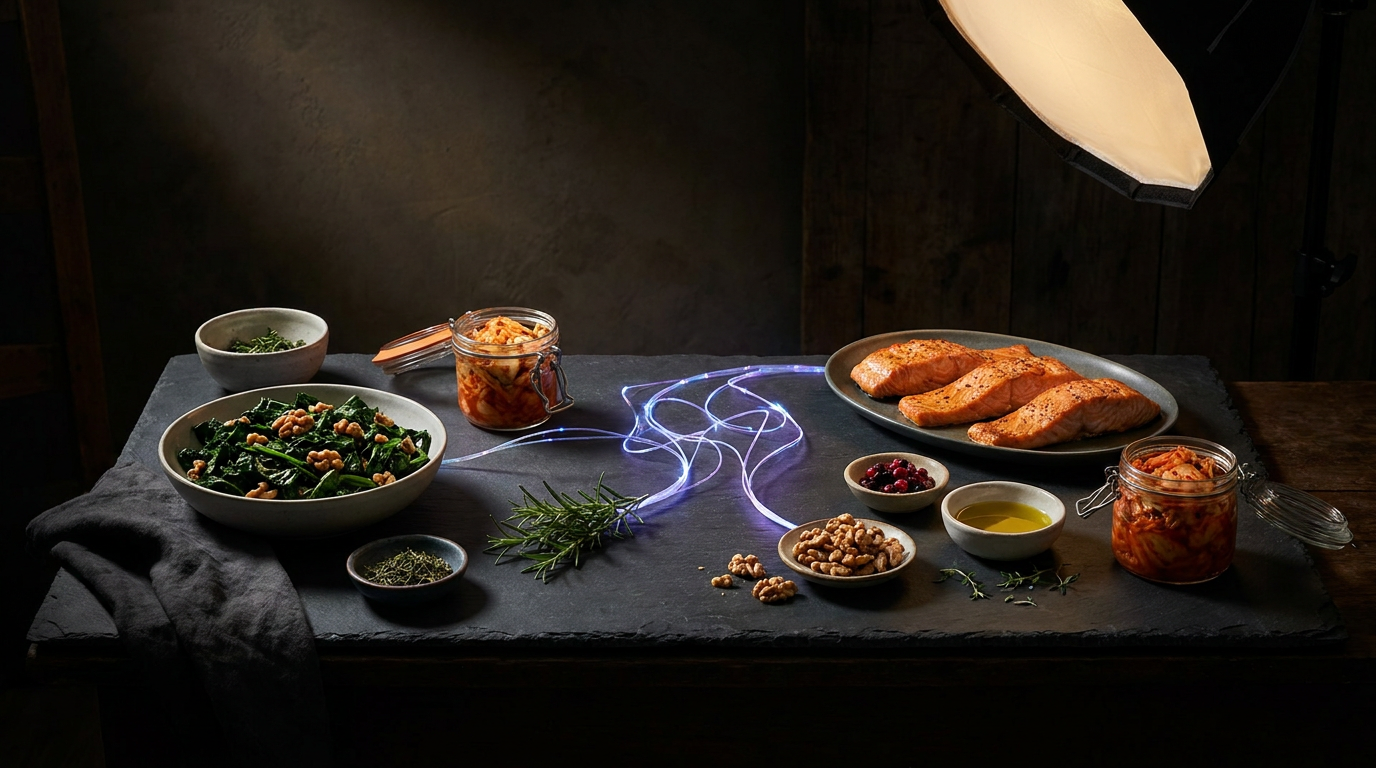
In these groundbreaking trials, patients who transitioned away from standard Western diets—which are notoriously high in ultra-processed foods, artificial emulsifiers, and refined sugars—experienced remarkable clinical turnarounds. By adopting a modified Mediterranean-style diet rich in leafy vegetables, legumes, whole grains, omega-3 fatty acids, and fermented foods, participants saw dramatic, measurable reductions in their depressive symptoms. This specific dietary shift actively reshaped their internal microbial ecosystems, starving off inflammatory bacterial strains while feeding the beneficial microbes responsible for maintaining the integrity of the gut lining and producing essential neurotransmitters.[5]

We repeatedly see that diets lower in ultra-processed foods and higher in whole, nutrient-dense foods are intrinsically linked to a significantly reduced risk of developing depression, notes Dr. Felice Jacka, an internationally recognized pioneer in the field of nutritional psychiatry. The clinical outcomes from these dietary interventions have proven so robust and reproducible that nutritional counseling is now being formally integrated into standard psychiatric care models and clinical guidelines in several countries, moving nutrition from an alternative therapy to a foundational pillar of mental health treatment.[2][5]
Felice Jacka, an internationally recognized pioneer in the field of nutritional psychiatry.
However, the science of the gut-brain axis is rapidly moving far beyond just providing broad dietary advice to patients. Researchers in cutting-edge laboratories are now actively isolating specific, highly effective bacterial strains to develop what are known as 'psychobiotics'—live microorganisms that are ingested specifically for their targeted mental health benefits. This development represents a massive leap from general nutritional wellness into the realm of precision medical intervention, offering the possibility of prescribing specific bacterial colonies to treat specific psychiatric symptoms just as a doctor would prescribe a targeted medication.[3]
A recent, highly publicized 2026 clinical trial clearly demonstrated the tangible, real-world impact of these targeted psychobiotic interventions. In the study, older adults formally diagnosed with clinical depression were given a daily, specifically formulated probiotic supplement alongside their regular, ongoing antidepressant treatments. The researchers found that the group receiving the live psychobiotics experienced significantly greater, faster improvements in both their depression and anxiety symptom scores compared to the control group that received a biologically inactive placebo, highlighting the powerful adjunctive potential of microbiome therapy.[3]
The findings of the study highlighted exactly how certain bacterial strains, particularly specific species within the Lactobacillus and Bifidobacterium families, perform their therapeutic work. These microbes actively synthesize gamma-aminobutyric acid (GABA)—an inhibitory neurotransmitter crucial for calming the nervous system and reducing anxiety—as well as serotonin. By directly supplementing the body's natural supply of these vital mood-regulating chemicals, these beneficial bacteria effectively act as microscopic, self-replicating pharmaceutical factories operating directly within the patient's digestive tract, bypassing the need for synthetic chemical interventions.[1]
Furthermore, advanced genomic sequencing of stool samples from patients suffering from major depressive disorder frequently reveals a profound state of 'dysbiosis.' This clinical term describes a severe ecological imbalance within the gut where beneficial, SCFA-producing bacterial families, such as Lachnospiraceae, are heavily depleted. Simultaneously, populations of inflammatory, opportunistic microbes are highly elevated. Researchers now believe that actively correcting this underlying microbial imbalance is not just helpful for symptom management, but is absolutely essential for achieving lasting, long-term recovery and preventing future depressive relapses.[1]
This accumulation of microbiome data is forcing a fundamental reclassification of depression itself within the highest levels of the medical establishment. Leading global health institutes and psychiatric organizations are increasingly viewing major depressive disorder not merely as a localized psychiatric issue confined to the brain, but rather as a complex, whole-body metabolic and immune condition. This broader, systemic understanding demands that clinicians adopt holistic treatment strategies that address the patient's underlying metabolic health, systemic inflammation levels, and digestive ecology, rather than solely focusing on neurochemistry.[4]

Compelling evidence indicates that disorders such as major depression should be viewed as whole-body conditions that entail both central processes, such as changes in neurotransmitter systems, and peripheral factors resulting from the involvement of the immune and neuroendocrine systems, researchers noted in a recent, comprehensive review published by the National Institutes of Health. This integrated framework acknowledges that treating the mind is biologically impossible without simultaneously treating the physical body that houses and sustains the neural networks responsible for human consciousness and emotion.[4]
Despite the immense promise and rapid clinical advancements, the field of nutritional psychiatry remains highly transparent about its current scientific limitations and the vast unknowns that still remain to be mapped. The human microbiome is incredibly complex and as entirely unique to an individual as a fingerprint. Because of this immense biological diversity, a specific dietary intervention or a particular psychobiotic strain that works miraculously to alleviate depression in one patient might do absolutely nothing for another, making standardized, one-size-fits-all treatments incredibly difficult to formulate.[6]
Additionally, while the clinical evidence supporting the mental health benefits of broad, whole-food dietary shifts is undeniably strong, the efficacy of over-the-counter probiotic supplements currently available to consumers remains highly variable and often disappointing. Many commercial supplements found on pharmacy shelves lack the highly specific bacterial strains, the necessary volume of colony-forming units (CFUs), or the protective encapsulation required to survive harsh stomach acids. Consequently, these generic products often fail to actually colonize the lower intestine and therefore exert zero measurable impact on the brain.[6]
Traditional psychopharmacologists and clinical psychiatrists also strongly caution patients against prematurely abandoning their established medical treatments in favor of purely dietary solutions. Within the current medical consensus, nutritional interventions and psychobiotics are viewed as incredibly powerful adjunctive therapies. This means they are designed to work synergistically alongside, rather than entirely replacing, standard evidence-based treatments like SSRIs, targeted psychotherapy, or cognitive behavioral therapy, particularly for patients suffering from acute, severe, or life-threatening cases of clinical depression where immediate stabilization is the primary medical priority.[2]

Looking ahead, the next major frontier in this rapidly evolving field is the development of true precision nutritional psychiatry. Scientists and bioengineers are actively working toward a near-future clinical reality where a patient presenting with depressive symptoms will routinely provide a stool sample for comprehensive genomic microbiome sequencing. This detailed biological map will allow clinicians to prescribe a highly personalized, targeted diet alongside specific, lab-cultivated psychobiotic strains perfectly tailored to correct that individual patient's unique microbial deficits and inflammatory markers.[6]
For now, the overarching scientific consensus emerging from the data is both remarkably clear and deeply empowering for patients: the food we consume every day is not merely caloric fuel for the physical body, but rather the foundational biological architecture of our mental health. By consciously tending to the microscopic, bustling ecosystem living within our digestive tracts, every individual possesses a powerful, daily, and highly accessible tool to actively cultivate psychological resilience, reduce systemic inflammation, and take control of their long-term emotional well-being.[5]
How we got here
2010
The first major epidemiological studies link overall diet quality to the prevalence of clinical mood and anxiety disorders.
2017
The landmark SMILES trial publishes findings showing that dietary intervention can effectively treat major depressive episodes.
2025
Major psychiatric journals publish editorials calling for a paradigm shift toward precision and functional psychiatry.
June 2026
New clinical trials demonstrate that specific probiotic strains provide a measurable mental health boost when added to standard antidepressant regimens.
Viewpoints in depth
Nutritional Psychiatrists' View
Advocating for food as foundational medicine.
This camp, pioneered by researchers involved in trials like SMILES, argues that the modern Western diet is a primary driver of the global mental health crisis. They point to robust clinical data showing that shifting patients to whole-food, anti-inflammatory diets can trigger remission in major depressive disorder at rates that rival traditional pharmaceuticals. For these practitioners, dietary counseling should be the first line of defense in psychiatric care, rather than an afterthought.
Microbiome Researchers' View
Focusing on the microscopic mechanics of the gut-brain axis.
While agreeing that diet is crucial, this group focuses on the specific biological mechanisms at play—namely, how specific bacterial strains produce neurotransmitters like GABA and serotonin, and anti-inflammatory short-chain fatty acids. They caution that broad dietary advice isn't enough for everyone, as individual microbiomes vary wildly. Their ultimate goal is the development of FDA-approved 'psychobiotics': highly specific, lab-cultivated bacterial strains prescribed to correct exact microbial deficits in a patient's gut.
Traditional Psychiatry's View
Maintaining the necessity of established psychopharmacology.
Mainstream psychiatric consensus welcomes the gut-brain axis data but warns against viewing diet as a cure-all for severe mental illness. They emphasize that for patients with acute, debilitating major depressive disorder, the immediate neurochemical stabilization provided by SSRIs or other medications is often necessary before a patient even has the executive function to overhaul their diet. They view nutritional psychiatry as a powerful adjunctive therapy, not a wholesale replacement for standard care.
What we don't know
- Which specific probiotic strains are most effective for different subtypes of clinical depression.
- How to accurately map an individual's unique microbiome to prescribe a perfectly personalized 'psychobiotic' regimen.
- The long-term relapse rates of patients treated solely with dietary interventions compared to those on traditional SSRIs.
Key terms
- Microbiome Dysbiosis
- An imbalance in the gut's microbial community, often characterized by a loss of beneficial bacteria and an overgrowth of harmful, inflammatory strains.
- Short-Chain Fatty Acids (SCFAs)
- Anti-inflammatory compounds, such as butyrate, produced when beneficial gut bacteria ferment dietary fiber.
- Vagus Nerve
- A major nerve that runs from the brainstem to the abdomen, acting as the primary biological superhighway for signals between the gut and the brain.
- Psychobiotics
- Targeted probiotic supplements designed specifically to influence brain function and improve mental health outcomes.
Frequently asked
What is the gut-brain axis?
It is the bidirectional communication network linking the central nervous system to the trillions of microbes in the digestive tract, primarily via the vagus nerve and immune signaling.
Can changing my diet cure depression?
While clinical trials show that transitioning to a whole-food, Mediterranean-style diet can significantly reduce or even remit depressive symptoms in some individuals, it is generally recommended as a powerful addition to standard treatments, not an absolute replacement.
What are psychobiotics?
Psychobiotics are specific strains of live bacteria (probiotics) that, when ingested, confer mental health benefits by producing neurotransmitters or reducing systemic inflammation.
Sources
Source coverage
6 outlets
3 viewpoints surfaced





[1]Frontiers in NutritionMicrobiome Researchers
The intricate interactions among gut microbiota and brain in depression
Read on Frontiers in Nutrition →[2]Psychiatric TimesNutritional Psychiatrists
Speaking of Lifestyle Psychiatry: Nutritional Interventions
Read on Psychiatric Times →[3]ScienceDailyMicrobiome Researchers
Probiotics offer surprising mental health boost for older adults with depression
Read on ScienceDaily →[4]National Institutes of HealthIntegrative Medicine Advocates
Nutritional Psychiatry: The Gut-Brain Axis and Mental Health
Read on National Institutes of Health →[5]American Psychological AssociationNutritional Psychiatrists
How diet and nutrition impact mental health
Read on American Psychological Association →[6]Factlen Editorial TeamIntegrative Medicine Advocates
Synthesis by Factlen editorial team
Read on Factlen Editorial Team →
More in health
See all 5 stories →

Every angle. Every day.
Get health stories with full source coverage and perspective breakdowns delivered to your inbox.