
Global Equestrian Injury Report: Delestre Sidelined, King Returns, and Shifting Leaderboards
As the 2026 equestrian season progresses, severe injuries to top riders like Simon Delestre and McLain Ward are reshaping global leaderboards. Meanwhile, successful returns and new data-driven safety protocols highlight a sport increasingly prioritizing long-term athlete welfare.
By Factlen Editorial Team
- Rider & Team Management
- Focus on recovery timelines, physical rehabilitation, and safely returning to peak performance.
- Governing Bodies & Medical Officials
- Focus on data-driven safety, new Return to Sport protocols, and enforcing mandatory rest periods.
- Equestrian Analysts
- Focus on how high-profile withdrawals shift leaderboards and create opportunities for alternate competitors.
What's not represented
- · Lower-level amateur riders who lack access to elite medical rehabilitation facilities
- · Event organizers facing last-minute high-profile withdrawals
Why this matters
The physical toll of elite equestrian sports is forcing a cultural reckoning. By embracing strict, data-driven recovery protocols rather than rushing athletes back to the saddle, the industry is ensuring longer, healthier careers for both riders and their equine partners.
Key points
- French show jumper Simon Delestre is sidelined for several weeks following shoulder surgery after a fall in Cannes.
- USA's McLain Ward prioritized long-term recovery over the 2026 World Cup Final after sustaining back and hand injuries.
- British eventer Emily King successfully returned to 5-star competition at Badminton after recovering from a fractured rib and torn lung.
- Governing bodies like the FEI and USEF are implementing stricter, data-driven 'Return to Sport' protocols to protect both human and equine athletes.
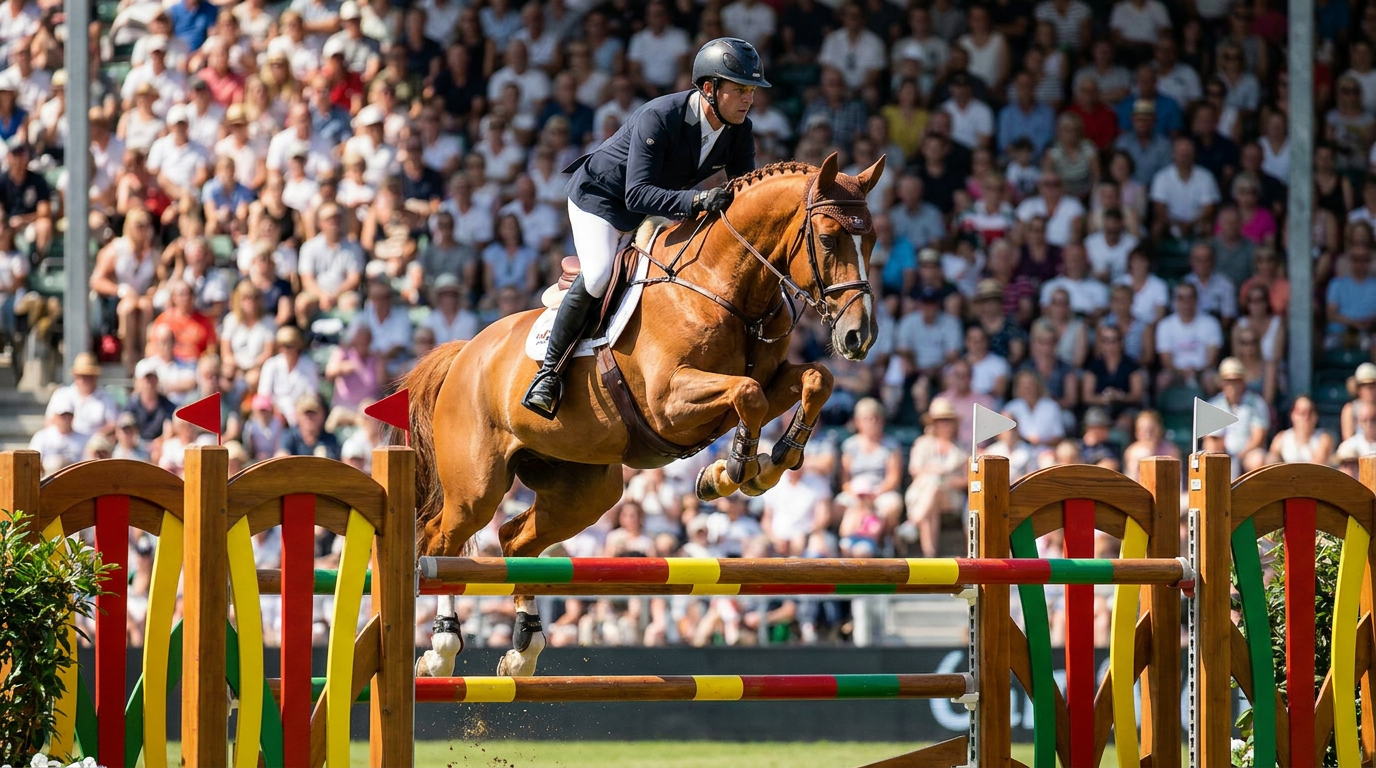
Mid-season 2026 has brought significant shakeups to the global equestrian leaderboards, as several top-ranked riders navigate severe injuries, complex surgeries, and high-profile returns. Across the demanding disciplines of show jumping, eventing, and dressage, the physical toll of the sport has forced both human and equine athletes to the sidelines, fundamentally reshaping the competitive landscape of major international tours. The most recent blow comes from the Longines Global Champions Tour (LGCT). France's Simon Delestre, who was leading the overall LGCT ranking, suffered a severe fall with his mount Gatsby during the Cannes Grand Prix in early June, bringing his dominant run to an abrupt halt.[1][2][3]
Delestre sustained a dislocated clavicle, torn ligaments, and hematomas to his head and temple during the terrifying incident in the Cannes arena. He was immediately transported to the hospital and underwent successful surgery to stabilize his shoulder. Medical officials confirmed there were no additional fractures to his clavicle, but the severity of the ligament damage requires complete immobilization of his left arm for several weeks. The French rider expressed gratitude for the outpouring of support from the equestrian community, noting that such scenarios are an unfortunate reality of a professional rider's life.[1]
Fortunately, Gatsby escaped the incident entirely uninjured, but Delestre's extended absence leaves the LGCT title race wide open heading into the crucial summer stretch. As the current points leader, missing multiple upcoming stops on the tour deals a brutal blow to his championship aspirations. Competitors who were trailing Delestre now have a prime opportunity to close the gap, drastically altering the strategic calculus for the remainder of the 2026 show jumping season.[1]
Delestre's setback mirrors the earlier misfortune of USA's six-time Olympian McLain Ward. Ward was forced to withdraw from the highly anticipated 2026 FEI Jumping World Cup Final in Fort Worth due to a painful combination of hand and back injuries. Ward, who famously won the 2017 World Cup Final on home soil in Omaha aboard HH Azur, had originally planned to compete with the 12-year-old gelding Jordan Molga M. However, he opted to prioritize his long-term health over rushing back to the arena for another title shot.[2][7]

Ward's withdrawal sent ripples through the American roster, but it also highlighted how high-profile absences can create unexpected, career-defining opportunities for the next generation of riders. Rising American star Lillie Keenan was tapped to step into Ward's spot with her horse Kick On. Keenan, who previously finished 11th in her World Cup Final debut in 2025, gained invaluable championship experience as a direct result of Ward's cautious approach to his physical rehabilitation.[2][7]
Rising American star Lillie Keenan was tapped to step into Ward's spot with her horse Kick On.
While the show jumping world deals with high-profile absences, the eventing community recently celebrated a monumental comeback. British eventer Emily King provided a masterclass in returning from severe trauma. Earlier in the year, King suffered a devastating fall that resulted in a fractured rib and a torn lung. The severity of the internal injuries required a meticulous and highly monitored recovery process, keeping her out of the saddle for months and casting doubt on her ability to compete in the grueling spring season.[3]
Defying the odds, King made a triumphant and highly anticipated return at the Mars Badminton Horse Trials in May. Piloting her bay gelding Valmy Biats, King scored a highly competitive 30.3 in the dressage phase, proving that her diligent physical rehabilitation had paid off immensely. She noted that while the build-up wasn't exactly smooth, she felt 'strong and healed up' for the demanding 5-star event. Her performance demonstrated the immense physical and mental resilience required to compete at the sport's highest level after a major trauma.[3]
The dressage world has also seen its share of sidelined stars, affecting both human and equine competitors. German Olympic gold medalist Hubertus Schmidt faces a long road to recovery following a severe riding accident at his Fleyenhof barn. Schmidt was thrown from an eight-year-old horse and sustained multiple fractures to his collarbone, ribs, pubic bone, and pelvis. Despite the severity of the fall, Schmidt has remained optimistic following multiple stabilization surgeries, relying on his deep bench of talented students and riders to keep his stable running during his convalescence.[4]

Equine athletes are being managed with equal caution, reflecting a broader industry shift toward long-term welfare. Marcus Orlob's top U.S. Grand Prix prospect, the 12-year-old mare Jane, was sidelined with a paddock injury, forcing her out of the national championships in Ocala. Jane, who is widely considered a top candidate for the 2028 Los Angeles Olympics, was placed on strict veterinary rest. Orlob and the owners chose to forfeit their immediate championship goals to preserve the mare's long-term athletic viability, refusing to risk her health for a short-term title.[5]
These high-profile injuries coincide with a major push by governing bodies to modernize recovery protocols and protect athletes from their own competitive drive. In 2026, US Equestrian (USEF) advanced its 'Return to Sport' requirements, mandating strict medical clearances for riders who suffer falls before they can remount. The new USEF protocols specifically target concussions and spinal impacts, utilizing modern sports medicine research that shows structured, gradual returns to activity are far more effective than the outdated equestrian culture of simply 'toughing it out' and getting right back in the saddle.[6]
Similarly, the international governing body has taken massive steps to protect equine partners through empirical research. The FEI's 2026 Sports Forum heavily emphasized 'Data-Driven Welfare and Safety.' By analyzing large-scale injury databases, the FEI is actively adjusting mandatory rest periods for horses based on risk profiles rather than uniform guesses. They are also utilizing tens of millions of data points to improve footing standards, proactively reducing the load on equine limbs to prevent catastrophic injuries before they occur.[8]

As the 2026 season progresses, the equestrian community's focus has fundamentally shifted from merely surviving the grueling calendar to optimizing recovery. With riders like King proving that patience yields elite results, and veterans like Ward and Delestre accepting the necessary time to heal, the sport is evolving. It is increasingly embracing a culture where medical science and data dictate the timeline, ensuring that both human and equine athletes return to the arena stronger, rather than sooner.[3][6][8]
How we got here
January 2026
Emily King suffers a severe fall, resulting in a fractured rib and torn lung.
March 2026
German dressage champion Hubertus Schmidt sustains multiple fractures in a riding accident.
April 2026
McLain Ward withdraws from the FEI Jumping World Cup Final due to back and hand injuries.
May 2026
Emily King makes a triumphant return to 5-star eventing at the Badminton Horse Trials.
June 2026
LGCT leader Simon Delestre undergoes shoulder surgery after a bad fall in Cannes.
Viewpoints in depth
Rider & Team Management
Prioritizing complete physical rehabilitation over rushed competitive returns.
For riders and their support teams, the 2026 season has underscored the necessity of patience. Athletes like McLain Ward and Emily King have openly discussed the mental and physical toll of stepping away from the arena to heal properly. Teams are increasingly treating injuries not just as temporary setbacks, but as critical periods for comprehensive rehabilitation, ensuring that when a rider or horse returns, they are genuinely fit for the rigors of 5-star competition rather than risking re-injury.
Governing Bodies & Medical Officials
Implementing data-driven safety rules to remove the pressure of premature returns.
Organizations like the FEI and US Equestrian are actively shifting the sport's culture away from 'riding through the pain.' By introducing strict Return to Sport protocols and mandatory medical evaluations after falls, governing bodies are taking the decision-making power out of the hands of adrenaline-fueled athletes. Medical officials emphasize that structured recovery—especially for concussions and spinal impacts—is vital for long-term athlete welfare, utilizing large-scale injury databases to continually refine these safety mandates.
Equestrian Analysts
Tracking the ripple effects of injuries on global leaderboards and alternate qualifications.
From a competitive standpoint, the absence of titans like Delestre and Ward creates massive vacuums at the top of the sport. Analysts note that these injuries drastically alter the strategic landscape of series like the LGCT and the World Cup Finals. However, they also point out that these unfortunate absences provide invaluable opportunities for rising stars—such as Lillie Keenan stepping in for Ward—to gain elite championship experience that they might not have otherwise received.
What we don't know
- Exactly when Simon Delestre will be cleared to return to the Longines Global Champions Tour.
- How the extended absences of top riders will permanently alter the final 2026 global rankings.
Key terms
- LGCT
- The Longines Global Champions Tour, an annual pre-eminent individual show jumping series.
- Dressage
- A highly skilled form of riding performed in exhibition and competition, often described as 'horse ballet.'
- Eventing
- An equestrian event comprising dressage, cross-country, and show jumping.
- Return to Sport Protocol
- Medical guidelines dictating the mandatory recovery and evaluation steps an athlete must complete before competing again.
Frequently asked
What happened to Simon Delestre?
The French show jumper suffered a dislocated clavicle and torn ligaments after a fall at the LGCT Cannes Grand Prix, requiring surgery and several weeks of immobilization.
Is McLain Ward competing in the 2026 World Cup Final?
No, Ward withdrew from the Fort Worth final due to back and hand injuries, allowing his mentee Lillie Keenan to take his place.
How did Emily King perform in her return from injury?
Returning from a fractured rib and torn lung, King scored a highly competitive 30.3 in dressage at the Mars Badminton Horse Trials.
What are the new USEF Return to Sport rules?
The updated 2026 protocols require riders who suffer falls to be evaluated by qualified medical personnel before remounting, with specific recovery timelines for concussions.
Sources
Source coverage
8 outlets
3 viewpoints surfaced







[1]World of ShowjumpingRider & Team Management
Simon Delestre sidelined after a fall during LGCT Cannes
Read on World of Showjumping →McLain Ward sidelined due to an additional injury, misses out on the FEI Jumping World Cup™ Final
Read on World of Showjumping →[3]Horse & HoundRider & Team Management
'It hasn't been a smooth build-up but I'm feeling strong': Emily King back from injury to tackle Badminton
Read on Horse & Hound →[4]EurodressageRider & Team Management
Hubertus Schmidt Severely Injured in Riding Accident
Read on Eurodressage →[5]Dressage-NewsRider & Team Management
Jane Sidelined With Injury, Likely Out of Grand Prix Championships
Read on Dressage-News →[6]US EquestrianGoverning Bodies & Medical Officials
What's Happening With That Rule? Updated Return To Sport Requirements
Read on US Equestrian →[7]Horse NetworkEquestrian Analysts
McLain Ward & Charlotte Dujardin Withdraw from 2026 World Cup Final
Read on Horse Network →[8]FEIGoverning Bodies & Medical Officials
FEI Sports Forum 2026: Data driven welfare and Safety
Read on FEI →
More in sports
See all 10 stories →Injury
Global Triathlon Injury Report: McCullough's Triumphant Return and Wilde's Precautionary Pause
6 sources
Standings
Vilaca and Potter Hold Narrow Leads in WTCS Standings as Triathlon Season Heats Up
6 sources
Injury
Wrestling Injury Report: Major Comebacks Shape the Road to the 2026 World Championships
7 sources
Standings
Global Wrestling Rankings Shake Up as USA, Russia, and Iran Brace for Astana World Championships
6 sources
Every angle. Every day.
Get sports stories with full source coverage and perspective breakdowns delivered to your inbox.