
The US-Iran Peace Talks in Switzerland: How the Lebanon Conflict Threatens the Deal
A historic US-Iran memorandum of understanding faces its first major test as fighting between Israel and Hezbollah delays nuclear negotiations in Switzerland. US Vice President JD Vance has sharply rebuked Israeli criticism of the deal.
By Factlen Editorial Team
- US Administration
- Argues the MoU is a historic victory that secures global oil markets and dismantles Iran's nuclear threat through diplomacy rather than endless war.
- Israeli Leadership
- Views the deal with deep suspicion, arguing it leaves Iran's nuclear infrastructure intact and fails to permanently neutralize the threat from Hezbollah.
- Iranian Government
- Demands that any bilateral peace agreement with the US must include a cessation of Israeli military operations against Iranian allies in Lebanon.
What's not represented
- · Lebanese Civilians
- · European Union Diplomats
Why this matters
The US and Iran are attempting to negotiate an end to a brief but devastating war and permanently cap Iran's nuclear program. However, the interconnected nature of Middle East conflicts means that violence in Lebanon could derail the entire diplomatic effort, potentially dragging the US back into a regional conflict and disrupting global energy markets.
Key points
- The US and Iran signed a 14-point memorandum to end their war and negotiate a permanent nuclear agreement.
- Implementation talks in Switzerland were delayed after heavy fighting erupted between Israel and Hezbollah.
- Iran demanded the US halt Israeli strikes in Lebanon before proceeding with the nuclear negotiations.
- US Vice President JD Vance sharply criticized Israeli leaders for panicking over the deal.
- A renewed ceasefire between Israel and Hezbollah may allow the Swiss talks to begin next week.
A historic diplomatic effort to end the war between the United States and Iran has collided with the reality of interconnected Middle East conflicts. Just days after US President Donald Trump and Iranian President Masoud Pezeshkian signed a 14-point memorandum of understanding (MoU), the first round of implementation talks in Switzerland was thrown into chaos by a severe military escalation between Israel and Hezbollah in Lebanon.[1][3][5]
The MoU, executed digitally on Wednesday, was designed to open a 60-day window for the US and Iran to negotiate a permanent agreement regarding Tehran's nuclear program and to secure the flow of oil through the Strait of Hormuz. The agreement explicitly called for an "immediate and permanent termination of military operations on all fronts, including in Lebanon."[1][6]

However, neither Israel nor the Iran-backed militant group Hezbollah were direct signatories to the US-Iran memorandum. On Thursday, Hezbollah launched a deadly attack that killed four Israeli soldiers near the southern Lebanese city of Nabatieh. In response, the Israel Defense Forces (IDF) launched a wave of retaliatory airstrikes against 80 Hezbollah targets across southern Lebanon and the Bekaa Valley, killing at least 18 people.[3][5][6]
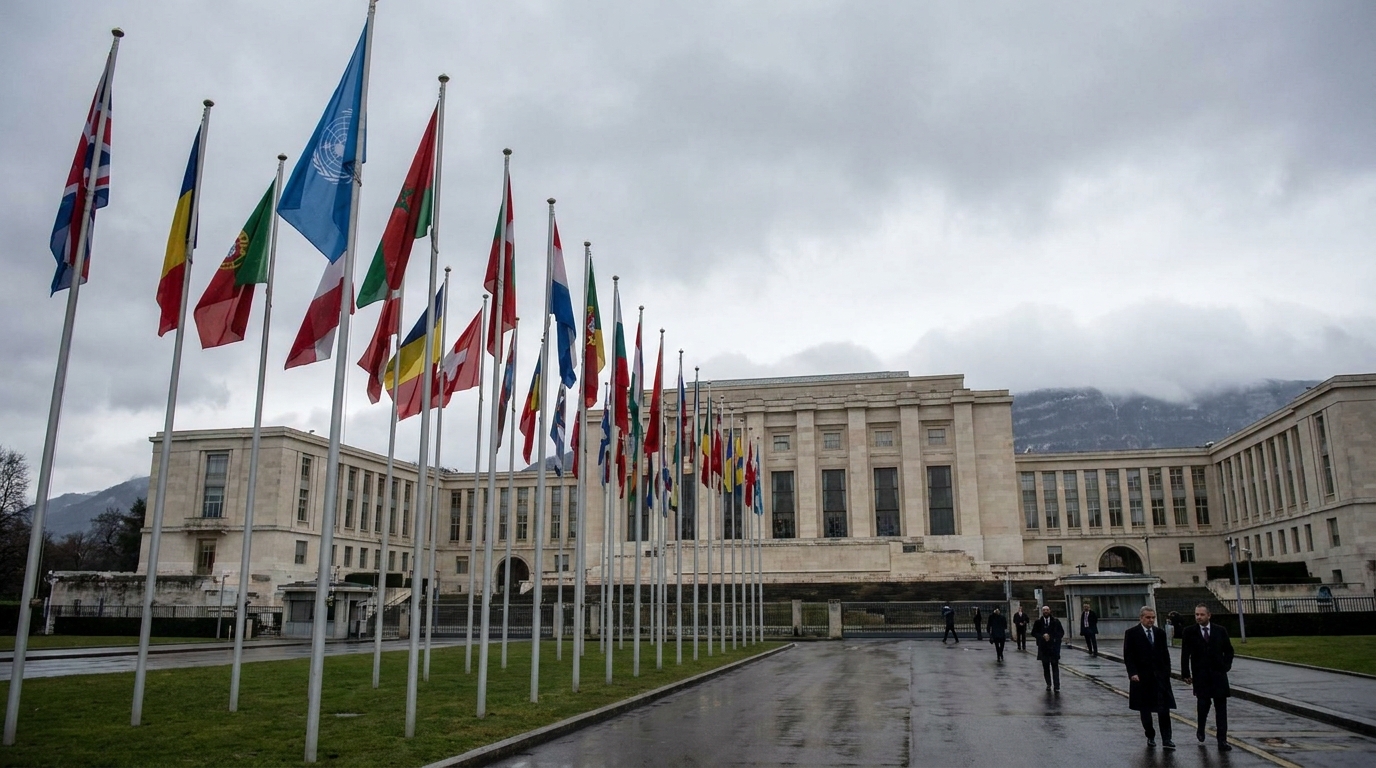
The violence immediately threatened the diplomatic track. Iranian officials delayed sending their delegation to the Swiss resort village of Obbürgen, insisting that the US must rein in Israel and ensure a stable ceasefire in Lebanon before nuclear negotiations could proceed. Iran's Foreign Ministry stated that the US bears responsibility for the Israeli strikes under the terms of the MoU.[3][6][8]

In Washington, the White House announced that Vice President JD Vance, who was scheduled to lead the US delegation, had postponed his departure due to "difficult logistics." Despite Vance's delay, other key US figures, including White House envoy Steve Witkoff and former adviser Jared Kushner, traveled to Switzerland to lay the groundwork for the talks.[1][2][7]
The mechanism of the proposed nuclear deal relies heavily on international oversight. According to briefings Witkoff provided to US lawmakers, the agreement requires Iran to invite the International Atomic Energy Agency (IAEA) to inspect its nuclear sites and uncover enriched material buried under rubble from recent US-Israeli strikes. The MoU also mandates that Iran's stockpile of highly enriched uranium be diluted under international supervision.[7]
The mechanism of the proposed nuclear deal relies heavily on international oversight.
While the Trump administration views the MoU as a major victory that is already calming global oil markets, the Israeli government has reacted with fury. Israeli leaders feel sidelined by a deal that they argue leaves Iran's nuclear infrastructure largely intact while constraining Israel's ability to fight Hezbollah.[1][4]
Israeli Finance Minister Bezalel Smotrich and National Security Minister Itamar Ben-Gvir have publicly attacked the agreement. Prime Minister Benjamin Netanyahu, while avoiding direct criticism of the US president, defied Washington's requests to halt the Lebanon offensive, stating that Israel "will not tolerate attacks on our soldiers or our territory."[4][6]
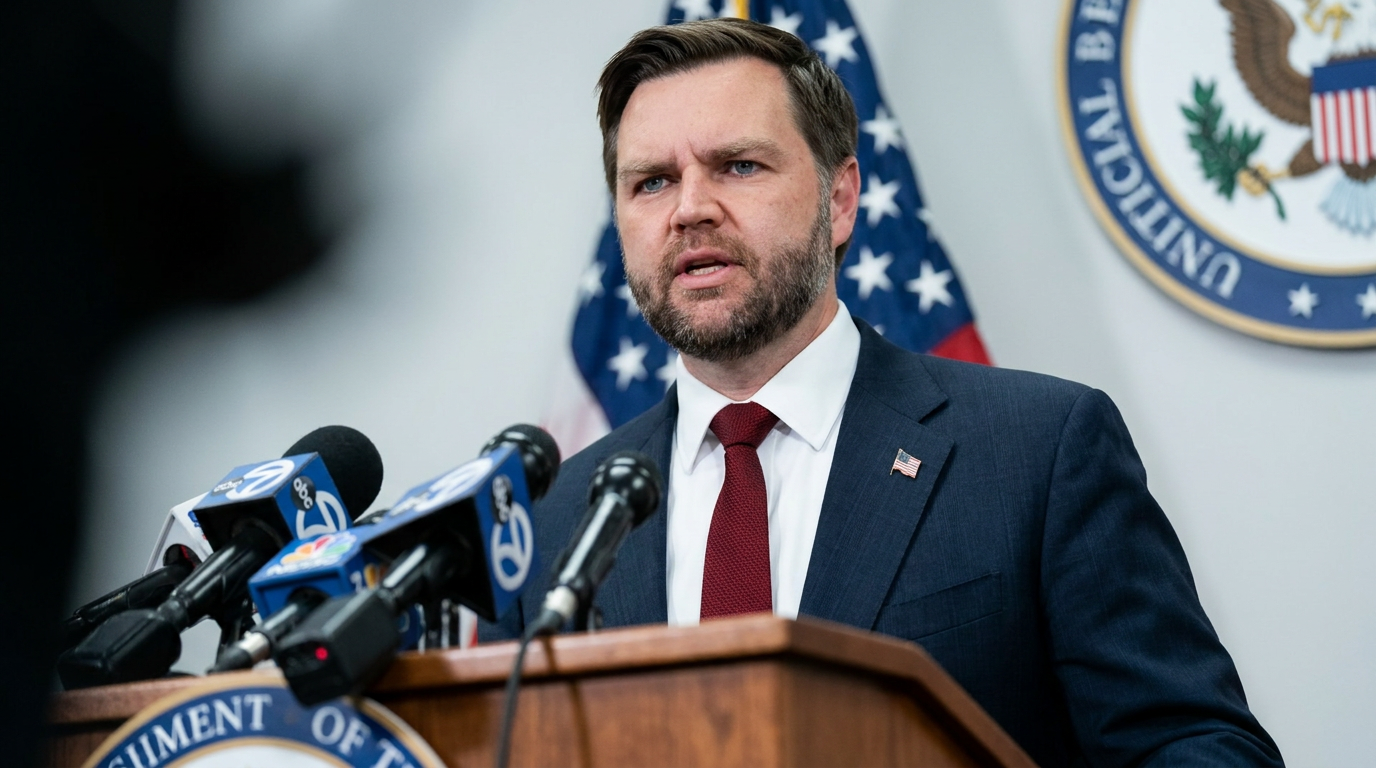
The Israeli opposition prompted a remarkably blunt public rebuke from Vice President Vance. In an interview with The New York Times, Vance dismissed the Israeli reaction as a "freakout" and a "weird panic" rooted in mistrust. He defended the US approach, arguing that the MoU effectively destroys Iran's nuclear weapons program.[4]
"What is your exact proposal? You're a country of nine million people. You can't just kill your way out of solving every single national security problem that you have," Vance said, directing his comments at the Israeli cabinet. He added that any sanctions relief for Tehran would be strictly conditioned on Iran's behavior, including halting its funding of proxy groups.[4]
The diplomatic standoff appeared to ease slightly by Friday afternoon, when US, Qatari, and Iranian mediators helped broker a renewed ceasefire between Israel and Hezbollah. President Trump told NBC News that he had personally spoken with Israeli leadership to urge them to agree to the halt in hostilities.[5][6]

If the Lebanon ceasefire holds, the technical talks in Switzerland are expected to begin early next week. The negotiations will test whether the US and Iran can translate a fragile, digitally signed memorandum into a durable treaty that satisfies Washington's security demands, Tehran's desire for economic relief, and the deep anxieties of US allies in the region.[2][7]
How we got here
Feb-March 2026
The US and Israel launch joint strikes on Iran, sparking a brief regional war.
June 17, 2026
President Trump and Iranian President Pezeshkian digitally sign a 14-point memorandum of understanding.
June 18, 2026
Hezbollah attacks Israeli forces in Lebanon, prompting massive Israeli retaliatory airstrikes.
June 18, 2026
Vice President JD Vance delays his trip to Switzerland as Iran demands an end to the Lebanon fighting.
June 19, 2026
A renewed ceasefire between Israel and Hezbollah is brokered, potentially saving the US-Iran talks.
Viewpoints in depth
The US Administration's View
Washington views the MoU as a pragmatic triumph that secures vital economic interests and neutralizes the nuclear threat.
The Trump administration argues that the memorandum of understanding achieves what years of maximum pressure could not: verifiable caps on Iran's nuclear program and the unimpeded flow of oil through the Strait of Hormuz. Vice President JD Vance has been the primary defender of this approach, arguing that diplomacy backed by the threat of force is the only viable path forward. The administration is deeply frustrated by Israel's military actions in Lebanon, viewing them as a tactical distraction that threatens a massive strategic victory. Vance's assertion that Israel cannot "kill its way out" of its security problems reflects a broader US pivot toward regional stabilization over endless military engagement.
The Israeli Leadership's View
Israel sees the US-Iran deal as a dangerous capitulation that leaves an existential threat intact.
Across the Israeli political spectrum, the US-Iran memorandum is viewed with profound alarm. Leaders argue that by focusing on a 60-day window and immediate economic relief, the US is allowing Iran to preserve the core infrastructure of its nuclear program. Furthermore, Israel feels entirely sidelined by its closest ally, noting that the US negotiated an end to hostilities that directly impacts Israel's northern border without securing binding constraints on Hezbollah. For Prime Minister Benjamin Netanyahu and his hardline cabinet ministers, military force remains the only reliable way to dismantle the "ring of fire" Iran has built around Israel, making them highly resistant to US pressure for a ceasefire.
The Iranian Government's View
Tehran insists that any bilateral peace with Washington must encompass the entire "Axis of Resistance."
Iran approaches the Swiss talks with a strict interpretation of the memorandum's first clause, which calls for an end to military operations on all fronts. Tehran refuses to decouple its own bilateral peace with the US from the fate of its primary regional proxy, Hezbollah. By delaying its delegation's trip to Switzerland, Iran effectively used the promise of nuclear concessions as leverage to force the US to rein in Israel's military campaign in Lebanon. Iranian officials maintain that they are ready to allow IAEA inspections and dilute enriched uranium, but only if the US proves it can deliver a comprehensive regional ceasefire.
What we don't know
- Whether the fragile ceasefire between Israel and Hezbollah will hold long enough for the Swiss talks to conclude.
- Exactly how much enriched uranium Iran currently possesses and whether it will fully comply with IAEA inspections.
- If the US will actually impose consequences on Israel if it resumes strikes in Lebanon during the 60-day negotiation window.
Key terms
- Memorandum of Understanding (MoU)
- A formal agreement between two or more parties that establishes a framework for future negotiations, though it is often not legally binding.
- Strait of Hormuz
- A crucial waterway between the Persian Gulf and the Gulf of Oman through which a significant portion of the world's oil supply passes.
- IAEA
- The International Atomic Energy Agency, the United Nations watchdog responsible for inspecting and verifying countries' nuclear programs.
- Enriched Uranium
- Uranium that has been processed to increase the concentration of the U-235 isotope, which can be used for civilian nuclear power or, at high levels, nuclear weapons.
Frequently asked
Why did JD Vance delay his trip to Switzerland?
Vance postponed his departure due to a severe military escalation between Israel and Hezbollah in Lebanon, which prompted Iran to delay sending its own delegation to the talks.
What does the US-Iran memorandum actually do?
It opens a 60-day window to negotiate a permanent nuclear deal, requires Iran to allow IAEA inspections and dilute enriched uranium, and secures commercial oil traffic through the Strait of Hormuz.
Why is Israel opposed to the US-Iran deal?
Israeli leaders feel sidelined by the negotiations and argue the deal relies on untrustworthy Iranian promises while failing to dismantle Tehran's nuclear infrastructure or its proxy militant groups.
How does the fighting in Lebanon affect the nuclear talks?
Iran insists that the US-Iran MoU requires an end to hostilities on all fronts, meaning Tehran will not proceed with nuclear negotiations while Israel continues to strike Hezbollah in Lebanon.
Sources
Source coverage
8 outlets
3 viewpoints surfaced








[1]Fox NewsUS Administration
US-Iran talks postponed in Switzerland amid Israel-Hezbollah tensions; Hormuz remains a key issue
Read on Fox News →[2]AxiosUS Administration
Trump envoy Witkoff heads to Switzerland ahead of potential Iran talks
Read on Axios →[3]The GuardianIranian Government
US-Iran peace talks in Switzerland cancelled after Israel-Hezbollah violence
Read on The Guardian →[4]The Times of IsraelIsraeli Leadership
Vance slams Israeli 'freakout' over Iran deal: 'You can't just kill your way out of solving' every security problem
Read on The Times of Israel →[5]CBS NewsIsraeli Leadership
Israel and Hezbollah reach ceasefire after deadly strikes test US-Iran deal
Read on CBS News →[6]TIMEIranian Government
Israel and Hezbollah Agree to Cease-Fire After Strikes Risked Derailing U.S.-Iran Talks
Read on TIME →[7]The Washington PostUS Administration
Vance delays trip to Switzerland to lead new US talks with Iran on its nuclear program
Read on The Washington Post →[8]Al JazeeraIranian Government
Iran war live: Tehran says US must ensure Israel ends attacks on Lebanon
Read on Al Jazeera →

Every angle. Every day.
Get news politics stories with full source coverage and perspective breakdowns delivered to your inbox.