
The Invisible Status Symbol: How Net-Zero and Passive House Standards are Redefining Ultra-Luxury Real Estate
High-net-worth buyers are abandoning traditional opulence in favor of absolute energy independence, hospital-grade air quality, and bioclimatic engineering.
By Factlen Editorial Team
- Sustainable Architects & Designers
- Architects view net-zero standards as an opportunity to merge high-performance engineering with aesthetic grandeur.
- Luxury Real Estate Brokerages
- Brokerages emphasize the shifting definition of status and the long-term financial resilience of sustainable properties.
- Building Science Advocates
- Building scientists focus on the rigorous, quantifiable metrics required to achieve true energy independence.
What's not represented
- · Traditional Luxury Builders
- · Municipal Grid Operators
Why this matters
The ultra-luxury real estate market acts as the research and development arm for the broader housing industry. The high-performance insulation, ventilation, and solar technologies being perfected in today's multi-million-dollar estates will eventually become the affordable standard for everyday homes.
Key points
- Ultra-luxury homebuyers are prioritizing absolute energy independence, perfect air quality, and acoustic silence over traditional opulent finishes.
- The Passive House standard, which requires a hermetically sealed building envelope, is being adapted for massive, glass-heavy luxury estates.
- Advanced Heat Recovery Ventilation (HRV) systems provide continuous, HEPA-filtered fresh air without losing internal heat.
- Airtight construction offers unparalleled resilience against extreme weather events, power grid failures, and wildfire smoke.
- The high-end real estate sector is acting as an R&D incubator, funding the development of sustainable building technologies for the broader market.
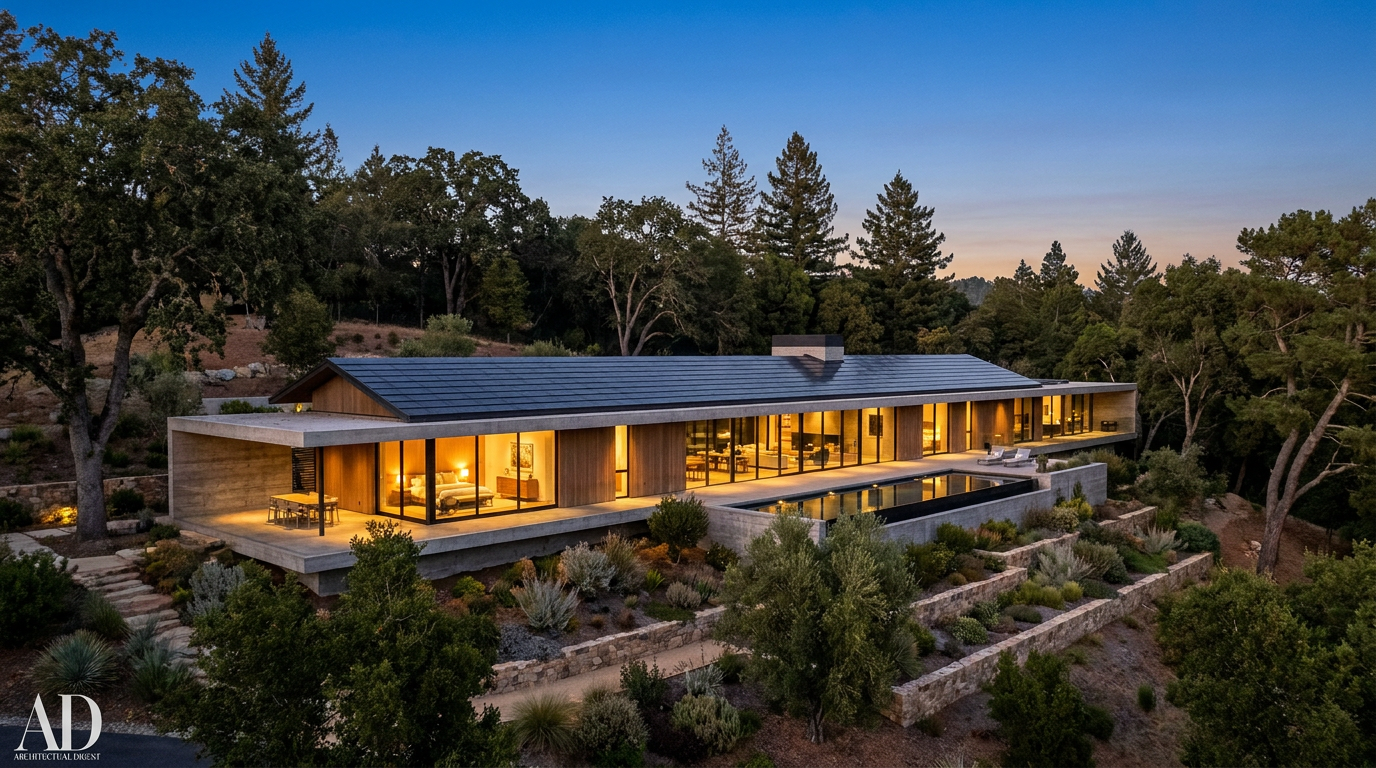
In the highest echelons of the 2026 real estate market, the ultimate status symbol is no longer visible. It is not a gold-leaf ceiling, a sprawling square footage, or an infinity pool. Instead, the defining luxury of the modern era is absolute silence, hospital-grade air quality, and total energy independence. Ultra-high-net-worth buyers are increasingly demanding homes that operate entirely off the grid without sacrificing an ounce of architectural grandeur. This evolution represents a fundamental shift in how the world's wealthiest individuals define exclusivity, moving away from conspicuous consumption toward invisible, high-performance engineering.[2][3]
This shift has propelled 'net-zero' and 'Passive House' standards from niche ecological movements into the baseline expectations for trophy assets. A net-zero home produces as much energy as it consumes over a year, but achieving this in a sprawling, 10,000-square-foot estate requires a monumental feat of engineering. The goal is to create a living space that feels deeply connected to its natural environment while remaining entirely insulated from its extremes. For today's elite buyers, a home that relies on a vulnerable municipal power grid is increasingly viewed as a liability rather than a luxury.[2][7]
At the core of this high-performance luxury is the Passive House standard. Originally developed by physicists in Germany during the 1990s, the concept was long considered too restrictive for luxury design, which traditionally favors massive, inefficient walls of glass. However, advances in building science have allowed architects to scale these principles to opulent proportions without compromising the rigorous metrics required for certification. The standard demands an almost obsessive attention to detail during the construction phase, fundamentally altering how a home is assembled from the foundation up.[5][8]
The foundation of a Passive House is its airtight building envelope. Unlike traditional homes, which leak conditioned air through thousands of microscopic gaps around doors, windows, and joints, a passive estate is sealed with surgical precision. This continuous insulation layer eliminates 'thermal bridges'—areas where heat typically escapes—ensuring that the home retains its internal temperature regardless of the weather outside. The result is a structure that requires up to ninety percent less energy for heating and cooling than a standard building.[5][8]

To maintain the panoramic views expected in ultra-luxury properties, builders utilize triple-pane, argon-filled glazing. These high-performance windows are strategically oriented to capture solar heat during the winter while utilizing deep architectural overhangs to block the harsh summer sun. This bioclimatic approach means the house actively works with the local climate rather than fighting it with brute-force air conditioning. The engineering behind these massive glass panels allows homeowners to enjoy floor-to-ceiling vistas without the thermal penalties that traditionally accompany large windows.[6][7]
Because the home is hermetically sealed, it requires a mechanical 'lung' to breathe. This is achieved through a Heat Recovery Ventilation (HRV) or Energy Recovery Ventilation (ERV) system. The system continuously draws in fresh outdoor air, filters it through HEPA-grade screens, and uses the outgoing stale air to heat or cool the incoming draft. The result is a constant supply of fresh, temperature-controlled air without the energy loss of opening a window, ensuring the home never feels stuffy despite its airtight construction.[4][8]
Because the home is hermetically sealed, it requires a mechanical 'lung' to breathe.
The appeal of this system extends far beyond energy efficiency; it is a profound wellness amenity. The rigorous filtration removes pollen, pollutants, and allergens, creating an indoor environment that actively supports respiratory health. Furthermore, the thick insulation and triple-glazed windows provide near-perfect acoustic isolation, transforming the home into a silent sanctuary shielded from exterior noise. For buyers seeking a retreat from the chaotic pace of modern life, this engineered tranquility is often cited as the most compelling feature of passive design.[2][4]
Resilience is another major driver of this trend, particularly in regions prone to climate volatility. In fire-prone areas like California and British Columbia, the airtight envelope of a Passive House prevents toxic wildfire smoke from infiltrating the living space. During extreme weather events, rolling blackouts, or municipal power grid failures, these homes can maintain a comfortable internal temperature for days without active heating or cooling, offering a level of security and self-sufficiency that traditional luxury homes simply cannot match.[4]
To achieve true net-zero status, the drastically reduced energy demand of the Passive House is met with on-site renewable generation. However, the aesthetic demands of luxury real estate dictate that these systems remain entirely invisible to the naked eye. Traditional, bulky solar panels are replaced by sleek, integrated solar roof tiles that mimic the appearance of natural slate or terracotta. Meanwhile, subterranean geothermal loops provide highly efficient radiant heating and cooling without disrupting the meticulously curated landscaping that surrounds the estate, ensuring the property remains visually pristine.[2][6]

The interior design of these estates reflects a broader shift toward 'quiet luxury' and biophilic design principles. Highly polished, synthetic finishes are being swapped for tactile, natural materials with low embodied carbon. Rammed earth walls, reclaimed exotic woods, and natural stone are favored not only for their aesthetic warmth but for their functional ability to act as thermal mass, absorbing heat during the day and releasing it at night. This integration of form and function creates spaces that are both visually stunning and deeply grounded in their natural context.[6][7]
Despite the clear benefits, constructing a net-zero luxury estate presents significant logistical challenges. The precision required to achieve Passive House certification leaves absolutely no room for error, demanding highly specialized builders and rigorous pressure testing throughout the construction process. Balancing the client's desire for sprawling, open-concept layouts with the strict energy models of passive design requires innovative structural engineering. Architects must carefully calculate the thermal dynamics of every single room, often pushing architectural firms to the very limits of modern building science to deliver a flawless final product.[2][8]
There is also a notable financial premium attached to this level of performance. While the cost gap has narrowed significantly in recent years, building to these exacting standards still commands a ten to twenty percent premium over traditional luxury construction. Yet, for the elite buyers driving this market, the upfront cost is secondary to the long-term value. These properties command higher resale values, offer complete independence from volatile energy grids, and require significantly less maintenance over their lifespan, making them highly attractive long-term assets.[4][5]

The rise of sustainable ultra-luxury is not merely a vanity project for the wealthy; it serves as a crucial testing ground for the broader construction industry. Just as the automotive industry uses Formula 1 racing to develop technologies that eventually reach consumer vehicles, the luxury real estate sector is funding the research and development of high-performance building materials. The massive budgets of these projects allow manufacturers to refine their products and scale their operations without the immediate pressure of mass-market pricing.[1][3]
As economies of scale continue to bring down the cost of triple-pane glass, advanced heat recovery systems, and low-carbon concrete, the innovations perfected in today's multi-million-dollar estates will inevitably trickle down to the mainstream housing market. The techniques used to seal a sprawling mansion today will be used to build affordable, energy-efficient suburban homes tomorrow. Ultimately, the 2026 luxury buyer is not just purchasing a spectacular home; they are actively investing in the blueprint for the future of sustainable living, proving that environmental responsibility and uncompromising elegance can seamlessly coexist.[1][3]
How we got here
1990
Physicist Wolfgang Feist develops the first Passivhaus standard in Germany, focusing on ultra-low energy consumption.
2015
Passive House principles begin gaining traction in North America, primarily in boutique urban developments.
2022
High-net-worth buyers begin prioritizing wellness and air quality in the wake of global health and climate concerns.
2026
Net-zero and Passive House standards become the baseline expectation for new ultra-luxury trophy estates.
Viewpoints in depth
Sustainable Architects & Designers
Architects view net-zero standards as an opportunity to merge high-performance engineering with aesthetic grandeur.
For high-end architectural firms, the challenge of 2026 is proving that sustainability does not require aesthetic compromise. They argue that the constraints of Passive House design—such as the need for thermal mass and strategic solar orientation—actually drive better, more thoughtful architecture. By utilizing bioclimatic principles, architects are designing homes that respond dynamically to their environment, turning the building itself into a living, breathing organism rather than a static box.
Luxury Real Estate Brokerages
Brokerages emphasize the shifting definition of status and the long-term financial resilience of sustainable properties.
Real estate professionals note a distinct demographic shift among ultra-high-net-worth buyers, who now view massive carbon footprints as a liability rather than a flex. Brokerages highlight that net-zero homes command significant market premiums and spend less time on the market. Furthermore, they point to the 'invisible amenities'—such as hospital-grade air quality and acoustic perfection—as the ultimate selling points for clients who already have every material luxury.
Building Science Advocates
Building scientists focus on the rigorous, quantifiable metrics required to achieve true energy independence.
Advocates from organizations like the Passive House Institute stress that 'greenwashing' is rampant in real estate, making strict certification essential. They argue that true sustainability is not achieved by simply adding solar panels to an inefficient home, but by fundamentally redesigning the building envelope. For these experts, the luxury market serves as a vital proving ground for advanced materials and ventilation systems that will eventually become standard in all residential construction.
What we don't know
- How quickly the cost of Passive House materials will drop for the middle-class housing market.
- Whether municipal zoning laws will adapt fast enough to accommodate off-grid water and power systems in urban areas.
Key terms
- Passive House (Passivhaus)
- A rigorous, voluntary standard for energy efficiency in a building, which reduces the building's ecological footprint and requires ultra-low energy for space heating or cooling.
- Thermal Bridge
- An area in a building's envelope that has significantly higher heat transfer than the surrounding materials, leading to energy loss.
- Heat Recovery Ventilation (HRV)
- A system that continuously replaces stale indoor air with fresh outdoor air while capturing the heat from the outgoing air to warm the incoming draft.
- Bioclimatic Architecture
- The design of buildings and spaces based on local climate, aimed at providing thermal and visual comfort utilizing solar energy and other environmental sources.
- Embodied Carbon
- The total greenhouse gas emissions generated to produce a built asset, including the extraction, manufacture, and transport of building materials.
Frequently asked
What makes a home 'net-zero'?
A net-zero home produces as much energy as it consumes over the course of a year, typically by combining extreme energy efficiency with on-site renewable power generation like solar or geothermal.
How is a Passive House different from a regular eco-friendly home?
A Passive House adheres to strict, quantifiable building standards focused on an airtight envelope, super-insulation, and heat recovery ventilation, reducing heating and cooling energy use by up to 90%.
Do Passive Houses feel stuffy because they are airtight?
No. They use advanced Heat Recovery Ventilation (HRV) systems that continuously cycle in fresh, filtered outdoor air, resulting in indoor air quality that is significantly better than a traditional drafty home.
Are net-zero luxury homes completely off the grid?
While they generate enough power to offset their usage, most remain connected to the municipal grid to draw power during peak times and feed excess energy back, though some incorporate large battery systems for total autonomy.
Sources
Source coverage
8 outlets
3 viewpoints surfaced








[1]Factlen Editorial TeamBuilding Science Advocates
Synthesis by Factlen editorial team
Read on Factlen Editorial Team →[2]Ralston ArchitectsSustainable Architects & Designers
Net-Zero Luxury Homes: The Future of High-End Architecture
Read on Ralston Architects →[3]Spain Sotheby's International RealtyLuxury Real Estate Brokerages
Sustainable Design: A New Paradigm in Luxury Architecture
Read on Spain Sotheby's International Realty →[4]Miami Real EstateLuxury Real Estate Brokerages
Passive House Construction: The New Standard in Luxury Real Estate
Read on Miami Real Estate →[5]William Pitt Sotheby'sLuxury Real Estate Brokerages
The Rise of the Passive House in Luxury Markets
Read on William Pitt Sotheby's →[6]Sculptform DesignSustainable Architects & Designers
6 Key Luxury Residential Design Trends for 2026
Read on Sculptform Design →[7]Dreamer Real EstateLuxury Real Estate Brokerages
Sustainable Luxury: The New High-End Buyers' Desire
Read on Dreamer Real Estate →[8]Passive House InstituteBuilding Science Advocates
Passive House Requirements and Standards
Read on Passive House Institute →
Every angle. Every day.
Get real estate stories with full source coverage and perspective breakdowns delivered to your inbox.