
Office-to-Residential Conversions Reach Record Scale as Developers Reshape Empty Downtowns
The national pipeline for office-to-apartment conversions has quadrupled since 2022, driven by collapsed commercial property values and aggressive municipal zoning reforms.
By Factlen Editorial Team
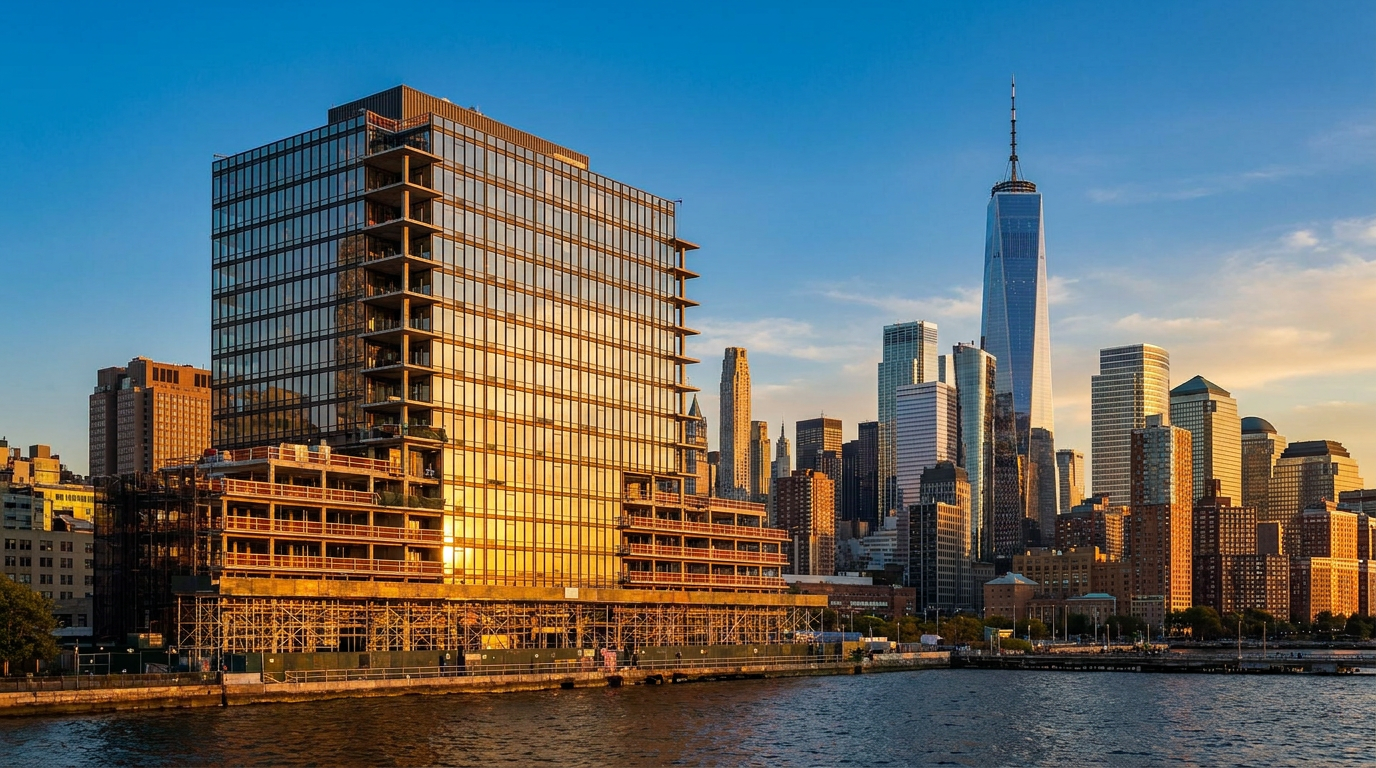
- Commercial Real Estate Developers
- See office conversions as a primary growth strategy and financial necessity due to collapsed commercial property values.
- Urban Planners & Municipalities
- View adaptive reuse as a vital urban renewal tool to restore foot traffic, generate new activity, and solve chronic housing shortages.
- Sustainability Advocates
- Champion adaptive reuse for its massive reduction in embodied carbon emissions compared to ground-up new construction.
- Housing & Policy Analysts
- Cautiously optimistic about the added supply but concerned that the high costs of conversion primarily yield luxury studios rather than affordable family homes.
What's not represented
- · Low-income families seeking multi-bedroom affordable housing
- · Small business owners reliant on traditional daytime office worker foot traffic
Why this matters
As remote work permanently alters the corporate landscape, the successful conversion of empty office towers into housing offers a rare double-victory for American cities: breathing life back into hollowed-out downtowns while simultaneously chipping away at a historic national housing shortage.
Key points
- The national pipeline for office-to-residential conversions has surged to 90,300 units in 2026, nearly four times the volume seen in 2022.
- Office conversions now account for 47 percent of all adaptive reuse real estate projects across the United States.
- New York City leads the nation with over 16,000 units planned, driven by new tax incentives and fast-tracked zoning approvals.
- A 45 percent drop in post-pandemic office building sale prices has made the expensive retrofitting process financially viable for developers.
- Only about 24 percent of the national office inventory is physically suitable for conversion due to the lack of natural light in deep floor plates.
- Renovating existing structures saves up to 75 percent of the embodied carbon emissions compared to ground-up new construction.
For years, the narrative surrounding the post-pandemic American downtown was defined by the "doom loop"—a cycle of empty office towers, plummeting property values, and shuttered street-level retail. But in 2026, the evidence points to a structural recalibration rather than a collapse. The long-theorized concept of adaptive reuse has transitioned from a niche architectural experiment into a primary growth strategy for the commercial real estate sector. The central claim driving urban policy today is that office-to-residential conversions have finally reached a scalable tipping point, offering a dual solution to record-high office vacancies and chronic housing shortages.
The strongest evidence for this shift is found in the sheer volume of the national development pipeline. Data compiled by Yardi Matrix and RentCafe reveals that 90,300 apartment units were actively in the conversion process at the start of 2026. This represents a 28 percent year-over-year increase and is nearly four times higher than the conversion volume recorded in 2022. Across the broader real estate landscape, office-to-residential projects now account for 47 percent of all future adaptive reuse developments, far outpacing hotel and industrial conversions.[1][4]
Geographically, the evidence shows this trend is highly concentrated in major metropolitan areas where the housing crisis is most acute. New York City leads the nation by a wide margin, with 16,358 future converted units in its pipeline—a 97 percent increase from the previous year. Washington, D.C., follows with nearly 8,500 units, while Chicago, Los Angeles, and Dallas each have roughly 4,000 units underway. In these urban cores, the return of government and corporate workers has stabilized demand for downtown living, even as demand for traditional desk space remains permanently reduced.[1]

A closer look at the New York market provides compelling evidence of how rapidly the pace is accelerating. According to a recent report by Cushman & Wakefield, office-to-residential conversion starts in the city more than doubled from 1.6 million square feet in 2023 to 3.3 million in 2024. In just the first eight months of 2025, developers commenced work on 4.1 million square feet of conversions, surpassing the entirety of the previous year. The firm notes that an additional 8.8 million square feet of projects are proposed for the post-2025 period, indicating that the momentum is durable.[2]
The economic mechanism enabling this surge is rooted in a severe market correction. For years, the primary barrier to adaptive reuse was the high acquisition cost of commercial real estate. However, the sustained drop in office demand has forced a painful but necessary reset in property valuations. The Office of the New York City Comptroller reports that the post-pandemic sale prices for office buildings slated for conversion have dropped by 45 percent, falling to an average of $276 per gross square foot.[3]
This dramatic reduction in acquisition costs has fundamentally altered the math for developers. When the underlying asset can be purchased at a steep discount, the heavy capital expenditures required to retrofit a commercial structure become financially viable. Industry analysts note that in the current lending environment, which is characterized by cautious underwriting and elevated borrowing costs, repurposing an existing shell offers a faster path to revenue generation than navigating the years-long entitlement phases of ground-up construction.[3][5]

This dramatic reduction in acquisition costs has fundamentally altered the math for developers.
Beyond market forces, the evidence shows that aggressive policy interventions are acting as a major catalyst. Municipalities are actively dismantling the regulatory barriers that previously stalled conversion projects. In New York, the implementation of the 467-m property tax exemption and the Office Conversion Accelerator Program have provided the financial and bureaucratic predictability developers require. Similarly, cities across the country are streamlining zoning approvals and offering infrastructure support to bypass the red tape that typically plagues new construction.[2][3][5]
There is also strong evidence supporting the environmental benefits of this trend. The American Institute of Architects calculates that renovating an existing structure saves between 50 and 75 percent of the embodied carbon emissions compared to demolishing and building anew. Because the concrete and steel are already in place, adaptive reuse allows developers to meet stringent Environmental, Social, and Governance (ESG) goals while avoiding the massive carbon footprint associated with manufacturing and transporting new heavy materials.[6]
However, the evidence supporting a universal transformation of the office market remains weak. A significant degree of uncertainty surrounds the physical viability of the broader commercial inventory. Modern office buildings, particularly those constructed after the 1970s, often feature massive, deep floor plates designed for cubicle farms. Because residential building codes require every bedroom to have a window, these deep interiors are incredibly difficult to convert without cutting expensive light wells through the center of the structure.[1][4]
Data from CommercialEdge highlights this limitation, estimating that only about 1.9 billion square feet of office space—roughly 24 percent of the total national inventory—is physically and economically suitable for residential conversion. Buildings with smaller floor plates, operable windows, and manageable plumbing infrastructure are prime candidates, but the vast majority of vacant suburban office parks and massive glass monoliths will likely never become housing.[4]

Another area of transparent uncertainty is the long-term fiscal impact on municipal budgets. Commercial properties have historically been the golden goose of city tax revenues, assessed at higher rates than residential buildings. The New York City Comptroller’s office warns that the current pipeline of conversions could remove up to 16 million rentable square feet of office supply from Manhattan alone. While this absorbs obsolete space, it remains unclear whether the new residential tax base and the localized economic activity generated by new downtown residents will fully offset the loss of commercial property taxes.[3]
Finally, the evidence regarding affordability is mixed. Because the structural retrofitting of plumbing, HVAC, and electrical systems is highly complex and expensive, developers must command high rents to achieve a return on investment. Consequently, data from completed conversions indicates that the resulting unit mix is heavily skewed toward market-rate or luxury studios and one-bedroom apartments. While this increases the overall housing supply, housing advocates argue it does little to directly serve families in need of affordable, multi-bedroom homes.[3][7]

Despite these limitations and uncertainties, the data overwhelmingly confirms that adaptive reuse is no longer a fringe concept. By transforming underutilized commercial assets into vibrant, mixed-use communities, cities are actively rewriting the blueprint for the 21st-century downtown. While it may not be a panacea for every empty office building or the entirety of the housing crisis, the 2026 conversion boom represents a highly effective, evidence-backed tool for urban renewal.[5][7]
How we got here
Early 2020
The COVID-19 pandemic triggers a massive shift to remote work, emptying downtown office buildings nationwide.
2022
Office-to-residential conversions begin to gain traction, with roughly 22,000 units entering the development pipeline.
2024
New York City introduces the 467-m property tax exemption and the Office Conversion Accelerator Program to incentivize developers.
Early 2026
The national conversion pipeline surges to over 90,000 units, representing 47 percent of all adaptive reuse projects.
Viewpoints in depth
Commercial Real Estate Developers
Driven by collapsed office values and high borrowing costs, developers view conversions as the most viable path to revenue.
For the development community, the pivot to residential conversions is largely a matter of financial survival and opportunistic math. With post-pandemic office building values dropping by as much as 45 percent, the initial acquisition costs have finally fallen low enough to offset the massive capital expenditures required for retrofitting. In an environment of elevated interest rates and cautious lending, developers argue that repurposing an existing shell offers a significantly faster speed-to-market than navigating the years-long entitlement and construction phases of a ground-up build.
Urban Planners & Municipalities
City officials see adaptive reuse as a comprehensive tool to save hollowed-out downtowns and boost housing supply.
Municipal governments are aggressively championing these projects to reverse the 'doom loop' of empty streets and failing ground-floor retail. By offering tax incentives like New York's 467-m program and fast-tracking zoning approvals, planners hope to transform single-use business districts into vibrant, 24-hour mixed-use neighborhoods. However, fiscal watchdogs within these municipalities remain cautious, noting that permanently removing millions of square feet of commercial space could negatively impact long-term property tax revenues, which are traditionally higher for office buildings than for residential units.
Sustainability Advocates
Environmental groups emphasize the massive carbon savings achieved by preserving existing concrete and steel structures.
From an environmental perspective, the greenest building is the one that is already built. Sustainability advocates point out that the manufacturing and transportation of new concrete and steel account for a massive portion of global greenhouse gas emissions. By preserving the core and shell of an existing office tower, adaptive reuse projects can save between 50 and 75 percent of the embodied carbon emissions associated with new construction, making these conversions a critical component of urban climate strategies.
What we don't know
- Whether the influx of new residential property taxes will fully offset the loss of higher-yielding commercial property taxes for municipal budgets.
- How the market will absorb the sudden surge of predominantly studio and one-bedroom apartments in downtown cores.
- If the pace of conversions will slow down once the most easily adaptable, prime-candidate buildings are exhausted.
Key terms
- Adaptive Reuse
- The process of repurposing an existing building for a use other than what it was originally designed for, such as turning an office into apartments.
- Floor Plate
- The total rentable area on a single floor of a building, which dictates how easily natural light can reach the interior spaces.
- Embodied Carbon
- The total greenhouse gas emissions generated by the manufacturing, transportation, and installation of building materials.
- Entitlement Process
- The legal and bureaucratic process of obtaining the necessary approvals and zoning variances from a municipality to develop a property.
Frequently asked
Can any empty office building be turned into apartments?
No. Modern office buildings often have massive, deep floor plates that prevent natural light from reaching the interior. Because residential codes require bedrooms to have windows, only about 24 percent of the national office inventory is physically suitable for conversion.
Are these new converted apartments affordable?
Generally, no. The high cost of retrofitting commercial plumbing, HVAC, and electrical systems means developers typically must charge market-rate or luxury rents to make the projects financially viable, though some cities offer tax breaks in exchange for a percentage of affordable units.
Is this trend happening everywhere in the US?
While it is a national trend, it is heavily concentrated in major metropolitan areas with severe housing shortages and high office vacancies, such as New York City, Washington D.C., Chicago, and Los Angeles.
Sources
Source coverage
7 outlets
4 viewpoints surfaced






[1]RentCafeCommercial Real Estate Developers
Adaptive Reuse Surge: Office-to-Residential Projects Nearly Quadruple Since 2022
Read on RentCafe →[2]Cushman & WakefieldCommercial Real Estate Developers
Office to Residential Conversions Surge to Record Levels in New York City
Read on Cushman & Wakefield →[3]Office of the New York City ComptrollerUrban Planners & Municipalities
Office-to-Residential Conversions in NYC: Economics and Fiscal Estimates
Read on Office of the New York City Comptroller →[4]Scotsman GuideCommercial Real Estate Developers
Office-to-residential conversions gain traction
Read on Scotsman Guide →[5]New England Real Estate JournalCommercial Real Estate Developers
Navigating the next phase: How adaptive reuse will shape real estate in 2026
Read on New England Real Estate Journal →[6]American Institute of ArchitectsSustainability Advocates
Sustainability and Adaptive Reuse
Read on American Institute of Architects →[7]Factlen Editorial TeamHousing & Policy Analysts
Synthesis by Factlen editorial team
Read on Factlen Editorial Team →
Every angle. Every day.
Get real estate stories with full source coverage and perspective breakdowns delivered to your inbox.