
The 'Exercise Pill' Moves from Mice to Humans: Inside the Race for Metabolic Mimetics
New clinical data suggests experimental drugs designed to mimic the cellular effects of a workout are finally showing promise in human trials, offering a potential breakthrough for longevity and metabolic health.
By Factlen Editorial Team
- Longevity Biotech Developers
- Argue that targeting fundamental metabolic pathways will yield multi-disease preventatives.
- Metabolic Researchers
- Focus on the distinct molecular mechanisms that replicate endurance adaptations.
- Clinical Skeptics
- Caution that decades of metabolic drug failures in humans warrant tempered expectations.
What's not represented
- · Patient advocacy groups for mobility-impaired individuals
- · Sports anti-doping agencies
Why this matters
For millions of older adults and individuals with mobility impairments, the inability to exercise accelerates metabolic decline and frailty. If exercise mimetics prove safe and effective in humans, they could fundamentally change how we treat obesity, prevent muscle wasting, and extend healthy lifespans.
Key points
- Exercise mimetics are experimental drugs designed to replicate the metabolic benefits of physical activity without mechanical strain.
- Cambrian Biopharma recently presented positive Phase 1b human data for ATX-304, an AMPK network activator.
- Other compounds, such as SLU-PP-332 and MOTS-c, target different cellular pathways to trick the body into an endurance state.
- These drugs are increasingly viewed as potential companion therapies to GLP-1s to prevent muscle loss during rapid weight reduction.
- While preclinical data is highly promising, translating metabolic success from mice to humans remains a significant clinical hurdle.
For decades, the concept of 'exercise in a pill' was dismissed as science fiction—a metabolic impossibility that ignored the complex, systemic stress of physical exertion. But the biological understanding of how movement alters cellular chemistry has advanced rapidly, giving rise to a new class of experimental drugs known as exercise mimetics.[6]
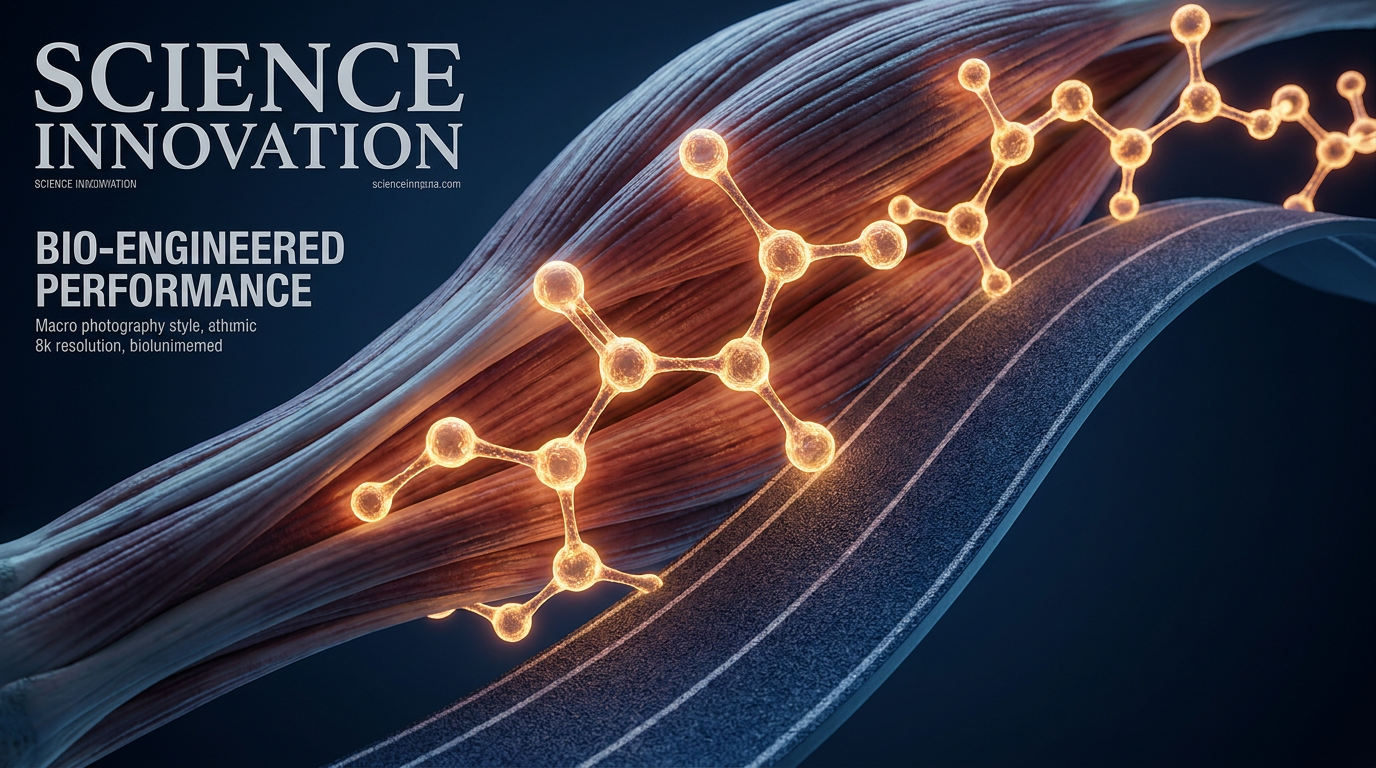
Rather than artificially elevating heart rate with stimulants, these compounds target the specific genetic and metabolic switches that normally flip only after miles of running or hours of fasting. By chemically tricking the body into an endurance state, they force cells to burn fat, clear glucose, and build mitochondrial density while the patient remains entirely at rest.[1][6]
The field reached a critical milestone in June 2026 at the American Diabetes Association's 86th Scientific Sessions. Cambrian Biopharma presented the first human clinical data for ATX-304, an investigational drug designed to activate the AMPK network. The Phase 1b results suggest that a mechanism long pursued by longevity researchers may finally be translating from theory into human biology, offering a potential lifeline for patients unable to exercise due to age, obesity, or mobility impairments.[2][5]
To understand the evidence behind these drugs, one must look at the cellular thermostat: AMP-activated protein kinase (AMPK). When a cell's energy levels drop—as they do during intense physical activity—AMPK acts as an emergency sensor. It shuts down energy-consuming processes and commands the cell to absorb glucose from the blood and mobilize stored fat for fuel.[2][5]

In youth, this system is highly responsive. But as humans age, the innate ability to activate AMPK steadily declines, taking with it the metabolic flexibility that keeps tissues healthy and resilient. ATX-304 is a peripherally restricted, oral small molecule that forces this AMPK network back online, essentially mimicking the cellular energy deficit of a strenuous workout without requiring the mechanical strain.[2][5]
Preclinical data for ATX-304 demonstrated muscle-sparing weight loss in obese animals, alongside major improvements in exercise endurance and the reversal of multiple cardiometabolic markers. The recent human data validates that the drug safely activates this pathway in people, setting the stage for Phase 2 trials aimed at reducing body weight by mobilizing lipids from adipose tissue while increasing overall energy expenditure.[2][5]
While AMPK activation represents one major therapeutic avenue, a separate class of exercise mimetics targets a different set of metabolic regulators: the estrogen-related receptors (ERRs). Despite their name, these nuclear receptors do not bind estrogen; instead, they act as transcription factors that govern mitochondrial biogenesis and fatty acid oxidation in skeletal muscle.[4]
The most prominent compound in this class is SLU-PP-332, a synthetic small molecule developed as a research tool. A landmark 2025 study published in the Proceedings of the National Academy of Sciences demonstrated that SLU-PP-332 acts as a pan-agonist, simultaneously activating ERRα, ERRβ, and ERRγ.[4]
The most prominent compound in this class is SLU-PP-332, a synthetic small molecule developed as a research tool.
In mouse models, this pan-activation reproduced the downstream genetic program of aerobic exercise. The treated mice exhibited enhanced treadmill endurance, reduced fat mass, and improved insulin sensitivity. However, the evidence here remains strictly preclinical; as of 2026, SLU-PP-332 has no FDA approval, no Investigational New Drug (IND) application, and no human clinical data, leaving open questions about potential cardiovascular side effects like increased resting heart rate.[4][6]

A third distinct biological route involves mitochondrial-derived peptides, most notably MOTS-c. Unlike small molecules that target nuclear receptors, MOTS-c is a 16-amino-acid peptide encoded directly within the mitochondrial genome.[3][7]
Foundational research published in Cell Metabolism revealed that injecting MOTS-c into mice fed a high-fat diet prevented obesity and insulin resistance, not by suppressing appetite, but by increasing heat production and glucose uptake in muscle tissue. A subsequent study in Nature Communications confirmed that the peptide acts as an exercise-induced regulator, boosting physical endurance and protecting against age-dependent physical decline.[3][7]
Because MOTS-c operates at the level of AMPK and insulin signaling, it has garnered significant attention in functional medicine and longevity circles. Yet, like SLU-PP-332, it remains an experimental research peptide. While early human case series suggest it is well-tolerated, rigorous, large-scale clinical trials are still required to prove its long-term safety and efficacy in humans.[3][6][7]
The sudden acceleration of exercise mimetic research in 2026 is inextricably linked to the explosion of GLP-1 receptor agonists like semaglutide and tirzepatide. While GLP-1 drugs are highly effective at inducing weight loss by suppressing appetite, they carry a significant clinical liability: up to 40% of the weight lost can be lean muscle mass.[1][5]
This phenomenon, known as sarcopenic obesity, poses a severe risk to older adults, for whom muscle loss directly correlates with frailty, falls, and mortality. Exercise mimetics are increasingly viewed by the biopharma industry not as competitors to GLP-1s, but as the missing half of the metabolic equation.[1][5]

If a drug like ATX-304 or a future ERR agonist can be co-administered with an appetite suppressant, it could theoretically instruct the body to preserve skeletal muscle and prioritize fat oxidation, resulting in high-quality, muscle-sparing weight loss. This synergy is currently driving hundreds of millions of dollars in venture capital toward longevity biotechs.[1][2][5]
Despite the immense promise, the translation of metabolic therapies from rodents to humans is notoriously fraught. Mice have vastly different metabolic rates and thermal regulation systems than humans, meaning that a compound that melts fat off a mouse may barely move the needle in a clinical trial.[4][6]
Furthermore, forcing the body into a perpetual state of 'exercise' carries theoretical risks. Chronic AMPK activation or continuous mitochondrial uncoupling could potentially lead to cellular exhaustion, cardiac stress, or unintended metabolic imbalances over decades of use. The safety bar for a drug intended to be taken by healthy individuals to prevent aging is exceptionally high.[1][4][6]
Nevertheless, the successful Phase 1b readout for ATX-304 marks a turning point. For the first time, the longevity field has human data validating a core mechanism of metabolic aging. If these compounds survive the gauntlet of Phase 2 and Phase 3 trials, they will fundamentally redefine preventative medicine—offering the molecular benefits of a marathon to those who need it most.[1][2][5][6]
How we got here
2015
Researchers at USC characterize MOTS-c, demonstrating its ability to prevent diet-induced obesity in mice.
2021
Studies in Nature Communications confirm MOTS-c boosts physical endurance and insulin sensitivity.
2023
Cambrian Biopharma launches Amplifier Therapeutics to advance the AMPK activator ATX-304 into clinical trials.
2025
PNAS publishes landmark research on SLU-PP-332, proving it mimics aerobic exercise gene programs via ERR pan-activation.
June 2026
Cambrian presents positive Phase 1b human data for ATX-304 at the American Diabetes Association's 86th Scientific Sessions.
Viewpoints in depth
Longevity Biotech Developers
Argue that targeting fundamental metabolic pathways will yield multi-disease preventatives.
Companies like Cambrian Biopharma view exercise mimetics not just as weight-loss aids, but as foundational anti-aging therapies. By restoring the AMPK network's youthful responsiveness, they believe it is possible to prevent the onset of cardiometabolic diseases, preserve organ function, and extend human healthspan. Their strategy involves proving efficacy in specific diseases like obesity first, before expanding to broader preventative applications.
Metabolic Researchers
Focus on the distinct molecular mechanisms that replicate endurance adaptations.
Academic researchers emphasize that 'exercise in a pill' is not a single mechanism, but a complex web of signaling pathways. While some focus on AMPK as the master energy switch, others highlight the estrogen-related receptors (ERRs) or mitochondrial-derived peptides like MOTS-c. Their primary goal is mapping how these distinct targets can safely mimic the transcriptional changes of aerobic training without causing cellular exhaustion.
Clinical Skeptics
Caution that decades of metabolic drug failures in humans warrant tempered expectations.
Skeptics within the clinical pharmacology community point out that mice are notoriously poor models for human metabolism. They note that previous attempts to develop AMPK activators or mitochondrial uncouplers have frequently stalled due to off-target toxicity or lack of efficacy in human trials. They stress that while the mechanistic science is sound, proving long-term safety for a drug intended to mimic chronic exercise remains a monumental hurdle.
What we don't know
- Whether chronic pharmacological activation of exercise pathways carries long-term cardiovascular risks in humans.
- How exercise mimetics will interact with existing GLP-1 receptor agonists in real-world clinical settings.
- If compounds that successfully mimic endurance training in mice can achieve the same magnitude of effect in human metabolisms.
Key terms
- Exercise Mimetic
- A therapeutic compound that activates the same cellular signaling pathways as physical exercise, producing similar metabolic benefits.
- AMPK
- An enzyme that serves as the body's master energy sensor, triggering fat burning and glucose uptake when cellular energy levels drop.
- ERR (Estrogen-related receptor)
- A type of protein that regulates the expression of genes involved in mitochondrial function and endurance adaptations in muscle.
- Sarcopenia
- The progressive, age-related loss of skeletal muscle mass and strength, which can be accelerated by rapid weight loss.
- Healthspan
- The period of a person's life during which they are generally healthy and free from serious or chronic illness.
- MOTS-c
- A naturally occurring peptide encoded in mitochondrial DNA that has been shown to regulate metabolic homeostasis and physical endurance.
Frequently asked
What exactly is an exercise mimetic?
It is an experimental class of drugs designed to replicate the physiological and metabolic benefits of physical activity—like fat oxidation and improved insulin sensitivity—without requiring actual mechanical strain or movement.
Will these drugs replace the need to work out?
No. Researchers emphasize that these drugs are primarily intended for individuals who cannot exercise due to age, obesity, or mobility impairments, and they do not replicate the mechanical benefits of exercise on bone density or joint health.
Are any exercise mimetics FDA approved?
As of mid-2026, no exercise mimetics are FDA approved for human use. Most are in preclinical (animal) testing, though a few, like ATX-304, have recently entered early-stage human clinical trials.
How do they differ from GLP-1 weight loss drugs?
GLP-1 drugs like Ozempic primarily work by suppressing appetite, which can lead to both fat and muscle loss. Exercise mimetics work by increasing cellular energy expenditure and fat oxidation, potentially preserving or even building lean muscle mass.
Sources
Source coverage
7 outlets
3 viewpoints surfaced






[1]STAT NewsLongevity Biotech Developers
STAT+: Cambrian’s experimental longevity drug mimics exercise
Read on STAT News →[2]BioSpaceLongevity Biotech Developers
Cambrian Bio Presents Positive Human Translational Data for ATX-304, the First AMPK Network Activator
Read on BioSpace →[3]Cell MetabolismMetabolic Researchers
The Mitochondrial-Derived Peptide MOTS-c Promotes Metabolic Homeostasis and Reduces Obesity and Insulin Resistance
Read on Cell Metabolism →[4]Proceedings of the National Academy of SciencesMetabolic Researchers
Estrogen-related receptors regulate innate and adaptive mitochondrial energetics in skeletal muscle
Read on Proceedings of the National Academy of Sciences →[5]Longevity.TechnologyLongevity Biotech Developers
Human data validate Cambrian Bio's aging target
Read on Longevity.Technology →[6]Factlen Editorial TeamClinical Skeptics
Synthesis by Factlen editorial team
Read on Factlen Editorial Team →[7]Nature CommunicationsMetabolic Researchers
MOTS-c is an exercise-induced mitochondrial-encoded regulator of age-dependent physical decline and muscle homeostasis
Read on Nature Communications →

More in health
See all 5 stories →Longevity Science
Experimental 'Exercise Mimetic' Drug Shows Promise in Early Human Trials
6 sources
Nutritional Psychiatry
How the Gut-Brain Axis and 'Psychobiotics' Are Reshaping Mental Health Treatment
8 sources

Vaccine Research
Shingles Vaccine Linked to 24% Lower Dementia Risk in Major Nursing Home Study
8 sources

Every angle. Every day.
Get health stories with full source coverage and perspective breakdowns delivered to your inbox.