
How Cozy Fantasy and Hopepunk Are Rewriting the Rules of Fiction
Readers exhausted by dystopian narratives are driving a massive publishing shift toward 'cozy fantasy,' 'hopepunk,' and 'solarpunk'—genres that weaponize optimism and focus on community building.
By Factlen Editorial Team
- Cozy Fantasy Readers
- Readers seeking low-stakes comfort, found family, and a psychological break from real-world anxiety.
- Hopepunk & Solarpunk Advocates
- Readers and authors seeking optimistic engagement with systemic issues, climate solutions, and radical kindness.
- Publishing Industry Analysts
- Professionals tracking the commercial viability, market trends, and aesthetic appeal of these emerging genres.
What's not represented
- · Traditional Grimdark Authors
- · Literary Fiction Purists
Why this matters
The stories we consume shape how we view the future. This literary shift from apocalyptic despair to 'weaponized optimism' provides readers with the emotional resilience and imaginative blueprints needed to tackle real-world challenges like climate change and social isolation.
Key points
- The publishing industry is experiencing a massive shift away from grimdark and dystopian fiction toward optimistic, low-stakes narratives.
- Cozy fantasy offers the immersive worldbuilding of epic fantasy but replaces world-ending warfare with personal stakes and community building.
- Hopepunk weaponizes optimism, portraying radical kindness and empathy as an active form of resistance against broken systems.
- Solarpunk provides a blueprint for climate optimism, envisioning an egalitarian future powered by renewable energy.
- Publishers are heavily investing in these genres as readers increasingly seek 'active comfort' and emotional resilience over apocalyptic stress.
For decades, the speculative fiction landscape was dominated by "grimdark" fantasy and apocalyptic dystopias. Readers were consistently drawn to narratives where the stakes were world-ending, the heroes were morally gray, and the tone was relentlessly bleak.[5]
But a profound shift has taken root in the publishing industry. Readers, exhausted by real-world turbulence and a relentless news cycle, are increasingly turning away from the apocalypse. In its place, a trio of optimistic subgenres—cozy fantasy, hopepunk, and solarpunk—has surged to the top of bestseller lists, fundamentally altering how stories are told.[2][5]
This transition is not merely a fleeting pandemic-era anomaly. Industry analysts note that the sustained demand for "active comfort" has reshaped what publishers are acquiring in 2025 and 2026. Readers are no longer seeking stories that add to their stress; they want engagement wrapped in safety.[2]
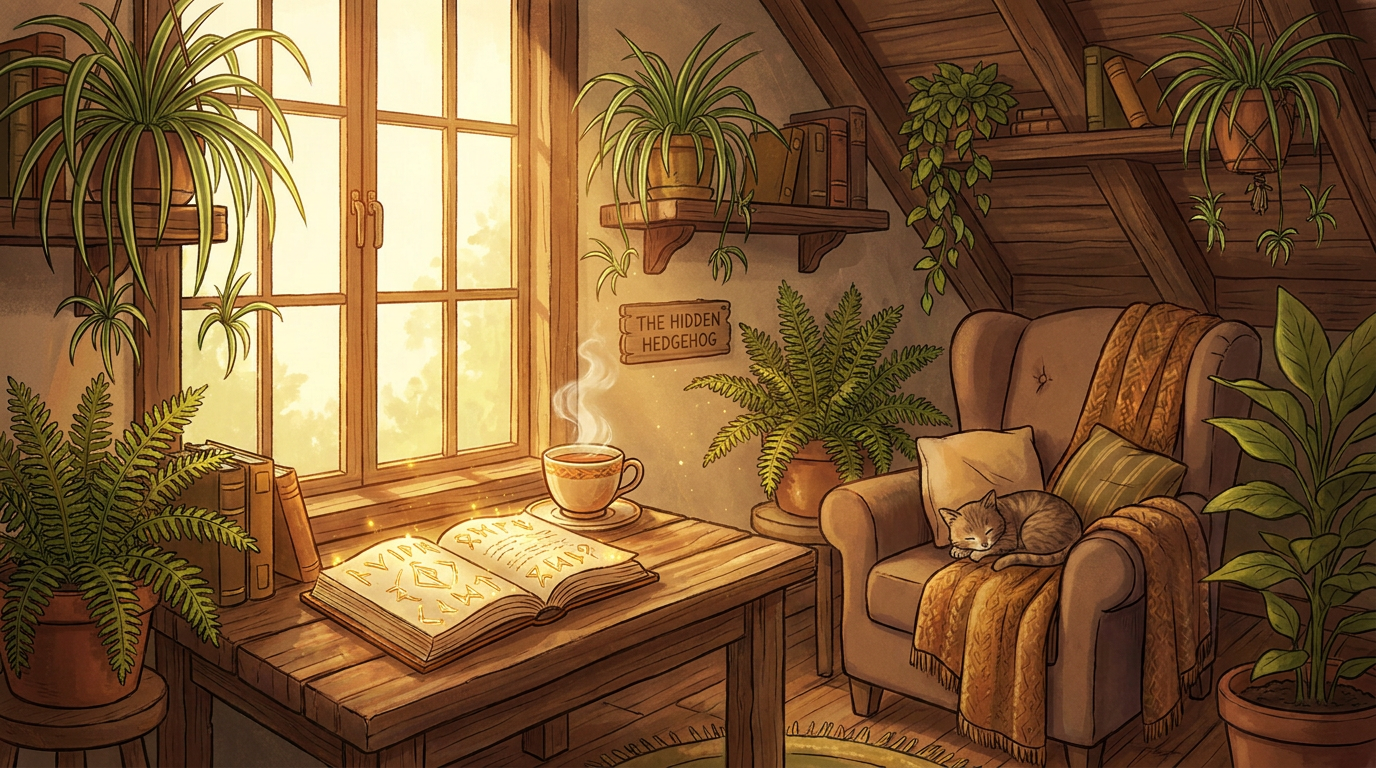
The most visible vanguard of this movement is "cozy fantasy." The subgenre takes the elaborate worldbuilding of traditional epic fantasy—complete with elves, orcs, and intricate magic systems—and deliberately strips away the world-ending stakes.[1][6]

Instead of saving the realm from a dark lord, protagonists in cozy fantasy are more likely to be opening a bakery, running a library, or managing a rural inn. The conflicts are deeply personal, and the narrative resolutions center on community building, friendship, and found family.[1][6]
The breakout hit that codified the modern genre was Travis Baldree's Legends & Lattes, a novel about a retired orc mercenary who hangs up her sword to open a coffee shop. Written as a personal balm for pandemic anxieties, its massive commercial success proved that readers craved "high fantasy, low stakes."[1][2]
Authors like Sarah Beth Durst, whose novel The Spellshop follows a librarian fleeing a revolution to make jam and save books, note that these stories provide a necessary sanctuary. They offer the immersive escapism of a fantasy world without the accompanying existential dread.[1]
However, this optimistic turn is not limited to low-stakes domesticity. For readers who still want to engage with systemic issues and societal challenges, "hopepunk" has emerged as a powerful narrative force.[4][7]
However, this optimistic turn is not limited to low-stakes domesticity.
Coined by author Alexandra Rowland, hopepunk is positioned as the ideological opposite of grimdark. It acknowledges that the world is deeply flawed and systems are broken, but it weaponizes optimism as a form of active resistance.[4]
In hopepunk literature, characters fight for positive change not through lone-wolf violence or cynicism, but through radical kindness, empathy, and collective action. It is a defiant insistence that fighting for a better world is worth the effort, even when victory is not guaranteed.[4][7]

This philosophy has seamlessly bled into science fiction through the rapid rise of "solarpunk." While traditional cyberpunk envisions a hyper-capitalist, neon-lit dystopia, solarpunk imagines a future where humanity has successfully navigated the climate crisis.[3][7]
Solarpunk literature is characterized by recurring themes of light, abundance, and transparency. It envisions egalitarian societies powered by renewable energy, where technology is utilized to harmonize with nature rather than exploit it.[3]
Climate optimism is the foundational pillar of the solarpunk movement. Rather than dwelling exclusively on the catastrophic impacts of global warming, these narratives provide a constructive blueprint for what a sustainable, equitable future might actually look like.[3]
The psychological mechanism driving all of these trends is what literary critics have termed "aspirational gentleness." Readers are seeking models for constructive engagement and emotional resilience, proving that fiction does not need to be gritty to be meaningful.[2]

The economics of the publishing industry strongly reflect this cultural shift. Publishers are actively seeking out cozy and optimistic manuscripts, and advances for established authors pivoting into these uplifting spaces are steadily climbing.[2][5]
The aesthetic appeal also plays a significant role in this market dominance. Platforms like BookTok and Bookstagram thrive on the photogenic nature of cozy fantasy, where illustrated covers featuring teacups, cottages, and lush greenery are highly shareable.[2]
Ultimately, the rise of cozy fantasy, hopepunk, and solarpunk demonstrates a collective desire to reimagine our relationship with conflict. Wonder, community, and small-scale problem-solving are proving to be just as compelling as warfare and destruction.[2]
How we got here
2017
Author Alexandra Rowland coins the term 'hopepunk' on Tumblr as the narrative opposite of grimdark.
March 2020
The onset of the global pandemic triggers a massive shift in reader preferences toward comforting, low-stakes narratives.
February 2022
Travis Baldree self-publishes Legends & Lattes, which becomes a viral sensation and codifies the cozy fantasy subgenre.
2023-2024
Solarpunk gains mainstream traction as readers seek climate optimism in response to growing ecological anxieties.
2025-2026
Cozy fantasy, hopepunk, and solarpunk dominate traditional publishing acquisitions and bestseller lists.
Viewpoints in depth
The Escapist View
Readers seeking a psychological sanctuary from real-world turbulence.
For many readers, the appeal of cozy fantasy lies entirely in its ability to provide a safe harbor. Exhausted by a relentless 24-hour news cycle and the lingering anxieties of the post-pandemic world, this camp argues that fiction should not add to their cognitive load. By stripping away world-ending stakes and focusing on domestic triumphs—like successfully baking a loaf of bread or running a rural inn—these stories offer a necessary emotional reset. They provide the imaginative engagement of a fantasy world without the existential dread.
The Activist View
Advocates who view optimism and climate solutions as a form of political resistance.
Proponents of hopepunk and solarpunk argue that optimism is not a retreat from reality, but a necessary tool for changing it. This camp believes that constantly consuming dystopian media breeds apathy and a sense of inevitability about societal collapse. By contrast, hopepunk weaponizes kindness, and solarpunk provides actionable blueprints for a sustainable future. They argue that imagining a better, more egalitarian world is the crucial first step to actually building one.
The Industry View
Publishers and booksellers capitalizing on the commercial viability of 'active comfort.'
From a purely economic standpoint, the publishing industry views these optimistic genres as a highly lucrative, long-term market shift. Analysts note that cozy fantasy and romantasy are driving massive sales, fueled heavily by the photogenic, highly shareable aesthetics of BookTok and Bookstagram. Publishers are actively seeking manuscripts that offer 'aspirational gentleness,' recognizing that readers are willing to invest heavily in long-running series that guarantee a comforting, emotionally satisfying experience.
What we don't know
- Whether the massive demand for cozy and optimistic fiction will wane if global geopolitical and economic stability improves.
- How traditional epic fantasy authors will adapt their writing styles to compete in a market that increasingly favors low-stakes narratives.
- If the solarpunk aesthetic can successfully transition from speculative fiction into widespread, real-world architectural and urban design.
Key terms
- Cozy Fantasy
- A subgenre of fantasy characterized by low stakes, high emotional resonance, and a focus on community and domestic life rather than warfare.
- Hopepunk
- A narrative movement that weaponizes optimism and radical kindness as a form of resistance against cynicism and systemic brokenness.
- Solarpunk
- A speculative fiction genre and aesthetic that envisions a sustainable, egalitarian future powered by renewable energy and climate optimism.
- Grimdark
- A subgenre of speculative fiction known for its bleak, violent, and morally ambiguous tone, often featuring anti-heroes and dystopian settings.
- Romantasy
- A highly popular hybrid genre that blends the worldbuilding of fantasy with the central romantic arc of a romance novel.
Frequently asked
What was the first cozy fantasy book?
While the roots trace back to children's literature and authors like Diana Wynne Jones, Travis Baldree's 2022 novel Legends & Lattes is widely credited with codifying the modern cozy fantasy trend.
How is hopepunk different from regular optimistic fiction?
Hopepunk explicitly acknowledges that the world is flawed and systems are broken, but it treats optimism and kindness as a defiant, active choice rather than passive ignorance.
Is solarpunk only a literary genre?
No, solarpunk is also an aesthetic and cultural movement that influences architecture, urban planning, and environmental activism, focusing on practical climate solutions.
Sources
Source coverage
7 outlets
3 viewpoints surfaced







[1]Paste MagazineCozy Fantasy Readers
Spellshop Author Sarah Beth Durst on Why We Love Cozy Fantasy
Read on Paste Magazine →[2]NINCPublishing Industry Analysts
The Rise of Cozy Fantasy and Why It Matters
Read on NINC →[3]Atmos MagazineHopepunk & Solarpunk Advocates
Solarpunk: Why 2023 Must Be the Year of the Sun
Read on Atmos Magazine →[4]The Bookish ElfHopepunk & Solarpunk Advocates
The Evolution of Contemporary Literature: Trends Defining 2025
Read on The Bookish Elf →[5]Kirkus ReviewsPublishing Industry Analysts
Book Trends for 2025
Read on Kirkus Reviews →[6]FairyLootCozy Fantasy Readers
The Rise of Cosy Fantasy
Read on FairyLoot →[7]Draft 2 BookHopepunk & Solarpunk Advocates
Ten Exciting Fiction Storytelling Trends in Early 2025
Read on Draft 2 Book →
Every angle. Every day.
Get culture stories with full source coverage and perspective breakdowns delivered to your inbox.