
Supreme Court Unanimously Rules Casual Marijuana Users Cannot Be Stripped of Gun Rights
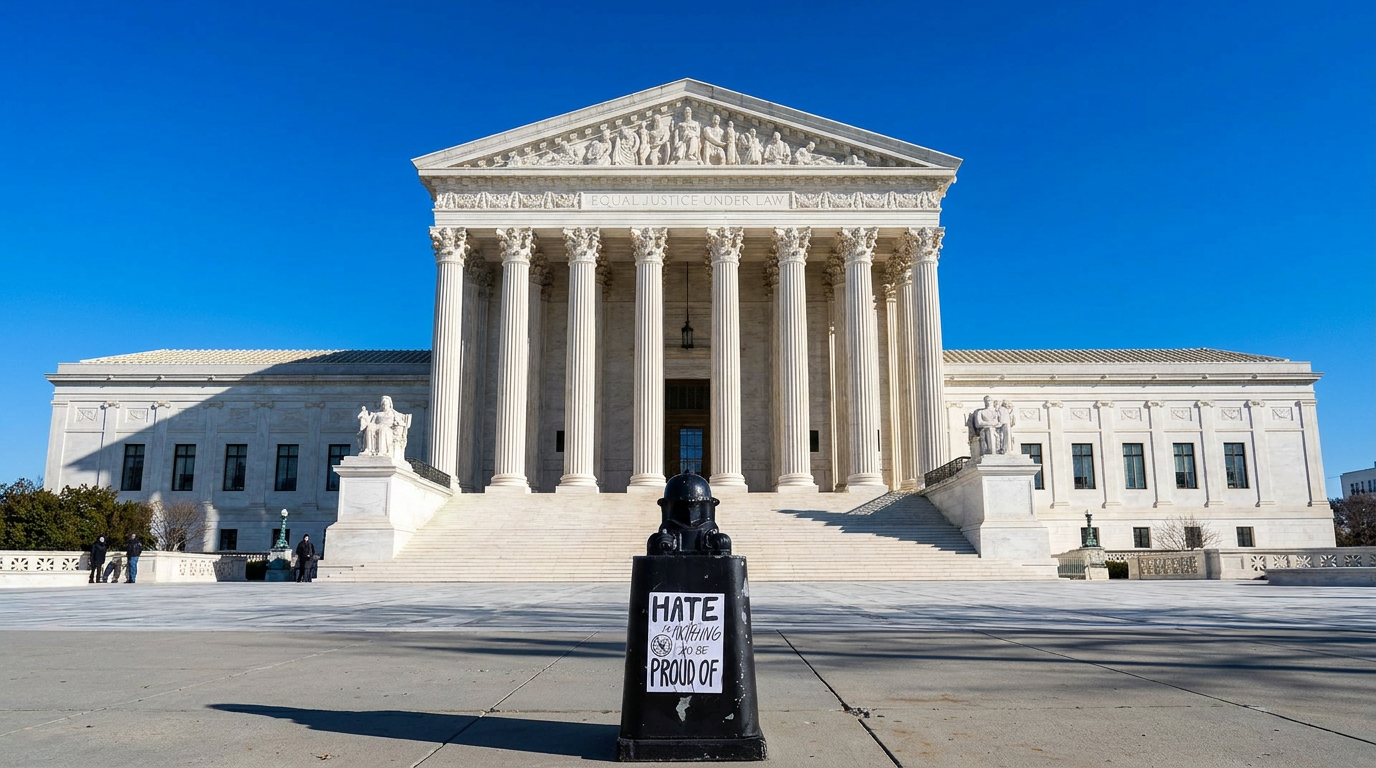
In a 9-0 decision, the Supreme Court ruled that a federal law banning casual drug users from possessing firearms violates the Second Amendment, rejecting the government's argument that marijuana use automatically makes a person dangerous.
By Factlen Editorial Team
- Second Amendment Advocates
- Argue that casual drug use does not forfeit a citizen's fundamental constitutional right to self-defense.
- Civil Liberties Groups
- View the federal ban as an overbroad relic of the War on Drugs that unjustly criminalized millions of peaceful Americans.
- Federal Prosecutors
- Argued that regular drug users are categorically dangerous and historically analogous to 'habitual drunkards,' justifying disarmament.
- Gun Control Advocates
- Emphasize that the ruling is narrow and still allows the government to disarm individuals who are actively intoxicated or severely addicted.
What's not represented
- · State-level law enforcement
Why this matters
This landmark ruling protects millions of Americans who use marijuana—now legal in many states—from facing up to 15 years in federal prison simply for keeping a firearm in their home for self-defense.
Key points
- The Supreme Court unanimously ruled that prosecuting a casual marijuana user for possessing a firearm violates the Second Amendment.
- The decision strikes down the broad application of 18 U.S.C. § 922(g)(3), a provision of the 1968 Gun Control Act.
- The Court rejected the government's argument that early American 'habitual drunkard' laws justified the modern ban on drug users.
- The ruling is narrow and leaves open the possibility of disarming individuals who are actively intoxicated or severely addicted.
The Supreme Court has unanimously ruled that the federal government cannot permanently disarm Americans simply because they occasionally use marijuana, striking a major blow to a decades-old provision of the Gun Control Act.[1][2]
The 9-0 decision in United States v. Hemani marks a significant expansion of Second Amendment rights and forged an unusual alliance between conservative gun rights advocates and progressive civil liberties groups.[3][4]
Writing for the Court, Justice Neil Gorsuch dismantled the Justice Department's argument that casual drug users are categorically dangerous. "The law automatically bans an individual from possessing a gun from the moment he becomes an unlawful user of any controlled substance until he ceases being one," Gorsuch wrote, warning that affording the government such broad power to designate groups as dangerous would risk allowing it to "quickly swallow" the Second Amendment.[1][6]
The case centered on Ali Danial Hemani, a Texas man who was investigated by federal agents in 2022 for suspected terrorism ties. Hemani cooperated with the investigation, surrendered a handgun he kept at home, and voluntarily admitted to using marijuana "about every other day."[1][6]

When the terrorism suspicions proved unfounded, prosecutors pivoted. Relying solely on his admitted cannabis use, the government charged Hemani under 18 U.S.C. § 922(g)(3), which makes it a felony punishable by up to 15 years in prison for an "unlawful user" of a controlled substance to possess a firearm.[1][6]
To defend the law, Solicitor General D. John Sauer and the Trump administration's Justice Department relied on the historical-tradition test established in the Court's 2022 Bruen decision. They argued that early American laws disarming "habitual drunkards" provided a historical analogue for banning drug users from owning guns.[2][6]
John Sauer and the Trump administration's Justice Department relied on the historical-tradition test established in the Court's 2022 Bruen decision.
The justices unanimously rejected that comparison. Gorsuch noted that historical drunkard laws required proof that a person was actively incapacitated or posed a direct danger to themselves or others. In contrast, the modern federal statute strips constitutional rights based on mere status, regardless of whether the person is impaired while handling the weapon.[5][6]
The ruling explicitly noted that the federal ban applies to users of any substance on the Controlled Substances Act schedules, sweeping in everything from heroin to Tylenol with codeine, without requiring the government to prove the user is actually dangerous.[6]
The decision represents a defeat for the federal government, which has historically used the statute to prosecute roughly 300 people annually. The law gained national prominence when it was used to convict Hunter Biden in 2024, though he was later pardoned by his father, President Joe Biden.[1][3]

Despite the sweeping 9-0 vote, the Court's ruling is narrow. The justices did not strike down § 922(g)(3) in its entirety. The decision leaves open the possibility that the government can still disarm individuals who are actively intoxicated, severely addicted, or proven to be "unusually dangerous."[2][4]
Gun control advocates emphasized this limitation. Leigh Rome of the Giffords Law Center noted that the opinion "continues to allow the government to enact and enforce reasonable categorical prohibitions on firearms ownership" for those who pose a genuine threat to public safety.[1]
However, for the millions of Americans living in states where medical or recreational marijuana is legal, the ruling removes the looming threat of federal felony charges for peaceful gun ownership.[3][5]

The case forged a rare consensus across the political spectrum. The American Civil Liberties Union (ACLU) and cannabis reform group NORML filed briefs supporting Hemani, arguing the law was a draconian relic of the War on Drugs. They were joined by the National Rifle Association (NRA) and the Cato Institute, who viewed the statute as an unconstitutional infringement on self-defense rights.[1][3][5]
The decision is expected to trigger a wave of challenges in lower courts as defense attorneys seek to dismiss similar charges, forcing prosecutors to prove that a defendant's specific drug use rendered them actively dangerous rather than just an occasional user.[4]
How we got here
1968
Congress passes the Gun Control Act, which includes a ban on firearm possession by unlawful drug users.
2022
The Supreme Court establishes the 'historical-tradition' test for Second Amendment cases in New York State Rifle & Pistol Association v. Bruen.
2022
Federal agents search Ali Hemani's Texas home, leading to his indictment for possessing a handgun while being a casual marijuana user.
June 18, 2026
The Supreme Court unanimously rules in United States v. Hemani that prosecuting casual drug users under the gun ban violates the Second Amendment.
Viewpoints in depth
Second Amendment Advocates
Argue that casual drug use does not forfeit a citizen's fundamental constitutional right to self-defense.
Gun rights organizations, including the National Rifle Association and the Second Amendment Foundation, view the ruling as a vital affirmation of the Bruen standard. They argue that the government cannot use broad, status-based categories to strip millions of Americans of their constitutional rights, particularly when the underlying conduct—casual marijuana use—does not inherently make someone violent or dangerous.
Civil Liberties & Cannabis Reformers
View the federal ban as an overbroad relic of the War on Drugs that unjustly criminalized millions of peaceful Americans.
Groups like the ACLU and NORML argue that 18 U.S.C. § 922(g)(3) was a draconian tool used to disproportionately target minorities and non-violent drug users. They emphasize that with marijuana now legal in some form in the vast majority of U.S. states, it is logically inconsistent and legally unjust to threaten state-compliant cannabis consumers with 15 years in federal prison simply for owning a firearm.
The Justice Department's View
Argued that regular drug users are categorically dangerous and historically analogous to 'habitual drunkards,' justifying disarmament.
Federal prosecutors maintained that the government has a compelling interest in keeping firearms out of the hands of individuals whose judgment may be impaired by controlled substances. They argued that early American laws disarming 'habitual drunkards' provided a sufficient historical precedent to justify the modern statute, asserting that regular drug use inherently elevates the risk of gun violence.
Gun Control Advocates
Emphasize that the ruling is narrow and still allows the government to disarm individuals who are actively intoxicated or severely addicted.
Organizations focused on gun violence prevention highlight the limits of the Court's decision. They point out that the justices did not strike down the law entirely, leaving room for prosecutors to disarm individuals if they can prove the person is actively impaired, severely addicted, or poses a demonstrable danger to themselves or others. They argue this preserves the government's ability to enforce reasonable safety regulations.
What we don't know
- How lower courts will differentiate between a 'casual user' protected by this ruling and an 'addict' who can still be disarmed.
- Whether this decision will lead to the overturning of past convictions for individuals imprisoned solely under this provision.
Key terms
- 18 U.S.C. § 922(g)(3)
- A provision of the 1968 Gun Control Act that makes it a federal crime for an 'unlawful user' of a controlled substance to possess a firearm.
- Bruen Test
- A legal standard established by the Supreme Court in 2022 requiring the government to prove that modern gun control laws have a direct historical analogue in early American history.
- Controlled Substances Act (CSA)
- The federal policy under which the manufacture, importation, possession, use, and distribution of certain substances is regulated into five schedules.
Frequently asked
Does this ruling legalize marijuana?
No. The ruling only addresses the Second Amendment right to own a firearm. Marijuana remains a Schedule I controlled substance under federal law.
Can anyone who uses drugs now buy a gun?
Not necessarily. The Court's ruling was narrow, protecting casual users. The government may still be able to disarm individuals who are severely addicted or actively intoxicated.
Does this affect people with felony convictions?
No. The Supreme Court explicitly stated that this ruling does not impact other federal firearms restrictions, including the ban on convicted felons owning guns.
Sources
Source coverage
6 outlets
4 viewpoints surfaced





[1]CBS NewsGun Control Advocates
Supreme Court rules in favor of Texas man who challenged federal gun ban for drug users
Read on CBS News →[2]Los Angeles TimesCivil Liberties Groups
Supreme Court rules for gun rights and against drug laws, striking down part of federal law
Read on Los Angeles Times →[3]The GuardianCivil Liberties Groups
Supreme court sides with Texas marijuana user who wants to legally own a gun
Read on The Guardian →[4]The TraceGun Control Advocates
Supreme Court Limits the Federal Gun Ban on Drug Users
Read on The Trace →[5]Cato InstituteSecond Amendment Advocates
Expert Available: Supreme Court Strikes Down Federal Gun Ban for Cannabis Users
Read on Cato Institute →[6]Supreme Court of the United StatesFederal Prosecutors
United States v. Hemani, 608 U.S. ___ (2026)
Read on Supreme Court of the United States →

More in news politics
See all 5 stories →US-Iran Deal
U.S. and Iran Sign 14-Point Memorandum to End War, Triggering 60-Day Ceasefire and Domestic Backlash
8 sources

Universal School Meals
Fact Check: The Evidence Behind the Universal Free School Meals Boom
8 sources

Middle East Peace
US-Iran Peace Deal on the Brink as Intelligence Warns Israeli Operations in Lebanon Could Derail Accord
7 sources
Every angle. Every day.
Get news politics stories with full source coverage and perspective breakdowns delivered to your inbox.