
FIS Alpine Skiing: The Top 5 Power Rankings Heading Into the 2026 Off-Season
Following a historic 2026 season defined by Olympic redemption and unprecedented geographic breakthroughs, a new hierarchy has emerged in alpine skiing.
By Factlen Editorial Team
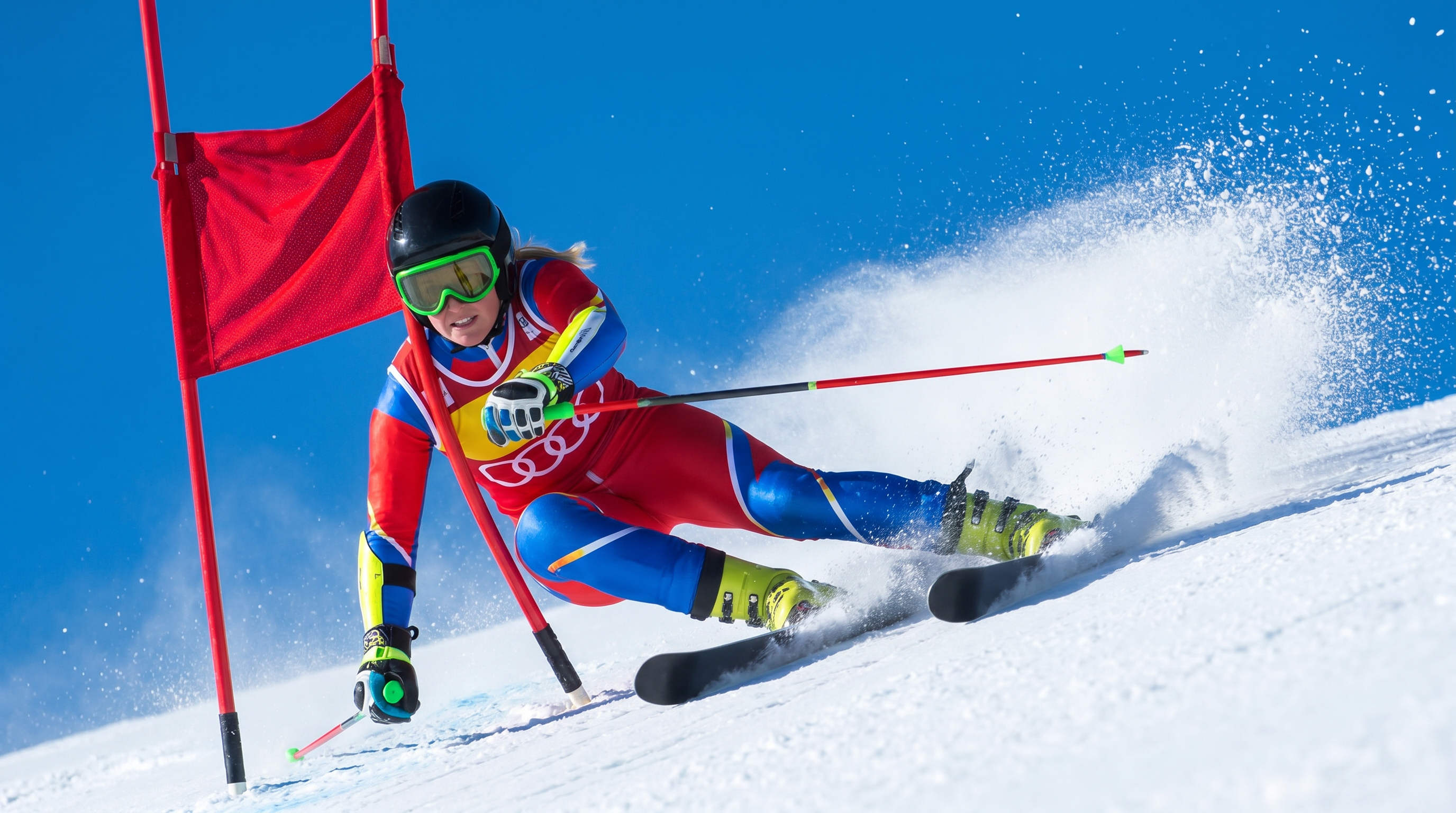
- The Established Champions
- Focuses on the sustained excellence, historical records, and immense pressure faced by generational talents like Shiffrin and Odermatt.
- The Disruptors
- Celebrates athletes breaking traditional molds, geographic boundaries, and challenging the old guard, highlighted by Braathen's move to Brazil.
- Neutral Analysts
- Evaluates the season purely on point totals, margins of victory, and statistical breakthroughs across the World Cup tour.
What's not represented
- · Athletes recovering from season-ending injuries who missed the 2026 campaign.
- · Smaller national federations struggling to compete with the budgets of European powerhouses.
Why this matters
As the sport's elite transition to their off-season training, this power ranking sets the stage for the 2026-2027 winter. With historic records broken and new nations claiming Olympic gold, the competitive landscape of alpine skiing has been permanently transformed.
Key points
- Mikaela Shiffrin tops the rankings after winning Olympic slalom gold and surpassing 100 career World Cup victories.
- Lucas Pinheiro Braathen claims the second spot following his historic Olympic gold for Brazil and giant slalom Crystal Globe.
- Marco Odermatt ranks third despite winning his fifth consecutive overall title and three Olympic medals.
- Germany's Emma Aicher and Norway's Atle Lie McGrath round out the top five after breakthrough campaigns.
The 2025-2026 FIS Alpine Ski World Cup season and the Milano Cortina Winter Olympics have officially concluded, leaving the sport fundamentally altered as athletes begin their off-season preparations. As the world's elite skiers transition to Southern Hemisphere training camps in New Zealand and South America, the power dynamics of alpine skiing have undergone a seismic shift. While the traditional European powerhouses still hold the bulk of the hardware, the most compelling stories of the 2026 campaign came from spectacular redemption arcs and unprecedented geographic breakthroughs that expanded the sport's global footprint. This off-season power ranking evaluates the top performers based on their World Cup consistency, Olympic triumphs, and the sheer historical weight of their recent achievements.
At the absolute summit of the power rankings sits American superstar Mikaela Shiffrin, who authored a season of profound personal and professional triumph. Entering the 2026 Winter Olympics in Italy, Shiffrin carried the heavy ghost of her highly publicized struggles at the 2022 Beijing Games, where she suffered multiple uncharacteristic disqualifications and left without a single medal. The pressure to perform in Milano Cortina was immense, but the 31-year-old responded with a masterclass in resilience and technical perfection.[4]
Shiffrin exorcised her Olympic demons in spectacular fashion at the Olympia delle Tofane track, capturing her third career Olympic gold medal in the slalom. She dismantled the world's best technical skiers, crossing the finish line with a yawning 1.50-second advantage over Switzerland's Camille Rast—the largest winning margin in any Olympic alpine event since 1998. Beyond her Olympic redemption, Shiffrin's World Cup campaign was equally historic. She shattered the mythical 100-win barrier, finishing the season with an unprecedented 109 career victories, and secured her sixth overall Crystal Globe after a grueling, season-long battle.[1][2][4]

Taking the number two spot in the rankings is the sport's ultimate disruptor: Lucas Pinheiro Braathen. After sitting out a season due to disputes with the Norwegian ski federation, the 26-year-old transferred his sporting nationality to Brazil—his mother's homeland—and completely rewired alpine skiing's geographic boundaries. Braathen brought a vibrant, samba-infused energy to the traditionally stoic European circuit, but his impact went far beyond cultural flair. He delivered a breathtaking performance at the Stelvio Ski Centre during the Milano Cortina Games, winning the giant slalom to become the first Brazilian and first South American in history to claim a Winter Olympic medal.[1][5]
Braathen did not allow his historic Olympic triumph to induce a late-season hangover, maintaining his razor-sharp focus through the grueling final weeks of the tour. In a high-stakes finale at the World Cup Finals in Lillehammer, Norway—competing on the very snow where he learned to race—he topped the field to win the giant slalom Crystal Globe. By edging out Swiss titan Marco Odermatt for the season-long discipline title, Braathen proved that his move to Brazil was not just a symbolic cultural gesture, but a resounding sporting success that fundamentally challenged the established alpine hierarchy.[6]

Braathen did not allow his historic Olympic triumph to induce a late-season hangover, maintaining his razor-sharp focus through the grueling final weeks of the tour.
Dropping to a highly contested number three is Marco Odermatt. By any traditional metric, the Swiss ace had a season for the ages, capturing his fifth consecutive overall World Cup title alongside the downhill and super-G globes. Odermatt also collected three medals at the Milano Cortina Games—two silvers and a bronze—making him the most decorated Swiss alpine skier in Olympic history. Yet, the 28-year-old dropped from the top spot due to his narrow misses in the sport's biggest individual moments, notably losing the Olympic giant slalom gold to Braathen and finishing second in the legendary Kitzbühel downhill.[4][7][8]
Odermatt's placement reflects the staggering, almost impossible standards he has set for himself, where anything less than absolute perfection is heavily scrutinized. "It's a brutal situation when second place already feels like a small defeat, and fourth place is almost a disaster," Odermatt openly admitted after the season concluded. He noted that the sheer weight of expectations has changed how he processes results, turning a three-medal Olympic haul and a five-globe World Cup season into a campaign that left him fiercely hungry to reclaim total dominance in the 2026-2027 winter.[3][4]
Fourth in the power rankings is Germany's Emma Aicher, who authored the definitive breakthrough campaign of the women's tour. The 22-year-old multi-discipline talent pushed Shiffrin to the absolute brink in the overall World Cup standings, finishing a brilliant second with 1,301 points. Aicher proved her mettle on the biggest stage by capturing a silver medal in the Olympic downhill, establishing herself not just as a rising star, but as the most credible long-term challenger to Shiffrin's throne across all four alpine disciplines.[1][6]

Rounding out the top five is Norway's Atle Lie McGrath, who provided the most dramatic conclusion to the World Cup season. In a men's slalom campaign defined by razor-thin margins and constant lead changes, McGrath delivered when the pressure was at its absolute highest. During the World Cup Finals in Lillehammer, the slalom globe battle went down to the final run. McGrath held his nerve on home snow to secure his first career Crystal Globe, edging out Olympic champion Clément Noël and cementing Norway's continued excellence in the technical disciplines despite Braathen's departure.[6]
Just outside the top five, several athletes deserve honorable mentions for their exceptional form. Switzerland's Loïc Meillard proved to be the ultimate Swiss Army knife of the men's tour, capturing Olympic bronze in the giant slalom and silver in the team combined, while finishing fourth in the overall World Cup standings. On the women's side, Switzerland's Camille Rast emerged as a technical powerhouse, securing Olympic silver in the slalom behind Shiffrin and finishing second in the season-long giant slalom standings, signaling a changing of the guard in the Swiss women's technical team.[1][6][8]

As the World Cup caravan rests and retools for the 2026-2027 season—which will feature the highly anticipated 2027 FIS Alpine World Ski Championships in Crans-Montana, Switzerland—the sport has never looked healthier. The compelling mix of established legends cementing their legacies, athletes finding redemption on the Olympic stage, and vibrant new stars expanding alpine skiing's global footprint promises a thrilling winter ahead. The upcoming Southern Hemisphere training blocks will be critical as this elite group prepares to renew their rivalries on the snow, ensuring that the battle for the Crystal Globes will be fiercer than ever.
How we got here
Feb 14, 2026
Lucas Pinheiro Braathen wins giant slalom gold, securing Brazil's first-ever Winter Olympic medal.
Feb 18, 2026
Mikaela Shiffrin wins the Olympic slalom by 1.50 seconds, claiming her third career Olympic gold.
Mar 21-25, 2026
The World Cup Finals in Lillehammer conclude the season, with Atle Lie McGrath and Braathen securing discipline globes.
June 2026
Athletes begin their off-season transitions to Southern Hemisphere training camps ahead of the 26/27 season.
Viewpoints in depth
The Established Champions' View
Maintaining dominance requires battling internal expectations as much as external competitors.
For generational talents like Mikaela Shiffrin and Marco Odermatt, the primary opponent is often their own historical standard. Odermatt's admission that a second-place finish in Kitzbühel felt like a 'defeat' underscores the immense psychological burden carried by the sport's elite. Their camps emphasize that true greatness isn't just about winning, but about sustaining peak performance over a grueling six-month season while carrying the expectations of traditional skiing nations.
The Disruptors' View
Alpine skiing must expand beyond its traditional European borders to thrive globally.
Lucas Pinheiro Braathen's historic season for Brazil represents a paradigm shift for a sport historically dominated by Alpine nations. Proponents of this view argue that Braathen's success injects desperately needed diversity and cultural flair into ski racing. By proving that an athlete can leave a powerhouse federation like Norway and still win Olympic gold and Crystal Globes, Braathen has created a blueprint for athletes from non-traditional winter sports nations to challenge the European hegemony.
What we don't know
- How Marco Odermatt will adjust his mental approach after expressing frustration with his near-misses in 2026.
- Whether Emma Aicher can maintain her multi-discipline excellence and overtake Shiffrin for the overall title next season.
Key terms
- Crystal Globe
- The trophy awarded by the International Ski Federation (FIS) to the season-long points champion in a specific discipline or the overall standings.
- Giant Slalom
- A technical alpine skiing event that involves skiing between sets of poles spaced at a greater distance than in slalom, requiring high-speed, sweeping turns.
- Downhill
- The fastest and most dangerous speed discipline in alpine skiing, featuring the longest courses and highest speeds.
- Team Combined
- An Olympic alpine skiing event where two skiers from the same nation compete, combining their times from a speed run and a technical run.
Frequently asked
Who won the men's overall World Cup title in 2026?
Switzerland's Marco Odermatt won his fifth consecutive overall Crystal Globe.
Did Lucas Pinheiro Braathen win a medal for Brazil?
Yes, Braathen won gold in the giant slalom at the Milano Cortina 2026 Games, becoming the first Brazilian and South American to win a Winter Olympic medal.
How many World Cup wins does Mikaela Shiffrin have?
Following the 2025-2026 season, Shiffrin holds the all-time record with 109 career World Cup victories.
Who won the men's slalom Crystal Globe?
Norway's Atle Lie McGrath secured the men's slalom globe in the final race of the season in Lillehammer.
Sources
Source coverage
8 outlets
3 viewpoints surfaced








[1]Olympics.comNeutral Analysts
Winter Olympics 2026: Mikaela Shiffrin soars to first gold of Games in women's slalom
Read on Olympics.com →[2]The GuardianThe Disruptors
Mikaela Shiffrin storms to stunning slalom gold to make Winter Olympic history
Read on The Guardian →[3]Ski Racing MediaThe Established Champions
Marco Odermatt: When second place feels like a defeat
Read on Ski Racing Media →[4]NBC OlympicsThe Established Champions
Marco Odermatt leaves 2026 Winter Olympics with three medals, no gold
Read on NBC Olympics →[5]FIS SkiThe Disruptors
Lucas PINHEIRO BRAATHEN - Athlete Biography
Read on FIS Ski →[6]Sportpress InternationalNeutral Analysts
2026 Audi FIS Alpine Ski World Cup Finals: Season Summary and Final Standings
Read on Sportpress International →[7]Alpine Ski World CupThe Established Champions
Alpine Ski World Cup 2026 Super-G Winner Marco Odermatt
Read on Alpine Ski World Cup →[8]StöckliThe Established Champions
Two silvers and one bronze – Marco Odermatt now owns the most extensive Olympic medal collection
Read on Stöckli →
More in sports
See all 390 stories →Pro Volleyball Boom
How Women's Professional Volleyball Finally Broke Through in America
6 sources
Women's Sports
How Women's Wrestling Became the Fastest-Growing Collegiate Sport in America
8 sources

Engine Regulations
The 2026 Formula 1 Engine Revolution: How Sustainable Fuel and a 50/50 Hybrid Split Are Changing the Sport
8 sources

MLB Milestones
Brewers' Jacob Misiorowski Throws Historic 15-Strikeout, One-Hit Shutout
7 sources

Every angle. Every day.
Get sports stories with full source coverage and perspective breakdowns delivered to your inbox.