
As 'Algorithm Fatigue' Sets In, Listeners Are Turning Back to Human-Curated Radio
The launch of a dedicated physical internet radio player highlights a growing cultural shift away from automated streaming algorithms in favor of human tastemakers and intentional listening.
By Factlen Editorial Team
- Human Curation Advocates
- Argue that algorithms minimize risk and homogenize taste, while human DJs provide essential context, serendipity, and real advocacy for artists.
- Algorithmic Streaming Defenders
- Maintain that machine learning democratizes discovery at an unprecedented scale, and that user-prompted AI can solve the current fatigue.
- Audiophile & Hardware Enthusiasts
- Focus on the tactile experience and uncompressed audio quality, arguing that physical interfaces fundamentally improve how we consume digital media.
What's not represented
- · Independent musicians who rely heavily on algorithmic discovery to reach audiences without major label backing.
- · Casual listeners who prefer the passive convenience of algorithmic background music over active curation.
Why this matters
For a decade, machine learning has dictated how we discover digital media, often trapping users in repetitive filter bubbles. The resurgence of human curation and bespoke hardware offers a blueprint for how consumers can reclaim control over their digital diets and support independent creators.
Key points
- Atonemo and NTS Radio have launched a $169 physical device dedicated to streaming human-curated internet radio.
- The hardware release highlights a growing cultural backlash against automated music discovery, known as 'algorithm fatigue.'
- Listeners are increasingly frustrated by algorithmic filter bubbles and the influx of AI-generated music on major platforms.
- Independent radio stations are seeing a resurgence as audiences seek the serendipity and context provided by human DJs.
- Major streaming platforms are attempting to counter this fatigue by introducing user-prompted AI and hybrid curation models.
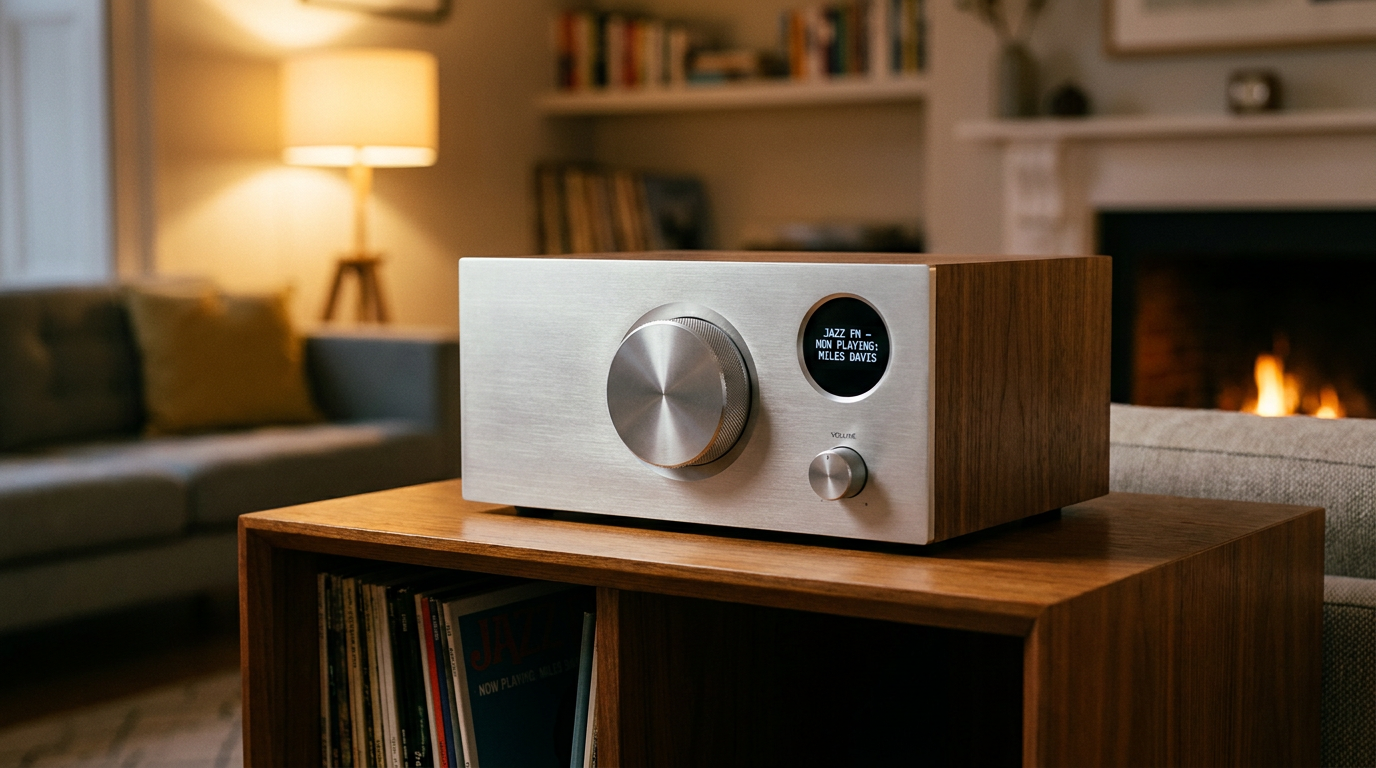
For the past decade, the smartphone screen and the algorithmic feed have been the undisputed gatekeepers of music discovery. Listeners handed over their tastes to complex machine-learning models, trusting that the infinite scroll would always serve up the perfect track. But on Friday, Swedish audio company Atonemo and global broadcasting platform NTS Radio launched a device that actively rejects this premise. The Atonemo NTS Radio Player is a physical Wi-Fi streamer with tactile knobs and a singular primary function: to play human-curated internet radio, completely bypassing the algorithm.[1][2]
The device itself is a minimalist slab of hardware that connects to any existing speaker or amplifier. With a click of a button, it tunes directly into NTS Channel 1, Channel 2, or one of the station's infinite mixtapes, delivering uncompressed 24-bit / 192 kHz audio. While it supports standard streaming protocols like AirPlay 2 and Spotify Connect, its physical design encourages users to hand over the reins to a human DJ in London, Tokyo, or Los Angeles, rather than a data center.[1][2]
The arrival of bespoke, single-purpose streaming hardware highlights a growing cultural shift in 2026: the onset of "algorithm fatigue." After years of relying on automated discovery, a vocal segment of listeners—particularly Gen Z and serious music enthusiasts—are feeling overwhelmed, uninspired, and trapped in sonic filter bubbles. When every recommendation is optimized for engagement, the result is a listening experience that feels safe, repetitive, and increasingly interchangeable.[3][4]
To understand the fatigue, one must look at the mechanics of modern streaming. Platforms rely heavily on collaborative filtering, which suggests songs based on the habits of similar users, and content-based filtering, which analyzes the audio features of a track. While these systems are highly efficient at keeping users on the platform, they are fundamentally designed to minimize risk. They favor familiarity over experimentation, quietly narrowing a listener's horizons rather than expanding them.[4][7]

This homogenization of taste has been exacerbated by the recent flood of "AI slop" hitting streaming services. As generative AI tools became widely accessible, platforms were inundated with synthetic tracks designed specifically to game recommendation engines and siphon royalty payouts. In recent years, industry data revealed that up to 18 percent of daily uploads on some platforms were entirely AI-generated. For listeners seeking authentic connection, the algorithmic feed began to feel less like a curated journey and more like a synthetic minefield.[5][7]
In response, the internet culture pendulum is swinging back toward human curation. Independent internet radio stations, once viewed as relics of a bygone era, are experiencing a massive resurgence. Platforms like NTS Radio, Seattle's KEXP, and London's Rinse FM are thriving because they offer what algorithms cannot: context over chaos, and taste over trends. Every track played on these stations is a deliberate choice made by a person accountable to their audience.[3][6]
In response, the internet culture pendulum is swinging back toward human curation.
This human filter introduces a crucial element that machine learning actively discourages: serendipity. An algorithm will rarely jump from a 1970s Nigerian funk track to a contemporary ambient electronic piece because the data points do not align. A human DJ, however, can make that leap based on mood, storytelling, or thematic resonance. This unpredictability is exactly what algorithm-fatigued listeners are now seeking out.[3][7]
The shift is also changing the economic realities for emerging artists. The algorithmic model incentivized musicians to create shorter, repetitive songs tailored to viral trends or platform-specific discovery modes, which often require artists to accept lower royalty rates in exchange for algorithmic boosts. In contrast, human-driven channels offer a more durable path to success, providing intentional exposure and real advocacy that can move an artist from a bedroom project to a sustainable touring career.[3][6]

The major streaming providers are not ignoring the backlash. Recognizing the dissatisfaction, companies have begun attempting to reintroduce the "human touch" into their software. Recent beta features have allowed users to input text prompts to steer the algorithm, effectively giving listeners more control over their own filter bubbles. However, critics argue that these are merely technological band-aids on a fundamentally automated system.[4][7]
As a result, 2026 is witnessing the rise of hybrid curation models. New platforms are emerging that layer human-selected tracks from global communities alongside AI personalization. These services attempt to strike a balance, using machine learning to organize and deliver the music, while relying on human tastemakers to ensure the catalog remains diverse, authentic, and free of generative filler.[7]
Yet, for a growing subculture, the solution isn't better software—it's better hardware. Devices like the Atonemo NTS Radio Player represent a desire for the "Cozy Web," a movement toward smaller, more intentional digital spaces. By removing the screen and the endless visual scroll, the physical radio player forces the listener to engage with the audio on its own terms, restoring a sense of ritual to the act of listening.[2][7]

It remains to be seen whether this hardware-driven return to human curation will scale beyond audiophiles and underground music fans. The convenience of the "everything app" is a powerful force, and the vast majority of the world's 600-plus million streaming subscribers are unlikely to abandon their personalized mixes entirely.[4][7]
However, the cultural momentum is undeniable. The success of independent radio and the demand for tactile, single-purpose devices prove that efficiency is not the only metric that matters in digital culture. Sometimes, the most advanced technological choice a listener can make is to turn off the algorithm, turn a physical dial, and let someone else take the wheel.[7]
How we got here
2008–2015
Streaming platforms popularize algorithmic discovery, shifting power from radio DJs to machine learning models.
2023
Major streaming services reduce editorial staff in favor of automated, AI-driven recommendation engines.
2024–2025
The 'AI slop' era begins, with generative AI tracks flooding streaming catalogs and diluting discovery.
June 2026
Atonemo and NTS Radio launch a dedicated physical Wi-Fi player, signaling a hardware-backed return to human curation.
Viewpoints in depth
Human Curation Advocates
Tastemakers argue that algorithms strip the soul out of music discovery by minimizing risk.
Independent radio stations, DJs, and music bloggers argue that collaborative filtering algorithms are fundamentally flawed because they optimize for engagement rather than artistic merit. By constantly feeding listeners variations of what they already know, algorithms create echo chambers that stifle genuine discovery. Human curators, they argue, provide essential context, storytelling, and serendipity. Furthermore, human advocacy is seen as a more sustainable economic model for emerging artists, who otherwise must alter their songwriting to appease black-box recommendation engines.
Algorithmic Streaming Defenders
Major platforms maintain that machine learning democratizes discovery at an unprecedented scale.
Proponents of algorithmic streaming point out that machine learning has allowed millions of independent artists to find global audiences without the need for traditional radio gatekeepers or major record labels. They argue that "algorithm fatigue" is a temporary user experience hurdle that can be solved with better technology, such as user-prompted AI playlists and hybrid models that blend editorial oversight with automated delivery. For the vast majority of consumers, they contend, the convenience of an "everything app" far outweighs the appeal of niche, single-purpose hardware.
Audiophile & Hardware Enthusiasts
Hardware makers focus on the tactile experience and uncompressed audio quality.
For the audiophile community, the shift away from algorithmic streaming is as much about the physical interface as it is about the music. Enthusiasts argue that the endless visual scroll of a smartphone app cheapens the listening experience, turning music into disposable background noise. By reintroducing physical knobs and dedicated hardware—alongside uncompressed 24-bit / 192 kHz audio—companies like Atonemo are attempting to restore a sense of ritual and intentionality to digital media consumption.
What we don't know
- Whether bespoke streaming hardware will remain a niche audiophile product or cross over into the mainstream consumer market.
- How major streaming platforms will successfully filter out the growing volume of AI-generated 'slop' without alienating independent creators.
- If hybrid AI-human curation models can scale effectively without losing the authentic serendipity of traditional radio.
Key terms
- Algorithm Fatigue
- A phenomenon where users become bored or frustrated by machine-learning recommendation systems that repeatedly serve familiar, homogenized content.
- Collaborative Filtering
- A recommendation method that suggests content based on the listening habits of other users with similar tastes.
- Filter Bubble
- A state of intellectual or cultural isolation that results from algorithms only serving information or media that aligns with a user's past behavior.
- AI Slop
- A colloquial term for low-quality, mass-produced, AI-generated music designed to game streaming algorithms and siphon royalty payouts.
Frequently asked
What exactly does the Atonemo NTS Radio Player do?
It is a dedicated Wi-Fi streaming device that connects to your speakers, allowing you to play NTS Radio channels directly via physical knobs, or stream high-resolution audio from your phone.
Why are people moving away from algorithmic playlists?
Many listeners are experiencing "algorithm fatigue," feeling that automated recommendations prioritize safe, familiar tracks over genuine discovery, leading to a homogenized listening experience.
Can I still use Spotify or Apple Music with these new hardware players?
Yes. Devices like the NTS Radio Player support protocols like AirPlay 2, Google Cast, and Spotify Connect, allowing users to bypass the radio function and stream their own libraries when desired.
How does human curation differ from AI recommendations?
Human curators, like independent DJs, select tracks based on context, emotion, and storytelling, often introducing serendipitous discoveries that an algorithm designed to minimize risk would ignore.
Sources
Source coverage
7 outlets
3 viewpoints surfaced







[1]The VergeAudiophile & Hardware Enthusiasts
The NTS Radio Player brings the best of internet radio to your hi-fi
Read on The Verge →[2]ForbesAudiophile & Hardware Enthusiasts
Atonemo Partners With NTS Radio For Dedicated Wi-Fi Streamer
Read on Forbes →[3]PlayMPEHuman Curation Advocates
The Algorithm Fatigue Crisis: When Discovery Loses Its Soul
Read on PlayMPE →[4]InformaAlgorithmic Streaming Defenders
Addressing the algorithm fatigue problem in music streaming
Read on Informa →[5]Los Angeles TimesHuman Curation Advocates
In an era of AI slop, can a tasteful streaming alternative survive?
Read on Los Angeles Times →[6]OnesToWatchHuman Curation Advocates
Your 2026 Underground Discovery Gateway
Read on OnesToWatch →[7]Factlen Editorial TeamAudiophile & Hardware Enthusiasts
Synthesis by Factlen editorial team
Read on Factlen Editorial Team →


Every angle. Every day.
Get technology stories with full source coverage and perspective breakdowns delivered to your inbox.