
AI Discovers Hidden Antibiotic Candidates Inside Disease-Causing Prions
Using a deep-learning platform, researchers have identified a new class of antimicrobial peptides hidden within prions—proteins typically known for causing fatal brain diseases. The AI-discovered compounds proved effective against drug-resistant bacteria in early mouse trials.
By Factlen Editorial Team
- Computational Biologists
- View this as validation that AI can bypass human bias and find therapeutics in biological 'dark matter' that scientists previously ignored.
- Infectious Disease Experts
- Focus on the urgent clinical need for new drug classes to combat highly resistant pathogens like Acinetobacter baumannii.
- Neuroscientists
- Intrigued by the evolutionary implications of prions containing antimicrobial sequences, but caution against assuming these proteins naturally act as immune defenses in the body.
What's not represented
- · Pharmaceutical Investors
- · Evolutionary Biologists
Why this matters
Antimicrobial resistance is one of the most urgent threats to global public health, with the pipeline for new treatments largely stalled. By using AI to find life-saving drugs inside the very proteins that cause fatal diseases, scientists are proving that machine learning can unlock entirely new, previously unthinkable frontiers in medicine.
Key points
- An AI platform scanned over 19 million peptide fragments to find new antibiotics.
- The system discovered bacteria-killing sequences hidden inside disease-causing prion proteins.
- These newly named 'prionins' successfully treated drug-resistant skin infections in mice.
- The compounds matched the efficacy of last-resort antibiotics without causing weight loss in the animal models.
- The discovery highlights AI's ability to find medicines in unconventional biological sources.
For decades, the search for new antibiotics has followed a familiar, exhausting path: scouring soil samples, fungi, and deep-sea microbes for compounds that can kill bacteria. But as pathogens evolve to resist our best drugs, the traditional pipeline has slowed to a trickle. Now, artificial intelligence is rewriting the rules of biological discovery by looking in the last place any human scientist would have thought to search: inside the proteins responsible for fatal brain diseases.[3][6]
In a breakthrough published today in Nature Microbiology, researchers at the University of Pennsylvania’s Perelman School of Medicine revealed that they have used a deep-learning platform to discover a hidden class of antibiotic candidates within prions. Prions are misfolded proteins notorious for causing rare, incurable neurodegenerative conditions like Creutzfeldt-Jakob disease. Yet, hidden within their molecular structure are short sequences that possess powerful bacteria-killing properties.[1][2]
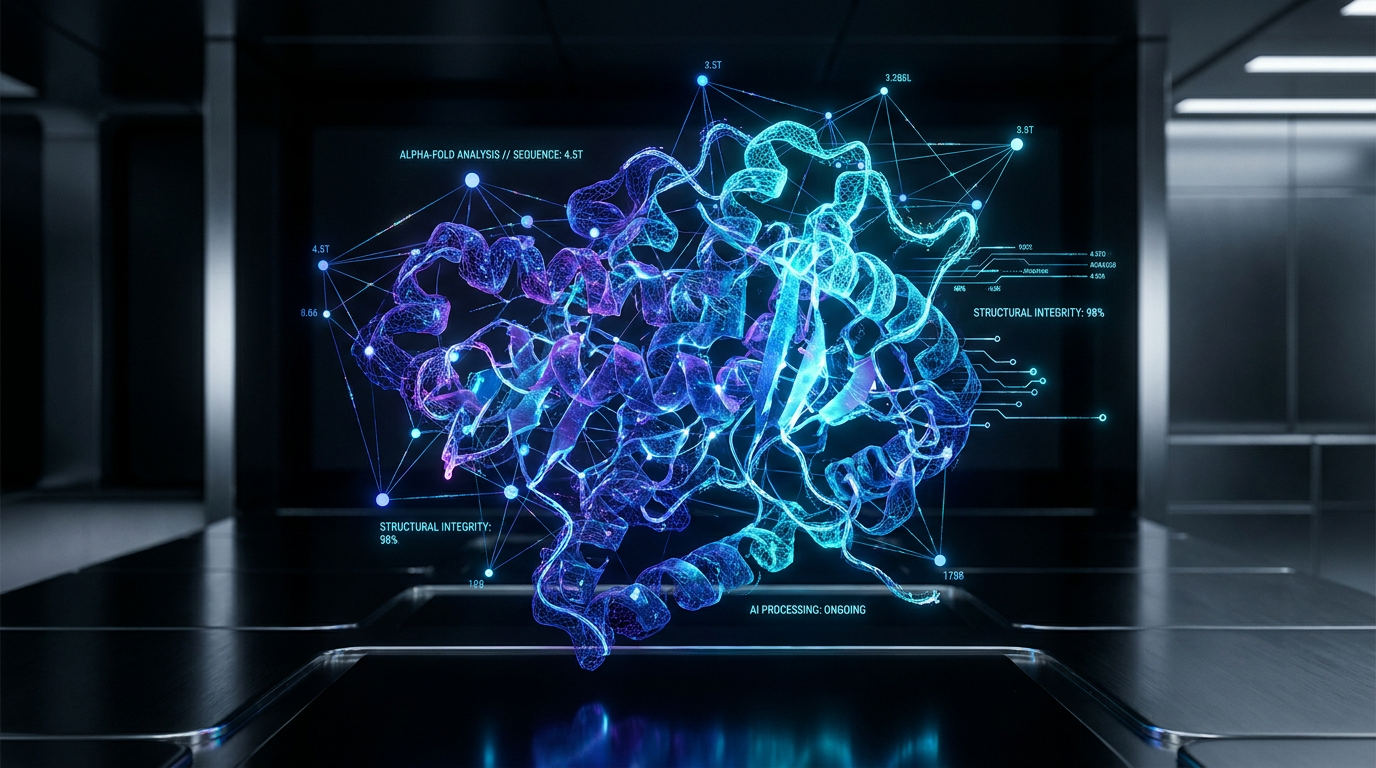
The research team, led by César de la Fuente, utilized an advanced AI tool known as APEX 1.1. Designed to predict the antimicrobial potential of any given amino acid sequence, the model was tasked with scanning an immense dataset of biological dark matter. The AI analyzed 19.3 million short peptide fragments derived from 2,897 prion and prion-like proteins.[2][3]
Human researchers could never manually synthesize and test millions of fragments. The computational model, however, rapidly whittled the massive dataset down to 1,179 highly promising candidate peptides. The researchers dubbed this newly discovered class of molecules "prionins."[1][3]

“For a long time, drug discovery has been limited not only by what we can test, but by where we choose to look,” de la Fuente noted in a statement following the publication. “AI is changing that. It gives us a way to search the hidden layers of biology and ask whether molecules associated with one story—in this case, disease—may also carry another story with therapeutic potential.”[2][3]
To validate the AI's predictions, the team moved from the computer screen to the laboratory. They synthesized several of the most promising prionins—including one derived from a fungus and another from a roundworm—and tested them against real-world pathogens. The target was Acinetobacter baumannii, a notoriously difficult-to-treat, drug-resistant bacterium that frequently causes severe hospital-acquired infections.[2][3]
The results were striking. In a standard mouse model of skin infection, the prionin peptides significantly reduced bacterial levels. Their efficacy was comparable to polymyxin B, a heavy-duty antibiotic often reserved as a last line of defense against multidrug-resistant superbugs.[1][3]

In a standard mouse model of skin infection, the prionin peptides significantly reduced bacterial levels.
Crucially, the treatment appeared safe in these early animal models. The mice exhibited no treatment-related weight loss, a standard metric used to gauge the toxicity of experimental compounds. This suggests that the prionins can attack bacterial cells without indiscriminately damaging the host's healthy tissue.[1][3]
This discovery marks a significant milestone in the broader evolution of AI in pharmaceuticals. According to industry analysts, 2026 has seen a structural shift in how biotechnology companies deploy machine learning. Rather than using AI merely to tweak existing drug classes, researchers are using it as a foundational engine to generate entirely novel hypotheses.[4][5]
Historically, discovering a new drug target and bringing it to clinical trials could take a decade or more, with a high rate of failure. AI platforms like APEX 1.1 compress the initial discovery phase from years into days, allowing scientists to bypass the "herding" behavior where the entire industry chases the same few well-understood biological targets.[5][6]

However, the researchers emphasize transparent boundaries around what this discovery actually means for human biology. The presence of these antimicrobial sequences does not imply that prions act as natural antibiotics inside the human body, nor does it suggest that prionins are naturally released during an infection.[2][3]
Furthermore, the findings do not alter the medical consensus regarding the danger of misfolded prions in neurodegenerative diseases. The AI simply identified that the raw molecular code of these proteins contains fragments that, when isolated and synthesized independently, can rupture bacterial membranes.[1][2]
The evolutionary reason for this dual nature remains an open question. Some biologists speculate that proteins best known for neurodegeneration might share ancient molecular features linked to innate immune defense, though proving this will require years of dedicated evolutionary biology research.[2][6]

For the pharmaceutical industry, the immediate focus is on the therapeutic potential. The next steps involve optimizing the chemical structure of the most effective prionins to improve their stability in the human bloodstream and preparing them for rigorous safety testing.[4][6]
While human clinical trials remain years away, the successful validation of the APEX 1.1 model provides a powerful proof of concept. It demonstrates that the chemical universe of potential medicines is vastly larger than previously mapped.[5][6]
Ultimately, the discovery of prionins is a testament to the power of machine learning to recontextualize the natural world. By stripping away human assumptions about where medicines should come from, AI has turned a symbol of biological malfunction into a promising blueprint for human survival.[3][6]
How we got here
2020
MIT researchers use AI to discover halicin, proving machine learning can identify novel antibiotics.
2023
AI models successfully identify a new class of antibiotics effective against MRSA by screening millions of compounds.
August 2025
Researchers use the APEX AI tool to find antibiotic candidates in the DNA of ancient, extinct organisms and Archaea.
June 19, 2026
Penn researchers publish findings in Nature Microbiology detailing the discovery of 'prionins' hidden inside disease-causing prions.
Viewpoints in depth
Computational Biologists
View this as validation that AI can bypass human bias and find therapeutics in biological 'dark matter' that scientists previously ignored.
For computational experts, the significance of this breakthrough lies in the methodology. Human researchers naturally suffer from 'streetlight effect'—looking for answers only where the light is shining, such as in soil bacteria or known medicinal plants. By feeding an AI the sequences of proteins known exclusively for causing disease, the researchers forced the system to evaluate biological dark matter without human prejudice. The success of the APEX 1.1 model proves that predictive algorithms can reliably map structural chemistry to biological function, even in entirely novel contexts.
Infectious Disease Experts
Focus on the urgent clinical need for new drug classes to combat highly resistant pathogens like Acinetobacter baumannii.
Clinicians and public health officials view this through the lens of the escalating antimicrobial resistance (AMR) crisis. Pathogens like Acinetobacter baumannii have evolved to survive nearly every drug in the modern pharmacopeia, forcing doctors to rely on highly toxic, last-resort drugs like polymyxin B. The fact that prionins matched the efficacy of polymyxin B in vivo without triggering weight loss in mice is a highly encouraging signal. For this camp, the AI's mechanism is secondary to the output: a desperately needed new structural class of molecules that bacteria have not yet learned to defeat.
Neuroscientists
Intrigued by the evolutionary implications of prions containing antimicrobial sequences, but caution against assuming these proteins naturally act as immune defenses in the body.
Researchers who study neurodegenerative diseases are fascinated by the evolutionary puzzle this presents. Why would a protein responsible for destroying brain tissue contain sequences that kill bacteria? While some hypothesize an ancient, vestigial immune function, neuroscientists urge caution. They emphasize that the AI merely identified a chemical capability of an isolated fragment, which does not mean the intact prion protein serves a protective role in a living brain. Their primary concern is ensuring the public understands that misfolded prions remain strictly pathogenic, even if their molecular components can be repurposed in a lab.
What we don't know
- Whether these AI-discovered peptides will remain safe and effective when tested in human clinical trials.
- If intact prion proteins serve any natural antimicrobial function in the human body, or if this is merely a structural coincidence.
- How quickly bacteria might develop resistance to this entirely new class of compounds.
Key terms
- Prion
- A type of protein that can trigger normal proteins in the brain to fold abnormally, typically associated with fatal neurodegenerative diseases.
- Antimicrobial Peptide (AMP)
- Short chains of amino acids that can disrupt the cell membranes of microorganisms, effectively killing bacteria or inhibiting their growth.
- Deep Learning
- A type of artificial intelligence that uses complex, multi-layered neural networks to analyze vast amounts of data and recognize patterns humans cannot see.
- Polymyxin B
- A powerful, older antibiotic often used as a last resort to treat severe infections caused by multidrug-resistant bacteria.
Frequently asked
What exactly are prionins?
Prionins are short chains of amino acids (peptides) hidden within the structure of prion proteins. AI discovered that when isolated, these specific fragments have the ability to kill bacteria.
Does this mean prion diseases could be beneficial?
No. Misfolded prions still cause fatal neurodegenerative diseases. The discovery only means that if scientists artificially extract and synthesize a tiny piece of the protein's code, that isolated piece can be used as a drug.
When will these new antibiotics be available for humans?
They are currently in the early preclinical stage. While they have shown success in mice, they must undergo years of optimization and rigorous human clinical trials before they can be approved for public use.
What is Acinetobacter baumannii?
It is a highly drug-resistant bacterium that frequently causes severe, difficult-to-treat infections in hospital settings. It was the primary target used to test the new AI-discovered peptides.
Sources
Source coverage
6 outlets
3 viewpoints surfaced






[1]Nature MicrobiologyInfectious Disease Experts
Deep learning reveals antimicrobial peptides within prions
Read on Nature Microbiology →[2]University of PennsylvaniaNeuroscientists
New antibiotic candidates for drug-resistant bacteria may reside inside prions
Read on University of Pennsylvania →[3]News-MedicalInfectious Disease Experts
AI discovers hidden antibiotic candidates inside disease-causing prions
Read on News-Medical →[4]Drug Discovery NewsComputational Biologists
The 2026 AI power shift
Read on Drug Discovery News →[5]World Economic ForumComputational Biologists
Here's how AI is reshaping drug discovery
Read on World Economic Forum →[6]Factlen Editorial TeamNeuroscientists
Synthesis by Factlen editorial team
Read on Factlen Editorial Team →

Every angle. Every day.
Get ai stories with full source coverage and perspective breakdowns delivered to your inbox.