
Shingles Vaccine Linked to 24% Lower Dementia Risk in Major New Study
A massive analysis of over 500,000 older adults found that the recombinant shingles vaccine significantly reduces the risk of developing dementia, adding to a growing body of evidence that routine immunizations may protect brain health.
By Factlen Editorial Team
- Immunologists & Neurologists
- Investigate the biological mechanisms linking viral suppression to brain health.
- Public Health Researchers
- Focus on the immediate epidemiological benefits and the need to increase vaccine uptake.
- Evidence-Based Skeptics
- Emphasize the limitations of observational data and the need for clinical trials.
What's not represented
- · Health Insurance Providers
- · Alzheimer's Patient Advocacy Groups
Why this matters
Dementia is one of the most devastating and costly health crises globally, with few effective treatments. If a widely available, routine vaccine can delay or prevent cognitive decline, it represents a massive, immediately accessible breakthrough for millions of aging adults.
Key points
- A new study of 500,000 seniors links the recombinant shingles vaccine to a 24% lower risk of dementia over four years.
- The findings translate to roughly one in 17 dementia cases potentially being prevented among the vaccinated cohort.
- Scientists believe the vaccine may protect the brain by preventing viral neuroinflammation or by boosting the immune system to clear toxic plaques.
- While observational data is highly promising, researchers caution that randomized controlled trials are needed to definitively prove cause and effect.
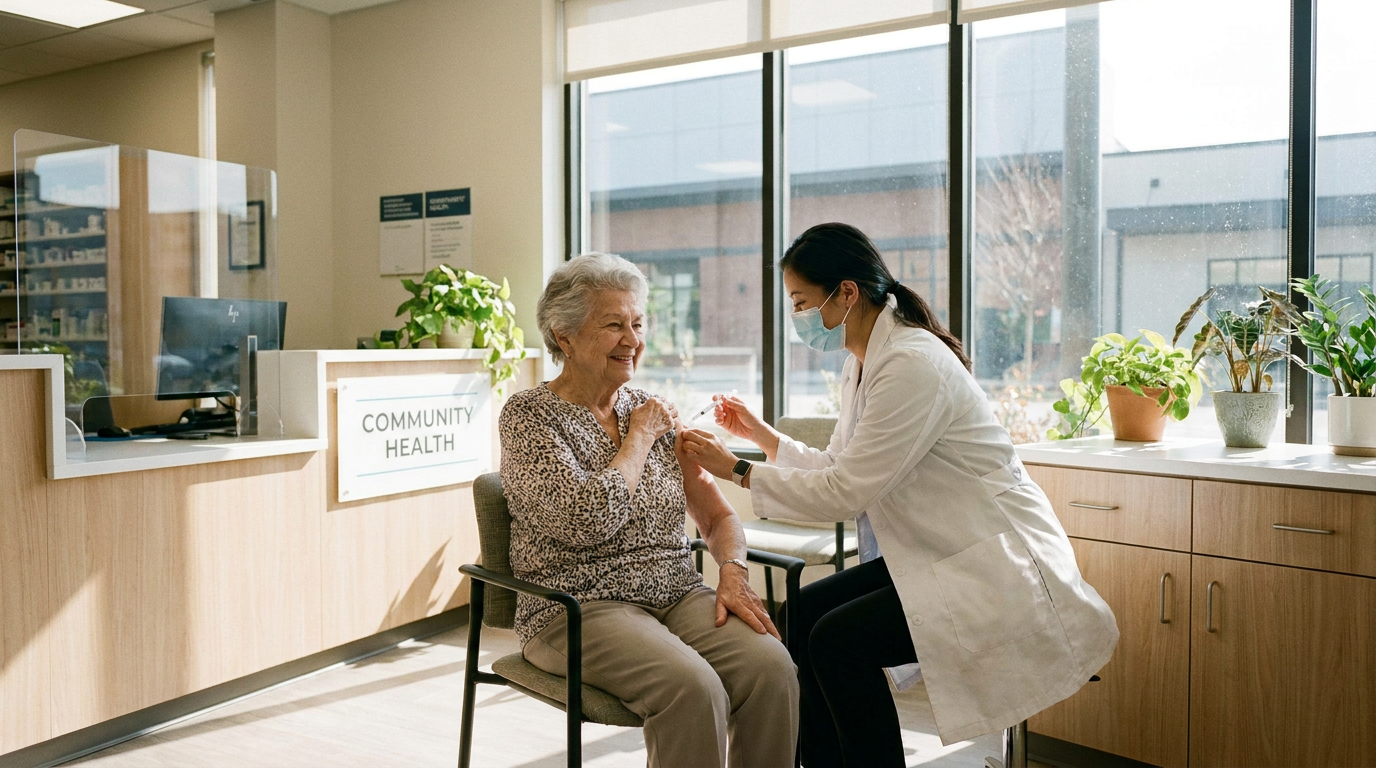
The global search for a dementia cure has cost billions of dollars and decades of research, often yielding marginal breakthroughs and dashed hopes. But a growing body of evidence suggests that a powerful defense against cognitive decline might already be sitting in local pharmacy freezers. A routine immunization—the recombinant shingles vaccine, widely known as Shingrix—is emerging as one of the most promising tools for reducing dementia risk in older adults. Unlike experimental therapeutics that target the brain after symptoms appear, this widely available preventative measure appears to intercept the biological cascades that lead to cognitive failure long before they begin.
The latest confirmation of this phenomenon arrived this week in the Annals of Internal Medicine, where researchers from Brown University published a massive observational study analyzing the health records of more than 500,000 adults aged 66 and older. The study focused on a highly vulnerable population: seniors who had recently been admitted to skilled nursing facilities for short- or long-term care. Because these individuals are at an elevated risk for both shingles outbreaks and cognitive decline, they provided an ideal cohort for tracking the long-term neurological impacts of the vaccine in a real-world clinical setting.[2][5]
The findings were striking. Patients who received at least one dose of the Shingrix vaccine had a 24 percent lower risk of being diagnosed with dementia over the following four years compared to their unvaccinated peers. In absolute terms, the researchers noted a 5.8 percentage-point drop in dementia diagnoses among the vaccinated cohort. According to the study's lead author, Dr. Kaley Hayes, this translates to roughly one in 17 dementia cases potentially being prevented through vaccination—a staggering public health victory if the relationship proves to be directly causal.[3][4][5][6]

This new data does not exist in a vacuum; rather, it reinforces a rapidly solidifying scientific consensus that the shingles vaccine offers profound neuroprotective benefits. A landmark 2024 study published in Nature Medicine previously demonstrated that Shingrix was associated with a significantly lower risk of dementia than the older, live-attenuated vaccine known as Zostavax, which is no longer used in the United States. Follow-up research in 2025 tracked hundreds of thousands of patients and found an 18 to 20 percent reduction in dementia diagnoses across multiple demographics, proving the effect was highly replicable.[7][8]
The consistency of these findings across different countries and demographic groups has forced the medical community to ask a critical question: how exactly does a shot designed to prevent a painful skin rash protect the brain? Scientists are currently converging on two primary theories, the first being the "viral hypothesis." Shingles is caused by the reactivation of the varicella-zoster virus—the exact same virus that causes chickenpox in childhood. After a childhood infection, the virus does not leave the body; instead, it lies dormant in the nervous system for decades.[4][7]
After a childhood infection, the virus does not leave the body; instead, it lies dormant in the nervous system for decades.
When this virus wakes up in older adulthood, it causes the blistering rash known as shingles. But the damage is rarely limited to the skin. The reactivation can trigger severe systemic inflammation, neuroinflammation, and an increased risk of microscopic strokes. All of these vascular and inflammatory events are known biological catalysts for dementia. By aggressively suppressing the varicella-zoster virus, the recombinant vaccine may prevent this devastating cascade of vascular and neurological damage before it can take root in the brain, effectively preserving cognitive function by keeping the nervous system quiet.[4][7]

The second leading theory focuses not on the virus itself, but on the vaccine's specific ingredients. Shingrix contains a powerful adjuvant called AS01, a compound specifically designed to provoke a robust, long-lasting immune response. Some immunologists suspect that this adjuvant might broadly stimulate the innate immune system in ways we are only beginning to understand. This heightened immune surveillance could potentially help the brain's specialized immune cells, known as microglia, clear out toxic amyloid plaques and tau tangles before they accumulate and cause the irreversible damage associated with Alzheimer's disease.[4][7]
Despite the overwhelming optimism surrounding these findings, researchers and epidemiologists emphasize a critical caveat: observational studies, no matter how large, cannot definitively prove cause and effect. Researchers must constantly account for the "healthy vaccinee bias"—the well-documented reality that people who proactively seek out preventative care like vaccines also tend to exercise more, eat better, and have superior access to healthcare. All of these lifestyle factors independently lower a person's dementia risk, making it difficult to isolate the exact impact of the vaccine itself from the general health of the patient.[2][3][5]

While the Brown University research team rigorously adjusted their statistical models to account for these variables—and still found a robust 24 percent risk reduction—the scientific community agrees that only a randomized controlled trial can provide absolute certainty. Such trials are expensive and take years to conduct, as researchers must track cognitive decline over a long period. However, given the massive societal cost of dementia and the safety profile of the already-approved vaccine, advocacy groups and researchers are aggressively pushing for these definitive clinical trials to begin immediately.[3][5]
In the meantime, the implications for immediate public health policy are immense. Shingles vaccine uptake remains persistently low, even among high-risk populations residing in skilled nursing facilities. If a widely available, FDA-approved vaccine can simultaneously prevent a debilitating viral infection and significantly delay cognitive decline, increasing immunization rates could become one of the most cost-effective and impactful dementia interventions of the current decade. For older adults weighing the decision to get vaccinated, the potential for a dual shield against both physical pain and cognitive loss makes the choice clearer than ever.[1][3][8]
How we got here
2017
The FDA approves Shingrix, a recombinant shingles vaccine, replacing the older live-attenuated Zostavax.
2024
A major Nature Medicine study reveals Shingrix is associated with a significantly lower dementia risk than its predecessor.
2025
Follow-up studies track hundreds of thousands of patients, confirming the 18 to 20 percent risk reduction across multiple demographics.
June 2026
Brown University researchers publish data showing a 24 percent risk reduction in highly vulnerable nursing facility patients.
Viewpoints in depth
Public Health Researchers
Focus on the immediate epidemiological benefits and the need to increase vaccine uptake.
Public health experts view these findings as a dual-purpose victory. Even if the neuroprotective effects are only partially causal, the shingles vaccine already prevents a highly painful and debilitating condition. Researchers argue that the potential for a 24 percent reduction in dementia risk should be aggressively used in public health messaging to combat the currently low uptake of the Shingrix vaccine, particularly among vulnerable populations in skilled nursing facilities.
Immunologists & Neurologists
Investigate the biological mechanisms linking viral suppression to brain health.
For the medical science community, the association between the recombinant vaccine and cognitive preservation opens a critical frontier in understanding dementia. Neurologists are increasingly embracing the 'viral hypothesis,' which suggests that latent infections like the varicella-zoster virus drive the neuroinflammation underlying Alzheimer's disease. Meanwhile, immunologists are eager to study whether the vaccine's specific AS01 adjuvant is actively training the immune system to clear toxic brain plaques, a mechanism that could inspire entirely new classes of dementia therapeutics.
Evidence-Based Skeptics
Emphasize the limitations of observational data and the need for clinical trials.
While optimistic, cautious epidemiologists warn against declaring the shingles vaccine a definitive dementia preventative without randomized controlled trials. They point to the 'healthy vaccinee bias'—the phenomenon where individuals who seek out preventative care like vaccines also tend to exercise more, eat better, and have better healthcare access, all of which independently lower dementia risk. Until a placebo-controlled trial isolates the vaccine's exact effect, this camp insists on framing the data as a strong association rather than a proven cure.
What we don't know
- Whether the vaccine directly causes the reduction in dementia, or if vaccinated individuals simply have healthier overall lifestyles.
- Exactly which biological mechanism—viral suppression or immune system stimulation—is responsible for the neuroprotective benefits.
- How long the protective effects against dementia last beyond the four-year window observed in the latest study.
Key terms
- Recombinant Vaccine
- A vaccine created by using a small, synthesized piece of a virus to trigger an immune response, rather than using a live or weakened virus.
- Varicella-Zoster Virus
- The virus that causes chickenpox in childhood and can reactivate decades later to cause shingles.
- Adjuvant
- An ingredient added to a vaccine that helps create a stronger, longer-lasting immune response in the patient's body.
- Healthy Vaccinee Bias
- A statistical distortion in observational studies where people who choose to get vaccinated also tend to have healthier overall lifestyles.
- Neuroinflammation
- Inflammation of the nervous tissue in the brain, increasingly believed to be a major driver of dementia and Alzheimer's disease.
Frequently asked
Does the shingles vaccine cure dementia?
No. The vaccine is preventative, not a cure. Studies show it is associated with a significantly lower risk of developing dementia in the future, but it does not reverse existing cognitive decline.
Which shingles vaccine was studied?
The recent studies focus on the recombinant zoster vaccine, commonly known as Shingrix, which is currently the only shingles vaccine available in the United States.
How might a vaccine protect the brain?
Scientists believe the vaccine either prevents the shingles virus from causing brain-damaging inflammation, or its immune-boosting ingredients help the body clear out toxic plaques associated with Alzheimer's.
Who should get the shingles vaccine?
The CDC currently recommends the Shingrix vaccine for healthy adults aged 50 and older, as well as for adults 19 and older who have weakened immune systems.
Sources
Source coverage
8 outlets
3 viewpoints surfaced








[1]STAT NewsEvidence-Based Skeptics
Shingles vaccine may lower dementia risk, new study finds
Read on STAT News →[2]Annals of Internal MedicineImmunologists & Neurologists
Dementia risk after recombinant herpes zoster vaccination in older adults with a recent skilled-nursing facility stay: a target trial emulation
Read on Annals of Internal Medicine →[3]MedPage TodayPublic Health Researchers
Study Looks at Risk for Dementia After Shingles Vaccine in High-Risk Group
Read on MedPage Today →[4]CIDRAPEvidence-Based Skeptics
Shingles vaccine may protect against dementia
Read on CIDRAP →[5]Brown UniversityPublic Health Researchers
Shingles vaccine linked to lower dementia risk in older adults
Read on Brown University →[6]FirstWord PharmaPublic Health Researchers
Shingles Vaccine Linked to Lower Dementia Risk in Older Adults, Study Suggests
Read on FirstWord Pharma →[7]Gavi, the Vaccine AllianceImmunologists & Neurologists
Vaccines that protect against dementia
Read on Gavi, the Vaccine Alliance →[8]NatureImmunologists & Neurologists
Recombinant shingles vaccine associated with lower dementia risk
Read on Nature →
More in health
See all 6 stories →Gut-Brain Science
How 'Psychobiotics' and the Gut-Brain Axis Are Reshaping Mental Health Treatment
7 sources

Metabolic Health
The 'Exercise Pill' Moves Closer to Reality as AMPK Activators Show Promise in Human Trials
7 sources
Longevity Tech
The Science of the 'Exercise Pill': How New Longevity Drugs Mimic the Benefits of a Workout
7 sources

Neuroscience
How Acupuncture Actually Works: The Neuroanatomy of an Ancient Practice
6 sources
Every angle. Every day.
Get health stories with full source coverage and perspective breakdowns delivered to your inbox.