
What to Expect at the 2027 FIFA Women's World Cup in Brazil
With just over a year until kickoff, the 2027 FIFA Women's World Cup in Brazil promises a historic South American debut, a fiercely competitive qualification cycle, and a newly leveled global playing field.
By Factlen Editorial Team
- European Powerhouses
- Focused on maintaining tactical dominance and securing automatic qualification.
- USWNT Supporters
- Optimistic about the team's rebuild under Emma Hayes and their Olympic momentum.
- Global Growth Advocates
- Excited about the tournament's expansion into South America and the rise of emerging nations.
What's not represented
- · Local Brazilian organizing committee officials managing the stadium logistics.
- · Players from emerging African and Asian nations navigating the qualification process.
Why this matters
The 2027 tournament marks a massive milestone for women's sports, bringing the biggest event in women's football to South America for the first time. For fans, it represents the culmination of a rapidly leveling global playing field where half a dozen nations now have a legitimate shot at the title.
Key points
- The 2027 Women's World Cup runs from June 24 to July 25 in Brazil.
- It is the first time the tournament will be hosted in South America.
- Eight Brazilian cities will host the 64 matches, utilizing 2014 men's World Cup venues.
- The tournament will feature 32 teams before expanding to 48 in 2031.
- Defending champions Spain and reigning Euro champions England are early favorites.
- The USWNT enters with renewed momentum under head coach Emma Hayes.
The countdown to the 2027 FIFA Women's World Cup has officially entered its final year, setting the stage for a landmark moment in international sports. Scheduled to run from June 24 to July 25, 2027, the tournament marks the first time the Women's World Cup will be hosted in South America. Following the record-breaking viewership and attendance of the 2023 edition in Australia and New Zealand, the global women's game is preparing for an intensely competitive showcase in Brazil.[1][7]
The geopolitical landscape of women's football has shifted dramatically since the last cycle. Defending champions Spain, who captured their first title by defeating England 1-0 in Sydney, have established themselves as the sport's new benchmark. The era of singular dominance by any one nation has definitively ended, replaced by a deep, multi-continental field where at least a half-dozen teams enter as legitimate title contenders.[1][6][8]
FIFA selected Brazil as the host nation following a competitive bidding process, driven by a desire to accelerate the growth of women's football in a region synonymous with the sport. The tournament will utilize eight host cities, all of which previously staged matches during the 2014 men's World Cup. By leveraging existing infrastructure, organizers aim to deliver world-class facilities while focusing investments on team preparations and fan experiences.[7]

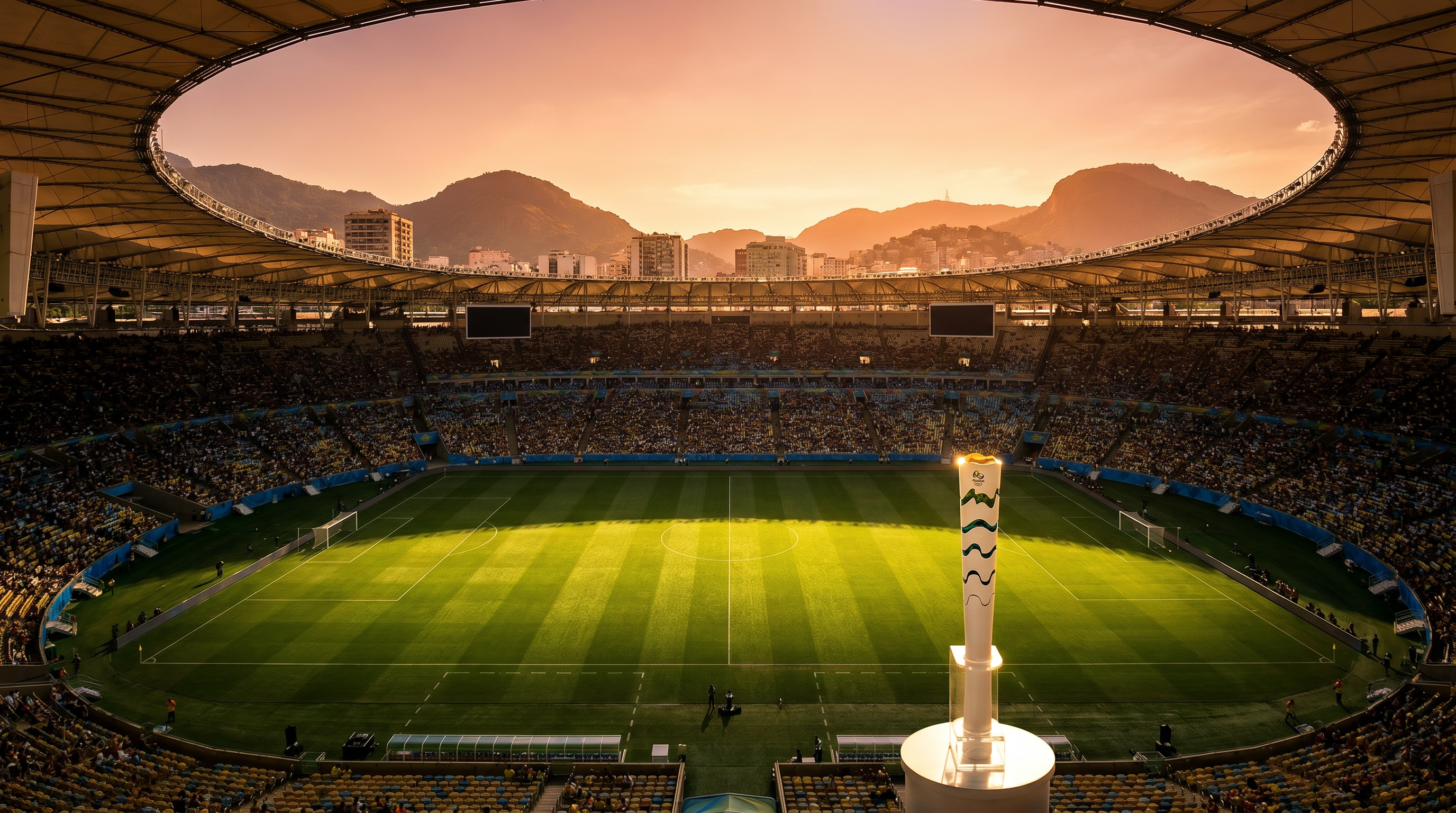
The geographical spread of the venues highlights Brazil's diverse footballing culture. Matches will be played in Belo Horizonte, Brasília, Fortaleza, Porto Alegre, Recife, Rio de Janeiro, Salvador, and São Paulo. The crown jewel of the tournament will be Rio's iconic Estádio do Maracanã, a 78,838-capacity cathedral that previously hosted the 1950 and 2014 men's finals, as well as the 2016 Olympic gold medal match.[1][7]
Structurally, the 2027 edition will be the second and final Women's World Cup to feature a 32-team format. FIFA has already confirmed that the tournament will expand to 48 nations in 2031, mirroring the recent growth of the men's competition. For this cycle, teams will be drawn into eight groups of four, with the top two finishers in each group advancing to a 16-team single-elimination knockout stage, culminating in a 64-match festival of football.[1]
As the host nation, Brazil receives automatic entry, leaving 31 spots up for grabs across the six continental confederations. The allocation guarantees 11 direct spots for Europe (UEFA), six for Asia (AFC), four each for Africa (CAF) and North/Central America (CONCACAF), three for South America (CONMEBOL), and one for Oceania (OFC).[1][9]

The qualification process is currently in full swing, utilizing a mix of regional championships and dedicated qualifying leagues. In Europe, the pathway is tied to a complex Nations League format where teams are divided into Leagues A, B, and C. The four group winners in League A secure direct tickets to Brazil, while the remaining spots are decided through a grueling series of playoffs in late 2026.[2][9]
The qualification process is currently in full swing, utilizing a mix of regional championships and dedicated qualifying leagues.
At the top of the European pyramid, a fierce rivalry is playing out between Spain and England. The two powerhouses find themselves navigating the same qualification windows, with their head-to-head performances serving as an early barometer for 2027. Analysts note that whichever side secures automatic qualification will have a significant advantage in tournament preparation, cementing their status as early favorites to lift the trophy in Rio.[3][6]
For the United States Women's National Team, the road to Brazil is defined by tactical evolution and a generational changing of the guard. Following a disappointing early exit in 2023, the USWNT hired former Chelsea manager Emma Hayes to orchestrate a comprehensive rebuild. Hayes immediately delivered results, guiding a rejuvenated American squad to Olympic gold in Paris in 2024 and restoring the program's championship pedigree.[4][8]
Hayes has used the current cycle to test new midfield partnerships and defensive structures. The American defense is now firmly anchored by center-back Naomi Girma, whose elite reading of the game and calm distribution under pressure have made her indispensable. The coaching staff is actively experimenting with different holding midfield combinations to ensure the team can dictate possession against sophisticated European opponents.[5][8]

Offensively, the USWNT boasts one of the most lethal frontlines in international football, affectionately dubbed 'Triple Espresso.' The trio of Trinity Rodman, Mallory Swanson, and Sophia Smith provides a devastating mix of pace, creativity, and clinical finishing. After navigating injuries and maternity leaves, their recent reunion in international friendlies has signaled that the American attack is ready to peak at the right time.[4][5]
Beyond the traditional heavyweights, the 2027 World Cup is expected to feature deep runs from emerging forces. Japan continues to impress with their intricate passing networks and tactical discipline, while Colombia's physical, high-energy style makes them a dangerous matchup for any opponent. The expanded investment in women's domestic leagues globally means that players from previously overlooked nations are now competing at the highest club levels.[6][8]
The final three tournament berths will be decided at a 10-team inter-confederation playoff tournament in early 2027. Hosted in Brazil, this mini-tournament will serve as a vital test event for the host country's logistics and stadium operations. It will feature two teams each from Asia, Africa, CONCACAF, and South America, plus one from Oceania and one from Europe, battling in a high-stakes knockout format.[2][9]

For the host nation, the stakes transcend mere logistics. The Brazilian women's national team has long been a pioneer of the sport, producing generational talents like Marta, yet they have never won a World Cup. Playing on home soil presents a historic opportunity to capture the ultimate prize, though the pressure from an expectant, football-obsessed public will be immense.[1][7]
As the final year of preparation begins, the narrative surrounding the 2027 FIFA Women's World Cup is one of unprecedented parity and anticipation. The days of predictable group stages and lopsided scorelines are largely in the past. When the opening whistle blows in June 2027, fans can expect the most competitive, technically advanced, and widely celebrated women's sporting event in history.[6][7][8]
How we got here
August 2023
Spain defeats England to win the 2023 Women's World Cup in Australia.
May 2024
FIFA awards the 2027 hosting rights to Brazil.
August 2024
The USWNT wins Olympic gold in Paris under new coach Emma Hayes.
February 2025
Global qualification matches officially begin.
June 24, 2027
The 2027 FIFA Women's World Cup kicks off in Brazil.
Viewpoints in depth
The Defending Champions
Spain aims to cement a dynasty amid rising competition.
Following their triumph in 2023, Spain's national team views the 2027 cycle as an opportunity to establish a lasting dynasty. Their possession-based, highly technical style of play has become the gold standard in women's football. However, the squad acknowledges that the element of surprise is gone, and European rivals like England are specifically tailoring their tactics to disrupt Spain's rhythm in the midfield.
The USWNT Rebuild
The United States seeks to reclaim the World Cup under Emma Hayes.
For the USWNT, the 2027 tournament is about proving that their 2024 Olympic gold was the start of a new era, not just a temporary bounce-back. The coaching staff and supporters emphasize tactical flexibility and the integration of young talent alongside established stars. The program's philosophy has shifted from relying purely on athletic dominance to prioritizing technical control and defensive organization.
The Host Nation's Dream
Brazil hopes to leverage home-field advantage for their first title.
Brazilian supporters and analysts view 2027 as the ultimate opportunity to capture the elusive World Cup trophy. The narrative centers on honoring the legacy of pioneers like Marta while showcasing a new generation of dynamic attackers. Playing at home brings immense pressure, but the team hopes the passionate crowds in cities like Rio and São Paulo will provide the emotional fuel needed to overcome the European heavyweights.
What we don't know
- Which three nations will secure the final spots via the inter-confederation play-offs in early 2027.
- Whether the USWNT's young core can maintain their Olympic form on the World Cup stage.
- How the pressure of being the host nation will impact Brazil's performance.
Key terms
- Inter-confederation play-offs
- A mini-tournament where teams from different continents compete for the final remaining spots in the World Cup.
- Nations League format
- A tiered league system used by UEFA for qualification, where teams are promoted or relegated based on performance.
- Triple Espresso
- The nickname for the USWNT's dynamic attacking trio of Trinity Rodman, Mallory Swanson, and Sophia Smith.
Frequently asked
When does the 2027 Women's World Cup start?
The tournament kicks off on June 24, 2027, and concludes with the final on July 25, 2027.
Where will the matches be played?
Matches will be held in eight Brazilian cities: Belo Horizonte, Brasília, Fortaleza, Porto Alegre, Recife, Rio de Janeiro, Salvador, and São Paulo.
How many teams are competing?
The 2027 tournament will feature 32 teams. It is the last edition before the World Cup expands to 48 teams in 2031.
Has the USWNT qualified yet?
Not yet. The USWNT will compete in the CONCACAF qualification process to secure their spot, though they are heavily favored to advance.
Sources
Source coverage
9 outlets
3 viewpoints surfaced









[1]BBC SportEuropean Powerhouses
All you need to know about 2027 Women's World Cup
Read on BBC Sport →[2]FIFAEuropean Powerhouses
European qualifying | Women's World Cup 2027
Read on FIFA →[3]Goal.comEuropean Powerhouses
England should be considered Women's World Cup favourites if Lionesses can beat Spain
Read on Goal.com →[4]Olympics.comUSWNT Supporters
Emma Hayes announces USWNT roster for Brazil friendlies
Read on Olympics.com →[5]FOX SportsUSWNT Supporters
Predicting USA's 2027 Women's World Cup Roster
Read on FOX Sports →[6]CBS SportsGlobal Growth Advocates
Way-too-early 2027 Women's World Cup Power Rankings
Read on CBS Sports →[7]Francs JeuxGlobal Growth Advocates
Fortaleza, Rio, São Paulo… The map of the 2027 Women's World Cup
Read on Francs Jeux →[8]Girls Soccer NetworkUSWNT Supporters
The USWNT's Road to the 2027 FIFA Women's World Cup: Key Storylines
Read on Girls Soccer Network →[9]Herfootball.orgGlobal Growth Advocates
FIFA Women's World Cup 2027 Qualification – Full Continental Breakdown
Read on Herfootball.org →

More in sports
See all 332 stories →Pro Volleyball Boom
The $100M Turf War Building America's First Sustainable Pro Volleyball Ecosystem
6 sources
Adaptive Gaming
How Adaptive Tech and Modular Design Are Leveling the Esports Playing Field
7 sources

Sports Tech
How Artificial Intelligence is Revolutionizing Soccer Scouting and Player Recruitment
8 sources
Fighter Safety
How Impact-Sensing Smart Gloves Are Changing the Science of Boxing Safety
7 sources

Every angle. Every day.
Get sports stories with full source coverage and perspective breakdowns delivered to your inbox.