
U.S. and Iran Open Historic Peace Talks in Switzerland with 60-Day Roadmap
Vice President JD Vance is leading a U.S. delegation in Geneva for unprecedented negotiations with Iranian officials, mediated by Qatar and Pakistan. The talks aim to establish a comprehensive regional stability framework, prompting Israel to temporarily limit military operations in Lebanon despite ongoing proxy tensions.
By Factlen Editorial Team
- U.S. and Mediators
- Views the talks as a historic and necessary opportunity to establish a comprehensive framework for Middle Eastern stability.
- Israeli Security Establishment
- Remains highly skeptical of the negotiations, warning that Iran's proxy networks will use the diplomatic pause to regroup and sabotage peace efforts.
- U.S. Domestic Critics
- Questions the administration's dealmaking strategy, arguing that the U.S. may be conceding too much leverage for a preliminary agreement.
What's not represented
- · Lebanese Civilian Leadership
- · Gulf State Energy Exporters
Why this matters
A successful U.S.-Iran diplomatic roadmap could fundamentally reshape Middle Eastern geopolitics, potentially de-escalating multi-front conflicts involving Israel and Gulf states, while heavily impacting global energy markets and shipping security.
Key points
- U.S. and Iranian delegations have opened historic peace talks in Geneva, Switzerland.
- The negotiations are structured around a 60-day roadmap for phased de-escalation.
- Qatar and Pakistan are serving as the primary mediators for the summit.
- Israel has temporarily limited military operations in Lebanon to avoid derailing the talks.
- Israeli President Isaac Herzog warned that Iran-backed proxies are attempting to sabotage the peace process.
- The diplomatic breakthrough has already caused fluctuations in global crude oil markets.
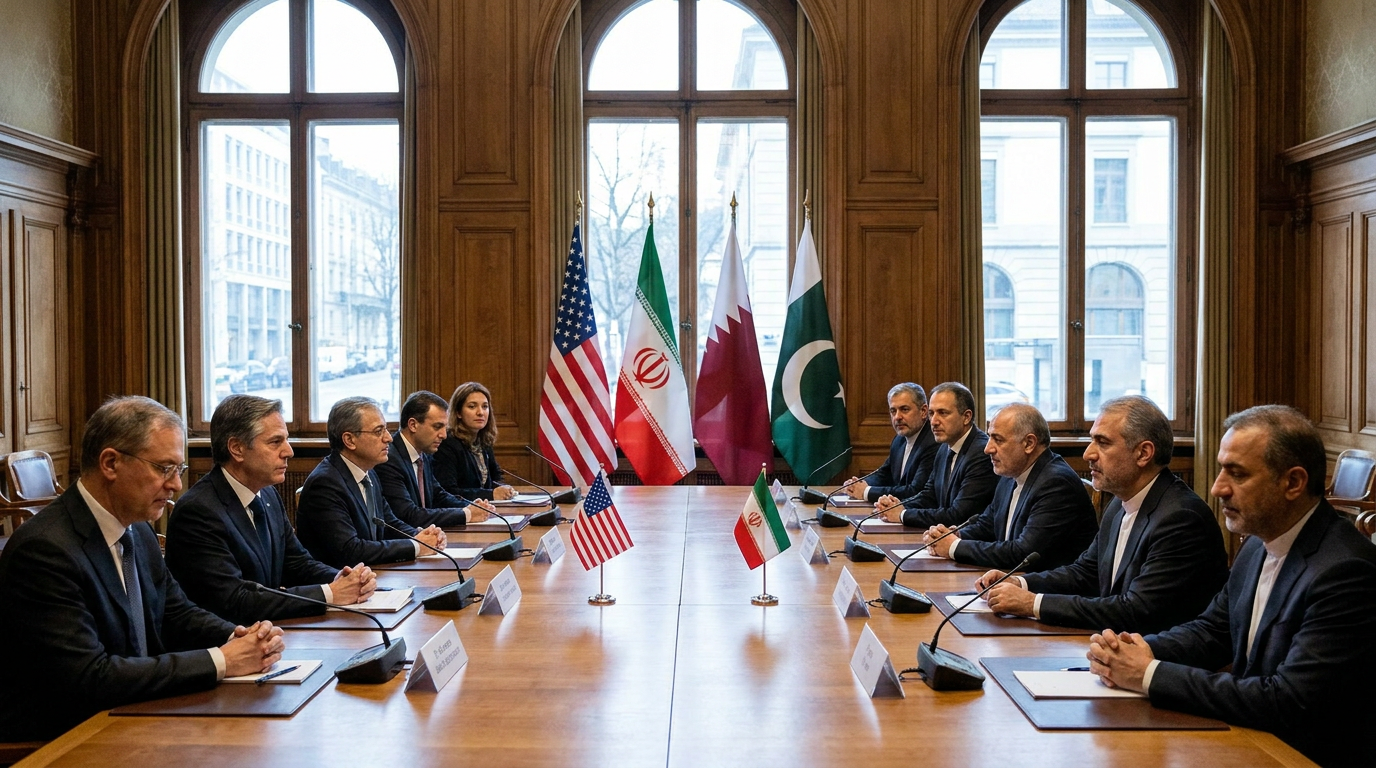
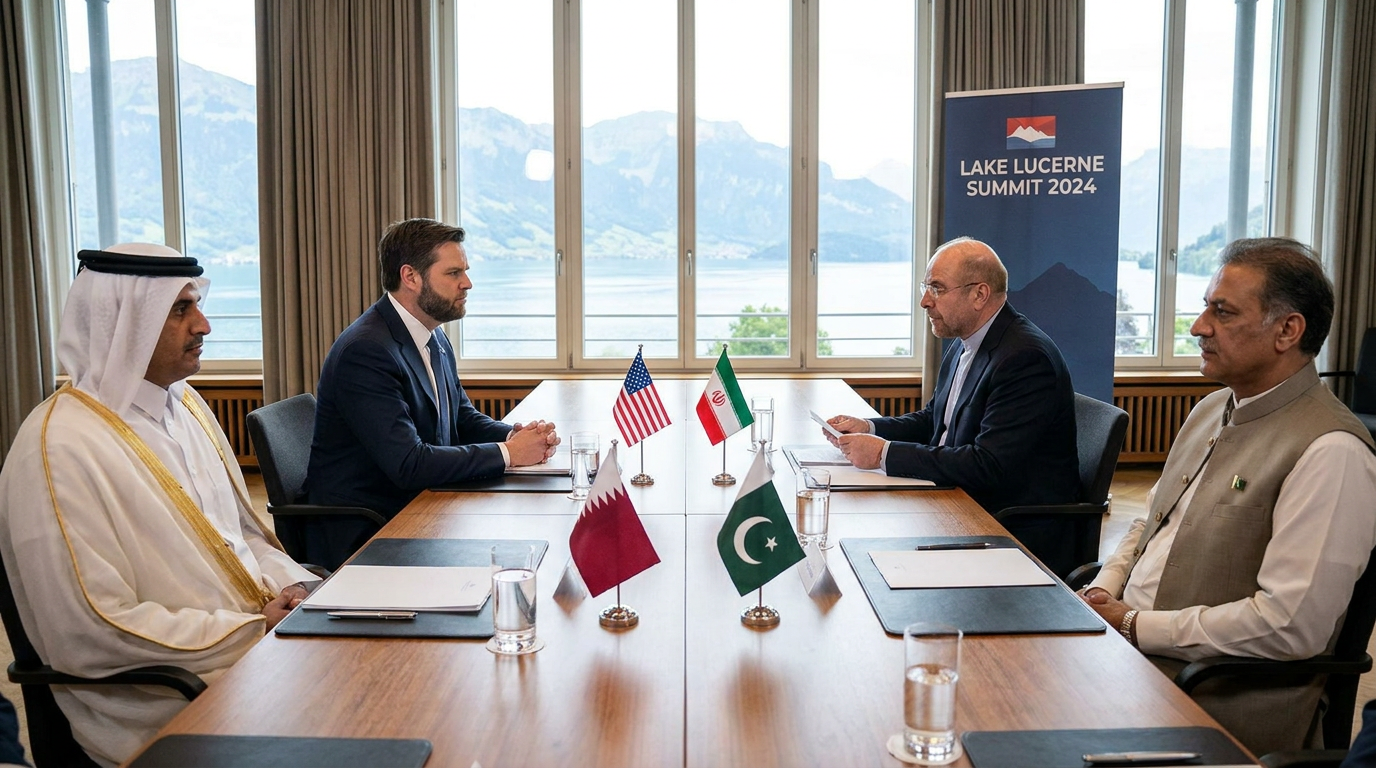
In a major diplomatic development, high-level delegations from the United States and Iran have officially opened historic peace negotiations in Switzerland. Led by Vice President JD Vance, the U.S. team is engaging in direct dialogue with Iranian officials under a newly established 60-day roadmap designed to de-escalate regional tensions. The summit marks one of the most significant diplomatic engagements between Washington and Tehran in years, aiming to construct a comprehensive framework for stability in the Middle East. Mediators from Qatar and Pakistan, who were instrumental in brokering the initial talks, have publicly hailed the summit as a historic opportunity to pull the region back from the brink of a wider conflict.[1][4][5]
The architecture of the negotiations centers on a 60-day roadmap, which outlines a phased approach to mutual concessions. While the full text of the preliminary Memorandum of Understanding remains classified, diplomatic sources indicate the framework addresses Iran's nuclear enrichment thresholds, the lifting of specific economic sanctions, and the operational posture of Iranian-aligned militia groups across Iraq, Syria, and Yemen. By establishing a strict two-month window, the mediating parties hope to maintain momentum and prevent the talks from stalling into an open-ended diplomatic stalemate. Qatari and Pakistani officials have emphasized that this compressed timeline is critical for building initial trust through verifiable, incremental steps.[1][4]

The immediate ripple effects of the Geneva summit are already altering the military landscape in the Levant. In a direct response to the diplomatic opening, the Israeli government has directed its military forces to temporarily limit offensive operations in southern Lebanon. This tactical pause is widely viewed as an effort by Jerusalem to give the U.S.-led negotiations room to breathe, avoiding any sudden escalations that could derail the fragile talks. The reduction in cross-border strikes represents a significant, albeit potentially temporary, shift in the ongoing conflict between the Israel Defense Forces and Hezbollah, offering a brief respite to civilian populations in the border regions.[3][6]
Despite the military pause, Israeli leadership remains deeply skeptical of Tehran's ultimate intentions. Israeli President Isaac Herzog issued a stark warning as the talks commenced, asserting that Iran-backed proxy groups are actively attempting to sabotage the peace process. Herzog and other senior Israeli security officials argue that Hezbollah and similar factions operate with a degree of autonomy that allows Tehran to maintain plausible deniability while continuing to destabilize the region. From Jerusalem's perspective, any diplomatic agreement that does not definitively dismantle the military capabilities of these proxy networks will ultimately fail to secure long-term peace, leaving Israel vulnerable to coordinated attacks.[2][6]

Despite the military pause, Israeli leadership remains deeply skeptical of Tehran's ultimate intentions.
Back in the United States, the administration's diplomatic gamble is facing intense scrutiny and vocal skepticism across the political spectrum. The decision to enter into a Memorandum of Understanding with Tehran has drawn sharp criticism from hawkish lawmakers and political commentators who question the administration's dealmaking strategy. Critics have publicly mocked the initial agreements, questioning whether the White House has sacrificed essential leverage for the sake of a headline-grabbing summit. This domestic pressure complicates the U.S. delegation's negotiating position, as any final agreement will inevitably face a grueling political battle for approval in Washington.[2][4]
The economic implications of the talks are already reverberating through global markets, particularly in the energy sector. The mere prospect of a diplomatic breakthrough and the potential easing of sanctions on Iranian crude exports have introduced new volatility into oil pricing. Analysts note that a successful 60-day roadmap could eventually bring millions of barrels of Iranian oil back onto the legitimate global market, fundamentally altering supply dynamics. Consequently, energy importers and major financial institutions are closely monitoring the daily developments in Geneva, recognizing that the outcome of these negotiations will directly impact global inflation metrics and economic growth forecasts for the remainder of the year.[4]

The role of Qatar and Pakistan as primary mediators underscores a shifting dynamic in international diplomacy, where regional powers are increasingly taking the lead in conflict resolution. Qatar's established relationships with both Western capitals and Tehran, combined with Pakistan's strategic interests and diplomatic channels, created a unique bridge that traditional European mediators struggled to build. These mediating nations have invested significant political capital in the success of the 60-day roadmap, positioning themselves as indispensable brokers in the modern geopolitical landscape. Their continued involvement will be crucial in verifying compliance and smoothing over the inevitable disputes that will arise during the phased implementation.[1][5]
As the 60-day clock begins ticking, the stakes for all involved parties could not be higher. If the U.S. and Iranian delegations can successfully navigate the roadmap and transition the preliminary MOU into a binding, verifiable treaty, it would represent a generational shift in Middle Eastern geopolitics. Conversely, if the talks collapse due to proxy violence, domestic political sabotage, or irreconcilable demands, the region risks plunging into a more severe and intractable conflict. For now, the international community watches Geneva, waiting to see if this unprecedented diplomatic window can yield lasting stability or if it will merely serve as a brief pause before a wider escalation.[1][3][6]
How we got here
Early 2026
Backchannel discussions are facilitated by Qatar and Pakistan to establish a baseline for direct negotiations.
June 2026
The U.S. and Iran agree to an initial Memorandum of Understanding, setting the stage for formal talks.
June 21, 2026
Historic peace negotiations officially kick off in Geneva with a 60-day roadmap.
Viewpoints in depth
U.S. and Mediators' View
The talks represent a rare and vital window to pull the Middle East back from the brink of wider war.
For the U.S. delegation and the mediating states of Qatar and Pakistan, the Geneva summit is viewed as a necessary pivot away from perpetual conflict. Proponents of the talks argue that the 60-day roadmap offers a structured, verifiable mechanism to cap Iran's nuclear ambitions while simultaneously cooling the multi-front proxy wars that have destabilized the region. By engaging directly, Washington hopes to establish a new security architecture that relies on diplomatic guardrails rather than constant military deterrence.
Israeli Leadership's View
The diplomatic pause is a tactical risk that allows hostile proxy forces to regroup without consequence.
The Israeli security establishment views the negotiations with profound skepticism. While Jerusalem has temporarily limited its operations in Lebanon to appease Washington, leaders like President Isaac Herzog argue that Iran uses diplomatic summits as a smokescreen. From this perspective, Tehran's strategy relies on keeping Western powers occupied at the negotiating table while its proxy networks—such as Hezbollah—continue to build military infrastructure and plan attacks, rendering any signed agreement functionally hollow.
Domestic U.S. Skeptics
The administration is sacrificing critical leverage for a preliminary agreement of questionable value.
Within the United States, a vocal coalition of hawkish lawmakers and political commentators has heavily criticized the decision to enter into the Memorandum of Understanding. These critics argue that by agreeing to a 60-day roadmap, the U.S. is prematurely signaling a willingness to ease economic sanctions before securing ironclad guarantees regarding Iran's proxy funding and ballistic missile programs. They fear the administration is prioritizing the optics of a historic summit over the substance of a durable, enforceable treaty.
What we don't know
- The exact classified terms and mutual concessions outlined in the preliminary Memorandum of Understanding.
- Whether Iran-backed proxy groups like Hezbollah will adhere to the de-escalation framework during the 60-day window.
- How the U.S. administration plans to navigate domestic political opposition to secure approval for a final treaty.
Key terms
- Memorandum of Understanding (MOU)
- A formal, non-binding agreement between two or more parties outlining the broad terms of a shared goal or negotiation framework.
- Proxy forces
- Armed groups or militias funded, trained, or directed by a larger state power to fight or exert influence on its behalf, such as Hezbollah in Lebanon.
- 60-day roadmap
- A specific, time-bound diplomatic schedule agreed upon by the U.S. and Iran to implement phased de-escalation steps.
Frequently asked
Why are the U.S. and Iran holding talks in Switzerland?
The delegations are meeting in Geneva to negotiate a 60-day roadmap aimed at de-escalating regional tensions, addressing nuclear thresholds, and stabilizing the Middle East.
What is the 60-day roadmap?
It is a phased, two-month diplomatic framework designed to build trust through verifiable, incremental concessions regarding sanctions, nuclear enrichment, and regional proxy forces.
How is Israel reacting to the negotiations?
Israel has temporarily limited its military actions in Lebanon to give the talks room, though Israeli leaders warn that Iran-backed proxies are actively trying to sabotage the peace process.
Who is mediating the peace talks?
Qatar and Pakistan are serving as the primary mediators, having facilitated the backchannel discussions that led to the current summit in Geneva.
Sources
Source coverage
6 outlets
3 viewpoints surfaced





[1]Al JazeeraU.S. and Mediators
Iran-U.S. launch historic peace talks with 60-day roadmap
Read on Al Jazeera →[2]Fox NewsU.S. Domestic Critics
Iran-backed proxies sabotaging Lebanon peace as JD Vance leads US delegation to Switzerland, Herzog says
Read on Fox News →[3]The New York TimesIsraeli Security Establishment
Israel directs its military to limit its actions in Lebanon, though tensions persist.
Read on The New York Times →[4]BBC NewsU.S. and Mediators
US and Iran begin high-stakes diplomatic talks in Switzerland
Read on BBC News →[5]U.S. Department of StateU.S. and Mediators
U.S. Delegation Arrives in Geneva for Multilateral Discussions
Read on U.S. Department of State →[6]The Jerusalem PostIsraeli Security Establishment
Herzog warns of proxy interference as US-Iran talks open in Geneva
Read on The Jerusalem Post →
More in news politics
See all 6 stories →Tech Regulation
UK and Canada Advance Sweeping Social Media Bans for Under-16s, Accelerating Global Trend
8 sources

US-Iran Peace Deal
U.S. and Iran Begin 60-Day Peace Sprint in Switzerland as GOP Hawks Revolt Over Deal
10 sources
Middle East Diplomacy
Historic US-Iran Peace Negotiations Open in Switzerland Amid Fragile Lebanon Ceasefire
8 sources
Middle East Diplomacy
U.S. and Iran Open Historic Peace Talks in Switzerland with 60-Day Roadmap
8 sources
Every angle. Every day.
Get news politics stories with full source coverage and perspective breakdowns delivered to your inbox.