
U.S. and Iran Begin 60-Day Peace Sprint in Switzerland as GOP Hawks Revolt Over Deal
Vice President JD Vance and Iranian officials have opened a 60-day sprint of negotiations in Switzerland to finalize a permanent peace deal. The preliminary agreement has reopened the Strait of Hormuz but ignited a fierce political civil war among Republicans in Washington.
By Factlen Editorial Team
- Trump Administration
- The deal is a victory for 'America First' diplomacy that restores deterrence and avoids endless war.
- GOP Defense Hawks
- The preliminary agreement surrenders critical leverage and rewards a state sponsor of terrorism.
- Israeli Leadership
- Bilateral U.S.-Iran talks ignore the immediate threat of Hezbollah in Lebanon.
- Iranian Delegation
- Seeking immediate sanctions relief while managing fierce internal divisions over trusting the U.S.
- Foreign Policy Analysts
- The 60-day window is a fragile, high-stakes gamble with massive implications for global energy markets.
What's not represented
- · European allies who were signatories to the original 2015 JCPOA
- · Global shipping companies navigating the Strait of Hormuz
- · Lebanese civilians caught in the ongoing crossfire between Israel and Hezbollah
Why this matters
This preliminary agreement pauses a 110-day conflict that threatened to drag the U.S. into a major Middle Eastern ground war, but its success or failure over the next 60 days will directly dictate global oil prices, the security of international shipping, and the future of Iran's nuclear capabilities.
Key points
- U.S. and Iranian officials have begun a 60-day negotiation sprint in Switzerland following the signing of a 14-point Memorandum of Understanding.
- The preliminary deal pauses a 110-day military conflict and requires Iran to reopen the Strait of Hormuz to global shipping.
- The agreement has sparked a fierce divide within the Republican Party, with defense hawks labeling it a 'disastrous mistake.'
- Critics are heavily focused on a proposed $300 billion reconstruction fund and the lack of an immediate halt to uranium enrichment.
- Israel is not a party to the agreement and continues to clash with Iranian-backed Hezbollah forces in Lebanon.
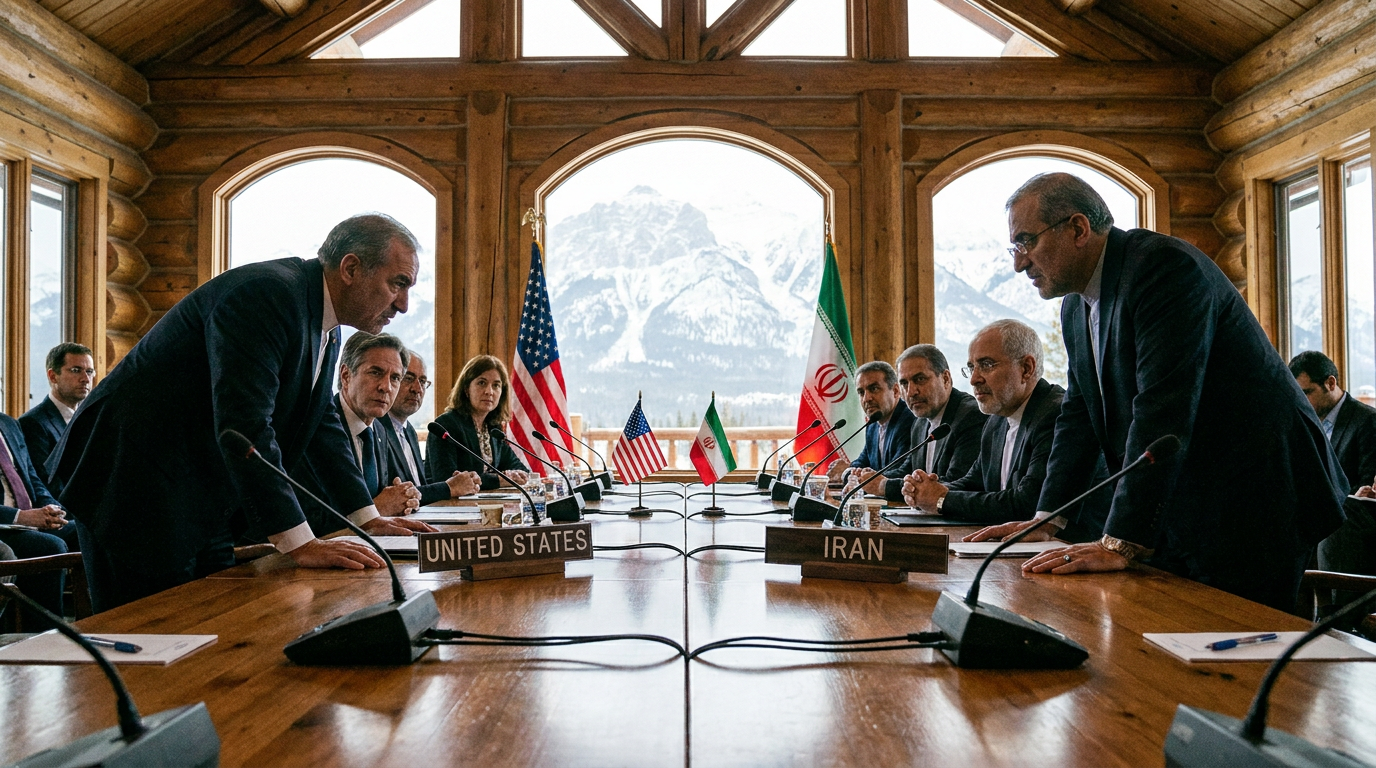
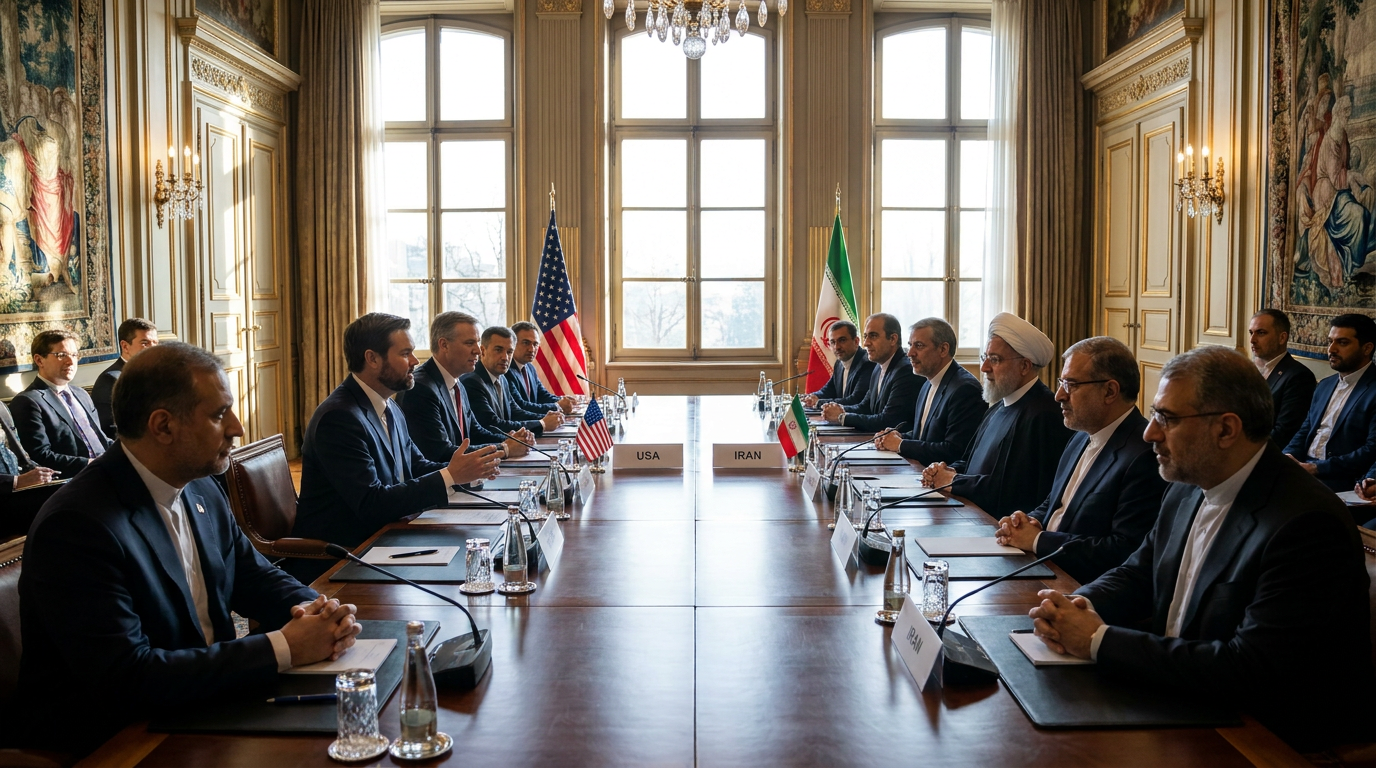
U.S. Vice President JD Vance and top Iranian officials convened at a Swiss mountainside resort on Sunday, launching a high-stakes 60-day sprint to convert a fragile ceasefire into a permanent, comprehensive peace agreement. The gathering, dubbed the 'Lake Lucerne Summit,' marks the first direct diplomatic engagement since President Donald Trump and Iranian President Masoud Pezeshkian signed a 14-point Memorandum of Understanding (MOU) last week. That preliminary document formally paused a devastating 110-day military conflict that had rattled global energy markets and threatened to drag the United States into a prolonged Middle Eastern ground war.[5][9][10]
The preliminary agreement mandates an immediate end to military operations on all fronts and requires Iran to ensure safe, toll-free passage through the Strait of Hormuz—a critical maritime chokepoint that handles roughly one-fifth of the world's traded oil and natural gas. In exchange for reopening the waterway, the two nations have established a two-month window to negotiate a final settlement. Those forthcoming talks are slated to address the lifting of crippling U.S. economic sanctions, the unfreezing of Iranian assets held overseas, and the ultimate disposition of Tehran's highly enriched uranium stockpile.[5][10]
But the ink on the memorandum was barely dry before the truce faced severe, real-world stress tests. Over the weekend, Iran's military abruptly announced it was closing the Strait of Hormuz in retaliation for ongoing Israeli military strikes in Lebanon. While U.S. officials quickly countered that commercial vessels were continuing to operate in the waterway without interference, the Iranian threat underscored the extreme fragility of the broader regional security architecture and the immense difficulty of enforcing a bilateral ceasefire in a multi-actor conflict zone.[5][6]

The escalating violence in Lebanon has rapidly become an immediate stumbling block for the Swiss negotiations. Israel, which is notably not a party to the U.S.-Iran MOU, has continued its aggressive military campaign against the Iranian-backed militant group Hezbollah. Israeli President Isaac Herzog publicly accused Iranian proxies of actively sabotaging the peace process, while the U.S. delegation scrambled to add a Lebanese ceasefire to a summit agenda that was originally conceived to focus strictly on oil transit and nuclear enrichment limits.[2][3][6]
"The question before us now is how much more can we accomplish together?" Vance told reporters shortly before the talks began, flanked by White House Middle East envoys Steve Witkoff and Jared Kushner. Vance emphasized that his immediate priorities for his brief time in Switzerland were establishing the structural framework of the negotiations, making tangible progress on the nuclear issue, and securing a halt to the fighting in Lebanon before handing the technical details over to the envoy team.[5][6]
Back in Washington, the Trump administration's sudden diplomatic pivot has ignited a fierce, highly public civil war within the Republican Party. Traditional GOP defense hawks are openly revolting against the memorandum of understanding, arguing that the White House surrendered critical leverage just as sustained military strikes and maximum-pressure sanctions were finally crippling the Iranian regime. The internal party rift pits the administration's 'America First' non-interventionist wing—which is eager to declare victory and exit the conflict—against veteran lawmakers who view any diplomatic compromise with Tehran as a dangerous, short-sighted capitulation that will inevitably backfire.[1][7]
Back in Washington, the Trump administration's sudden diplomatic pivot has ignited a fierce, highly public civil war within the Republican Party.
Senator Bill Cassidy of Louisiana led the conservative charge, labeling the agreement 'the worst foreign policy blunder in decades' and suggesting that Ronald Reagan would be rolling in his grave. Cassidy argued that Iran learned it could successfully weaponize the Strait of Hormuz to extract concessions. Senator Ted Cruz of Texas similarly warned that the president was receiving 'bad advice,' cautioning against any deal that allows theocratic leaders in Tehran to rebuild their infrastructure and emerge as an even stronger, better-funded regional threat to American interests.[7]

Much of the conservative ire centers on a highly controversial provision in the MOU that outlines a mutually agreed plan to generate at least $300 billion for the reconstruction and economic development of Iran. While President Trump has adamantly insisted that any such funding would come strictly from voluntary private investments rather than U.S. taxpayers, critics remain entirely unconvinced. Lawmakers argue that regardless of the capital's source, injecting hundreds of billions of dollars into the Iranian economy will inevitably free up domestic resources to fund state-sponsored terrorism across the Middle East.[7]
The nuclear parameters of the preliminary deal have also drawn intense, bipartisan scrutiny. Unlike the 2015 Joint Comprehensive Plan of Action (JCPOA) brokered by the Obama administration—which mandated strict, immediate caps on enrichment—the current MOU does not require an immediate halt to Iran's uranium processing. Instead, Iran has broadly reaffirmed a commitment not to procure or develop nuclear weapons, leaving the highly complex mechanics of down-blending its existing stockpile of 60-percent enriched uranium to be hammered out by technical teams over the next 60 days.[10]
Despite the mounting domestic backlash, the White House has aggressively defended the agreement as a historic triumph of its 'America First' doctrine. In a forcefully worded statement, the administration argued that Trump successfully forced Iran to the negotiating table from a position of decisive American strength. By securing the reopening of vital global shipping lanes and establishing a framework for nuclear talks, the administration believes it has avoided the trap of an endless Middle Eastern ground war while thoroughly rejecting the 'failed policies of appeasement' favored by previous presidents.[8]

The political turbulence surrounding the deal is certainly not confined to the United States. The Iranian delegation, led by Parliament Speaker Mohammad Bagher Ghalibaf, arrived in Switzerland amid a furious internal row in Tehran. Hardline factions and elements of the Islamic Revolutionary Guard Corps argue that negotiating with Washington is a fool's errand, citing the U.S. withdrawal from the 2015 nuclear deal. Recently leaked confidential correspondence suggests deep, ongoing friction at the highest levels of the Iranian government over whether the supreme leader's strict negotiating instructions are actually being followed by the diplomatic team.[4][6]
For now, the technical details of the final pact rest entirely in the hands of the negotiators gathered in Bürgenstock. With mediators from Pakistan and Qatar facilitating the room, the U.S. and Iranian teams must somehow bridge massive, decades-old gaps on sanctions relief, nuclear inspections, and proxy warfare before the 60-day clock expires. The stakes for the summit could not be higher; if the talks collapse, U.S. officials have explicitly indicated they are prepared to walk away from the table and significantly escalate both economic and military pressure on Tehran.[5][6][10]
How we got here
Feb 2026
The United States and Iran enter a period of direct military conflict.
June 14, 2026
Negotiators reach a preliminary 14-point Memorandum of Understanding.
June 17, 2026
President Trump and President Pezeshkian remotely sign the MOU, officially pausing hostilities.
June 21, 2026
Vice President JD Vance and Iranian officials begin a 60-day sprint of negotiations in Switzerland.
Viewpoints in depth
The Trump Administration's View
The deal is a victory for 'America First' diplomacy that restores deterrence.
White House officials argue that the president's willingness to use decisive military force brought Iran to the table from a position of weakness. By securing the reopening of the Strait of Hormuz and establishing a framework for nuclear talks, the administration believes it has avoided an endless Middle Eastern ground war while rejecting the 'appeasement' policies of previous administrations.
GOP Defense Hawks
The preliminary agreement surrenders critical leverage and rewards a state sponsor of terrorism.
Conservative critics like Senators Ted Cruz and Bill Cassidy view the MOU as a catastrophic unforced error. They argue that halting military operations just as sanctions were crushing Tehran allows the regime to rebuild. Hawks are particularly incensed by the proposed $300 billion reconstruction fund and the lack of an immediate, mandatory halt to Iran's uranium enrichment.
Iranian Hardliners
Negotiating with the United States is a trap that will yield no permanent sanctions relief.
Within Tehran, the decision to sign the MOU has triggered a fierce internal backlash. Hardline factions and elements of the military establishment argue that Washington cannot be trusted to honor its commitments, pointing to the U.S. withdrawal from the 2015 JCPOA. They advocate for maintaining a closed Strait of Hormuz and continuing proxy attacks until all economic sanctions are permanently lifted.
Israeli Leadership
Bilateral U.S.-Iran talks ignore the immediate threat of Hezbollah in Lebanon.
Israeli officials are deeply skeptical of the 60-day negotiation window, noting that the MOU does not bind Israel's military actions. With Iranian-backed Hezbollah forces continuing to clash with the IDF in Lebanon, leaders in Jerusalem fear the agreement will allow Tehran to resupply its proxy networks under the cover of a diplomatic ceasefire.
What we don't know
- Whether the U.S. and Iran can bridge their massive differences on nuclear enrichment and sanctions relief within the 60-day window.
- How the proposed $300 billion reconstruction fund would be financed and monitored to prevent capital from flowing to militant proxies.
- Whether ongoing Israeli military operations in Lebanon will cause Iran to walk away from the negotiating table.
Key terms
- Memorandum of Understanding (MOU)
- A preliminary, non-binding agreement outlining the broad terms of a deal before a final, formal treaty is negotiated.
- Strait of Hormuz
- A narrow waterway between the Persian Gulf and the Gulf of Oman that serves as the transit point for roughly 20% of the world's traded oil.
- Down-blending
- The process of diluting highly enriched uranium so that it can no longer be used to produce a nuclear weapon.
- Joint Comprehensive Plan of Action (JCPOA)
- The 2015 nuclear agreement brokered by the Obama administration, which President Trump withdrew the U.S. from during his first term.
Frequently asked
What does the U.S.-Iran Memorandum of Understanding actually do?
It establishes an immediate ceasefire to a 110-day conflict, reopens the Strait of Hormuz to shipping, and sets a 60-day window to negotiate a final deal on Iran's nuclear program and U.S. sanctions.
Why are Republicans divided over the deal?
Defense hawks like Ted Cruz and Bill Cassidy argue the deal surrenders U.S. leverage, fails to immediately halt uranium enrichment, and could provide Iran with a $300 billion reconstruction fund.
Is Israel part of this peace agreement?
No. Israel is not a party to the U.S.-Iran MOU and has continued its military operations against the Iranian-backed militant group Hezbollah in Lebanon.
Sources
Source coverage
10 outlets
5 viewpoints surfaced








[1]Fox NewsGOP Defense Hawks
Trump's Iran gamble divides GOP hawks and 'America First' conservatives over what victory looks like
Read on Fox News →Iran-backed proxies sabotaging Lebanon peace as JD Vance leads US delegation to Switzerland, Herzog says
Read on Fox News World →[3]The New York TimesIsraeli Leadership
Israel Directs Its Military to Limit Its Actions in Lebanon, but Tensions Persist
Read on The New York Times →[4]The GuardianIranian Delegation
Secret correspondence claims suggest tensions at top of Iranian government
Read on The Guardian →[5]The Washington PostTrump Administration
Vice President JD Vance and Iranian officials meet in Switzerland
Read on The Washington Post →JD Vance says talks aim to 'make progress on the nuclear issue, make progress on the Lebanon ceasefire issue'
Read on The Guardian US →[7]CBS NewsGOP Defense Hawks
Republicans concerned about Iran deal
Read on CBS News →[8]White House Press OfficeTrump Administration
President Trump's Iran Agreement Is America First in Action
Read on White House Press Office →[9]AxiosTrump Administration
U.S. and Iran sign deal ahead of schedule
Read on Axios →[10]Council on Foreign RelationsForeign Policy Analysts
Trump's Iran Deal: What We Know, What's Contested, and What Remains Unresolved
Read on Council on Foreign Relations →
Every angle. Every day.
Get news politics stories with full source coverage and perspective breakdowns delivered to your inbox.