
The Science of Sanctuary: How Neuroaesthetics is Turning Interior Design into Preventive Healthcare
Advances in neuroscience reveal that interior design choices trigger measurable biological responses, transforming how we build spaces to actively reduce stress and boost cognitive function.
By Factlen Editorial Team
- Neuro-Architects & Researchers
- View the built environment as a measurable medical intervention.
- Biophilic Design Advocates
- Focus on correcting the evolutionary mismatch of modern indoor living.
- Evidence-Based Design Educators
- Bridge the gap between scientific data and practical interior application.
What's not represented
- · Renters with limited control over their architectural spaces
- · Low-income communities lacking access to natural light and green spaces
Why this matters
Your home and workspace are not just visual backdrops; they are active environments that either elevate cortisol or trigger your parasympathetic nervous system. Understanding neuroaesthetics allows you to engineer spaces that actively support your mental and physical health.
Key points
- Neuroaesthetics proves that interior design choices trigger measurable biological and neurological responses.
- Biophilic design uses natural patterns and materials to activate the body's parasympathetic nervous system.
- Thoughtfully designed spaces can reduce stress hormones by up to 20 percent.
- Curved contours, dynamic lighting, and acoustic harmony improve cognitive function and emotional regulation.
There is a distinct, universal feeling of walking into a room and instantly exhaling. For decades, interior designers relied on intuition and artistic training to create spaces that felt "right" to their clients. Today, that intuition is being validated by functional MRI machines, biometric sensors, and rigorous clinical data.[7]
The emerging field of neuroaesthetics—the scientific study of how the brain responds to aesthetic experiences—is fundamentally changing how we understand the built environment. It shifts interior design from a purely visual luxury to a measurable biological intervention, proving that our surroundings are constantly communicating with our nervous systems.[1][2]
"Neuroaesthetics is the study of how the arts and aesthetics measurably change our brain, body, and behavior," explains Susan Magsamen, founding executive director of the International Arts + Mind Lab at Johns Hopkins University. This discipline reveals that design choices are not just matters of taste, but powerful tools for health promotion.[5]
When we encounter a space that the brain perceives as beautiful or harmonious, it triggers a cascade of physiological responses. Functional imaging studies show that pleasing environments positively stimulate the medial orbitofrontal cortex, the specific brain region linked to emotional regulation, decision-making, and reward processing.[2]

The biological stakes of our interior environments are surprisingly high. In an era where humans spend upwards of 90 percent of their time indoors, sterile, high-contrast urban environments can force the brain into a persistent "fight or flight" state. This chronic, low-grade stress elevates cortisol levels and steadily erodes cognitive performance.[3]
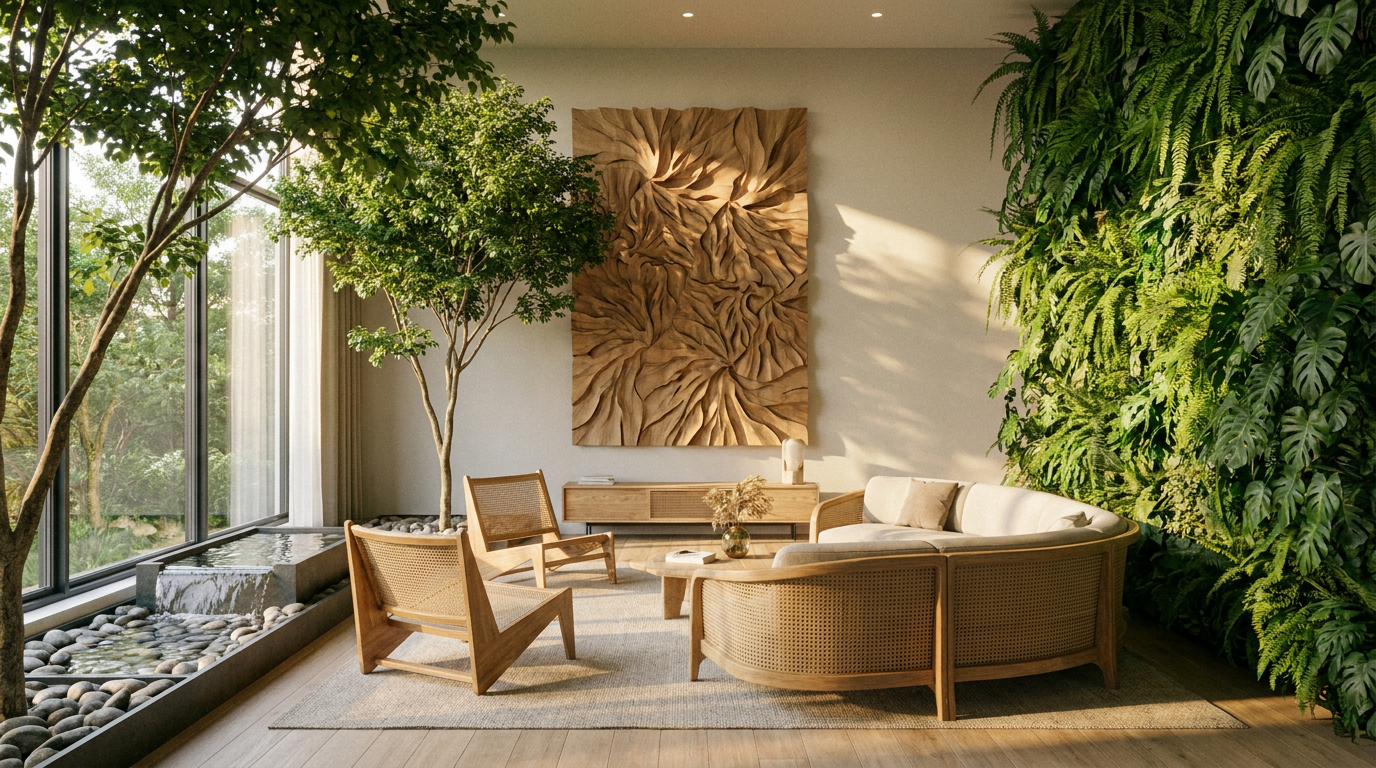
To counteract this modern deficit, architects are increasingly turning to biophilic design—the deliberate integration of natural elements into the built environment. This approach goes far beyond simply placing a potted plant in a corner; it involves mimicking the complex sensory experiences, lighting, and textures of the natural world to signal safety to the brain.[3][4]
To counteract this modern deficit, architects are increasingly turning to biophilic design—the deliberate integration of natural elements into the built environment.
A core mechanism of biophilic design is "fractal fluency." The human brain evolved to process the repeating, self-similar patterns found in nature—like the branching of trees, the veins of a leaf, or the ripples in sand—with minimal effort. When interior spaces incorporate these fractal geometries through wood grains, stone textures, or specific architectural motifs, cognitive load drops significantly.[3][5]
The physiological results of these interventions are highly quantifiable. Research indicates that thoughtfully designed, nature-inspired spaces can yield a 15 to 20 percent reduction in stress hormones. Heart rates slow, blood pressure drops, and the parasympathetic nervous system—responsible for the body's "rest and digest" functions—takes over.[1][4]

Beyond stress reduction, neuroaesthetic principles actively enhance cognitive function. Studies demonstrate that access to dynamic natural light and views of nature significantly improve working memory, focus, and creativity. In healthcare settings, these same principles have been shown to accelerate patient recovery times and reduce the need for pain medication.[1][4]
Shape and contour also play a critical role in spatial psychology. Neuroaesthetic research reveals that the brain perceives curved, organic contours as more pleasant and less threatening than sharp, rectilinear edges. Integrating arches, rounded furniture, and sweeping architectural lines activates the brain's pleasure centers, drawing on an evolutionary preference for environments that offer both prospect and refuge.[6]
The sensory experience of a room extends well beyond the visual. Multisensory layering—incorporating tactile natural materials like untreated wood or woven fabrics, alongside acoustic harmony—is essential. Unpredictable, harsh noises elevate stress markers, while spaces designed with sound-absorbing materials and pleasant ambient acoustics foster concentration and calm.[1][5]

Color psychology, long a staple of traditional decorating, is also gaining empirical backing. Soft, nature-derived palettes—such as sage greens, warm ochres, and terracotta—help regulate mood, while the strategic use of dynamic lighting that mimics the sun's natural circadian progression ensures healthy sleep-wake cycles.[4]
This convergence of neuroscience and design is prompting a paradigm shift in how we view our homes and workplaces. Forward-thinking design firms now approach the home not as a static collection of furniture, but as an active "health machine" engineered to nurture the nervous system and buffer against the demands of modern life.[3]
Ultimately, neuroaesthetics democratizes well-being by proving that good design is not merely a superficial indulgence. By understanding the biological impact of light, texture, and proportion, anyone can make evidence-based choices to transform their environment into a sanctuary for mental and physical flourishing.[7]
Viewpoints in depth
Neuro-Architects & Researchers
View the built environment as a measurable medical intervention.
For researchers in this emerging field, architecture is no longer just about shelter or style; it is a biological tool. They point to functional MRI data showing how specific spatial geometries and lighting conditions can actively lower cortisol, improve cognition, and accelerate physical healing. From this perspective, designing a space without considering its neurological impact is a missed opportunity for preventative healthcare.
Biophilic Design Advocates
Focus on correcting the evolutionary mismatch of modern indoor living.
This camp argues that human biology has not adapted to the sterile, right-angled, artificially lit boxes we currently inhabit. They emphasize that our nervous systems require the sensory inputs of the natural world—fractal patterns, organic textures, and dynamic daylight—to regulate properly. For them, biophilic design is not a trend, but a necessary re-wilding of our daily habitats to combat chronic stress.
Traditional Design Practitioners
Balance scientific data with the intuitive art of personal expression.
While welcoming the empirical validation that neuroaesthetics provides, traditional designers caution against reducing interior design to a purely clinical formula. They argue that the subjective elements of design—cultural context, personal memory, and individual artistic expression—are equally vital to making a space feel like 'home.' They advocate for using science as a foundational tool, rather than a rigid rulebook.
What we don't know
- How different neurodivergent populations uniquely process and respond to specific neuroaesthetic interventions.
- The long-term, longitudinal health outcomes of living exclusively in scientifically optimized biophilic environments over decades.
Key terms
- Neuroaesthetics
- The scientific study of how the brain responds to aesthetic experiences, art, and design.
- Biophilic Design
- An architectural approach that connects building occupants more closely to nature through natural lighting, ventilation, landscape features, and organic materials.
- Parasympathetic Nervous System
- The part of the nervous system responsible for the body's "rest and digest" functions, which slows the heart rate and relaxes muscles.
- Orbitofrontal Cortex
- A region of the brain involved in cognitive processing of decision-making and emotional regulation, which is stimulated by pleasing environments.
- Circadian Rhythm
- The natural, internal process that regulates the sleep-wake cycle and repeats roughly every 24 hours, heavily influenced by environmental light.
Frequently asked
Do I need a large budget to apply neuroaesthetics in my home?
No. Many effective interventions are low-cost, such as maximizing natural light, decluttering to reduce visual noise, incorporating house plants, and using nature-inspired color palettes.
What is "fractal fluency"?
Fractal fluency refers to the brain's ability to easily process the repeating, complex patterns found in nature. Incorporating these patterns indoors reduces cognitive load and promotes relaxation.
How do curved shapes affect the brain compared to sharp angles?
Neuroaesthetic research shows that the brain perceives curved, organic contours as more pleasant and less threatening than sharp, rectilinear edges, activating the brain's reward and pleasure centers.
Why is acoustic design considered part of neuroaesthetics?
Unpredictable or harsh noises elevate cortisol and keep the brain in a stressed state. Thoughtful acoustic design using sound-absorbing materials helps maintain a calm, focused environment.
Sources
Source coverage
7 outlets
3 viewpoints surfaced







[1]Science in DesignBiophilic Design Advocates
Neuroaesthetics: The Future of Interior Design
Read on Science in Design →[2]Pearl AcademyEvidence-Based Design Educators
Bridging the gap between art and neuroscience
Read on Pearl Academy →[3]Nuvira SpaceBiophilic Design Advocates
The Neuro-Architecture of Biophilia
Read on Nuvira Space →[4]National Institutes of HealthNeuro-Architects & Researchers
Therapeutic Interior Environments for Chronic Diseases
Read on National Institutes of Health →[5]ArchiExpoNeuro-Architects & Researchers
Designing the Future of Wellness
Read on ArchiExpo →[6]MediumNeuro-Architects & Researchers
The brain and the built environment
Read on Medium →[7]Factlen Editorial TeamEvidence-Based Design Educators
Synthesis by Factlen editorial team
Read on Factlen Editorial Team →


Every angle. Every day.
Get lifestyle stories with full source coverage and perspective breakdowns delivered to your inbox.